Published on: 2026-05-29
Cash-like ETFs are winning 2026 because investors want fixed-income yield without the price sensitivity of long-duration bonds. The strongest flows are not moving into the far end of the Treasury curve. They are moving into ultra-short funds that preserve liquidity, reset quickly, and keep interest-rate exposure tightly controlled.
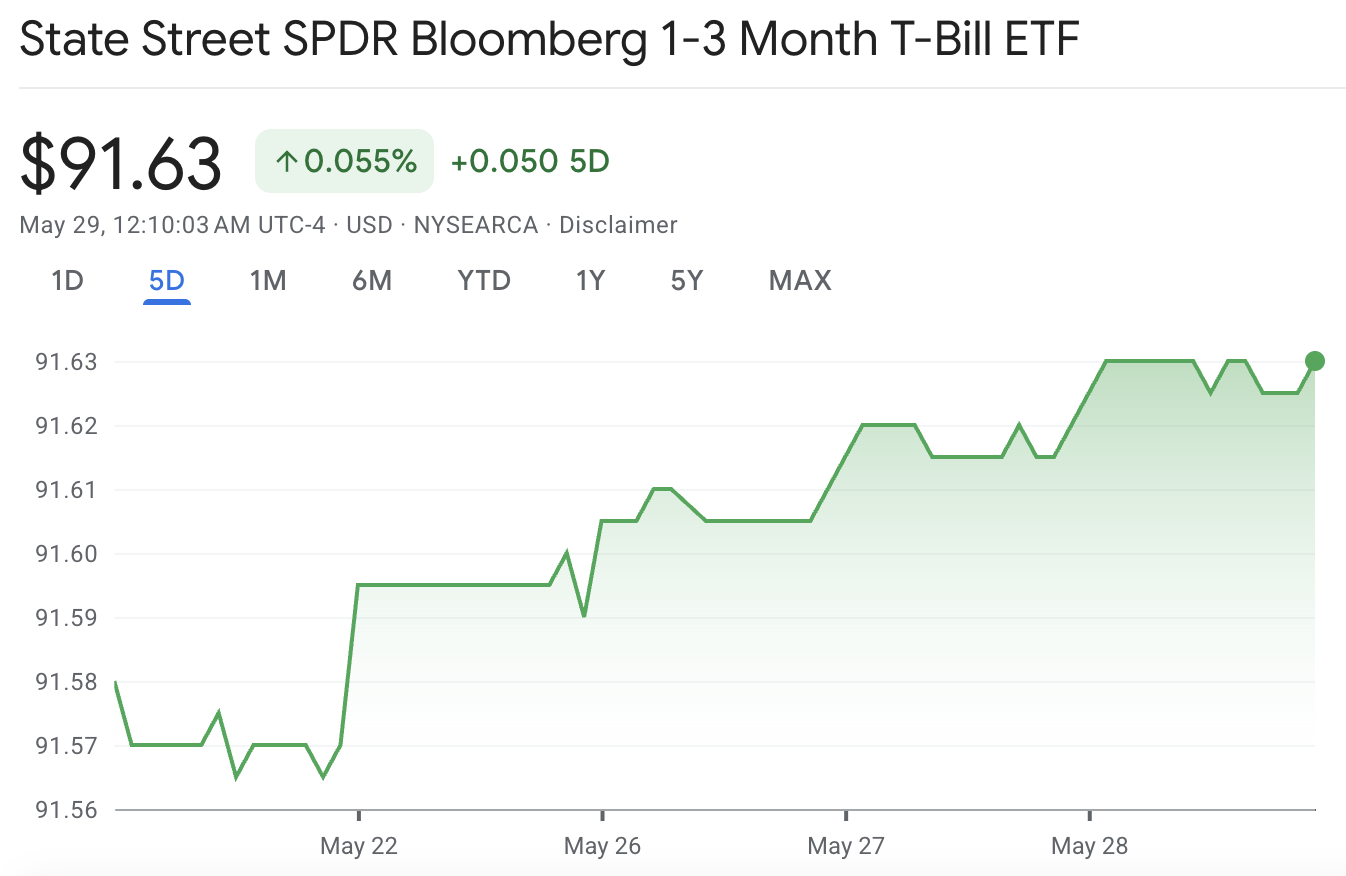
The scale of the rotation is clear. Ultra-short bond funds have taken in more money than any other Morningstar fixed-income ETF category this year, with March delivering the largest monthly inflow on record for the group.
BlackRock’s iShares 0-3 Month Treasury Bond ETF, SGOV, has pulled in $22.2 billion year to date, while a long-duration Treasury fund from the same issuer has seen $3.2 billion of outflows. Investors are not rejecting bonds. They are compressing maturity risk.
Ultra-short bond ETFs are leading 2026 fixed-income flows as investors favour liquidity over long-duration rate exposure.
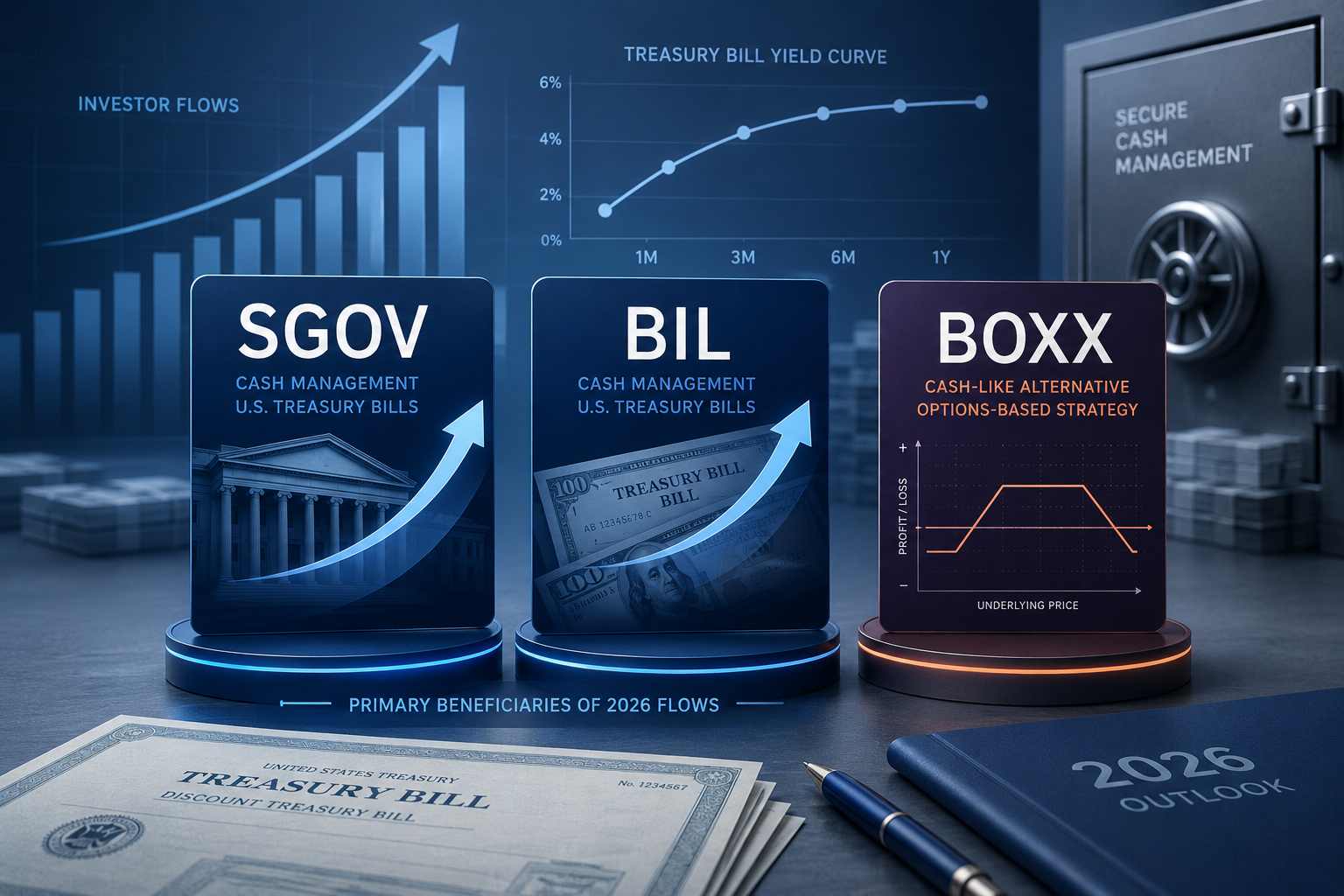
SGOV is the clearest beneficiary, with 0-3 month Treasury-bill exposure and effective duration near 0.09 years.
BIL remains a direct peer, tracking 1-3 month U.S. Treasury bills with a 0.1353% expense ratio and low duration.
BOXX belongs in the cash-like conversation, but its box-spread strategy makes it structurally different from Treasury-bill ETFs.
The central market signal is duration avoidance, not a wholesale retreat from fixed income.
BOXX’s appeal depends partly on tax treatment, which introduces a consideration SGOV and BIL do not share.
| ETF | Core Structure | 2026 Role | Key Appeal | Main Consideration |
|---|---|---|---|---|
| SGOV | 0-3 month U.S. Treasury bills | Lead Treasury-bill ETF beneficiary | Low duration, liquidity, low fee | Income resets lower if short rates fall |
| BIL | 1-3 month U.S. Treasury bills | Institutional cash-management peer | Scale, simplicity, monthly income | Slightly higher fee than SGOV |
| BOXX | Options-based box spreads | Tax-focused cash-like alternative | Potential after-tax efficiency | Tax-treatment and structure complexity |
The distinction is essential. SGOV and BIL are Treasury-bill ETFs. BOXX is an options-based strategy designed to pursue a similar return profile. Grouping them together is useful only if the structural difference stays explicit.
The 2026 inflow story is best understood as a duration trade. Investors are still willing to own fixed income, but they are less willing to accept the mark-to-market swings embedded in longer Treasuries.
A long-duration Treasury ETF can perform well if yields fall sharply. It can also decline if inflation remains firm, Treasury supply pressures the curve, or rate-cut expectations are pushed further out. That uncertainty has made the long end more difficult to hold passively.
Ultra-short Treasury ETFs offer a cleaner trade-off. They hold securities that mature quickly, distribute income regularly, and keep sensitivity to rate moves low. SGOV’s duration near 0.09 years means a 100-basis-point rate move would imply only about a $0.09 price move on a $100 position before income, convexity, and market-friction effects.
That is why the fund functions more like a liquidity tool than a traditional bond-market bet. This does not make cash-like ETFs risk-free. ETF shares can fluctuate, yields can decline, and investors do not receive FDIC insurance. The point is narrower: the price risk is much smaller than in long-duration Treasury funds.
SGOV and BIL serve almost the same portfolio purpose. Both give investors access to short-dated U.S. Treasury bills. Both sit near the front end of the yield curve. Both are designed to generate income while limiting exposure to interest-rate volatility.
SGOV tracks Treasury bills with maturities of 0-3 months and charges a 0.09% expense ratio. BIL tracks the 1-3 month segment and charges 0.1353%. The difference is meaningful at scale, but not large enough to change the strategic role of either fund.
For many investors, the choice comes down to liquidity, execution, platform access, and preference for a specific maturity segment. SGOV has become more visibly tied to the 2026 inflow story. BIL has a longer track record and remains widely used in institutional cash allocation.
The broader point is that both funds benefit from the same market condition. Investors want to earn front-end income without making a strong call on the 10-year or 30-year Treasury yield.
BOXX should not be treated as a third Treasury-bill ETF. The Alpha Architect 1-3 Month Box ETF seeks a return profile similar to the 1-3 month Treasury-bill market, but it does so through box spreads.
A box spread combines offsetting options positions to create an expected return linked to prevailing short-term rates. The structure is designed to reduce directional equity-market exposure, even though the instruments used are options. BOXX therefore belongs in the cash-like ETF discussion, but with a separate label.
The fund’s growth shows the demand for this approach. BOXX had roughly $12.1 billion in assets as of late May 2026, with an average yield to option expiration around 4.2% and a net expense ratio below 0.20%. Those figures place it firmly inside the short-term income conversation.
Its appeal is not only yield. BOXX is also designed with tax efficiency in mind. Instead of distributing ordinary interest income in the same way as a conventional Treasury-bill ETF, the fund seeks to reflect much of its return through share-price appreciation. For taxable investors, that may improve after-tax outcomes if the intended treatment is sustained.
That last condition is important. BOXX’s prospectus acknowledges that some transactions may lack clear tax guidance and that derivatives can affect the character, timing, and amount of taxable distributions. This is not a reason to describe the fund in alarmist terms. It is a reason to describe it accurately.
SGOV and BIL carry reinvestment risk if short-term rates fall. BOXX carries that rate exposure plus a structure-specific tax-treatment consideration.
The cleanest way to frame BOXX is this: the fund has delivered a cash-like return profile, but part of its appeal rests on tax mechanics that remain more complex than direct Treasury-bill ownership.
Recent scrutiny has focused on whether box-spread returns inside an ETF should continue to receive the tax treatment investors expect. The fund remains operational, and there has been no settled adverse outcome. The issue is not whether BOXX is currently functioning. It is whether the after-tax advantage that many investors value will remain as effective under future interpretation.
That distinction prevents the article from overstating the risk. BOXX is not a simple replacement for SGOV or BIL. It is a more specialised vehicle for investors who understand the difference between pre-tax yield and after-tax return.
The strongest read on the market is duration avoidance. Investors are not hiding from all risk. They are rejecting the type of bond exposure where a modest change in yields can produce a meaningful price move.
This explains why ultra-short ETFs are taking share. Front-end yields remain high enough to compete with deposits, CDs, and money-market alternatives. At the same time, these funds allow investors to keep capital available for redeployment if equity valuations reset, credit spreads widen, or the Fed’s policy path becomes clearer.
The opportunity cost is straightforward. If long yields fall sharply, long-duration bonds may outperform SGOV and BIL. Cash-like ETFs are not designed to capture that upside. They are designed to reduce volatility while preserving income and flexibility.
That is why the narrative should not be written as a chase for yield. It is a portfolio-control trade.
Cash allocation has become more strategic. When front-end yields are near 4%, liquidity no longer sits outside portfolio construction. It becomes part of risk management.
SGOV and BIL fit portfolios that need Treasury exposure, daily liquidity, and low price sensitivity. They can function as cash reserves, temporary holding vehicles, or collateral-like instruments within broader allocation frameworks.
BOXX fits a narrower use case. It may appeal to taxable investors focused on after-tax efficiency, but it requires comfort with options-based mechanics and the possibility that tax treatment could evolve. That makes it a different allocation decision from owning Treasury bills directly through SGOV or BIL.
The clean framework is simple. SGOV and BIL are macro beneficiaries of duration avoidance. BOXX is a tax-sensitive cash-like alternative with a more complex structure.
Cash-like ETFs are attracting inflows because investors can earn short-term income while limiting exposure to bond-price volatility. Ultra-short Treasury ETFs keep maturity risk low and allow portfolios to adjust quickly as rate expectations change.
BIL tracks 1-3 month Treasury bills, while SGOV tracks 0-3 month Treasury bills. Both are ultra-short Treasury ETFs. The main differences are expense ratio, maturity range, liquidity profile, and investor preference.
No. BOXX seeks Treasury-bill-like returns through box spreads, which are options positions. Its intended return profile may resemble short-term Treasury exposure, but its structure, tax treatment, and operational risks differ from SGOV and BIL.
Yes. If the Fed cuts rates materially, income from SGOV, BIL, and similar funds would likely decline as holdings mature and reset. Their strength is liquidity and flexibility, not yield permanence.
Cash-like ETFs are winning 2026 because investors are choosing income without unnecessary duration risk. SGOV and BIL are the clearest beneficiaries of that shift. They provide direct Treasury-bill exposure, low volatility, and a transparent link to the front end of the rate curve.
BOXX belongs in the discussion, but it should not be treated as the same product in a different wrapper. It seeks a similar return profile through box spreads and places greater emphasis on after-tax efficiency. That creates a different analytical framework from plain Treasury-bill ETFs.
The sharper conclusion is that fixed income has not lost relevance. Duration has become more selective. In 2026, SGOV and BIL are winning because the macro environment favours liquid, short-maturity Treasury exposure. BOXX is gaining attention because taxable investors are evaluating a more specialised route to cash-like returns. The two trends overlap, but they should not be analysed as the same trade.