Published on: 2026-07-31
Updated on: 2026-07-31
Situational Awareness gained 439% in the first half of 2026, then lost 67% in July and sold most of its public-equity portfolio to Citadel. Former OpenAI researcher Leopold Aschenbrenner’s AI thesis may still prove right, yet leverage stripped his fund of the time required for recovery.
The fund remained roughly 78% higher for the year, while falling collateral values left it unable to hold the positions that had produced its extraordinary rise.
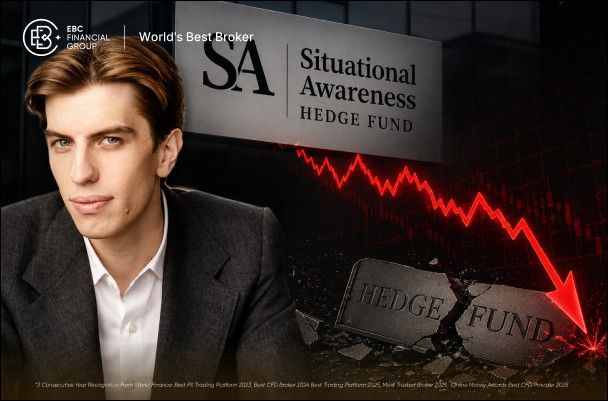
Aschenbrenner built Situational Awareness above $20 billion within roughly two years despite having no established institutional investment record.
Citadel acquired most of the public-equity portfolio, not the management company or the full collection of private investments.
The $13.68 billion Form 13F total included option-related positions and could not reveal the fund’s actual leverage or net market exposure.
Private AI assets retained substantial value but could not meet immediate public-market margin demands.
Removing leverage lowers the risk of another forced sale while making the fund’s earlier returns harder to reproduce.
Leopold Aschenbrenner built Situational Awareness by converting a public forecast about rapid AI development into a concentrated investment strategy. After working on OpenAI’s Superalignment team, he published Situational Awareness: The Decade Ahead in June 2024. The essay argued that advanced AI could arrive by 2027 and identified chips, electricity and data centres as the main constraints on further expansion.
Aschenbrenner had no long institutional investing record. His strategy focused on companies supplying computing power, memory, energy and data-centre capacity. Situational Awareness reportedly returned 1,551% from inception through June 2026 and grew beyond $20 billion in roughly two years.
Exceptional returns attracted capital and supported larger positions. Assets, market exposure and financing needs expanded before the strategy had faced a severe reversal across the same group of AI-linked stocks.
Situational Awareness’s March 31 Form 13F disclosed 42 positions with a reported value of $13.68 billion. The filing included direct holdings in Bloom Energy, Sandisk, CoreWeave and other AI-infrastructure companies, alongside put positions linked to semiconductor stocks and the VanEck Semiconductor ETF.
Those puts suggested that parts of the portfolio were hedged. The filing could not show whether the protection matched the positions that later fell, or whether the options remained in place during the July decline.
Form 13F lists option positions through information tied largely to the underlying securities. It excludes short equity positions, written options and borrowing arrangements. The filing therefore could not establish Situational Awareness’s option premiums, net exposure or total leverage.
The widely reported figures measure different layers of the fund and should not be compared directly.
| Reported figure | What it measures |
|---|---|
| Above $20 billion | Fund assets near the reported peak |
| $13.68 billion | March Form 13F value, including option-related entries |
| About $16 billion | Estimated public-equity portfolio before the sale |
| About $5 billion | Reported value of the private Anthropic holding |
The $13.68 billion figure comes from the SEC filing, while the public-portfolio and Anthropic estimates were reported during the July negotiations.
Lenders could demand cash or liquid collateral on immediate deadlines. The private Anthropic stake could not be converted on the same timetable.
Falling AI stocks reduced both Situational Awareness’s capital and the collateral supporting its borrowed positions. Leverage magnified the losses and increased cash demands from lenders. The fund sought additional financing, approached existing capital providers and offered assets for sale as the pressure intensified.
Borrowed portfolios operate on lender deadlines. Even if Aschenbrenner’s long-term AI thesis remained valid, Situational Awareness had to supply cash before its positions had time to recover. Its financing horizon became shorter than its investment horizon.
Situational Awareness reportedly agreed late on July 29 to sell $3.5 billion of Anthropic shares to a consortium led by Greenoaks and Sequoia Capital. The proposed sale was withdrawn the following morning after the Citadel agreement.
The attempted transaction exposed the immediate problem. Valuable assets remained, yet the cash deadline arrived first.
Citadel acquired most of Situational Awareness’s public-equity portfolio, estimated at roughly $16 billion. It did not acquire the management company or the entire investment operation. Situational Awareness retained its private holdings and continued operating in a reduced form.
The transaction moved liquid securities from a fund under urgent financing pressure to one with greater balance-sheet capacity. Selling the holdings as a block avoided the need to unload a large, concentrated portfolio security by security into a falling market.
Citadel could finance positions that Situational Awareness could no longer afford to hold. The loss damaged Situational Awareness’s returns. The sale gave Citadel much of the exposure to any subsequent rebound.
Aschenbrenner told clients that Situational Awareness had removed all portfolio leverage. The change reduces the risk of another forced sale while limiting the exposure that powered its earlier gains.
Situational Awareness now holds a smaller public portfolio and a greater concentration of private AI assets. Those holdings may retain considerable value, yet they cannot be sold or repositioned as quickly as listed securities.
Investor withdrawals, new subscriptions and private-asset sales will reveal whether the fund has enough capital to rebuild. A recovery in AI stocks would support the remaining portfolio without recreating the leveraged exposure that produced the original surge.
The fund must now prove that its AI thesis can deliver returns without borrowed capital deciding how long it is allowed to wait.
The 67% figure refers to Situational Awareness’s July fund performance, not Aschenbrenner’s personal wealth. His ownership stake, share of fund profits and other assets have not been disclosed in enough detail to calculate his individual loss.
Situational Awareness did not shut down. The firm sold most of its public equities, removed leverage and retained private investments. Its liquid trading operation became considerably smaller, while the investment firm continued operating.
The strongest reporting identifies Citadel, Ken Griffin’s hedge fund, as the buyer. Citadel Securities is a separate market-making business and has not been identified as the purchaser in the principal reporting on the transaction.
The Anthropic holding carried substantial private-market value but could not be converted into cash as quickly as listed securities. Private-share sales require negotiations and willing counterparties, while margin demands can arrive immediately.
A 67% decline requires a gain of approximately 203% to return to the previous capital level. Recovery remains possible, though the fund must now generate returns without the leverage that amplified its earlier rise.
The August 14 Form 13F filing will show holdings from June 30, before the July unwind. The November 16 filing will be the first scheduled disclosure capable of reflecting the Citadel sale, although it will still exclude private assets, short positions and financing arrangements.
The next 13F can show what remained. Only the fund’s future financing can show whether the same crisis could happen again.