Published on: 2026-03-05
Updated on: 2026-03-05
South Korean equities have staged a powerful rebound after a two-day sell-off that shook investor confidence and triggered market-wide trading curbs.
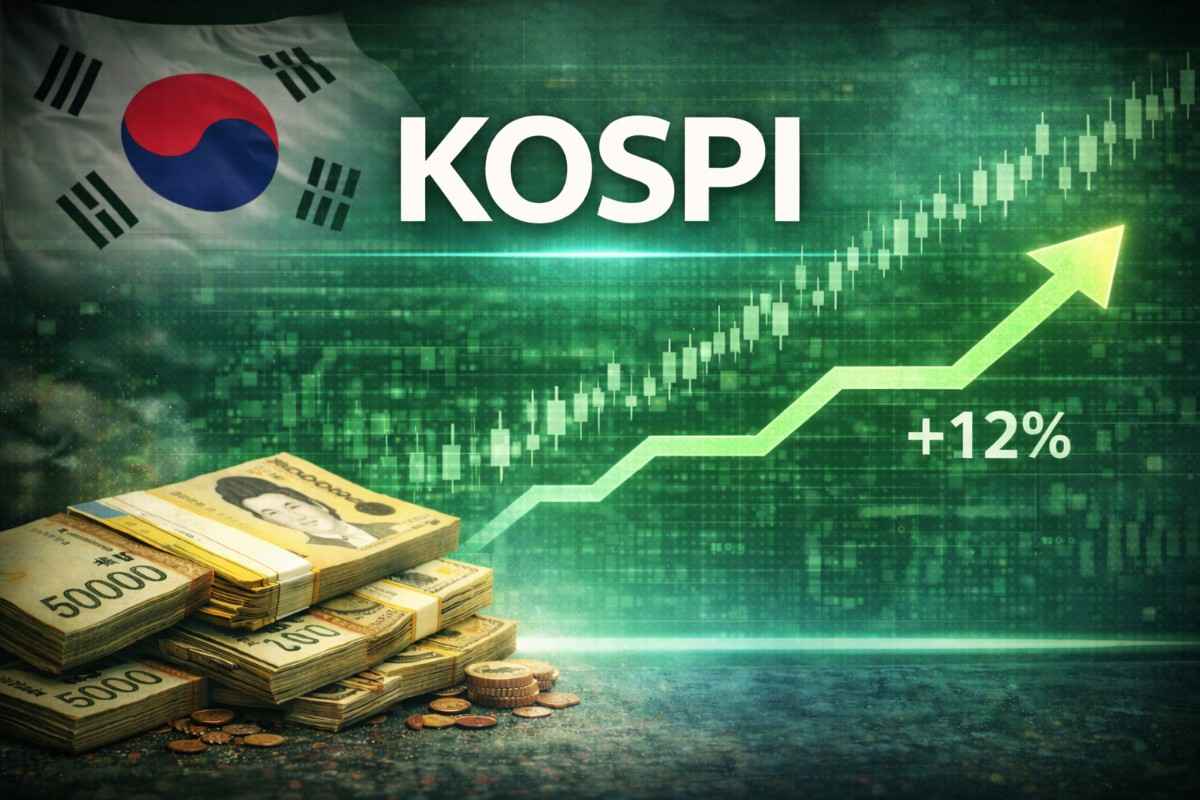
The KOSPI suffered a historic fall on Wednesday, 4 March 2026, when the index plunged 12% in a single session. That drop followed a sharp fall the previous day, which meant many investors were suddenly nursing large losses in positions that had been heavily crowded earlier in the year.
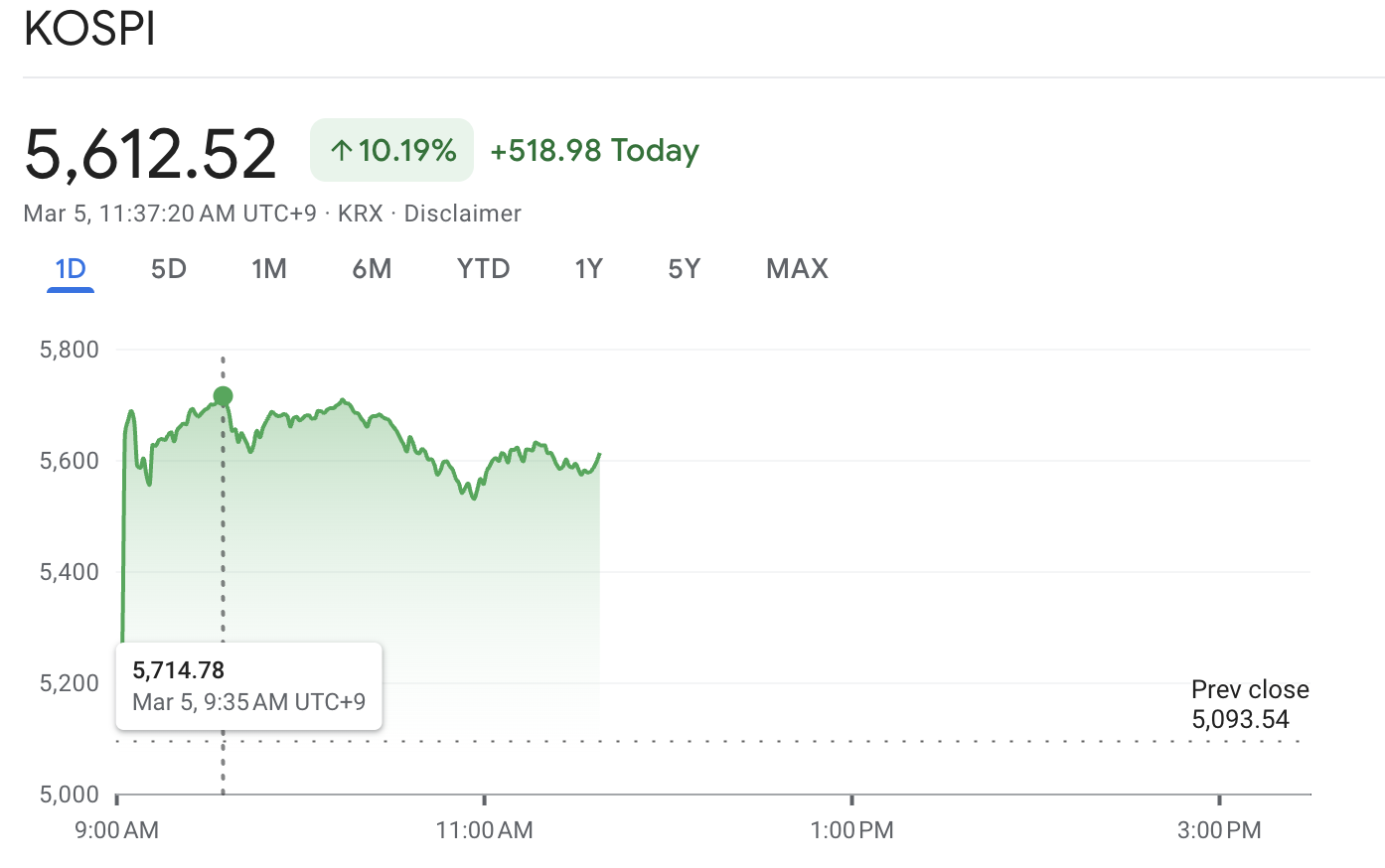
Today, the market snapped back. KOSPI recovered 12% of the previous day's losses and was around 5,702 shortly after the market opened, before trading was suspended due to the rapid surge in the index.
Korea's recent sell-off was fueled by a familiar yet powerful combination: a geopolitical shock that raised oil prices and a market already stretched after a significant rally earlier in the year.
In the first two months of 2026, KOSPI gained nearly 50% before a sell-off, highlighting significant losses in major tech companies, foreign outflows, and a weakening won.
The rebound was broad and fast enough to trigger trading pauses, which typically happen when prices move too sharply for orderly execution.
| Item | Latest reference | Why it matters |
|---|---|---|
| KOSPI level (early trade) | ~5,702 | Shows a sharp gap higher after the rout. |
| KOSPI move | Took back the 12%” lost the day before | Suggests a relief rally rather than a small technical bounce. |
| Trading status | Trading was suspended after a rapid rise | Confirms the move was strong enough to trigger volatility controls. |
Today's bounce did not come from one single headline. It arose from multiple pressures easing simultaneously, along with aggressive buying activity in response to forced selling.
The fastest way to stabilise global equities after a Middle East escalation is for oil prices to stop climbing.
For context, Oil prices "moderated" during the prior US session, with Brent settling around $81.40 after briefly topping $84, and US crude around $74.66.
That cooling mattered because oil is the channel through which geopolitical stress becomes a global inflation problem.
For South Korea, this channel is essential because it is the world's eighth-largest oil importer, and its market reacts strongly to concerns about oil supply disruptions.
Why This Helps Korean Stocks Quickly
Lower oil prices reduce the risk of a sudden inflation flare-up.
Lower oil prices reduce the risk of margin compression for energy-intensive manufacturers.
Lower oil reduces the "tail risk" that forces investors to cut exposure rapidly.
When US markets recover, Asia often gets a strong early boost, especially after a panic sell-off.
The S&P 500 rose 0.8%, the Dow rose 0.5%, and the Nasdaq rose 1.3% in the prior session, as investors reacted to easing oil pressure and encouraging US economic updates.
In summary, this allowed Korean traders to shift from "sell first" to "pricing the worst-case scenario less aggressively."
Additionally, today's rebound was led by the same part of the market that was crushed in the rout: chips and tech.
Samsung Electronics jumped more than 14% and SK Hynix more than 15% in the rebound.
That is a powerful index lever, and it also changes sentiment quickly because semiconductors are Korea's flagship export story.
Korea's market structure can magnify extremes. During panic, volatility controls limit downside momentum. During rebound, they can also trigger bursts of catch-up buying when program flows resume.
The Korea Exchange reactivated a sidecar curb and temporarily suspended program trading for five minutes due to volatility. The rapid rise also triggered a trading halt.
Simply put, when the market is swinging hard, these tools can cause prices to jump in steps, not in a smooth line.
During geopolitical shocks, markets seek signals that authorities are monitoring liquidity and currency stability.
Korea JoongAng Daily reported that the Korean government stepped up market monitoring after the Iran conflict raised uncertainty over oil shipments and pressure on the won.
Monitoring alone does not change fundamentals, but it can reduce panic when investors worry about disorderly currency moves.
This table is designed for planning, not prediction, and it links the next move in Korean equities to oil and the wider risk mood.
| Scenario | What happens next | What would likely drive it | What it means for KOSPI |
|---|---|---|---|
| Relief rally extends | The market adds gains after today | Oil stays stable and global equities remain firm | KOSPI can retrace more |
| Choppy consolidation | Large intraday swings continue | Headlines stay volatile and liquidity remains thin | KOSPI trades in a wide range and repeatedly tests support. |
| Second leg down | The bounce fades and sellers regain control | Oil resumes climbing or shipping risks intensify | Korea underperforms again due to energy import exposure. |
| Policy-supported stabilisation | Volatility compresses over several sessions | Clear policy signals and calmer FX conditions | The market becomes tradable again for longer-horizon investors. |
The sell-off was heavily tied to oil shock risk, so oil remains the quickest signal for whether the fear premium is rising or falling.
When the won weakens sharply, foreign investors often reduce exposure because equity losses compound in dollar terms. The prior day's losses emphasised foreign outflows and currency pressure as part of the stress picture.
When trading is halted after sharp moves, reopening auctions and thin liquidity can exaggerate the next push, in either direction.
KOSPI rebounded because oil stopped spiking, Wall Street recovered, and dip-buyers moved quickly after a record sell-off. Trading was even suspended after the index surged rapidly near the open.
A large rebound reduces immediate panic, but it does not remove geopolitical and energy risks. The market is likely to continue following oil headlines closely in the coming sessions.
South Korea is a major oil importer, so higher crude prices can raise inflation risk and squeeze corporate margins, especially in energy-intensive manufacturing.
In conclusion, KOSPI's bounce is best understood as a risk premium unwind after oil stopped accelerating and US equities regained confidence.
The significant move led to a trading suspension after the market opened, indicating that positioning and market mechanics are influencing price action as much as fundamentals.
The next sessions are likely to be decided by two variables that traders can monitor in real time: oil prices and the won's stability. If both calm down, the rebound can extend. If either one worsens, the market can quickly return to disorder.
Disclaimer: This material is for general information purposes only and is not intended as (and should not be considered to be) financial, investment or other advice on which reliance should be placed. No opinion given in the material constitutes a recommendation by EBC or the author that any particular investment, security, transaction or investment strategy is suitable for any specific person.