Published on: 2026-04-14
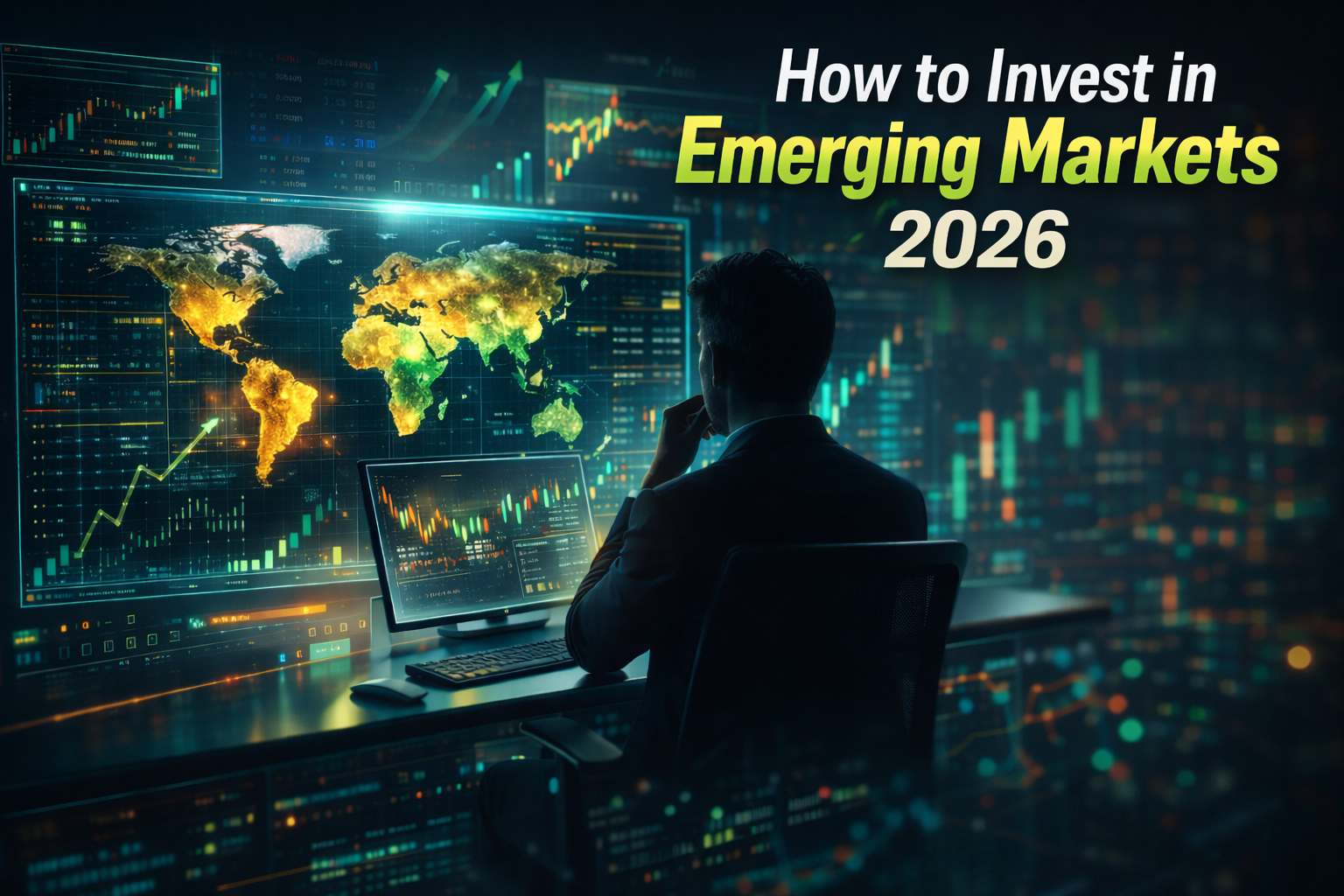
Emerging markets have become an increasingly important part of global investing as economic growth expands beyond traditional developed economies. Developing countries continue to attract investor attention through industrialisation, digital adoption, and rising consumer demand.
In investing, an emerging market usually refers to a market that sits between a developed market and a frontier market in size, liquidity, and accessibility. Index providers such as MSCI classify markets using factors such as size and liquidity, market accessibility, and economic development, so country lists can vary by provider and can change over time.
For investors, these markets can offer attractive long-term opportunities, but they also come with distinct risks that require careful planning.

Emerging markets offer higher growth potential but come with greater volatility.
ETFs are the most accessible and diversified entry point.
Macroeconomic factors often drive returns more than fundamentals.
A 5%–20% allocation is typical for balanced portfolios
Long-term discipline is essential to capture growth.
Investors have multiple pathways to gain exposure, each with different levels of risk and complexity.
Exchange-traded funds (ETFs) provide diversified exposure across countries and sectors in a single investment.
Examples include:
Vanguard FTSE Emerging Markets ETF
iShares MSCI Emerging Markets ETF
For many investors, broad emerging-market ETFs can be a practical starting point because they offer diversified exposure across countries and sectors in a single vehicle. Costs, liquidity, index methodology, and tax treatment can still vary by fund and by jurisdiction.
However, it is important to understand how access works on the platform you use. On some trading platforms, including EBC Financial Group, exposure may be offered through Contracts for Difference (CFDs) rather than direct ownership of the ETF.
Through this structure, traders can:
Access global emerging market ETFs from a single platform
Trade on price movements without owning the underlying asset
Use leverage, depending on their strategy and risk tolerance.
At the same time, this means:
You do not own the ETF itself.
You are trading based on price speculation rather than long-term holding.
Dividend access and long-term compounding may differ from direct investing.
As a result, ETF CFDs are generally better matched to shorter-term trading or hedging strategies, while direct ETF investing is usually the cleaner choice for long-term portfolio building.
Investors with strong macro views may focus on individual markets, such as India for growth or Brazil for commodities.
Considerations:
Higher return potential
Greater exposure to country-specific risks
Direct equity investing allows exposure to leading companies benefiting from local growth.
Examples:
Tencent (technology and digital ecosystem)
TSMC (global semiconductor leader)
This approach requires deeper research into company fundamentals, governance, and regulatory risks.
Professionally managed funds allocate capital across regions and sectors.
Suitable for:
Investors seeking active management
Those without time to monitor macroeconomic trends
Emerging markets are not simply “faster-growing economies.” Their expansion is supported by several structural and cyclical drivers:
Many emerging economies are undergoing rapid GDP growth, supported by infrastructure development, foreign investment, and industrialisation.
These regions often have younger populations and a growing middle class, which fuels consumption and long-term economic activity.
As economies shift from agriculture to manufacturing and services, productivity increases and income levels rise.
Examples of themes investors are watching in 2026 include:
Supply chain diversification (“China +1” strategy)
Expansion of digital ecosystems and fintech
Commodity demand driven by energy transition
A structured approach is essential to balance growth potential with risk.
Avoid concentrating exposure in a single country. A mix of Asia, Latin America, and other regions helps reduce risk.
Emerging markets are inherently volatile. Investors should expect short-term fluctuations and maintain a multi-year perspective.
Key indicators to watch include:
Global interest rate cycles
Commodity price trends
Overconcentration in one country or sector
Ignoring currency risk, which can erode returns
Chasing short-term hype instead of focusing on fundamentals
Underestimating volatility and liquidity risks
Treating emerging markets as a quick-profit strategy
While the growth narrative is attractive, emerging markets are highly sensitive to external and internal risks.
Currency Volatility
Exchange rate fluctuations can significantly impact returns, especially when local currencies weaken against the US dollar.
Political and Regulatory Uncertainty
Policy changes or geopolitical tensions can disrupt markets quickly.
Liquidity Constraints
Some markets may lack depth, making large trades more difficult.
Global Interest Rate Sensitivity
Decisions by institutions like the Federal Reserve can trigger capital outflows, affecting valuations and currencies.
In practice, emerging market performance can be heavily influenced by global financial conditions, including US dollar strength, risk appetite, and interest-rate expectations, not only by domestic growth.
For many investors, one of the lower-risk ways to start is through a diversified emerging-market ETF, such as the Vanguard FTSE Emerging Markets ETF. A broad fund can reduce single-country and single-company risk, but it still carries market, currency, and liquidity risk.
A common starting range is 5% to 20% of a portfolio, but the right allocation depends on risk tolerance, investment goals, and time horizon. Lower allocations may suit more conservative investors, while higher allocations are usually chosen by investors seeking more growth and who can accept larger drawdowns.
Emerging markets can be suitable for beginners when accessed through diversified instruments such as ETFs or managed funds. Platforms like EBC Financial Group may also offer ETF CFDs, which are better suited to active traders than to long-term investors.
Key risks include currency volatility, political instability, regulatory changes, and sensitivity to global interest rates. Decisions by institutions such as the Federal Reserve can significantly influence capital flows and overall market performance.
Emerging markets do not consistently outperform developed markets. While they offer higher growth potential, returns are cyclical and heavily influenced by global macroeconomic conditions, investor sentiment, and liquidity cycles.
Emerging markets offer compelling opportunities for investors seeking growth beyond developed economies. However, this potential comes with higher volatility and macroeconomic sensitivity.
A disciplined approach, focused on diversification, controlled allocation, and long-term investing, can help investors capture the benefits while managing the risks. For most portfolios, emerging markets should serve as a complementary growth component rather than a core holding.
Disclaimer: This material is for general information purposes only and is not intended as (and should not be considered to be) financial, investment or other advice on which reliance should be placed. No opinion given in the material constitutes a recommendation by EBC or the author that any particular investment, security, transaction or investment strategy is suitable for any specific person.