Published on: 2026-04-10
Updated on: 2026-04-10
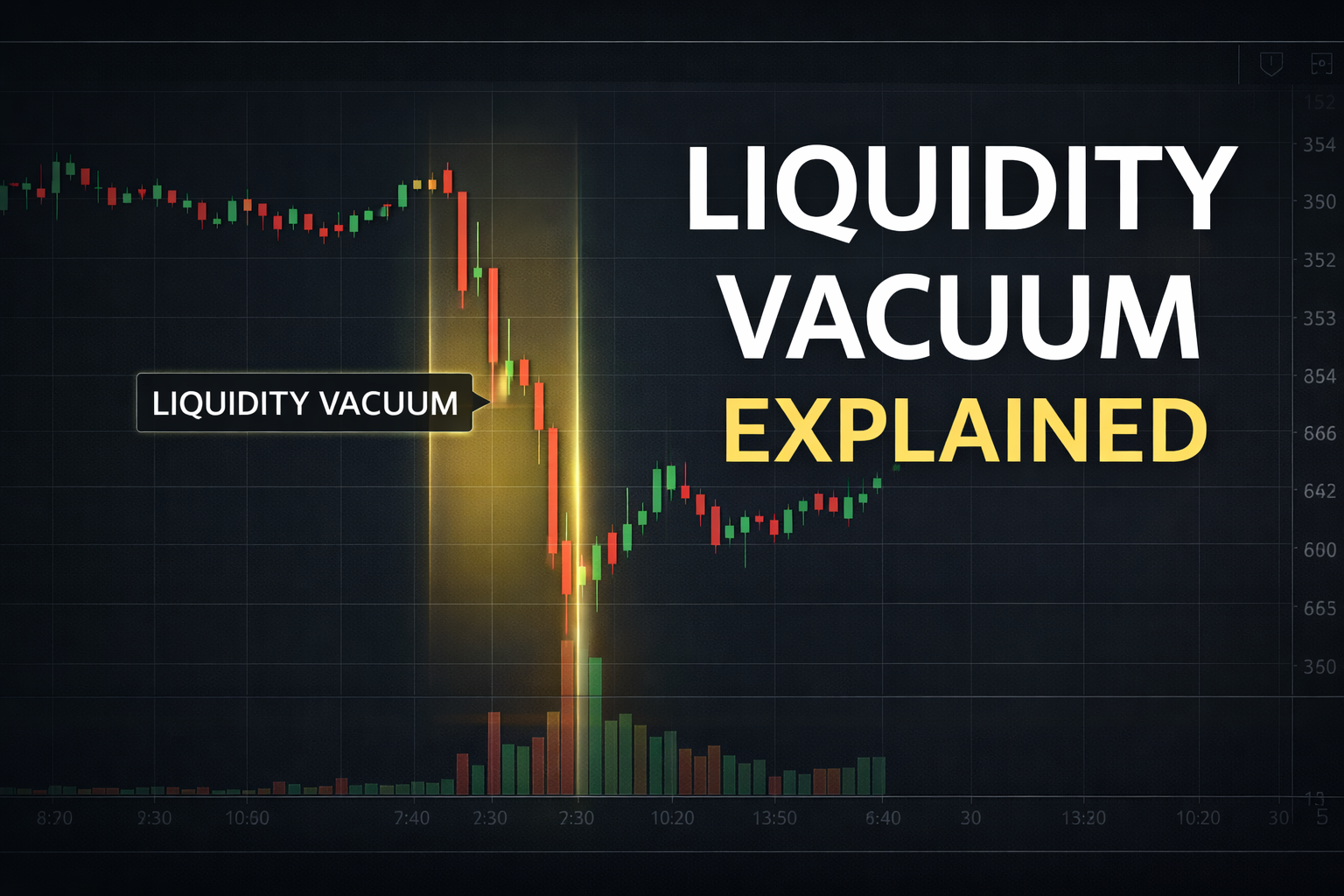
One of the key drivers of financial market movement is the liquidity vacuum, a condition in which there is a sudden absence of buy or sell orders at certain price levels, causing prices to move rapidly in search of the next available liquidity.
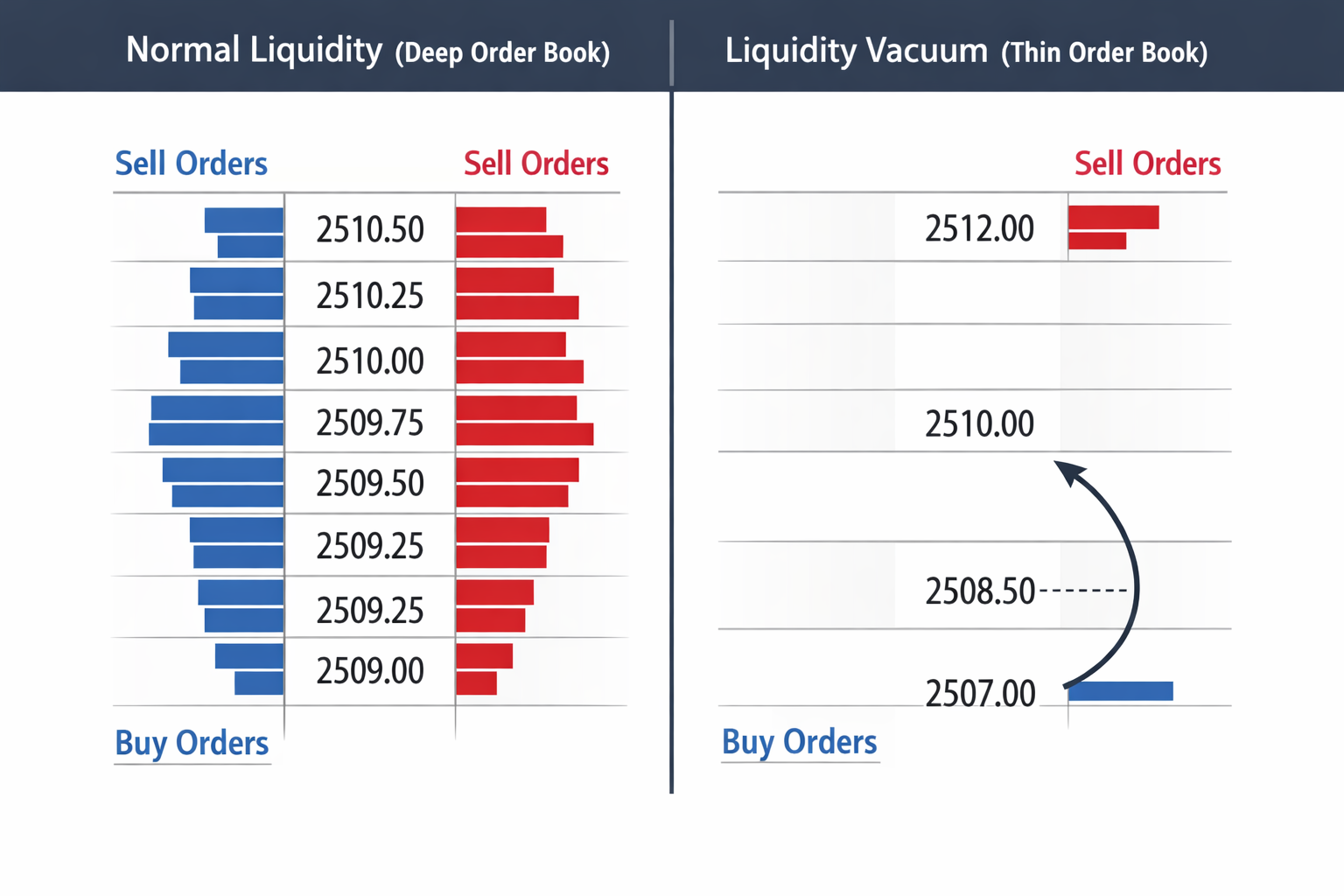
Liquidity vacuums occur when order books thin out, leading to sharp price movements.
They are common during high-impact news, market opens, and low-liquidity sessions.
Price moves faster because there are fewer opposing orders to absorb trades.
Traders can identify these moves through gaps, long candles, and low-volume zones.
Managing risk is critical, as volatility spikes unpredictably during such events.
A liquidity vacuum happens when there are insufficient resting orders (limit orders) in the market to absorb incoming trades. As a result, even a moderate surge in buying or selling pressure can push prices through multiple levels quickly.
In a well-balanced market, buyers and sellers are evenly matched, and price changes gradually. However, when liquidity disappears, the market must “jump” to the next level where orders exist. This creates fast, sharp price movements.
Liquidity vacuums typically emerge when market participants pull orders or hesitate to provide liquidity. This can occur under several conditions:
Economic data, central bank decisions, or geopolitical developments can cause market makers to withdraw orders.
Example (2026 context):
A surprise inflation spike can affect expectations around Federal Reserve policy, leading to rapid moves in indices like the S&P 500 ETF (SPY).
Liquidity is often uneven during:
The first 30 minutes after market open
The final hour of trading
During these periods, prices can move aggressively due to imbalanced order flow.
Certain sessions, such as late Asian trading hours or holiday periods, may have fewer participants, increasing the likelihood of vacuums.
When clusters of stop-loss orders are triggered, they can remove liquidity and accelerate price movement in one direction.
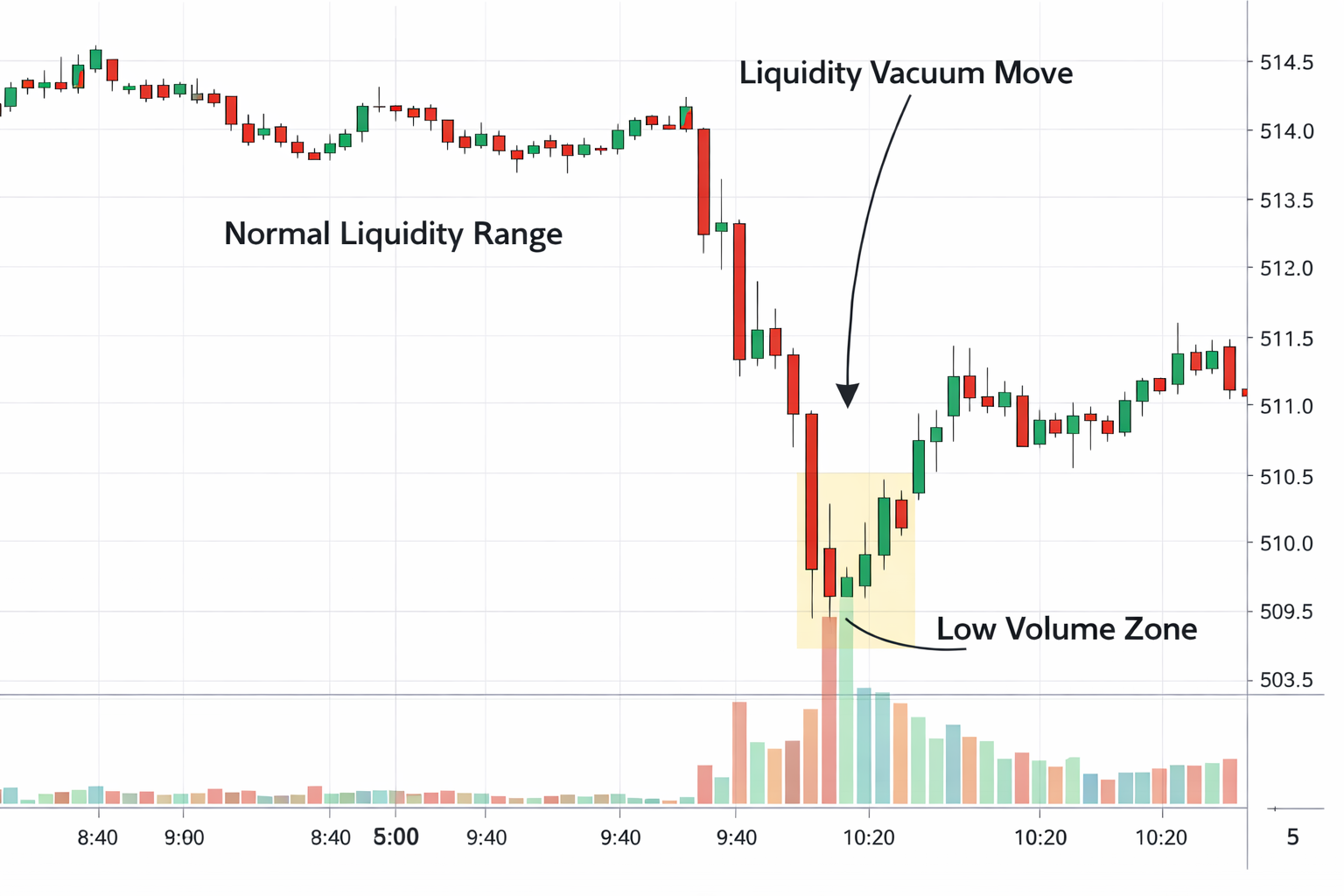
Liquidity vacuum moves have distinct visual and structural features:
Large Candles: Sudden, elongated price bars on charts
Price Gaps: Areas where little or no trading occurred
Thin Volume Profiles: Low traded volume in specific price zones
Slippage: Orders executed at worse-than-expected prices
During earnings season, major tech companies can experience liquidity vacuums immediately after earnings announcements. If results significantly exceed or fall short of expectations, prices may gap sharply.
Large ETFs like SPY or QQQ can trigger rapid moves during rebalancing periods, especially if liquidity providers step back.
In energy markets, sudden geopolitical tensions can create liquidity gaps, leading to sharp price spikes in oil futures.
Understanding liquidity vacuums helps traders avoid costly mistakes and identify opportunities.
Entering trades in a vacuum can result in poor execution.
Stop-loss orders may be triggered prematurely.
Increased emotional trading due to rapid price swings
Momentum traders can capitalise on fast directional moves.
Breakout strategies often benefit from low-liquidity conditions.
Mean reversion traders can target price retracements after the vacuum ends.
Traders can spot potential liquidity vacuums using a combination of tools and observation:
Key Indicators
Order Book (Level II): Sudden thinning of bids or asks
Volume Analysis: Low volume zones followed by spikes
Price Action: Strong impulsive moves without consolidation
News Calendar: Scheduled events that may disrupt liquidity
Practical Tip: If price moves rapidly through a level without hesitation, it is often a sign that liquidity was insufficient at that level.
Entering late during a fast-moving market increases the risk of a reversal or poor pricing.
After a liquidity vacuum, price often revisits the area to “fill” the gap or rebalance.
Tight stops are more likely to be triggered in volatile conditions.
Liquidity tends to cluster around:
Previous highs and lows
Psychological price levels
Institutional entry zones
Liquidity vacuums amplify both profits and losses. Therefore, disciplined risk management is essential:
Reduce position size during volatile periods
Avoid trading during major news if unprepared
Use limit orders instead of market orders when possible
Monitor spreads, as they often widen significantly
A liquidity vacuum occurs when there are not enough buy or sell orders at certain price levels. This often happens during news events, low participation periods, or when market makers temporarily withdraw, causing the price to move rapidly to find liquidity.
They are not fully predictable, but traders can anticipate conditions where they are more likely. Monitoring economic calendars, market sessions, and volatility indicators can help identify periods when liquidity may drop, and price movements may accelerate.
Beginners should approach these conditions cautiously. The fast pace and increased volatility make execution difficult and risky. It is generally safer to observe or trade after the market stabilises rather than during the most aggressive phase.
Not always. While some moves retrace after the vacuum fills, others continue trending if strong momentum persists. Traders should confirm with price action and volume rather than assuming a reversal will occur.
Use proper risk management techniques such as smaller position sizes, wider stop-loss levels, and limit orders. Avoid trading during major news events unless experienced, and always be aware of widening spreads and potential slippage.
Liquidity vacuum moves are a critical concept for understanding modern financial markets, especially in fast-moving environments. They explain why prices can surge or collapse suddenly without clear intermediate levels. By recognising the conditions that create these vacuums, traders can better manage risk, improve execution, and identify high-probability opportunities. Mastery of this concept provides a significant edge in navigating volatile market conditions.
Disclaimer: This material is for general information purposes only and is not intended as (and should not be considered to be) financial, investment or other advice on which reliance should be placed. No opinion given in the material constitutes a recommendation by EBC or the author that any particular investment, security, transaction or investment strategy is suitable for any specific person.