Published on: 2026-04-01
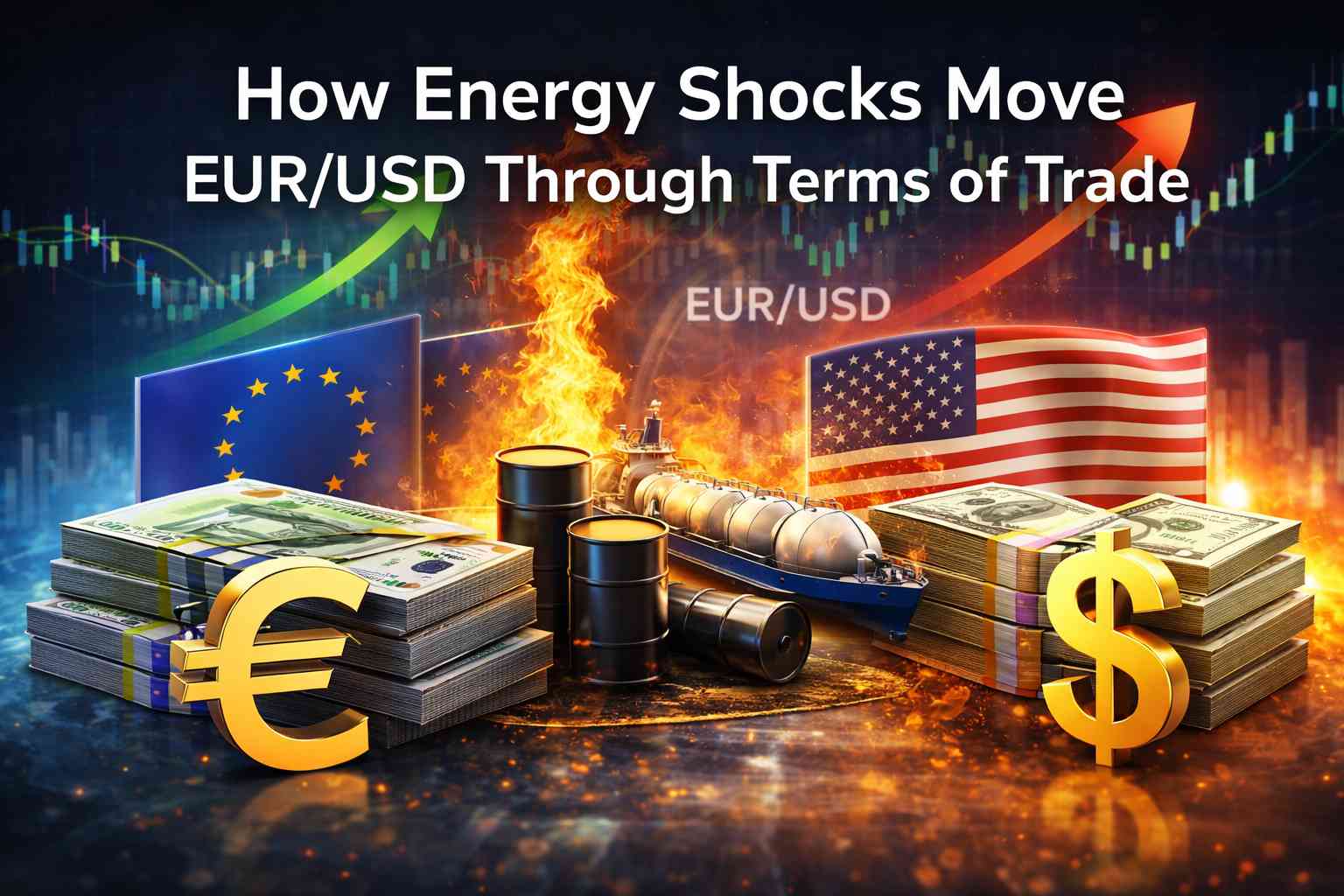
When Europe pays more for imported oil and gas, the region’s purchasing power falls, corporate costs rise, and the euro often loses support against the US dollar.
This matters now because the euro area still runs a current account surplus, at €37.9 billion in January 2026, yet Europe remains structurally exposed to imported energy costs.
In 2024, the United States supplied 16.1% of EU petroleum imports and 45.3% of EU LNG imports, yet ECB analysis still describes the EU as importing nearly all the oil and gas it consumes.
Terms of trade are the ratio of export prices to import prices. If import prices rise faster than export prices, terms of trade deteriorate. For the euro area, that usually means the region must give up more income to pay for energy bought from abroad.
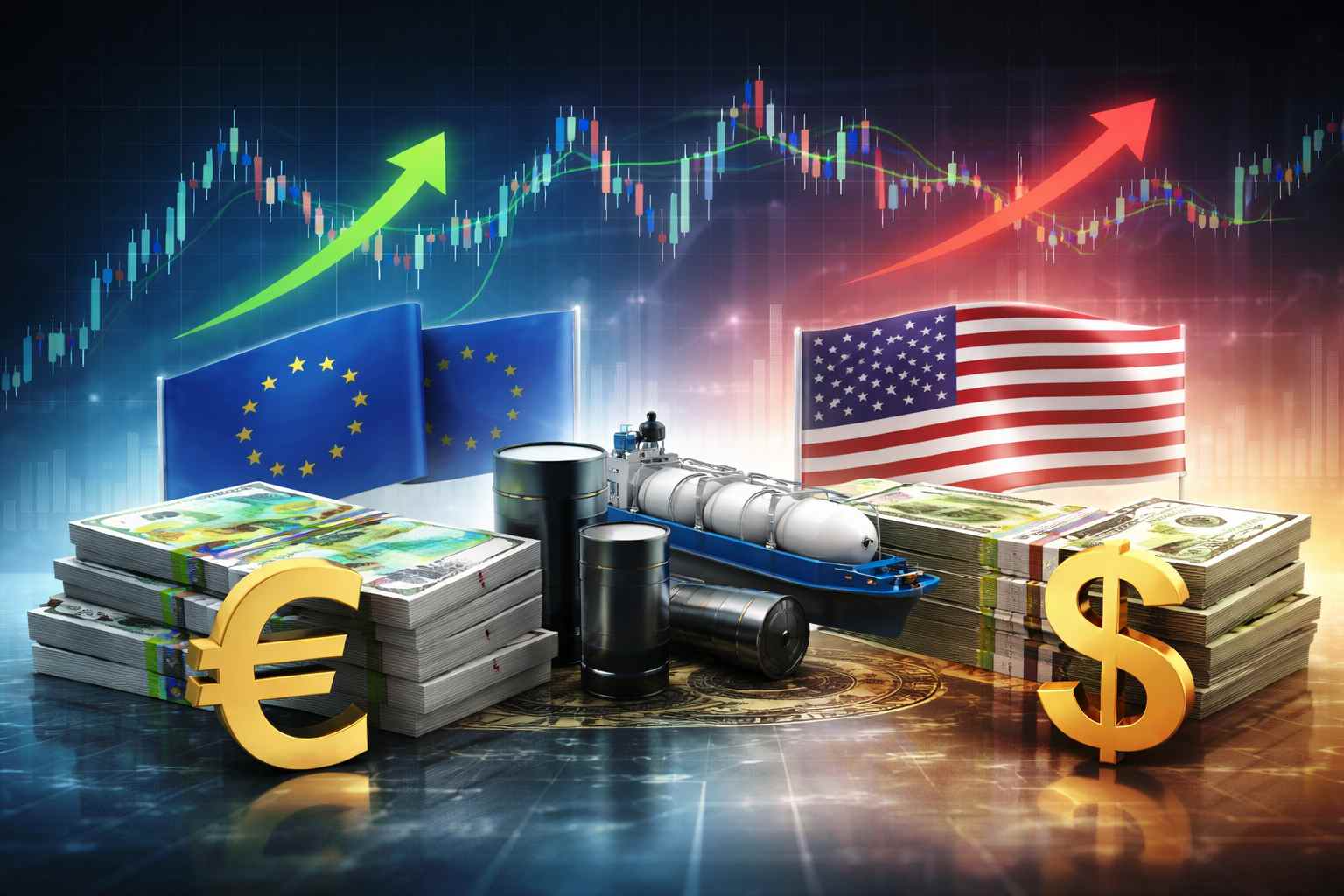
That is why terms of trade matter for energy shock and euro analysis. A weaker terms-of-trade position reduces real income, squeezes profit margins, and can weaken external demand for the currency.
ECB research found that the recent surge in euro area energy prices caused a cumulative 2.4 percentage point GDP loss between the third quarter of 2021 and the third quarter of 2022, the largest five-quarter loss since the euro was launched.
For EUR/USD, this is more than a trade statistic. ECB analysis explicitly models an adverse euro-area terms-of-trade shock as one that tends to depreciate the euro against the dollar.
In plain language, when Europe’s imported energy bill rises sharply, the exchange rate often becomes part of the adjustment.
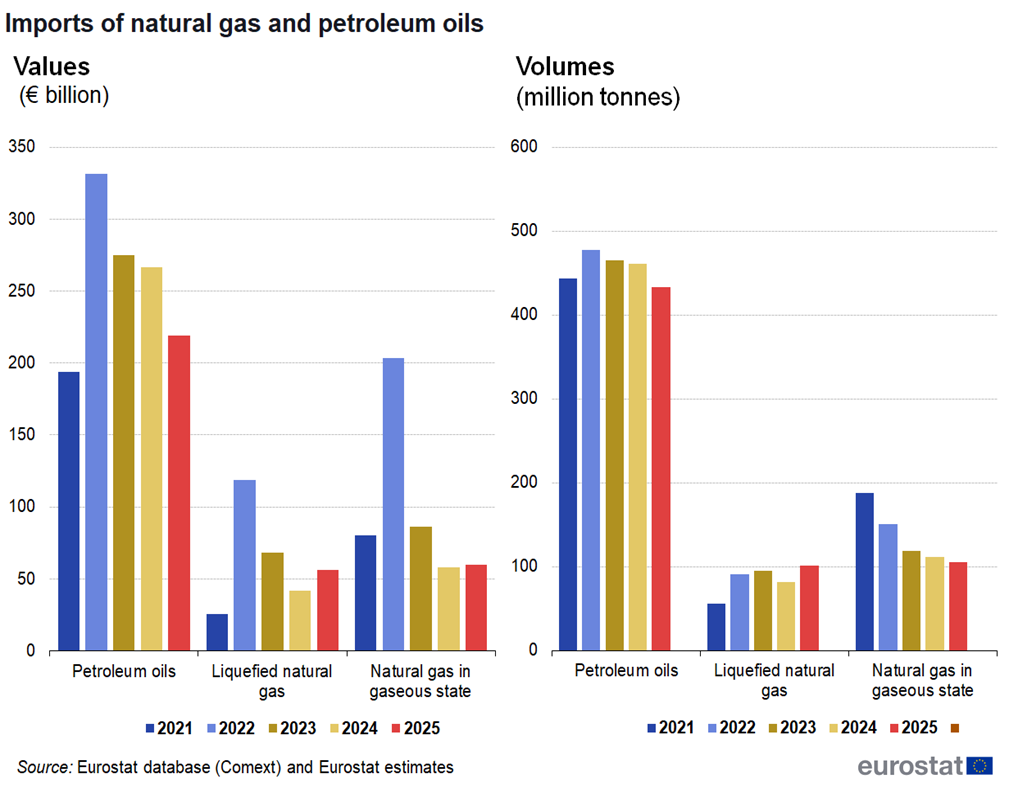
Europe is unusually sensitive to imported energy prices because it does not control the global price of the oil and gas it needs.
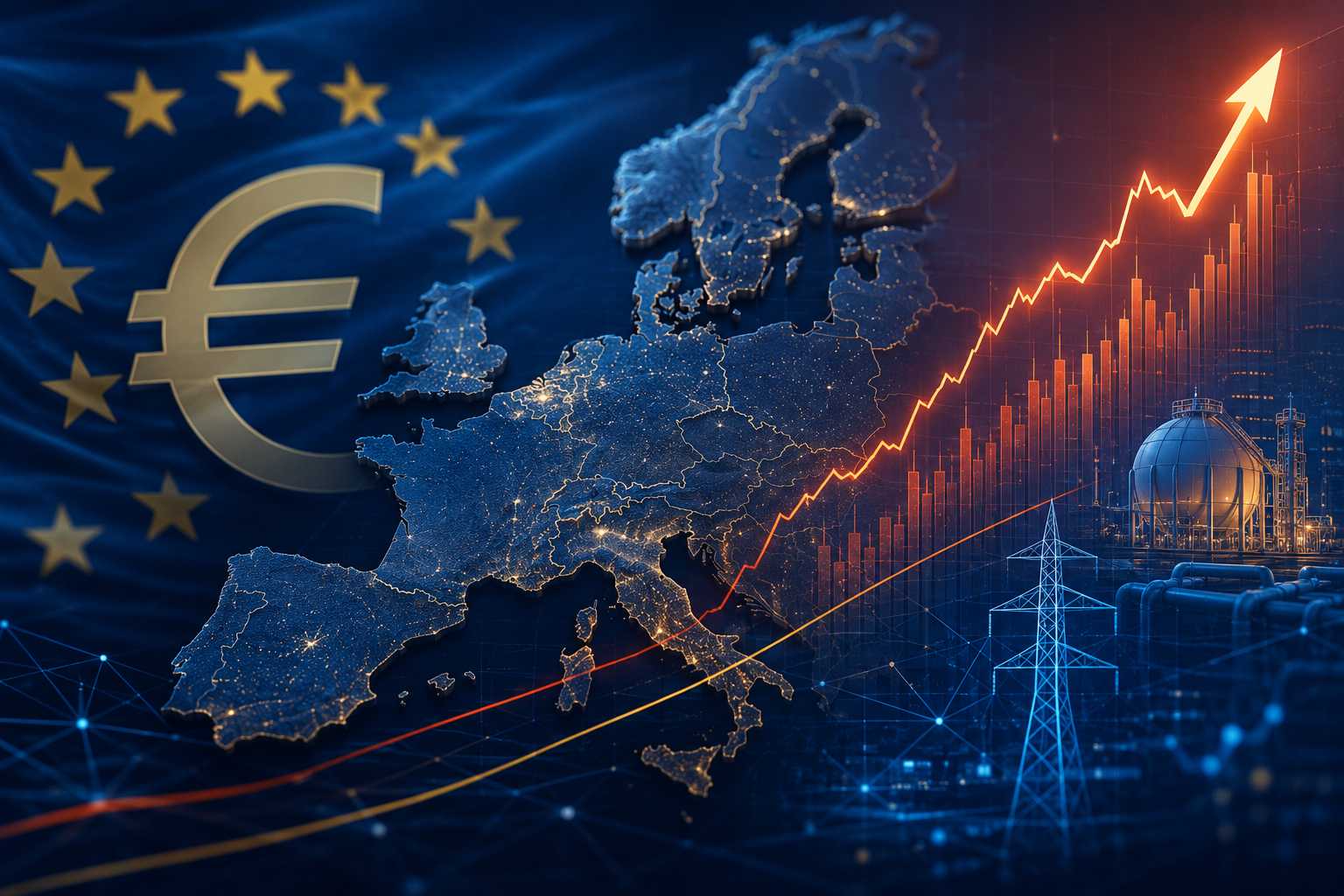
The ECB states that the EU imports nearly all the oil and gas it consumes, leaving the region highly exposed to geopolitical events, global production decisions, and shipping disruptions outside Europe.
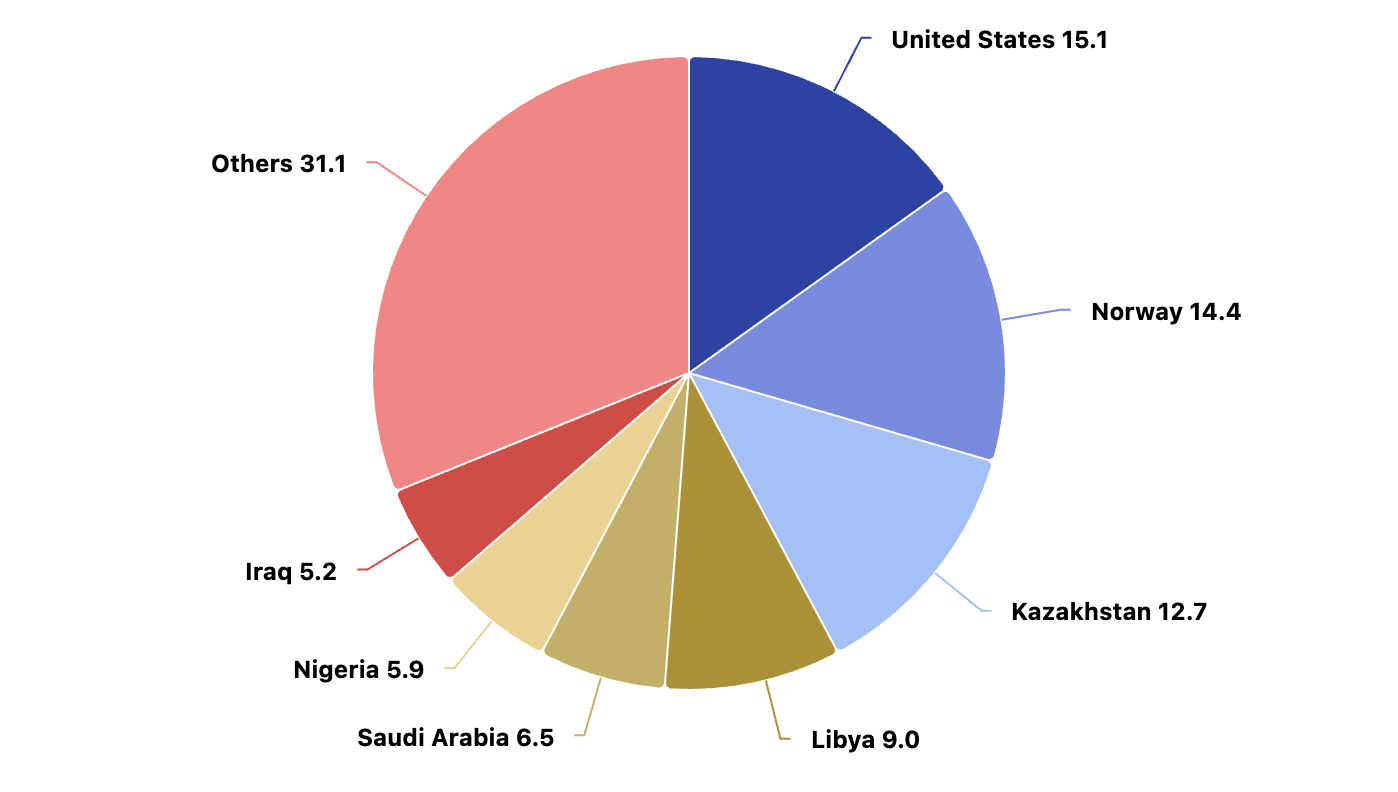
That exposure is visible in current trade patterns. In 2024, the United States was the largest supplier of EU petroleum oils, accounting for 16.1%, and was the largest supplier of imported LNG, accounting for 45.3%. Norway was also a major supplier of pipeline gas and oil.
This means any sharp move in global energy prices feeds quickly into Europe’s import bill.
Gas prices matter especially because they have a broader effect on European industry and electricity costs. ECB research notes that gas-fired power plants generated 19% of EU electricity in 2022 but set the power price 55% of the time.
That made gas far more important to industrial pricing than its share of output alone would suggest.
This is why gas prices and EUR/USD often move together more visibly than many traders expect. During the energy crisis, ECB research found that euro-area gas prices rose more than US gas prices, widening the price gap and worsening price competitiveness in the euro area.
An energy shock usually flows through four channels before fully showing up in EUR/USD.
| Channel | What happens in the euro area | Likely EUR/USD effect |
|---|---|---|
| Import bill | Oil and gas imports become more expensive | Negative for euro |
| Real income | Households and firms lose purchasing power | Negative for euro |
| Competitiveness | Producers face higher input costs | Negative for euro |
| External balance | Current account support can weaken | Negative for euro |
A higher oil or gas bill means more euros leave the region to pay for imported energy.
That weakens the income available for domestic spending and investment and can erode part of the support that a current account surplus normally provides to the currency.
Higher imported energy prices lift producer and consumer costs, but they also act like a tax on the economy.
Households pay more for heating, electricity, and transport, while firms face thinner margins. That mix is not euro-positive because it reduces real growth quality even if headline inflation rises.
ECB analysis shows that higher energy input costs can weaken euro-area price competitiveness in the medium term, especially in producer-price-based real effective exchange rate measures.
That matters because exporters do not compete only with the United States. They compete with firms from many regions at once.
When markets conclude that Europe faces a larger income and competitiveness shock than the United States, EUR/USD often falls even before trade data fully captures the damage. That is one reason energy markets can move the pair faster than many macro releases.
Oil matters to every major economy. Gas is more regional, and that makes it especially important for the euro.
ECB work shows that at the peak of the energy crisis, euro-area gas prices rose more than those in the United States or Asia. It also noted that gas futures for 2025 were about three times higher in the euro area than equivalent US contracts at the time.
That asymmetry makes natural gas a stronger relative shock for Europe than for America.
The IEA also projected that Europe’s LNG imports would reach an all-time high in 2025 as the region increased storage injections and replaced the lower Russian pipeline supply. That means Europe remains more exposed than the United States to global LNG competition and shipping risk.
The practical lesson is simple: when oil prices and the euro move together, the effect can be broad. When European gas prices surge relative to US gas prices, the signal is often sharper for EUR/USD because it changes Europe’s relative cost base.
Focus on a short dashboard:
TTF gas versus US gas benchmarks for relative energy stress in Europe.
Brent crude and LNG import trends for the size of Europe’s energy bill.
Euro area current account data for whether external support is strengthening or weakening.
Euro effective exchange rate and competitiveness measures for broader trade impact beyond a single currency pair.
Rate differentials matter, but energy shocks can reshape the growth, inflation, and external-balance backdrop on which those rate expectations sit.
No. It depends on the broader macro backdrop. But for an energy-importing region like the euro area, a sustained rise in oil prices usually worsens terms of trade and raises import costs, which is often a headwind for the euro.
TTF is the main euro-area gas reference price used in ECB analysis. It gives a clearer view of Europe-specific energy stress than global oil alone.
No. Terms of trade measure export prices versus import prices. The current account is broader and includes goods, services, income, and transfers.
Yes. Other forces can dominate for a time, including US growth weakness, changing rate expectations, or broader dollar softness. But the energy shock still weighs on the euro’s fundamentals.
It means how well euro-area producers can price and sell against foreign rivals. Higher energy costs can weaken that position by raising the cost base of tradeable goods.
The EUR/USD terms of trade are one of the most useful frameworks for understanding how energy shocks move the pair.
When Europe’s import prices, especially gas and oil, rise faster than its export prices, the euro area loses purchasing power, competitiveness softens, and the euro often weakens against the dollar.
That does not mean every move in EUR/USD is about energy. It does mean energy remains one of the clearest transmission channels from the real economy into the exchange rate.
For a region that still imports nearly all the oil and gas it consumes, and still relies heavily on global LNG and petroleum flows, that link remains structurally important in 2026.
Disclaimer: This material is for general information purposes only and is not intended as (and should not be considered to be) financial, investment or other advice on which reliance should be placed. No opinion given in the material constitutes a recommendation by EBC or the author that any particular investment, security, transaction or investment strategy is suitable for any specific person.