Published on: 2023-11-03
Updated on: 2026-05-08
The trade balance shows whether a country sells more to the world than it buys. It is one of the simplest economic indicators, but it often explains some of the biggest market moves in currencies, interest-rate expectations, inflation, and trade policy.
It matters more in 2026 because global trade is no longer moving in a straight line. AI-related hardware demand, tariffs, energy prices, and supply-chain rerouting are reshaping export and import flows. World merchandise trade volume grew 4.6% in 2025, but is projected to slow to 1.9% in 2026, while services trade is expected to ease from 5.3% growth to 4.8%.
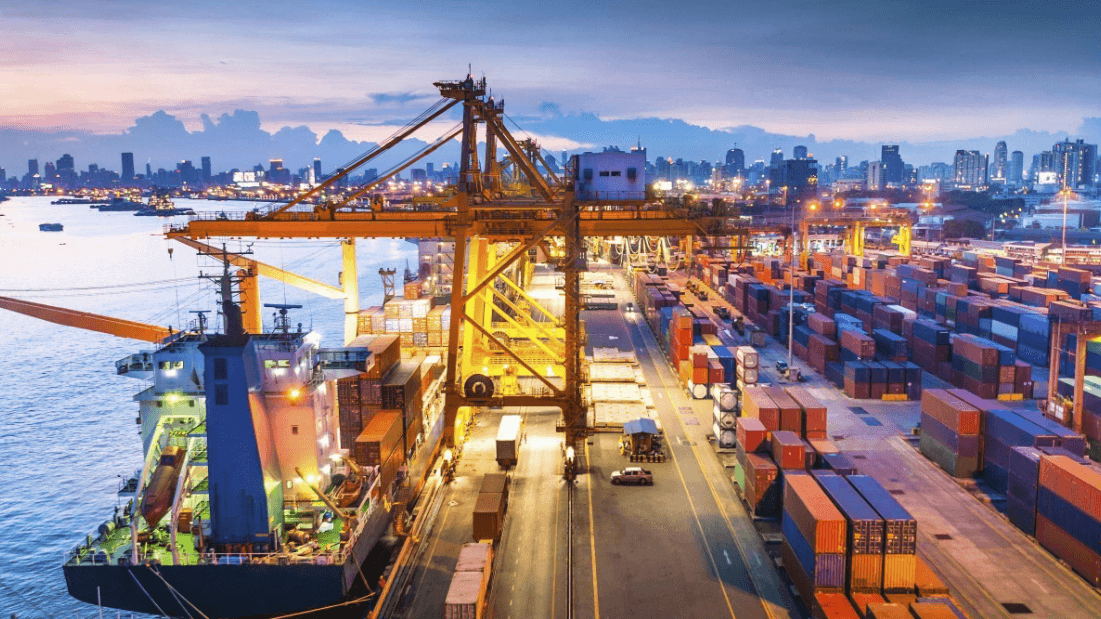
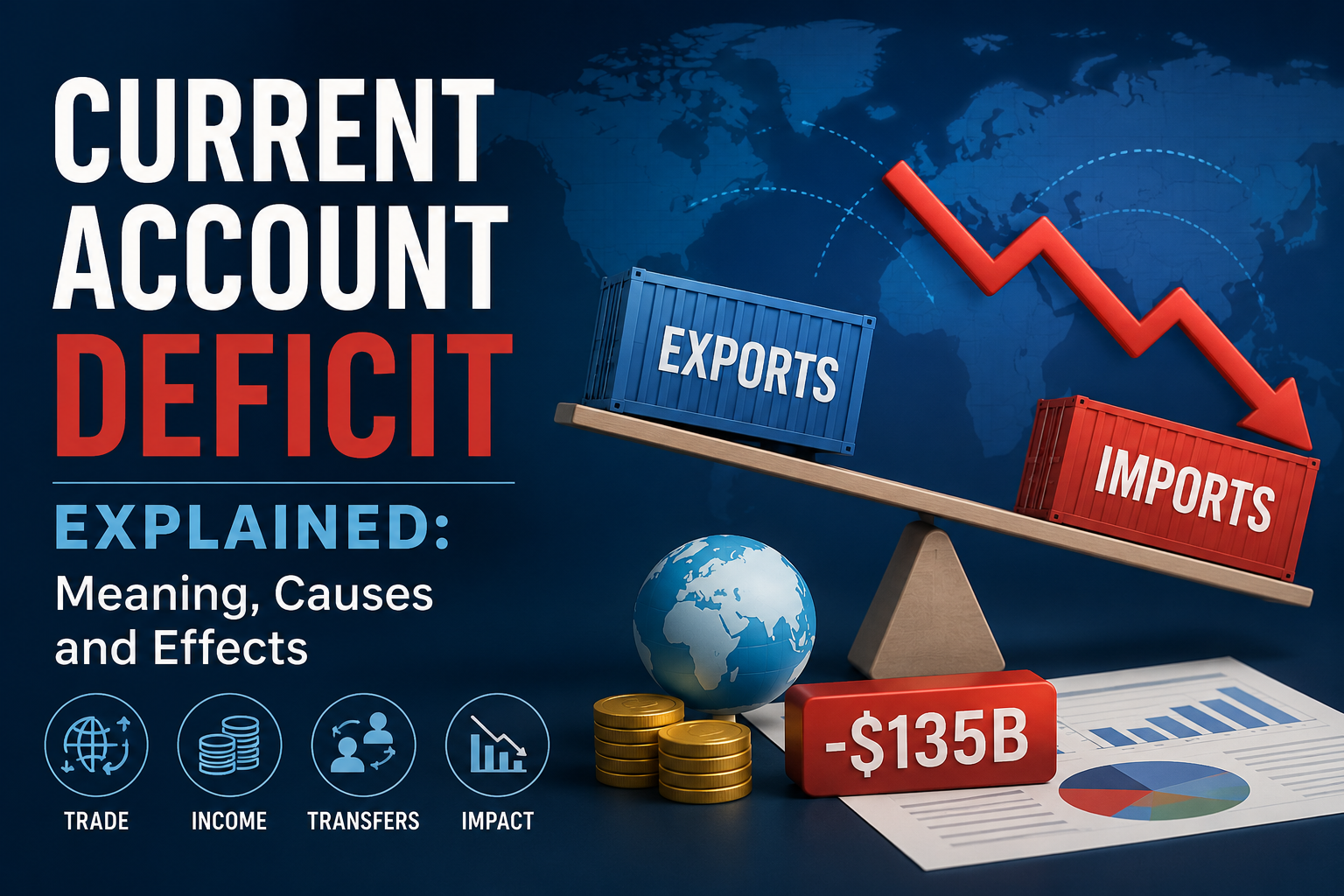
Trade balance equals exports minus imports. A positive number is a trade surplus, while a negative number is a trade deficit.
A trade surplus can support industrial output, employment, and foreign exchange reserves, but a large surplus can also create dependence on foreign demand.
A trade deficit can signal weak export competitiveness, but it can also reflect strong domestic demand or investment in imported capital goods.
Trade balance affects currencies, but capital flows, interest rates, and investor confidence often decide the final exchange-rate reaction.
In 2026, trade balance data is especially important because tariffs, AI hardware demand, and energy costs are changing global trade patterns.
Trade balance, often abbreviated as TB, is the difference between the value of a country’s exports and imports during a specific period.
The formula is simple:
Trade Balance = Exports minus Imports
Exports are goods and services sold to foreign buyers. Imports are goods and services purchased from other countries.
If exports exceed imports, the country has a trade surplus. If imports exceed exports, the country has a trade deficit. If exports and imports are equal, trade is balanced.
Trade balance can include goods, services, or both. Goods include oil, cars, semiconductors, machinery, wheat, and consumer products. Services include tourism, education, banking, insurance, software, shipping, consulting, and intellectual property.
This distinction matters. A country may run a large goods deficit but still earn a services surplus. The United States is a clear example. In March 2026, its goods deficit reached $88.7 billion, while its services surplus reached $28.4 billion. The total goods and services deficit was $60.3 billion.
A trade surplus happens when a country exports more than it imports. It means foreign buyers are spending more on that country’s goods and services than the country is spending abroad.
A surplus can support factories, jobs, corporate earnings, and foreign exchange reserves. China’s 2025 trade figures show how powerful this can be. Exports rose 6.1% to 26.99 trillion yuan, while imports reached 18.48 trillion yuan. That created a large goods surplus and reflected strong demand for higher-value exports, including technology and green products.
But a surplus is not automatically healthy. If it depends too heavily on weak wages, subdued domestic consumption, or foreign demand, the economy may become vulnerable when global buyers pull back. Large surpluses can also create political friction, especially when trading partners believe exports are supported by subsidies, currency policy, or market barriers.
A trade deficit happens when a country imports more than it exports. It means more money is flowing out through trade payments than is coming in through export revenue.
A deficit can be a warning sign if it reflects poor competitiveness, weak industrial capacity, or rising external debt. But it can also reflect strength. A fast-growing economy may import more machinery, energy, technology, and consumer goods as companies invest and households gain purchasing power.
The United States is a useful example. In March 2026, exports totalled $320.9 billion, and imports totalled $381.2 billion, resulting in a $60.3 billion deficit. Imports increased faster than exports, partly because goods imports such as vehicles, consumer goods, and capital goods rose during the month.
The euro area also shows why sector detail matters. In September 2025, its goods surplus reached €19.4 billion, helped by a stronger chemicals surplus. For January to September 2025, the euro area recorded a €128.7 billion goods surplus, even as imports rose slightly faster than exports.
Calculating trade balance takes three steps:
Add the total value of exports.
Add the total value of imports.
Subtract imports from exports.
For example:
Exports: $800 billion
Imports: $950 billion
Trade Balance: $800 billion minus $950 billion = -$150 billion
The country has a $150 billion trade deficit.
Another example:
Exports: $1.2 trillion
Imports: $900 billion
Trade Balance: $1.2 trillion minus $900 billion = +$300 billion
The country has a $300 billion trade surplus.
The calculation is simple. The interpretation is not. A monthly deficit may widen because energy prices rose, companies imported inventory before tariffs changed, or consumers bought more foreign goods. A surplus may improve because exports grew, but it may also improve because domestic demand weakened and imports fell.
That is why traders and economists focus on the cause, not only the number.
Trade balance and net exports use the same basic formula:
Exports minus Imports
The difference is how the term is used.
Trade balance is usually discussed in international trade, balance of payments, and currency analysis. It focuses on whether a country is running a surplus or a deficit with the rest of the world.
Net exports are used in GDP analysis. They are part of the GDP formula:
GDP = Consumption + Investment + Government Spending + Net Exports
When net exports rise, they add to GDP growth. When net exports fall, they subtract from GDP growth.
So the calculation is similar, but the purpose is different. The trade balance explains a country’s external trade position. Net exports explain how trade affects domestic economic output.
The trade balance is part of the wider balance of payments. The balance of payments records economic transactions between residents and nonresidents over a period of time. It includes the goods and services account, primary income, secondary income, capital account, and financial account.
This matters because a trade deficit must be financed. A country that imports more than it exports needs capital inflows, foreign investment, borrowing, or the use of reserves to cover the gap.
A trade surplus works in the opposite direction. A surplus country often accumulates foreign assets, builds reserves, or lends capital abroad.
This is why the trade balance cannot be judged alone. A deficit backed by stable long-term investment may be sustainable. A deficit financed by short-term speculative inflows may become dangerous if investor confidence turns.
Trade balance can influence exchange rates through supply and demand for currencies.
When a country runs a trade surplus, foreign buyers often need its currency to pay exporters. That can support the currency. When a country runs a trade deficit, domestic importers need foreign currency to pay overseas suppliers. That can create depreciation pressure.
But this is only the first layer. Exchange rates also respond to interest rates, inflation, capital flows, investor confidence, central bank policy, and safe-haven demand.
That is why a deficit country can still have a strong currency. If foreign investors are buying its bonds, equities, property, or direct investments, capital inflows may more than offset trade-related currency pressure.
The better rule is this: trade balance creates currency pressure, but capital flows decide whether that pressure becomes a trend.
Trade balance data helps traders understand whether economic demand is strengthening or weakening.
A widening deficit may suggest strong domestic consumption, rising imports, or weaker export competitiveness. A narrowing deficit may signal improving exports, softer imports, or weaker domestic demand.
A growing surplus may support the currency and export sectors. But if the surplus becomes politically sensitive, it can raise tariff risk. The 2025–2026 trade environment makes this especially important because trade policy, AI hardware demand, and energy costs are changing import and export patterns more rapidly than usual.
For forex traders, trade balance is most useful when combined with interest-rate expectations, inflation data, commodity prices, and capital-flow indicators. For stock investors, it can reveal pressure on exporters, import-heavy retailers, industrial firms, automakers, and technology supply chains.
In short, the trade balance is not just an economic definition. It is a market signal.
The trade balance is the difference between a country's exports and imports. If exports are higher, the country has a trade surplus. If imports are higher, it has a trade deficit.
No. A surplus can support growth, jobs, and reserves, but it can also show weak domestic demand or excessive dependence on foreign buyers. Very large surpluses may also create political tension with trading partners.
No. A trade deficit can reflect strong consumer demand or business investment. It becomes a problem when it is financed by unstable borrowing or when it reflects long-term weakness in exports and domestic production.
A surplus can support a currency because foreign buyers need that currency to pay exporters. A deficit can weaken a currency because importers need foreign currency. In practice, capital flows and interest rates often dominate the currency reaction.
Traders watch trade balance because it can affect currencies, bond yields, inflation expectations, and growth forecasts. A surprise widening or narrowing of the trade gap can shift expectations for central bank policy and market direction.
The trade balance is easy to calculate but harder to interpret. It shows whether a country exports more than it imports, yet the real meaning depends on why the surplus or deficit exists.
A surplus can show export strength, but it can also reveal weak domestic demand. A deficit can signal external weakness, but it can also reflect strong consumption, investment, or capital goods imports.
Disclaimer: This material is for general information purposes only and is not intended as (and should not be considered to be) financial, investment or other advice on which reliance should be placed. No opinion given in the material constitutes a recommendation by EBC or the author that any particular investment, security, transaction or investment strategy is suitable for any specific person.