Published on: 2026-03-27
Businesses that absorbed tariff costs in 2025 are now passing them on to consumers, pushing up everyday prices.
The US Supreme Court struck down a major category of tariffs in early 2026, but new levies quickly followed, keeping trade policy in flux.
Stock markets have remained unsettled, with US equities trailing their global peers by the widest gap in decades.
The US and India struck an interim trade deal that significantly reduced reciprocal tariffs, offering early relief to businesses in both countries.
Tariffs and inflation have returned to the forefront of the 2026 market debate, with implications that extend beyond political discourse.
Tariffs are increasing costs in specific segments of the economy, while their effects on stock markets are unevenly distributed across sectors. The India-US tariff agreement has also introduced a notable shift in global supply chain dynamics.
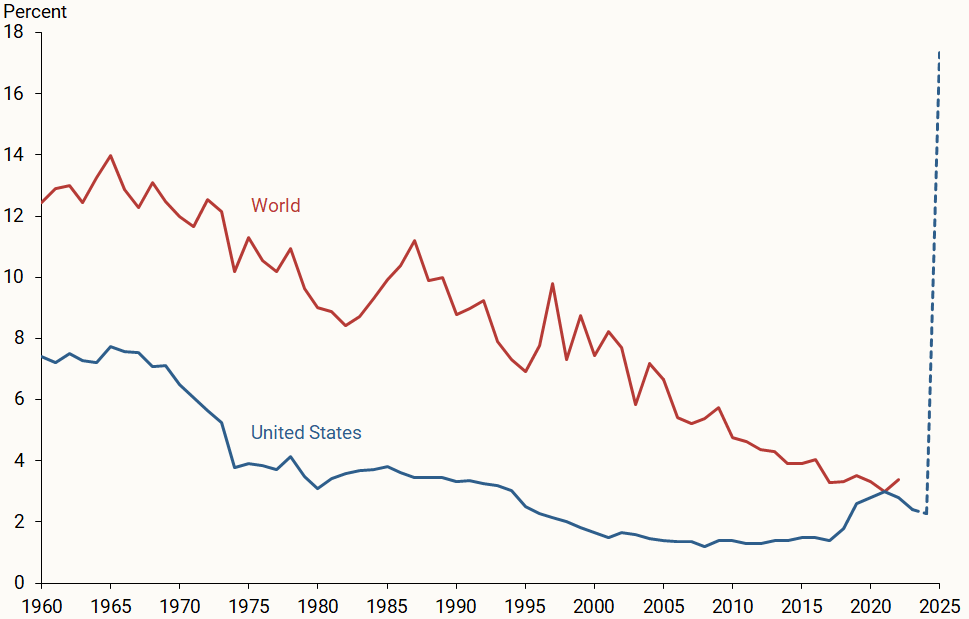
As of March 2026, Penn Wharton estimates the average effective US tariff rate at 10.3% through January 2026, up from roughly 2.2% at the start of 2025, a level not seen in decades.
The effective US tariff rate climbed sharply through 2025 and into 2026, before the Supreme Court’s February 20, 2026, ruling struck down all tariffs imposed under the International Emergency Economic Powers Act (IEEPA).
Following the ruling, the administration acted swiftly to maintain trade pressure. President Trump imposed a new 10% global baseline tariff under Section 122 of the Trade Act of 1974 on the same day, raising it to the statutory maximum of 15% the following day.
The result is a trade environment that remains significantly more expensive than any period in recent memory, even accounting for the court’s intervention.
| Metric | Latest Read | Why It Matters |
|---|---|---|
| US effective tariff rate through January 2026 | 10.3% (Penn Wharton) | Shows how sharply trade costs have risen versus early 2025. |
| Section 122 global baseline tariff (post-ruling) | 15% | Confirms tariff pressure remained elevated after IEEPA was struck down. |
| Average household tariff cost in 2026 | $570 to $600 (Yale Budget Lab / Tax Foundation, March 2026) | Signals the direct financial burden on consumers. |
| Estimated household loss range if Section 122 is extended | $770 to $940 (Yale Budget Lab) | Points to a materially worse scenario if the 150-day tariff is made permanent. |
| Imported core goods tariff pass-through | Rising sharply through mid-2026 | Confirms tariff costs are moving into consumer prices. |
The tariff impact on consumers is not uniform. Sectors to watch include:
Groceries: Thin margins leave supermarkets with little room to absorb costs.
Consumer durables: Goods such as appliances and electronics are expected to experience cumulative price increases from 2025 to 2027.
Pharmaceuticals and auto parts: Potential tariff hikes on these categories remain a live risk for the second half of 2026.
In 2026, businesses are experiencing the exhaustion of a two-year buffer against rising supply chain costs.
Many firms accumulated inventory during 2024 and early 2025 in anticipation of tariff increases. While this approach temporarily delayed price pass-through, it is no longer a viable strategy.
According to a research published in August 2025, US consumers had absorbed roughly 22% of total tariff costs through June 2025, with businesses carrying the remaining majority.
It was projected that by October 2025, the consumer share would rise sharply to 67% of the total burden as pre-tariff inventory buffers ran out, a shift that has continued into 2026.
The sectors most exposed to supply chain costs from tariffs include:
| Sector | Primary Exposure |
|---|---|
| Consumer electronics | China and Southeast Asia imports |
| Auto manufacturers | Steel, aluminum, and parts |
| Apparel and footwear | South and Southeast Asia sourcing |
| Grocery and food manufacturing | Agricultural inputs and packaging |
Equity markets have not treated tariffs as a single, market-wide crash signal in 2026. Since election day on November 5, 2024, the S&P 500 total return was 19.3% as of March 10, 2026, despite repeated swings linked to policy shifts and geopolitical stress.
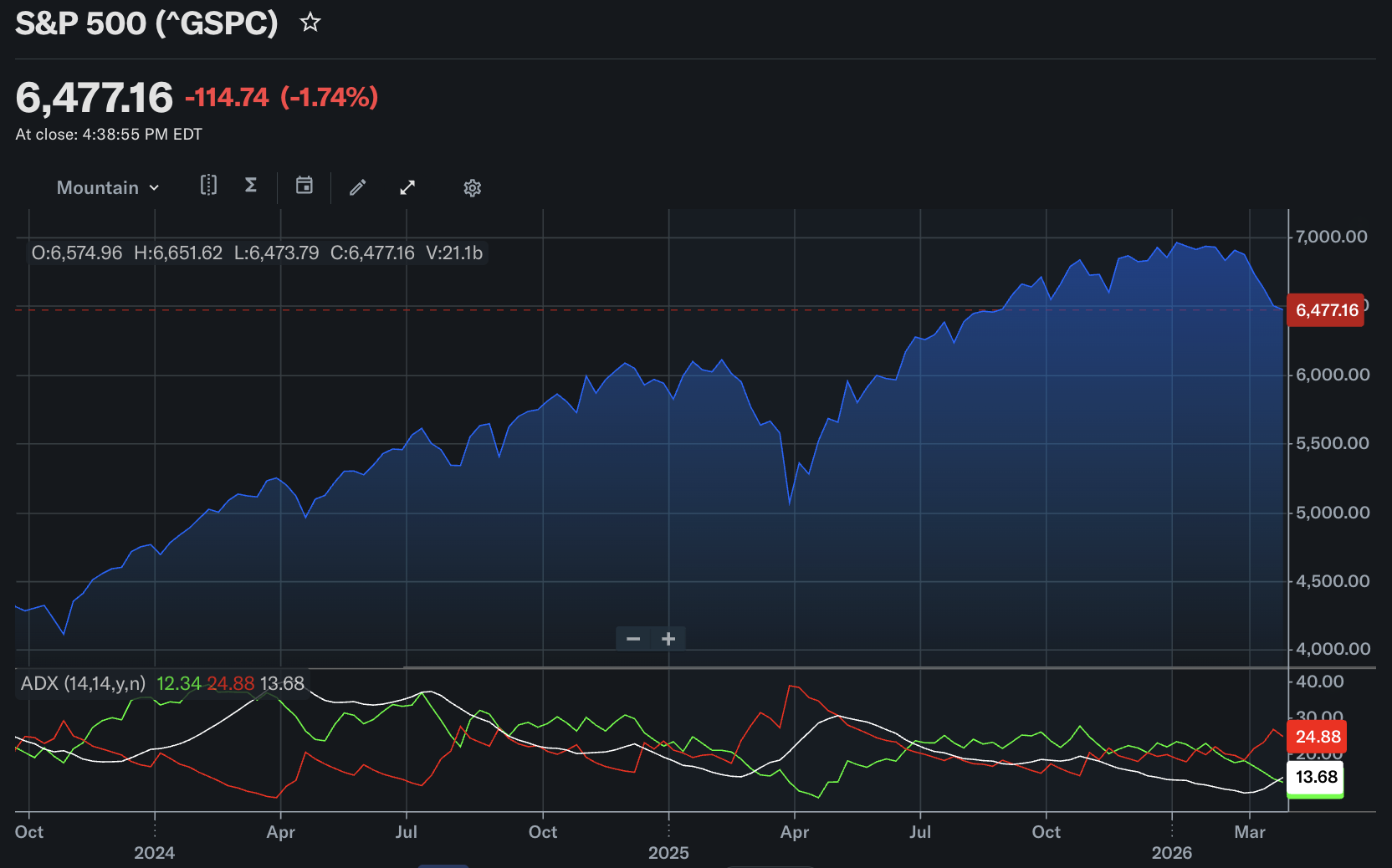
What has changed is how tariff risk is priced. it was noted that the market reaction to the Supreme Court ruling was muted, but also stressed that tariffs on China under Section 301 and sector-specific tariffs on steel, aluminium, autos, pharmaceuticals, and copper remain in place.
That matters because the tariff impact on stocks is now filtering through company fundamentals rather than only through headline shock.
Firms that rely on imported inputs or have weak pricing power face margin compression, while companies that pass costs on too aggressively risk slower sales.
The two main equity channels are clear:
Margin compression: import costs rise, but revenue does not automatically follow.
Demand risk: higher prices can weaken volumes if households pull back.
Corporate fundamentals still offer some support. With 99% of S&P 500 companies reporting fourth-quarter 2025 results, revenues rose 9.3%, and earnings climbed 13.7%, well ahead of the initial 7.9% growth estimate, providing a cushion against tariff headwinds for now.
Amid broader market volatility, one bilateral development provided tangible relief. On February 6, 2026, the United States and India announced a framework for an interim trade agreement, with the US reducing the reciprocal tariff on Indian goods from 25% to 18%, while separately removing an additional 25% penalty tariff linked to India’s purchases of Russian oil, effective February 7, 2026.
The combined reduction brought the total effective US tariff on most Indian imports down from roughly 50% to 18%, a significant change that followed months of escalating trade tensions, which had made India one of the most expensive sourcing markets for US importers and undermined its appeal as an alternative to China.
Under the framework, India agreed to eliminate or reduce tariffs on US industrial goods and a range of agricultural products, while committing to purchase $500 billion worth of US goods, including energy, technology products, aircraft, and coking coal, over five years.
However, the deal is still evolving. As of late March 2026, the interim framework remains short on legally binding implementation details, and legal questions persist over whether the Section 122 authority underpinning the remaining US tariffs is itself on solid ground.
Not always immediately. Tariffs often raise the prices of goods over time, but the size of the effect depends on how much businesses absorb, the state of consumer demand, and whether companies can shift to alternative suppliers.
Sectors with imported inputs and thin pricing power are most exposed. Autos, consumer goods, industrial components, metals users, and some healthcare supply chains remain particularly sensitive.
No. It is a framework for an interim agreement and broader negotiations, not a full removal of tariff barriers across all sectors. Many details and implementation timelines remain unresolved.
Most major forecasters project slower growth rather than an outright recession in their base cases. However, a significant escalation in tariffs or a sharp pullback in consumer spending could tip the balance, and policy uncertainty itself suppresses business investment.
The relationship between tariffs and inflation in 2026 is now evident in price data, corporate earnings reports, and household budgets.
Although the stock market has not experienced a collapse due to tariff uncertainty, it has struggled to gain ground and continues to lag global peers by a historically significant margin.
Elevated valuations leave limited tolerance for negative surprises should corporate earnings reflect increased margin pressure more visibly in the quarters ahead.
Regarding trade agreements, the India-US tariff deal is the clearest example of how negotiation, rather than escalation, tends to yield better commercial outcomes. The reduction in the effective tariff rate from roughly 50% to 18% offers real relief to businesses in both countries, even as the final binding terms remain subject to further negotiations.
Disclaimer: This material is for general information purposes only and is not intended as (and should not be considered to be) financial, investment or other advice on which reliance should be placed. No opinion given in the material constitutes a recommendation by EBC or the author that any particular investment, security, transaction or investment strategy is suitable for any specific person.