Published on: 2026-03-27
The term 'Bond Vigilante' is a Wall Street expression that, despite its dramatic connotation, refers to market forces that can simultaneously impact governments, equities, mortgages, and household borrowing costs.

When investors sell government bonds due to concerns about loose fiscal policy, persistent inflation, or diminished policy credibility, yields increase and attract broad market attention.
A bond vigilante is an investor who sells government bonds or demands higher yields to own them when public borrowing, inflation risk, or policy choices become unsustainable.
The phrase is commonly associated with economist Ed Yardeni, who popularised it in the early 1980s.
The underlying mechanism is straightforward: if bond buyers anticipate prolonged inflation or continued aggressive government borrowing, they demand higher returns.
As a result, bond prices decline, yields rise, and government funding costs increase accordingly.
Bond vigilantes do not operate as a coordinated group. In practice, they are typically large institutions, fund managers, insurers, hedge funds, and other major fixed-income investors who respond simultaneously to perceived risks.

The ECB’s research on sovereign stress found that investment funds account for most net sales of government bonds during stress episodes.
This selling activity is significant because sovereign yields serve as the foundation of the financial pricing system.
When benchmark government yields rise, borrowing typically becomes more expensive for companies, households, and, occasionally, banks.
Equity valuations may also decline as the discount rate applied to future cash flows increases.
| Trigger | Bond market reaction | Why it matters |
|---|---|---|
| Bigger deficits or heavy debt issuance | Investors demand higher yields | Governments pay more to borrow |
| Sticky inflation or energy shocks | Longer-term yields rise | Rate-cut hopes fade |
| Weak policy credibility | Sovereign bonds sell off faster | Currency and equity volatility can rise |
| Poor auction demand | Dealers absorb more supply | Markets read it as a warning sign |
This transmission mechanism explains how bond-market stress can extend beyond the bond market itself. The International Monetary Fund (IMF) notes that Treasury market dysfunction can widen bid-ask spreads, reduce liquidity, and tighten funding conditions.
The classic triggers are familiar:
Large fiscal deficits
Heavy sovereign debt issuance
Sticky inflation
Policy mistakes
Weak investor demand at bond auctions
A sudden loss of confidence in fiscal discipline
Simply put, bond vigilantes emerge when investors no longer view sovereign debt as appropriately priced and instead perceive it as insufficiently compensating for risk.
Earlier this year, renewed concerns about substantial government borrowing in major economies revived discussions about bond vigilantes.
The current US environment aligns with this pattern. Official Federal Reserve data indicate that long-dated Treasury yields remain elevated, and recent news coverage highlighted three weak Treasury auctions within a single week.
Simultaneously, investors are contending with inflation risk associated with higher oil prices and an anticipated increase in the supply of government and investment-grade debt.
However, not every increase in yields constitutes a vigilante response. Yields may also rise for constructive reasons, such as stronger economic growth.
The term becomes particularly relevant when the market is evidently reacting to inflation risk, fiscal deterioration, or diminished confidence in the sustainability of future borrowing.
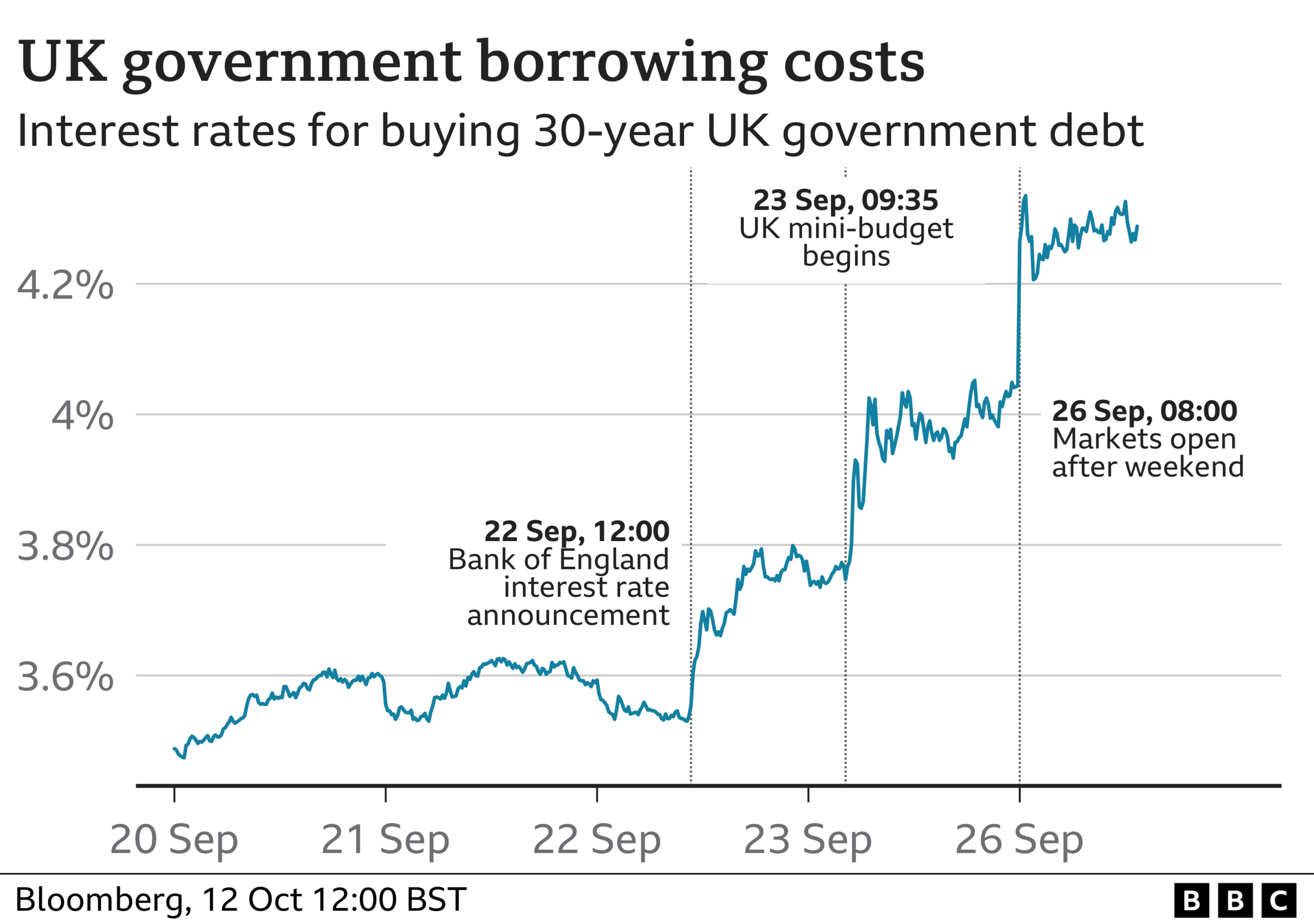
The most famous modern example is the UK mini-budget shock in 2022. Bond yields surged after unfunded tax-cut plans rattled investors, and the Bank of England had to intervene as market stress hit pension-linked strategies.
This episode serves as a textbook example of the speed with which sovereign markets can compel policymakers to reconsider their strategies.
The euro area has provided another version of the story. ECB research published in 2025 found that during sovereign stress episodes, investment funds were the main net sellers of debt in the countries under pressure, acting in a distinctly procyclical way.
The United States differs in this context because its Treasury market is more liquid and the US dollar continues to function as the world’s primary reserve currency.
Nevertheless, even in the United States, rising yields can rapidly tighten financial conditions. Consequently, weak auctions, elevated long-term yields, and increased sensitivity to fiscal supply receive significant attention.
Not necessarily. Markets may overshoot, misinterpret policy trajectories, or respond to temporary shocks. Additionally, central banks can influence market reactions.
During extreme stress, policymakers can step in to restore market functioning, as the Fed did in March 2020 and as the Bank of England did during the UK gilt turmoil.
Therefore, the term should be applied with caution. Bond vigilantes are best interpreted as market signals rather than moral arbiters.
They indicate when investors believe sovereign risk is underpriced, but, in isolation, do not prescribe appropriate policy responses.
For investors, the most important signals are not the slogan but the plumbing:
Long-dated sovereign yields are moving sharply higher
Weak bid-to-cover ratios or soft auction demand
Rising term premium and bond volatility
Inflation expectations are turning up
Fiscal announcements that require heavier borrowing
If several of these indicators emerge simultaneously, the bond market is typically signalling that policymakers must address a message.
Bond vigilantes have reentered discussions as sovereign yields have increased, debt supply remains substantial, and investors are responding more acutely to inflation and fiscal risk.
Yes. When government bond yields increase, mortgage rates and other long-term borrowing costs typically rise as well. Sovereign yields serve as a foundational rate for much of the financial system.
Central banks can occasionally mitigate market dysfunction, but they cannot permanently eliminate inflation risk or concerns about fiscal credibility, as these factors do not resolve the underlying factors prompting investors to demand higher yields.
A bond vigilante is not a mythical market figure; rather, the term refers to the bond market enforcing discipline when investors perceive that inflation risk, debt issuance, or fiscal policy is being underpriced.
This is significant because sovereign yields serve as the benchmark for borrowing throughout the economy. When these yields rise sharply, governments are affected first, followed by households, companies, and equity markets.
In the current market environment, characterized by elevated Treasury yields and renewed attention to weak auction demand, the term has regained relevance. Bond investors retain the ability to reprice risk more rapidly than policymakers can respond.
Disclaimer: This material is for general information purposes only and is not intended as (and should not be considered to be) financial, investment or other advice on which reliance should be placed. No opinion given in the material constitutes a recommendation by EBC or the author that any particular investment, security, transaction or investment strategy is suitable for any specific person.