Published on: 2026-05-11
Updated on: 2026-05-11
AST SpaceMobile reports Q1 2026 results today, May 11, 2026, after the close, with its business update call scheduled for 5:00 p.m. Eastern Time. Management will provide a business and financial update and answer investor questions. (1)

Options are already pricing a large move for ASTS stock. The earnings reaction now depends on whether management changes the market’s view of 2026 revenue, satellite deployment, launch cadence, capex, or liquidity.
Options sources point to a roughly 15% to 20% earnings move, but ASTS’s last four one-day post-earnings reactions were smaller than that. A breakout from the implied range likely requires a guidance-level surprise, not a routine EPS beat or miss.
Options imply a large earnings move: OptionCharts shows a 14.97% expected move for the May 15 weekly expiry, while OptionSlam shows a 15.59% weekly implied move. TipRanks also flagged a separate 19.9% expected swing. (2)
ASTS closed at $75.05 on May 8 after a 14.84% rally: From that close, a 15% move implies roughly $63.80 to $86.30. A 20% move implies a range of roughly $60.00 to $90.00. (2)
Consensus is not the whole story: Market consensus suggests a $0.23-per-share loss on $38.24 million in Q1 revenue. (3)
EPS has not been the main driver: Recent ASTS reactions have been driven more by deployment timing, revenue conversion, liquidity, launch cadence, and capex than by the headline EPS miss.
BlueBird 7 is the pressure point: AST said BlueBird 7 was placed into a lower-than-planned orbit and was expected to de-orbit, while insurance was expected to cover the satellite cost. AST also continued to target about 45 satellites in orbit by year-end 2026. (4)
The FCC approval is the bullish offset: In April, the FCC approved AST’s application to operate a 248-satellite constellation and provide Supplemental Coverage from Space with mobile partners. (5)
| Item | Current setup |
|---|---|
| May 8 close | $75.05 |
| OptionCharts expected move | 14.97% |
| OptionSlam implied move | 15.59% |
| TipRanks swing estimate | 19.9% |
| 15% range from $75.05 | ~$63.80 to ~$86.30 |
| 20% range from $75.05 | ~$60.00 to ~$90.00 |
OptionCharts shows an expected move of ±$11.21, or 14.97%, for ASTS options expiring May 15, with a displayed range of $63.64 to $86.06. OptionSlam shows a similar weekly implied move of 15.59%. TipRanks separately flagged a 19.9% swing estimate tied to the Q1 earnings setup. (2)
Those numbers do not predict direction. They show the size of the move traders are willing to pay for in short-dated options. From the May 8 close of $75.05, a 15% move puts the rough range at $63.80 to $86.30. A 20% move gives a wider range of roughly $60.00 to $90.00.
That is a high bar. A normal ASTS earnings reaction may already be priced in. A move outside the range probably needs new information on deployment, revenue timing, capex, or liquidity.
ASTS’s recent earnings history supports the current setup: the stock has not traded mainly on EPS. It has moved on whether the report changed confidence in revenue conversion, satellite deployment, liquidity, launch cadence, and commercialization timing.
| Quarter | EPS Result | Revenue Result | One-Day Move | Five-Day Move | Main Driver |
|---|---|---|---|---|---|
| Q4 2025 | -$0.26 vs. -$0.18 | $54.31M vs. $39.53M | +6.6% | +3.3% | Revenue beat, liquidity, 2026 deployment plan |
| Q3 2025 | -$0.45 vs. -$0.18 | $14.74M vs. $22.04M | -1.2% | -17.6% | Contract momentum offset by miss and valuation pressure |
| Q2 2025 | -$0.41 vs. -$0.19 | $1.16M vs. $6.37M | +8.4% | +4.9% | Spectrum, launch cadence, commercialization path |
| Q1 2025 | -$0.20 vs. -$0.17 | $0.72M vs. $3.85M | -2.3% | -9.4% | Rollout timing and cash-burn scrutiny |
ASTS missed EPS consensus in each of the last four reports, and revenue beat only in Q4 2025. The stock still rose after Q4 because revenue, liquidity, and deployment commentary outweighed the EPS miss.
Q4 commentary cited $70.9 million in 2025 revenue, roughly $3.9 billion in pro forma liquidity, more than $1 billion in contracted revenue commitments, and a plan to deploy 45 to 60 Block 2 BlueBird satellites by the end of 2026.
That record makes Q1 less about whether the loss is a few cents above or below consensus. The earnings reaction should hinge on whether management preserves the revenue ramp and deployment schedule without increasing perceived capex, funding, or timing risk.
Wall Street expects ASTS to report a Q1 loss of about $0.23 per share on $38.24 million in revenue. Those numbers are important, but ASTS is still being valued as a deployment and commercialization story rather than a clean near-term earnings story. (3)
The Q4 2025 update explains why. AST said 2025 was its first revenue year, with $70.9 million in full-year revenue, more than $1.2 billion in aggregate contracted revenue commitments, and a 2026 revenue framework of $150 million to $200 million. Management also targeted 45 to 60 satellites by the end of 2026 and planned to launch them on average every 1 to 2 months. (6)
That makes Q1 less about whether the loss is a few cents better or worse. The stock is more likely to move on if management defends the 2026 plan.
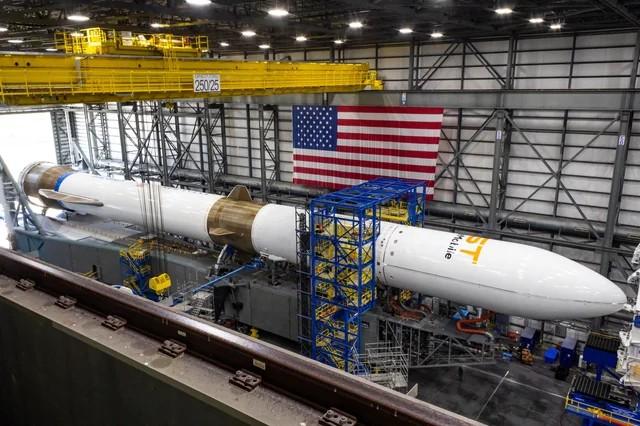
BlueBird 7 should be one of the most important call topics. AST said the satellite separated and powered on, but Blue Origin’s New Glenn mission placed it in an orbit too low for sustained operations with its onboard thrusters. AST expected the satellite to de-orbit and said insurance should cover the cost. (4)
The insured satellite cost is not the main issue. The earnings risk is schedule slippage. AST maintained its plan for frequent 2026 launches and a target of about 45 satellites in orbit by year-end 2026. If management repeats that target with credible launch alternatives, the BlueBird 7 damage may stay contained. If the call exposes schedule risk, ASTS can break below the implied range.
BlueBird 7 raises timing risk. The FCC approval gives management a credible regulatory win to point to on the call.
The FCC approved AST’s application to operate a 248-satellite constellation and provide Supplemental Coverage from Space with mobile partners. That strengthens the long-term direct-to-device thesis and gives management a clear positive update to discuss on the call. (5)
The approval does not remove execution risk. AST still has to launch, deploy, fund, and commercialize the network. But it reduces one category of uncertainty while the stock is trading heavily on whether the 2026 plan remains intact.
A move above the implied range likely requires more than Q1 revenue slightly ahead of consensus.
The clean upside setup would include:
| Upside catalyst | Trader read-through |
|---|---|
| Revenue above consensus | Better evidence of revenue conversion |
| 2026 revenue guide reaffirmed or raised | Less doubt around the $150M–$200M target |
| Satellite target reaffirmed after BlueBird 7 | Lower deployment-risk discount |
| Launch cadence unchanged | Less schedule pressure |
| Capex held inside prior expectations | Lower funding-risk premium |
| New partner or government commitments | More visible revenue path |
The strongest bullish outcome would be a call that shifts the debate from “Can ASTS fund and deploy the network?” to “How quickly can revenue scale once service expands?”
A downside break probably requires management to weaken confidence in the 2026 ramp.
| Downside catalyst | Trader read-through |
|---|---|
| Revenue below consensus | Slower conversion from contracts to recognized revenue |
| BlueBird 7 affects future launch timing | Higher deployment-risk discount |
| Satellite target reduced or softened | Lower confidence in commercial-service timing |
| Capex rises above prior framework | More pressure on liquidity assumptions |
| Commercial service shifts later into 2026 | Revenue expectations move out |
| Liquidity commentary weakens | Funding or dilution risk comes back |
The downside risk is sharper because ASTS is not priced like a mature satellite-services company. It is priced around a steep commercialization curve. Any credible delay can hit the stock harder than the income statement suggests.
ASTS options are pricing a large post-earnings move, with key sources pointing to roughly 15% to 20%. That is already wider than the stock’s last four one-day post-earnings reactions.
A break outside the range likely requires a guidance-level surprise. EPS alone probably does not do it.
The call needs to answer four questions:
1. Is the $150 million to $200 million revenue framework for 2026 still credible?
2. Is the year-end satellite target still intact after BlueBird 7?
3. Are launch cadence and capex still within the prior framework?
4. Does liquidity still cover the deployment plan without reopening funding risk?
If management gives firm answers, the options market may already have priced in the normal earnings-day move. If the call introduces real doubt on deployment timing, revenue conversion, capex, or liquidity, the implied range may not be wide enough.
(1) AST SpaceMobile / BusinessWire: Q1 2026 business update call date and 5:00 p.m. ET timing.
(2) OptionCharts, OptionSlam, and TipRanks/The Fly: ASTS expected move and implied swing estimates.
(3) Zacks/Yahoo Finance: Q1 2026 EPS and revenue consensus.
(4) AST SpaceMobile 8-K / company release: BlueBird 7 lower-than-planned orbit, expected de-orbit, insurance recovery, and 2026 satellite target.
(5) FCC: AST approval for 248-satellite constellation and Supplemental Coverage from Space.
(6) AST SpaceMobile Q4 2025 business update: 2025 revenue, contracted commitments, 2026 revenue framework, satellite deployment target, and launch cadence.