Published on: 2026-04-13
Updated on: 2026-04-13
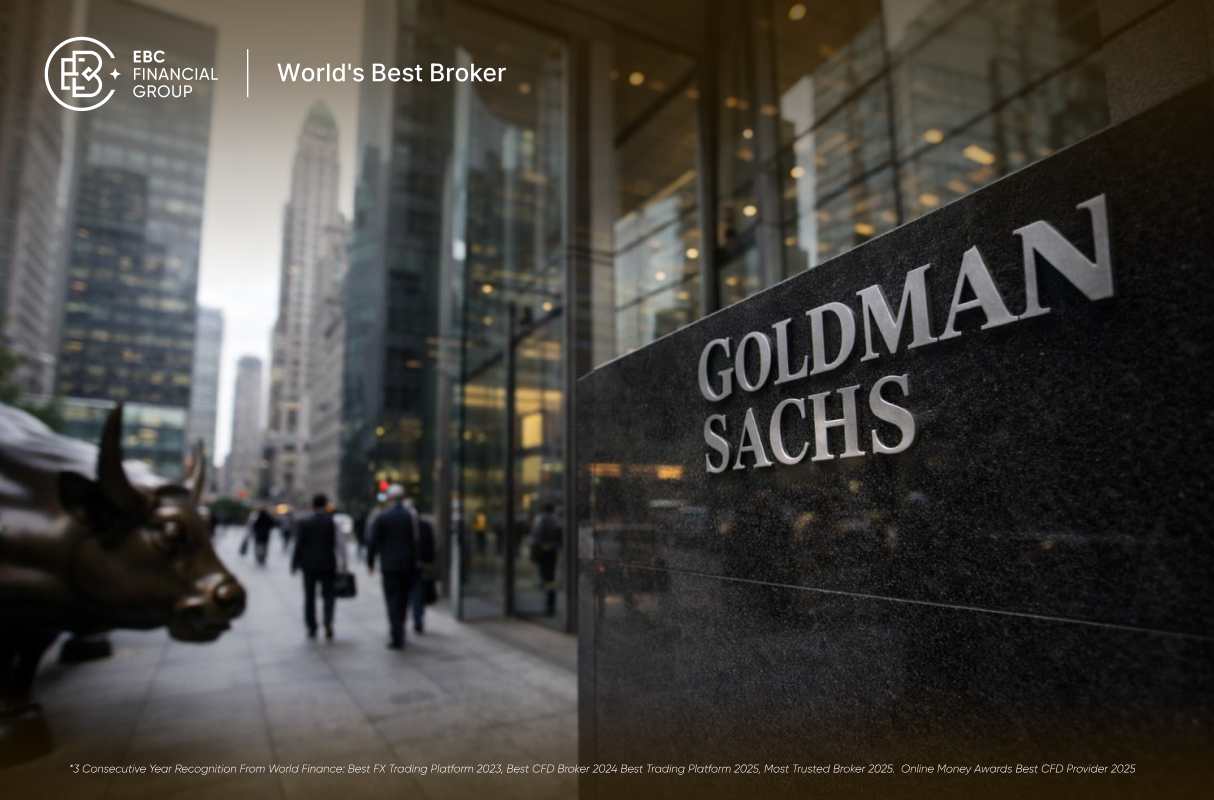
Goldman Sachs Q1 earnings arrive before the open, making the bank one of the first major tests for Wall Street earnings this week.
The real focus is not only profit. It is whether trading strength and client activity still look durable after a strong 2025.
A solid quarter may not be enough on its own. Markets will listen just as closely to management’s tone on momentum into the rest of 2026.
Goldman still matters as an early read on risk appetite, capital markets activity, and the quality of Wall Street earnings.
Goldman Sachs Q1 earnings are scheduled for April 13, 2026, with results due at about 7:30 a.m. ET and the conference call set for 9:30 a.m. ET. That timing matters because Goldman is one of the first major U.S. banks to report, which makes it an early signal for how investors may read the rest of the week’s financial results.
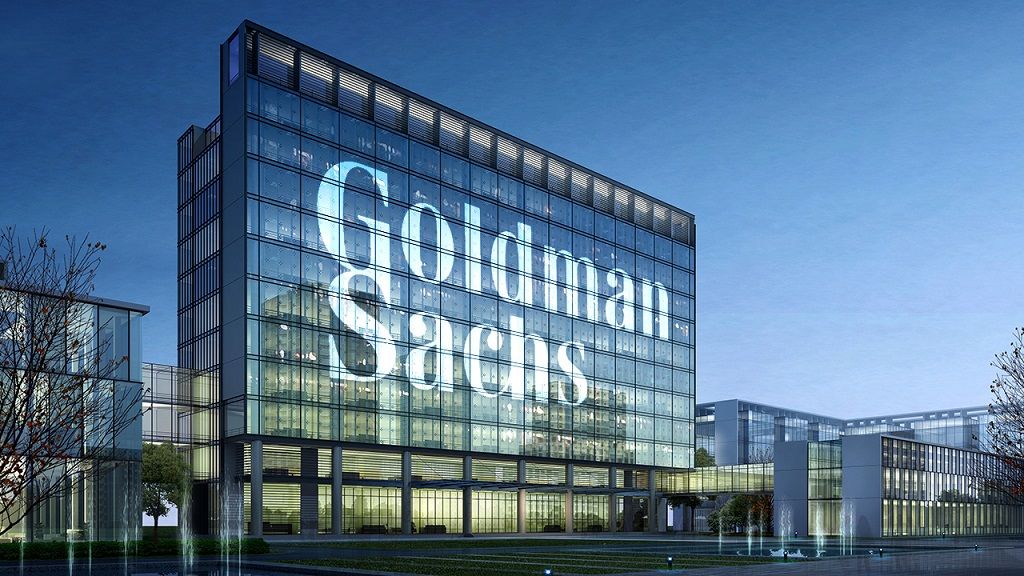
The setup is stronger than it was a year ago. Goldman finished 2025 with $58.28 billion in net revenue, $17.18 billion in net earnings, $51.32 in diluted EPS, and 15.0% return on equity.
In the fourth quarter alone, net revenue was $13.45 billion, net earnings were $4.62 billion, and diluted EPS was $14.01. This is no longer a recovery story. It is a test of whether momentum still holds.
Goldman does not need to prove that its franchise works. The bank already did that in 2025. The real issue now is whether the earnings mix that supported last year still looks healthy enough to sustain expectations in early 2026.
That distinction is important because strong prior results change the standard. When a bank posts stronger revenue, stronger profitability, and a stronger fourth quarter, investors stop asking whether conditions improved. They start asking whether the operating backdrop still looks good enough to justify the stock’s higher bar.
| Metric | Latest official reading | Why it matters |
|---|---|---|
| Q1 2026 earnings date | April 13, 2026 | Same-day catalyst |
| Results release time | Approx. 7:30 a.m. ET | Sets the premarket tone |
| Conference call | 9:30 a.m. ET | Management tone matters |
| 2025 net revenue | $58.28 billion | Strong full-year backdrop |
| 2025 net earnings | $17.18 billion | High profit base |
| 2025 diluted EPS | $51.32 | Raises expectations |
| 2025 ROE | 15.0% | Profitability benchmark |
| 4Q25 diluted EPS | $14.01 | Latest official quarter |
Trading remains Goldman’s cleanest earnings engine. In 2025, the bank reported $14.52 billion in FICC revenue and $16.54 billion in Equities revenue. In the fourth quarter alone, FICC delivered $3.11 billion and Equities generated $4.31 billion, both above the prior year.

That leaves the market with a simple question going into Q1: did client activity stay broad enough to support another firm quarter, or did late-2025 strength cool after year-end. For Goldman, this matters because markets often treat its trading lines as a direct read on client risk appetite and market engagement.
Goldman is also one of the clearest listed read-throughs on deal activity. The bank reported $9.34 billion in investment banking fees for 2025, up 21% from 2024.
In 4Q25, investment banking fees rose to $2.58 billion, up 25% from a year earlier, while advisory improved sharply and the fees backlog increased significantly from both year-end 2024 and the end of the third quarter of 2025.
That matters because investors use Goldman to judge more than one balance sheet. If advisory, underwriting, and backlog still look firm, the market is likely to read that as support for a broader improvement in Wall Street capital-markets activity. If management sounds cautious instead, the read-through could quickly turn colder.
This segment does not usually dominate the headlines, but it still matters for earnings quality. Goldman reported $16.68 billion of net revenue in Asset & Wealth Management for 2025, up 2% from 2024.
In 4Q25, the segment produced $4.72 billion, roughly flat from a year earlier, with stronger management and other fees helping offset weaker investment revenue.
For Q1, investors do not need a big surprise here. They need stability. A steady contribution from this segment would make it easier for markets to focus on the bank’s stronger trading and banking businesses without worrying that earnings quality is becoming too narrow.
One reason Goldman’s recent figures need careful reading is that Platform Solutions has distorted comparisons. In 2025, the segment generated only $151 million in net revenue, and in the fourth quarter it recorded negative $1.68 billion. Goldman tied that weakness to markdowns and contract termination obligations related to the Apple Card transition.
That does not make Platform Solutions the main Q1 story. But it does matter because investors will want a cleaner sense of what Goldman’s earnings power looks like when the noisier parts of the business matter less to the quarter’s overall narrative.
The first move in GS stock is likely to come down to four practical questions:
Did trading revenue stay strong enough to support another firm quarter?
Did management describe client activity as still broad and active?
Did advisory and underwriting still point to better deal conditions?
Did the bank sound confident about momentum into the rest of 2026?
These questions matter because Goldman is entering earnings season from a stronger position than many peers. That gives the bank more credibility, but it also gives investors less patience for a weak tone.
Goldman does not need a dramatic surprise. It needs numbers and commentary that keep the 2025 story intact.
The key risk is not that Goldman suddenly reports a broken franchise. The bigger risk is that expectations have already risen. Strong full-year results, a strong fourth quarter, and management’s own January message on momentum have all pushed the bar higher.
Goldman said in January that the firm continued to see high levels of client engagement and expected momentum to accelerate in 2026. That makes today’s tone especially important.
That means even a respectable quarter can still feel underwhelming if management sounds more cautious on activity, pipeline quality, or the operating backdrop. In a market using Goldman as an early Wall Street earnings signal, the difference between solid and strong enough may decide the first reaction.
Goldman Sachs is scheduled to report Q1 2026 earnings on April 13 at about 7:30 a.m. ET, with a conference call at 9:30 a.m. ET.
Trading revenue, deal activity, backlog, and management’s tone on client engagement are likely to matter most.
Goldman is an early read-through on trading conditions, capital-markets activity, and broader risk appetite across Wall Street.
The biggest risk is a decent quarter paired with cautious commentary that weakens confidence in momentum through the rest of 2026.
Goldman Sachs Q1 earnings matter because the bank enters the quarter from a position of strength. The latest official numbers show stronger revenue, stronger earnings, and stronger profitability than a year earlier. That gives Goldman a better setup, but it also leaves less room for a soft message.
For investors, the test is straightforward. Can Goldman show that trading strength, deal activity, and client engagement held up well enough to keep the 2025 momentum story alive in early 2026?
If the answer is yes, the bank can help set a constructive tone for the rest of Wall Street earnings. If not, markets may decide expectations ran ahead of the quarter.
Disclaimer: This material is for general information purposes only and is not intended as (and should not be considered to be) financial, investment or other advice on which reliance should be placed. No opinion given in the material constitutes a recommendation by EBC or the author that any particular investment, security, transaction or investment strategy is suitable for any specific person.