Published on: 2026-08-21
Updated on: 2026-08-21
Canada and the U.S. say they are “very close” to a trade agreement, yet USD/CAD already touched 1.3757 on August 20, its lowest level since May 21, before final terms were announced. Reported proposals could halve the headline U.S. tariff on Canadian steel and aluminium and lower the auto tariff, while higher oil prices and broader U.S. dollar weakness have also supported CAD. The currency has already priced in some improvement, raising the bar for whatever agreement follows.
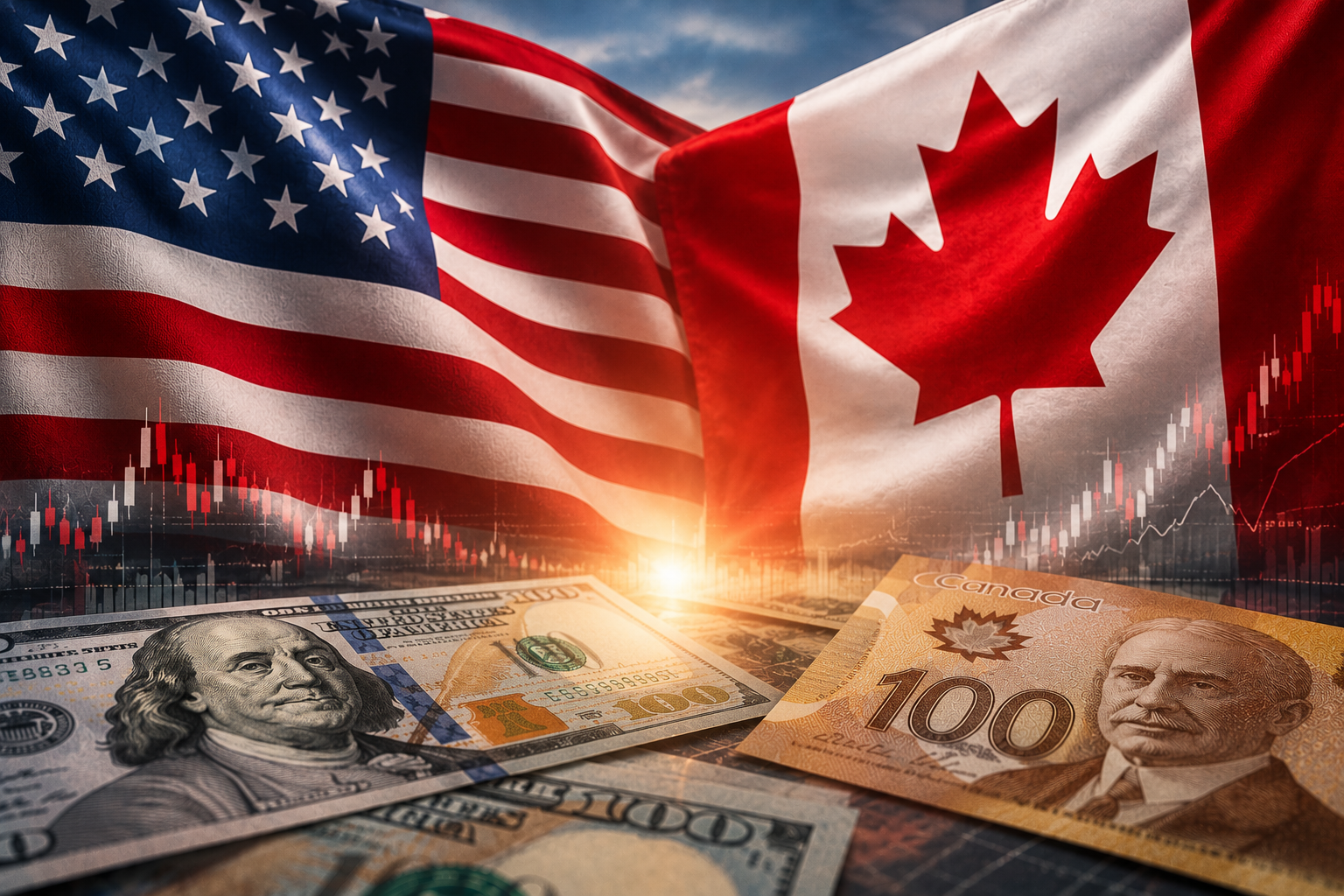
USD/CAD touched 1.3757 on August 20, its lowest level since May 21, before a final Canada-U.S. agreement was announced.
Reported proposals could cut headline steel and aluminium tariffs from 50% to 25% and the auto tariff from 25% to 15%.
Reuters said higher oil and broad U.S. dollar weakness were also supporting CAD, so trade talks do not explain the entire move.
With USD/CAD already near a three-month low, the final tariff terms need to exceed expectations to provide a fresh Canada-specific catalyst.
USD/CAD has been falling for weeks. The Bank of Canada’s daily average moved from 1.4114 on July 27 to 1.3785 on August 20, while Reuters recorded an intraday low of 1.3757 on Thursday.
Trade risk has eased during that decline. Canadian Trade Minister Dominic LeBlanc said the two sides were “very close” after nearly three hours of talks with U.S. Trade Representative Jamieson Greer on Thursday, although more work remained and final terms had not been announced.
Oil and the U.S. dollar have moved in CAD’s favour at the same time. U.S. crude futures rose about 2% to $87.50 a barrel on Thursday, while Reuters cited higher oil and broad dollar weakness as the main supports for the Canadian currency. Trade optimism added another source of support, though it did not explain the entire move.
Markets do not need a signed agreement to react to changing odds. As the probability of a harsher Canadian trade outcome fell, some Canada-specific risk reflected in USD/CAD also began to fade.
The immediate deadline concerns new 50% Section 338 tariffs on roughly $20 billion of Canadian goods, which have been delayed until 12:01 a.m. EDT on Saturday, August 22 while negotiations continue. These duties cover selected goods linked to disputes over autos, dairy and alcohol and exclude products already subject to Section 232 tariffs.
The reported agreement could also reduce tariffs that are already affecting major Canadian industries.
Trade measure |
Current headline position |
Reported proposal |
Steel and aluminium |
50% U.S. tariff |
Cut to 25% |
Canadian autos |
25% headline tariff |
Cut to 15% |
New Section 338 duties |
Additional 50% threatened |
Avoided or further delayed |
The 25% metals and 15% auto figures remain reported proposals, not confirmed final terms. Product coverage, exemptions, and other details remain unresolved.
Avoiding the new Section 338 duties would remove an additional threat. Cutting existing metals and auto tariffs would more directly reduce costs already affecting cross-border trade.
Canada remains heavily exposed to U.S. demand. In 2025, 71.7% of Canadian merchandise exports went to the United States, down from 75.9% a year earlier.
Autos are even more concentrated. More than 90% of Canadian-made vehicles and 60% of Canadian-made auto parts are exported to the U.S. Canadian-made vehicles have faced a 25% U.S. tariff on their non-U.S. content since April 2025, while U.S. content in qualifying vehicles is exempt.
A reported cut to a 15% headline auto tariff would lower costs across a deeply integrated supply chain. A reduction in headline steel and aluminium tariffs would also provide relief, although a 25% tariff would remain restrictive.
The Bank of Canada adds another link between trade policy and CAD. It has held its policy rate at 2.25% since October 2025, and its July outlook still described U.S. trade policy as a headwind to Canadian growth while elevated oil prices remained an inflation risk. A stronger trade agreement would reduce part of that growth downside without removing the Bank’s concern over persistent energy inflation.
The timing of the currency move raises the bar for the final agreement. USD/CAD reached roughly 1.376 before confirmed tariff reductions were published. Simply announcing an agreement may produce a smaller response if its main provisions match the terms already circulating in markets.
A deal that meaningfully lowers metals and auto tariffs would strengthen the economic case behind the recent CAD move. An agreement that mainly prevents the new Section 338 tariffs while leaving existing sectoral barriers largely intact would offer less additional relief.
A breakdown would create the opposite risk. The delayed Section 338 tariffs are scheduled to take effect on August 22 unless the U.S. changes course again, so failure to finalise the agreement could quickly return trade uncertainty to USD/CAD.
A weaker-than-expected deal could leave the most important metals and auto tariffs largely unchanged.
Lower oil prices would remove one factor that supported CAD during Thursday’s move.
A broader U.S. dollar rebound could lift USD/CAD even if Canada receives favourable tariff relief.
A favourable trade headline alone does not determine the pair. The final tariff terms, oil and the broader dollar still need to point in the same direction.
No. As of August 21, officials said the two sides were “very close,” but they had not publicly confirmed final tariff terms. Reported metals and auto cuts remain proposals until a formal announcement.
If talks fail and the delayed Section 338 tariffs take effect, some Canada-specific risk could return to USD/CAD. The size of any move would still depend on oil and the broader dollar.
Yes. A favourable agreement may already be partly priced in at current levels. USD/CAD could still rise if the final terms disappoint expectations, oil falls sharply, or the U.S. dollar strengthens broadly.
The next test comes Saturday, August 22, when the delayed Section 338 tariffs are due to take effect unless the two governments finalise an agreement or extend the pause again.
A deal that mainly prevents new tariffs may confirm expectations already reflected near 1.376. Meaningful relief on metals and autos would give the loonie something new to price. The headline is whether Canada gets a deal. The market-moving question is whether the deal is better than the one USD/CAD already expects.