Published on: 2026-04-29
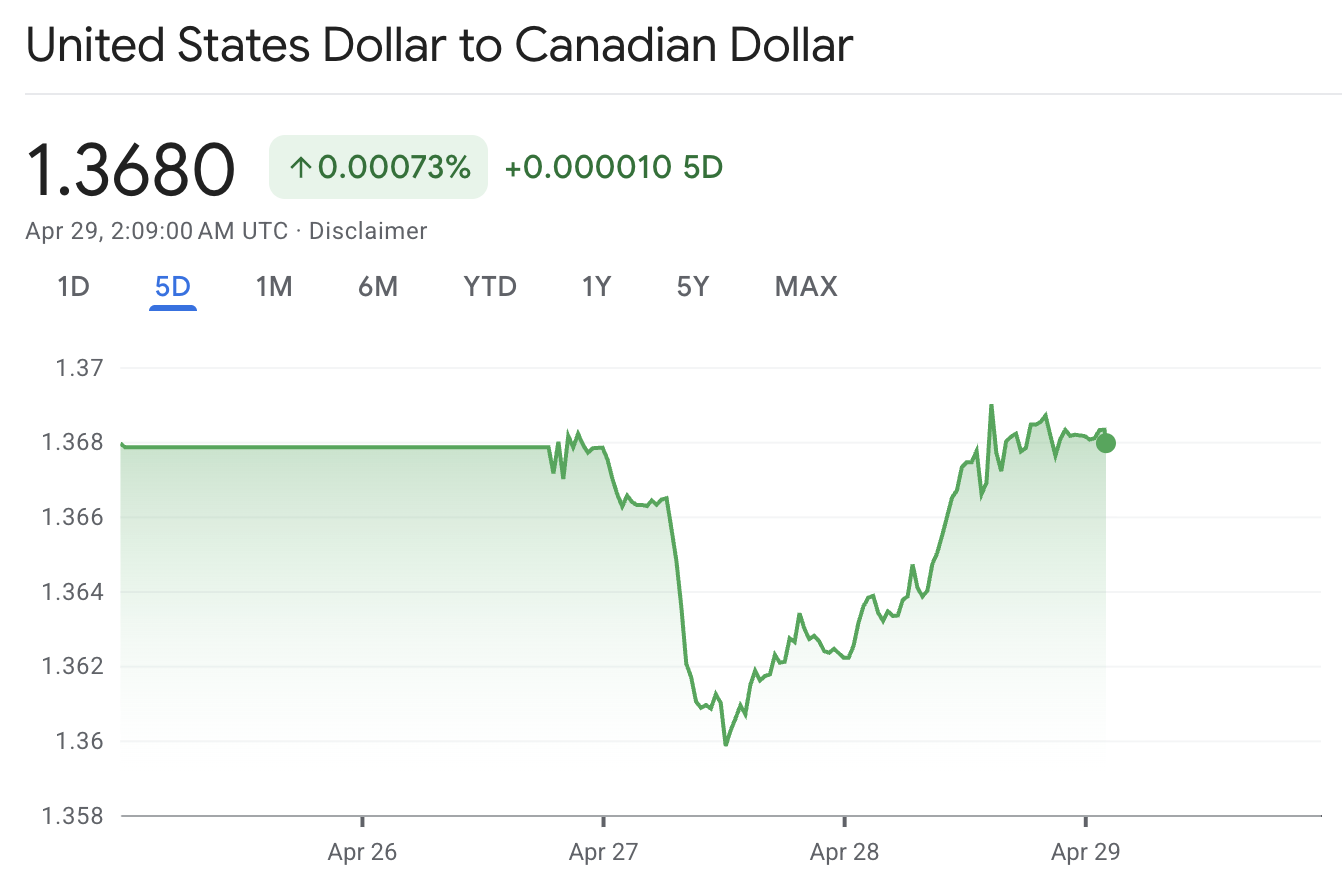
USD/CAD held near 1.37 on 29 April as rising oil prices supported the Canadian dollar, while Fed uncertainty and geopolitical risk limited broader selling pressure on the US dollar. The pair traded around 1.3686, leaving the loonie backed by Canada’s energy exposure but restrained by broader safe-haven demand for the greenback.
The move highlights a familiar tension in Canadian foreign exchange markets. Higher crude prices usually improve Canada’s terms of trade because the country is a major energy exporter. Yet the same oil shock is also reinforcing inflation risk, geopolitical caution, and demand for US dollar liquidity before the Fed’s April decision.
USD/CAD traded near 1.3686 on 29 April, little changed on the day as oil support met US dollar resilience.
Brent crude traded above $111 per barrel, strengthening Canada’s energy-linked currency profile.
The Bank of Canada is expected to keep rates at 2.25%, limiting the policy surprise for the Canadian dollar.
The Fed is widely expected to hold rates at 3.50% to 3.75%, keeping rate differentials supportive for the US dollar.
Middle East supply risk remains the key external driver, with disruption around the Strait of Hormuz sustaining an oil risk premium.
USD/CAD is caught between two powerful market forces. On one side, elevated oil prices are supporting the Canadian dollar by improving export revenues and increasing foreign exchange inflows into Canada’s economy. On the other, the US dollar remains underpinned by risk aversion, sticky inflation concerns, and the view that the Fed will avoid premature monetary easing.
Trading around 1.3686 suggests the market is not treating higher oil prices as a simple bullish signal for Canada. Instead, investors are assessing whether the oil rally will improve Canada’s trade position or weaken global growth enough to keep safe-haven demand concentrated in the US dollar.
That distinction matters. The Canadian dollar typically benefits when crude prices rise in a stable growth environment. It performs less consistently when oil gains are driven by supply shocks, geopolitical risk, or inflation concerns. In the current setup, oil is helping the loonie, but it is not yet strong enough to overpower defensive dollar flows.
The Canadian dollar is one of the most oil-sensitive major currencies. Energy exports form a significant part of Canada’s external earnings, so stronger crude prices often improve sentiment toward the loonie.
Brent crude traded near $111.60 per barrel on 29 April, supported by uncertainty around Middle East supply. Concerns around the Strait of Hormuz remain especially important because the route is tied to roughly 20% of global oil shipments. Any sustained disruption can quickly lift crude prices, widen inflation risks, and reshape currency flows.
For Canada, higher oil prices can lift export receipts, support fiscal revenues in energy-producing provinces, and improve the country’s external position. For USD/CAD, this creates downward pressure because a stronger Canadian dollar means fewer Canadian dollars are required to buy one US dollar.
| Indicator | Latest Reading | Market Relevance |
|---|---|---|
| USD/CAD | 1.3686 | Pair remains anchored near 1.37 |
| Brent crude | $111.60 per barrel | Supports Canada’s energy-linked currency |
| Canada policy rate | 2.25% | Bank of Canada expected to remain steady |
| Fed funds target range | 3.50% to 3.75% | Keeps US dollar yield support intact |
| Canada inflation | 2.4% | Energy shock raises future inflation sensitivity |
The oil rally alone has not been enough to push USD/CAD sharply lower because the US dollar still carries defensive appeal. Markets expect the Federal Reserve to keep the federal funds rate unchanged at 3.50% to 3.75%, with attention focused on whether policymakers sound more concerned about energy-driven inflation.
That matters for USD/CAD because the US dollar tends to benefit when investors expect US rates to remain elevated. A cautious Fed reduces the urgency to sell dollars, particularly when higher energy prices threaten to keep inflation expectations above target.
The Fed’s policy challenge is being complicated by the same oil shock that is helping Canada. Higher energy costs can pressure consumers, raise business input costs, and slow economic activity. At the same time, they can keep inflation firm enough to delay rate cuts. That combination supports the dollar’s yield advantage and prevents the Canadian dollar from fully capitalising on crude strength.
The Bank of Canada is expected to keep its overnight target rate at 2.25%, with markets looking for guidance on how policymakers interpret the inflation impact of higher energy prices. The central bank’s challenge is different from the Fed’s because oil carries both benefits and costs for Canada.
Higher crude prices can improve national income through stronger exports. They can also raise fuel costs for households, transport companies, and manufacturers. That mixed effect explains why the Canadian dollar has not moved in a straight line despite a supportive oil backdrop.
A more hawkish Bank of Canada would normally support the loonie. However, policymakers may avoid overreacting while growth remains uneven and global uncertainty stays elevated. Unless the central bank signals a clear shift in its inflation outlook, the currency impact may remain limited.
The next move in USD/CAD depends on whether the oil impulse or the Fed impulse becomes dominant.
A sustained move in Brent above recent levels would likely strengthen the Canadian dollar, especially if markets view the price increase as a durable terms-of-trade gain rather than a temporary geopolitical shock. In that case, USD/CAD could remain capped near the 1.37 area.
A more hawkish Fed tone would have the opposite effect. If policymakers stress inflation risk and push back against rate-cut expectations, US Treasury yields could rise and the dollar could regain momentum. That would make it harder for the Canadian dollar to convert oil strength into a broader rally.
The most important variable is whether oil prices remain high without damaging global risk appetite. Canada benefits from stronger crude, but USD/CAD can still rise if the same energy shock pushes investors toward the safety and liquidity of the US dollar.
The decisive issue for USD/CAD is not whether higher oil prices support the Canadian dollar. They do. The real question is whether that support is strong enough to offset the US dollar’s policy and safe-haven advantage. Until the Fed turns less cautious or oil strength becomes a clearer terms-of-trade gain for Canada, USD/CAD may remain anchored near 1.37 rather than breaking decisively lower.