Published on: 2026-07-02
Updated on: 2026-07-02
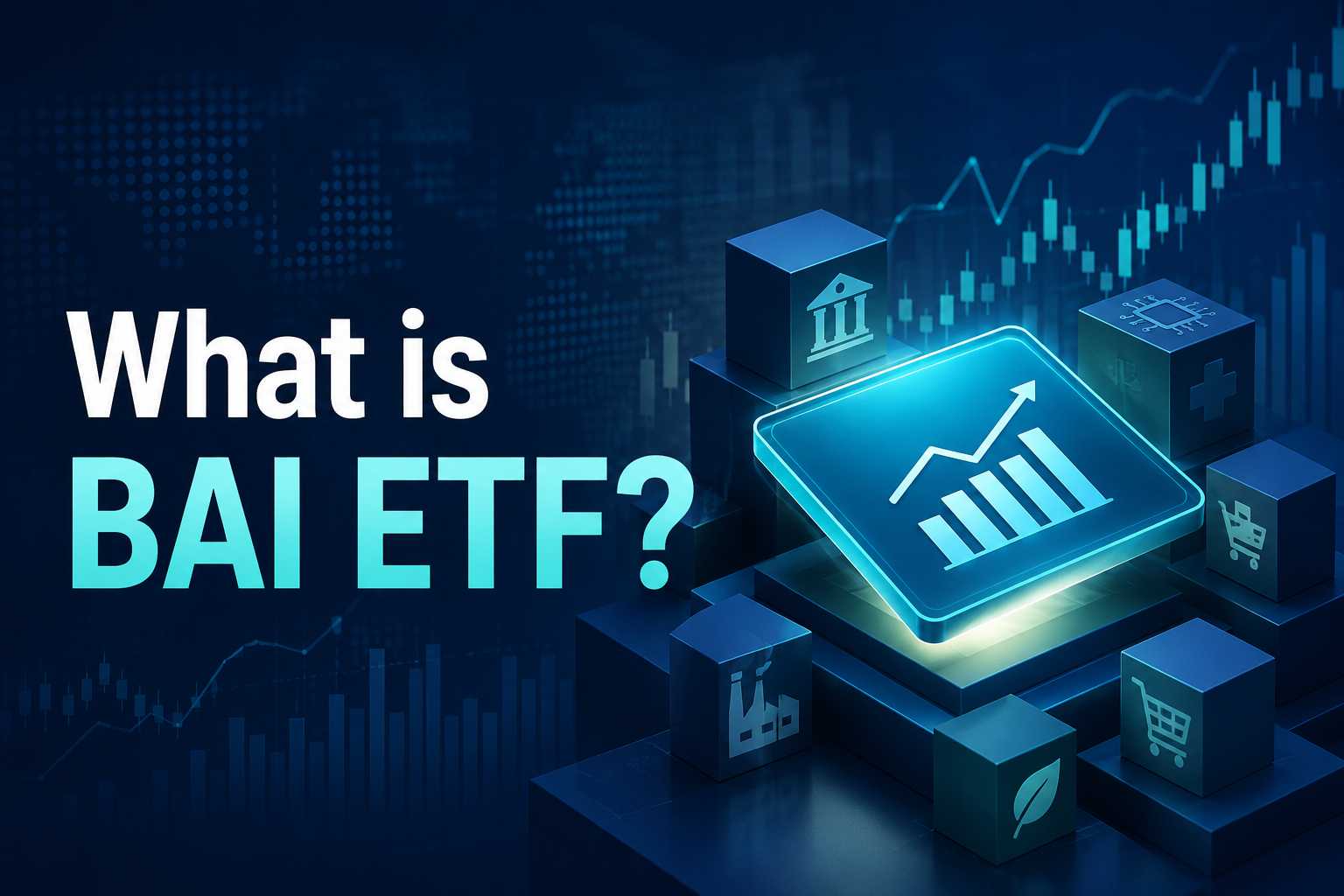
The BAI ETF, officially the iShares A.I. Innovation and Tech Active ETF, is BlackRock’s actively managed AI and technology ETF. Rather than track a fixed index, the fund gives traders flexibility to invest across the AI stack, including semiconductors, infrastructure, data tools, AI models, software platforms and AI-related services.
That active mandate is the fund’s defining feature. In a fast-moving AI sector, managers can adjust exposure toward the parts of the value chain they believe are better positioned, whether that is semiconductors, infrastructure, cloud platforms or software.
The trade-off is transparency. BAI does not follow a fixed, rules-based index, so investors are relying on BlackRock’s portfolio decisions. The fund is best viewed as focused AI growth exposure for investors who want the theme without selecting individual stocks, not as a broad or low-volatility core holding.
BAI ETF is an actively managed AI and technology fund, not a passive index ETF. BlackRock’s managers can shift exposure across different parts of the AI value chain.
The fund is concentrated, with only 43 holdings, so performance can be driven by a relatively small group of AI-linked stocks.
BAI leans heavily toward AI infrastructure, with top holdings tied to semiconductors, chip production, memory, networking, cloud platforms and hardware supply chains.
Technology exposure dominates the portfolio, with more than 90% of market value in information technology, making the fund sensitive to growth-stock and semiconductor sentiment.
The fund has delivered strong 2026 performance, but that reflects a powerful AI rally rather than a normal return expectation.
Fees are higher than passive ETFs, with a 0.65% gross expense ratio and 0.55% net expense ratio after the stated fee waiver.
BAI is best viewed as a focused growth satellite, not a diversified core holding, because of its concentration, active management and exposure to AI valuation risk.
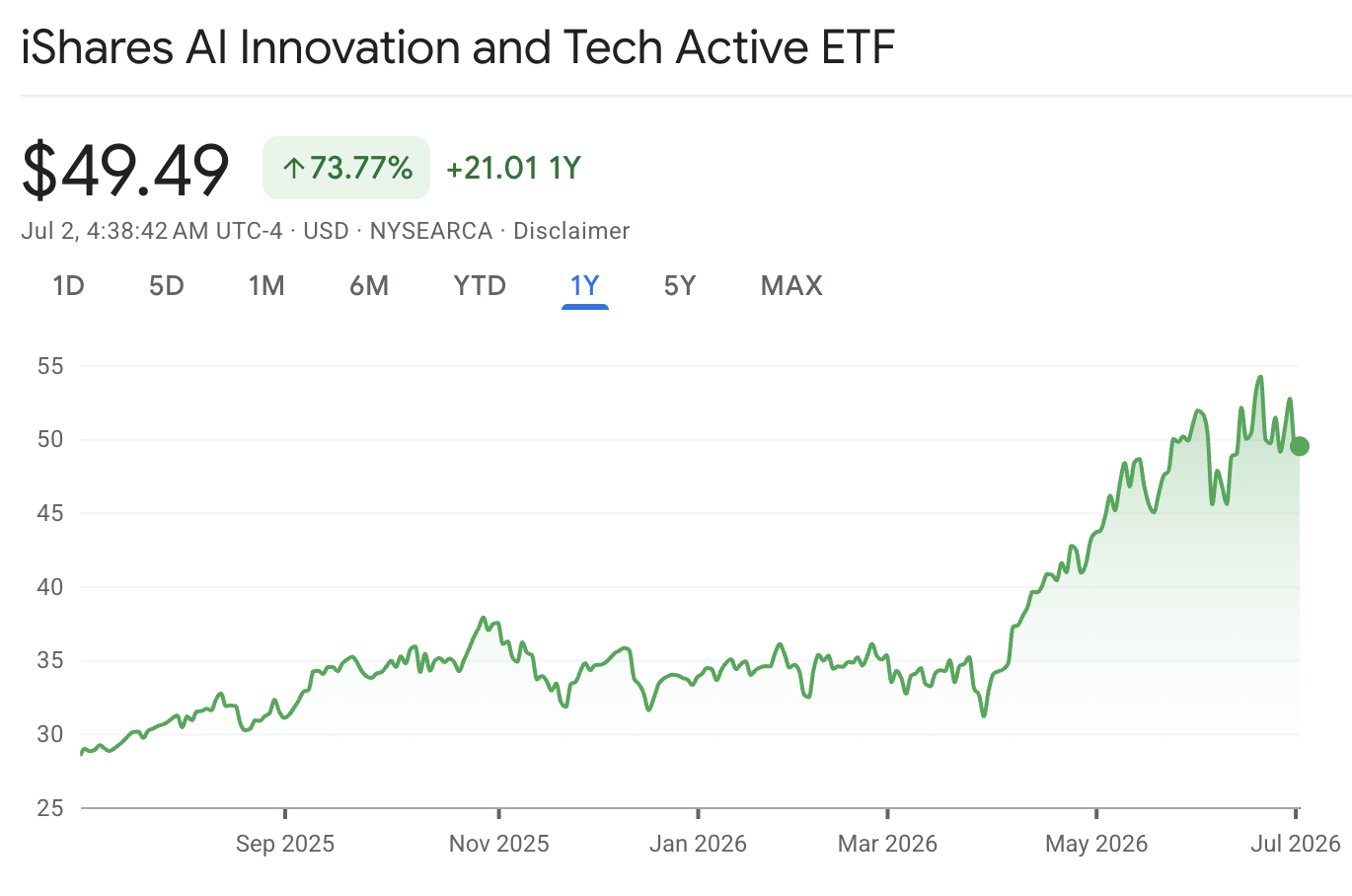
BAI trades on NYSE Arca under the ticker BAI. Issued by iShares, it launched on October 21, 2024 as an actively managed equity ETF and pays distributions semi-annually.
| Metric | Latest figure | Why it matters |
|---|---|---|
| Fund name | iShares A.I. Innovation and Tech Active ETF | Confirms the ETF’s official name. |
| Ticker | BAI | Trading symbol on NYSE Arca. |
| Issuer | iShares / BlackRock | Shows the fund provider. |
| Asset class | Equity | BAI invests mainly in stocks. |
| Fund inception | October 21, 2024 | The ETF has a short live track record. |
| NAV | $49.63 | Latest net asset value per share, as of July 1, 2026. |
| Closing price | $49.49 | Latest market close, as of July 1, 2026. |
| Net assets | $14.86 billion | Shows the fund has reached meaningful scale. |
| Number of holdings | 43 | Indicates a concentrated portfolio. |
| Shares outstanding | 299.4 million | Reflects the size of the ETF share base. |
| Daily volume | 4.08 million shares | Latest trading volume, as of July 1, 2026. |
| Expense ratio | 0.65% | Gross annual fund operating cost. |
| Net expense ratio | 0.55% | Cost after the stated fee waiver. |
| 12-month trailing yield | 1.20% | Reflects recent distribution history. |
| YTD NAV total return | 58.18% | Shows strong 2026 performance through June 30. |
| Distribution frequency | Semi-annual | Indicates how often distributions are scheduled. |
The numbers describe a fund that has scaled quickly and performed strongly in 2026. BAI holds nearly $14.9 billion in assets across only 43 positions, making it large but still concentrated.
Its fee is higher than many passive technology ETFs, but that is common for an active thematic fund. Income is not the appeal. The investment case rests mainly on capital growth from AI and technology exposure.
Under normal conditions, BAI invests at least 80% of its assets in equities of U.S. and non-U.S. companies tied to artificial intelligence, technology or technology-related businesses.
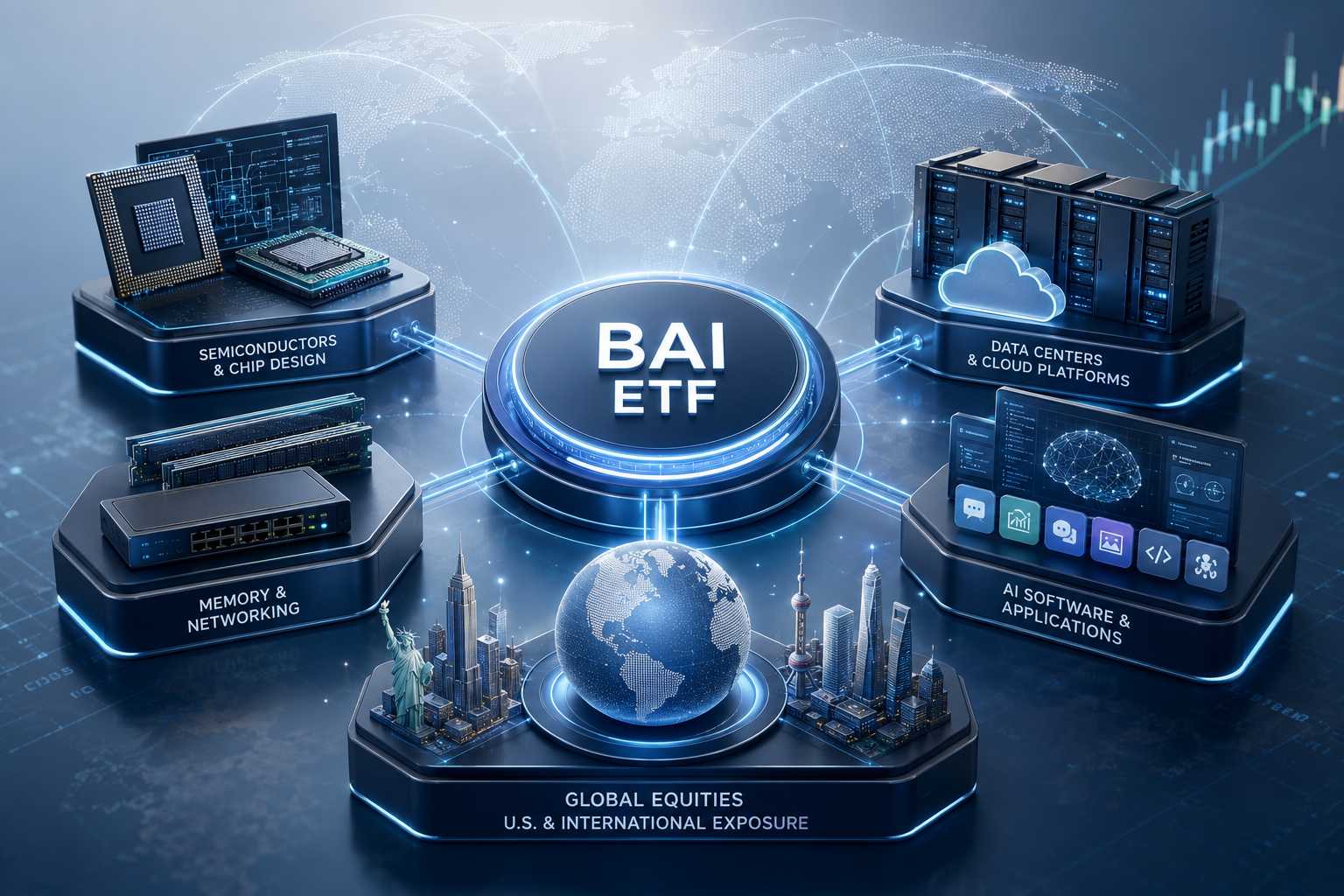
The fund’s mandate spans the AI stack, from infrastructure and computing power to applications and services. This gives BAI a broader reach than a semiconductor-only ETF or a software-only ETF. The portfolio can include chip designers, foundries, memory makers, cloud platforms, networking suppliers, data-infrastructure companies and software firms.
That broader mandate reflects how the AI market develops in phases. Chipmakers may lead during periods of heavy infrastructure spending. Memory, networking, cloud platforms or software companies may take over when demand shifts toward deployment and applications. BAI’s active structure gives managers room to adjust as different parts of the AI cycle gain momentum.
BAI’s portfolio tilts strongly toward AI infrastructure rather than pure software. The latest available iShares fact sheet listed these top holdings:
| Rank | Holding | Portfolio weight |
|---|---|---|
| 1 | NVIDIA Corp | 7.17% |
| 2 | Broadcom Inc | 6.04% |
| 3 | Taiwan Semiconductor Manufacturing | 5.18% |
| 4 | Tower Semiconductor Ltd | 4.74% |
| 5 | Lam Research Corp | 4.33% |
| 6 | Alphabet Inc Class A | 4.20% |
| 7 | SK Hynix Inc | 4.02% |
| 8 | Lumentum Holdings Inc | 3.96% |
| 9 | Fabrinet | 3.19% |
| 10 | Advanced Micro Devices Inc | 2.79% |
These holdings map cleanly onto the AI supply chain. Nvidia, Broadcom and AMD provide exposure to AI chips and networking. Taiwan Semiconductor and Tower Semiconductor connect the fund to chip production. Lam Research adds semiconductor equipment exposure. SK Hynix gives BAI memory exposure, which matters because AI workloads require large amounts of high-performance memory.
Alphabet brings in the platform and AI-services angle, while Lumentum and Fabrinet connect the ETF to optical and hardware supply chains. The result reads more like an AI-infrastructure fund than a basket of popular AI software names.
BAI is overwhelmingly a technology fund. Information technology accounts for more than 90% of market value, with smaller allocations to communication services, industrials and consumer discretionary stocks.
That concentration is expected for an AI-focused ETF, but it also raises the fund’s sensitivity to technology-sector sentiment. If semiconductor shares, AI infrastructure names or growth stocks weaken, BAI can move quickly.
Geographically, BAI is U.S.-led but not U.S.-only. The United States is the largest exposure, followed by major Asian technology markets such as Taiwan, South Korea and Japan. That country mix reflects how the AI supply chain is built. U.S. companies dominate platforms, software and chip design, while Taiwan and South Korea play major roles in semiconductor manufacturing and memory.
The global reach gives BAI access to critical AI suppliers. It also adds currency, geopolitical and supply-chain risks that a U.S.-only fund would not carry.
BAI’s pitch is targeted AI exposure with active flexibility. Investors are not buying a broad technology index. They are buying a portfolio that can shift across the parts of the AI value chain that BlackRock’s managers believe are better positioned.
This can be useful if AI leadership broadens beyond a few mega-cap stocks. The AI build-out touches chips, power, networking, memory, cloud platforms, software and data infrastructure. A fund that can rotate across those areas may appeal to investors who want more than one narrow slice of the theme.
The 2026 return is another reason BAI has attracted attention. A 58.18% year-to-date NAV total return through June 30 reflects strong demand for AI-linked equities. It should not be treated as a normal return expectation. The same concentration that helps in an AI rally can work against investors during a technology selloff.
BAI carries a 0.65% gross expense ratio, reduced to 0.55% after a fee waiver. That is higher than many broad-market ETFs, but broadly in line with active thematic funds.
The fee depends on whether investors believe active management can add value through stock selection, exposure shifts or risk control. Those seeking cheaper technology exposure may find passive ETFs more suitable.
Income is not the main draw. BAI’s yield profile is modest, so the investment case rests mainly on capital growth from AI and technology stocks.
Liquidity appears reasonable for a thematic ETF of this size. The fund has meaningful assets, strong average trading volume and a relatively tight bid/ask spread. Even so, limit orders remain useful, especially during volatile market sessions.
Concentration. With only 43 holdings, a small group of stocks can drive performance. If several large holdings fall together, BAI can decline quickly.
Valuation. Many AI-linked stocks already reflect strong growth expectations. If earnings, margins or AI spending disappoint, the ETF can fall even if the long-term AI theme remains intact.
Technology-cycle exposure. More than 90% of market value sits in information technology. That makes BAI sensitive to rates, chip demand, regulation and any rotation away from growth stocks.
Active management. Flexibility is useful, but it does not guarantee better results. Poor stock selection or timing can leave BAI behind cheaper passive AI or technology ETFs.
International exposure. Taiwan, South Korea, Japan and other non-U.S. markets are important to the AI supply chain, but they add currency, geopolitical and regional-market risk.
BAI fits investors who want concentrated exposure to AI innovation, would rather not pick individual AI stocks and believe the opportunity extends beyond a few large U.S. technology names.
It is less suitable for investors seeking broad diversification, low fees, steady income or a smoother ride. In practice, BAI works better as a satellite growth position, sized deliberately around a diversified core, rather than as the foundation of a portfolio.
BAI is the iShares A.I. Innovation and Tech Active ETF, an actively managed equity fund that invests in companies connected to artificial intelligence, technology and related innovation.
BAI holds AI and technology companies across semiconductors, computing, platforms, memory, networking and software. Top holdings include Nvidia, Broadcom, Taiwan Semiconductor, Tower Semiconductor and Lam Research.
Yes. BAI is concentrated, technology-heavy, globally exposed and tied to AI valuations. It can perform strongly during AI rallies, but it can also fall sharply when technology sentiment weakens.
BAI offers actively managed exposure to the AI build-out, with a portfolio weighted toward the semiconductors, computing, memory, networking and platform companies that support the theme. Its appeal comes from strong 2026 performance, meaningful fund scale and a clear mandate focused on AI and technology innovation.
The trade-off is concentration. BAI carries higher fees than many passive ETFs and remains highly exposed to the technology cycle. Investors considering the fund should view it as targeted AI exposure within a broader portfolio, rather than a substitute for diversified equity exposure.