Published on: 2026-07-03
Gold and silver ETFs moved higher after the latest U.S. jobs report softened the rate and dollar backdrop for precious metals. GLD closed at $378.13, up 2.05%, while SLV closed at $55.02, up 2.69%. Silver’s stronger move reflected its higher-beta profile during metals rallies.
The June nonfarm payrolls report showed U.S. employers added 57,000 jobs, while the unemployment rate fell to 4.2%. Payroll growth slowed sharply, but the lower jobless rate stopped the report from becoming a clean recession signal. The data reduced pressure from yields and the dollar without forcing a broad defensive sell-off across risk assets.

The move also showed why ETF demand can become part of the signal. GLD and SLV were not just tracking higher metal prices; they were the liquid vehicles investors used to express a view on lower rate pressure, weaker dollar momentum and renewed portfolio hedging demand.
Gold and silver ETFs rose after softer NFP data eased rate and dollar pressure.
GLD benefited from lower real-yield pressure and renewed demand for gold exposure.
SLV outperformed because silver tends to move with higher beta during metals rallies.
The June jobs report showed 57,000 payroll gains, while unemployment fell to 4.2%.
Real yields, the dollar, inflation data and ETF demand will decide whether the move extends.
The jobs report did not create a clean growth scare. It gave markets a softer labour reading that reduced the urgency of tighter policy expectations.
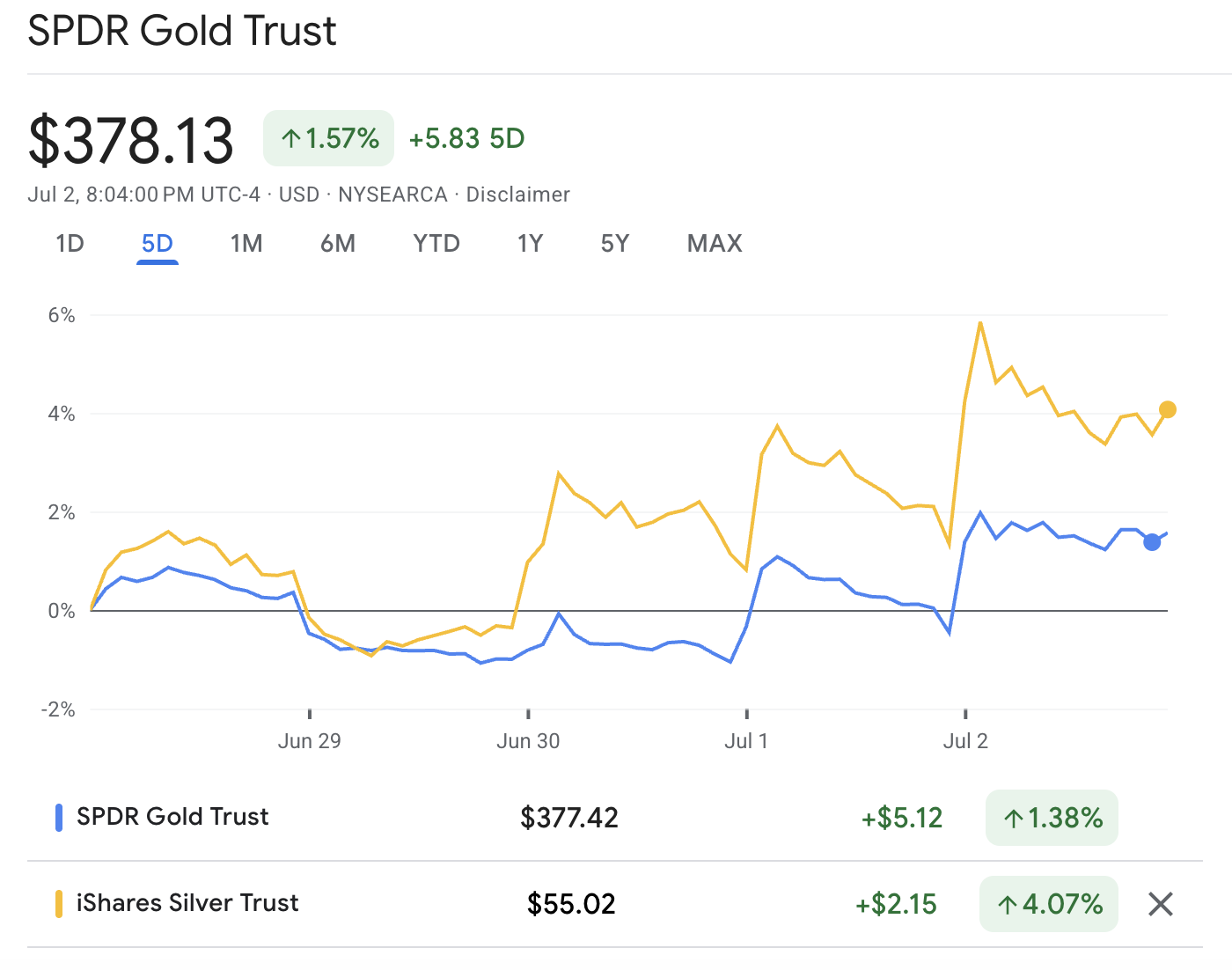
Gold and silver responded because the metals trade is highly sensitive to rate expectations, real yields and the U.S. dollar.
| Asset or data point | Latest figure |
|---|---|
| Nonfarm payrolls | +57,000 |
| Unemployment rate | 4.2% |
| GLD close | $378.13 |
| GLD daily move | +2.05% |
| SLV close | $55.02 |
| SLV daily move | +2.69% |
Gold and silver do not pay interest. Their appeal often weakens when cash, money-market funds and Treasury bills offer attractive yields. When yields stop rising or the dollar loses momentum, the opportunity cost of holding metals declines. GLD and SLV gained because investors reassessed that trade-off after the payroll data.
The reaction should not be reduced to a simple link between weak jobs data and higher metals prices. Payroll data influences metals through the policy channel. Softer hiring can reduce expectations for higher rates, which can ease real-yield pressure and weaken the dollar. Those conditions are more favourable for non-yielding assets such as gold and silver.
The macro chain is direct. Softer payrolls lower the pressure for higher policy rates. Lower rate pressure can weaken the dollar and reduce upward pressure on Treasury yields. Lower yields reduce the return investors give up by holding assets that do not generate income.
GLD is more closely tied to real-yield expectations, dollar direction and defensive allocation. SLV shares those drivers, but silver also responds to industrial demand expectations and broader risk appetite. The NFP reaction supported both ETFs, while silver’s higher-beta profile gave SLV the larger move.
ETF structure added another layer to the session. A shift in the rate and dollar outlook can be implemented quickly through GLD and SLV. The ETFs translate a macro view into liquid market exposure without requiring physical storage, margin management or futures rollover decisions.
GLD and SLV responded to the same catalyst, but the two ETFs serve different roles. GLD is the cleaner gold exposure. It is commonly used when the market is repricing real yields, dollar weakness, central-bank expectations or defensive allocation.
SLV carries a more volatile silver profile. Silver has a dual role as both a precious metal and an industrial input. It can gain from the same lower-yield and weaker-dollar backdrop that helps gold, while also responding to industrial demand, cyclical sentiment and risk appetite.
| ETF | Main exposure | Typical role | Main risk |
|---|---|---|---|
| GLD | Gold | Defensive macro hedge | Real yields rebound |
| SLV | Silver | Higher-beta metals exposure | Volatility and industrial sensitivity |
SLV’s larger gain after NFP does not prove that silver has a stronger fundamental outlook than gold. It reflects the usual amplitude difference between the two ETFs. Silver often rises more when metals sentiment improves, and the same volatility can work against positions when yields rebound or industrial demand concerns return.
The comparison is less about the better one-day move and more about risk profile. GLD offers a cleaner macro hedge. SLV offers more upside during strong metals rallies, with wider drawdown risk when the backdrop turns less supportive.
The latest NFP reaction put metals ETFs back in focus because they offer fast implementation after a macro surprise. Investors can use GLD and SLV to adjust exposure without buying physical bullion, managing futures margin or dealing with storage. The structure is useful around scheduled events such as NFP, CPI, Fed meetings and major dollar moves.
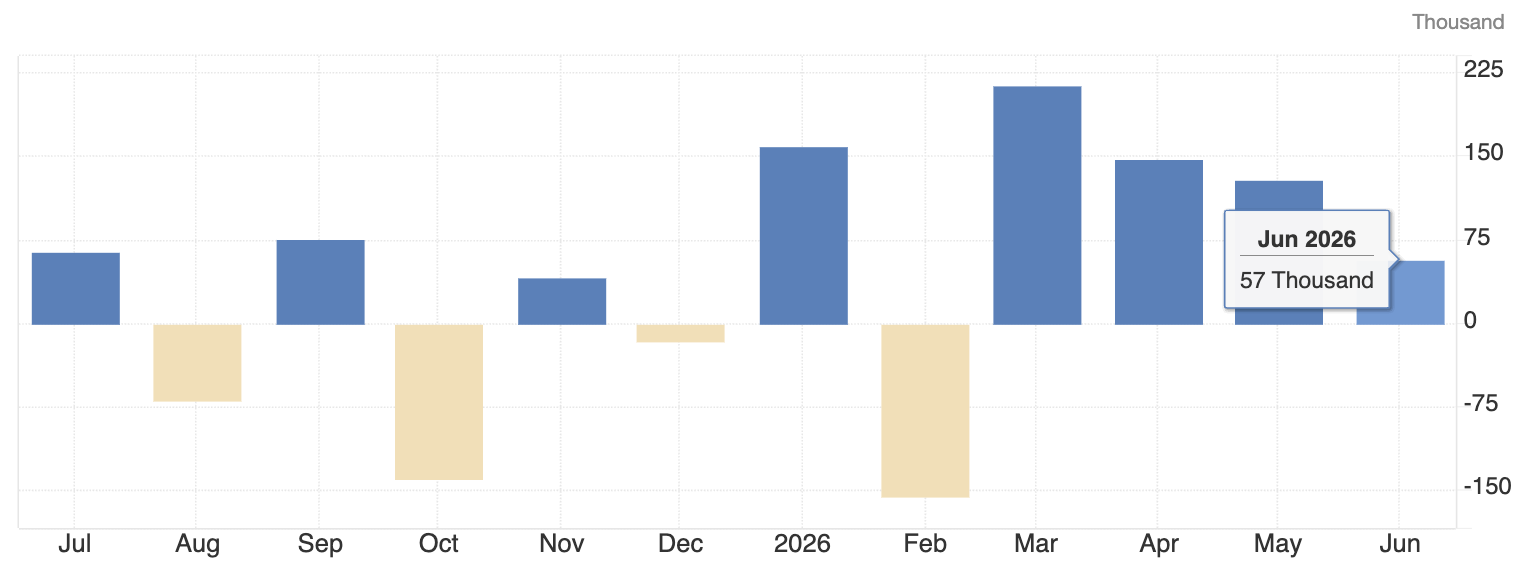
For anyone tracking monthly NFP data and market impact, the ETF reaction can provide an early view of how the market is positioning around metals. Price action gives the first signal. Volume, creations and fund flows show whether the move is developing into broader allocation demand.
A one-day gain can fade if the dollar stabilises or yields rebound. Sustained demand would be more meaningful because it would suggest investors are rebuilding metals exposure rather than reacting to one data release. Labour reports often create an initial move that later gets revised by inflation data, Fed commentary or bond-market pricing.
GLD and SLV are vehicles for exposure, not operating companies. Their returns depend mainly on the underlying metal price after costs. Investors comparing gold ETF versus spot gold execution should separate product structure from the broader macro signal.
The move in GLD and SLV carried more information than a simple rise in gold and silver prices.
First, ETF rallies show how investors implement macro views. Part of the move reflected demand for fast, liquid exposure rather than a long discussion about physical bullion.
Second, GLD and SLV generate no income. Their appeal depends on price appreciation, hedging value and opportunity cost versus cash or bonds. A softer yield backdrop improves that trade-off.
Third, silver’s outperformance cuts both ways. SLV can rise faster than GLD when metals sentiment improves, and it can fall faster when real yields rise or risk sentiment weakens. Higher beta is not a one-directional advantage.
Fourth, ETF follow-through carries more weight than the first reaction. A strong session after NFP becomes more meaningful if real yields, the dollar and ETF flows continue to support the move.
The ETF reaction showed how the market translated a softer labour print into positioning across gold and silver exposure.
The same macro channels that helped GLD and SLV can move against them. A stronger inflation print could push Treasury yields higher and increase the opportunity cost of holding non-yielding metals. Sticky inflation would also make it harder for markets to price a softer policy path.
A rebound in the U.S. dollar would create another headwind. Gold and silver are priced globally in dollars, so dollar strength can reduce demand from non-U.S. buyers and pressure metals ETFs.
Future labour data could also change the interpretation of the June report. One soft payroll number does not define the labour trend. A stronger follow-up jobs report or firmer wage growth could rebuild expectations for higher-for-longer policy.
Fed communication remains a key risk. Markets may respond quickly to softer data, but Fed officials can push back if inflation remains too firm. Metals ETFs are sensitive to the gap between market expectations and central-bank messaging.
SLV carries an additional layer of risk because silver has stronger cyclical and industrial exposure than gold. Silver ETF volatility and flow sensitivity can amplify both gains and drawdowns after macro releases.
Gold and silver ETFs rose after NFP because the jobs report eased pressure from rates and the dollar. GLD offered the cleaner gold hedge tied to real yields and defensive positioning. SLV delivered the stronger move because silver usually reacts more aggressively when metals sentiment improves.
Metals ETFs are back in focus as practical vehicles for expressing a macro view after labour-market data. The rally has a credible foundation, but it still needs confirmation. Real yields, the U.S. dollar, inflation data and ETF demand will decide whether the move develops into a broader metals ETF rotation or remains a short-lived reaction to one jobs report.