Published on: 2023-11-08
Updated on: 2026-05-13
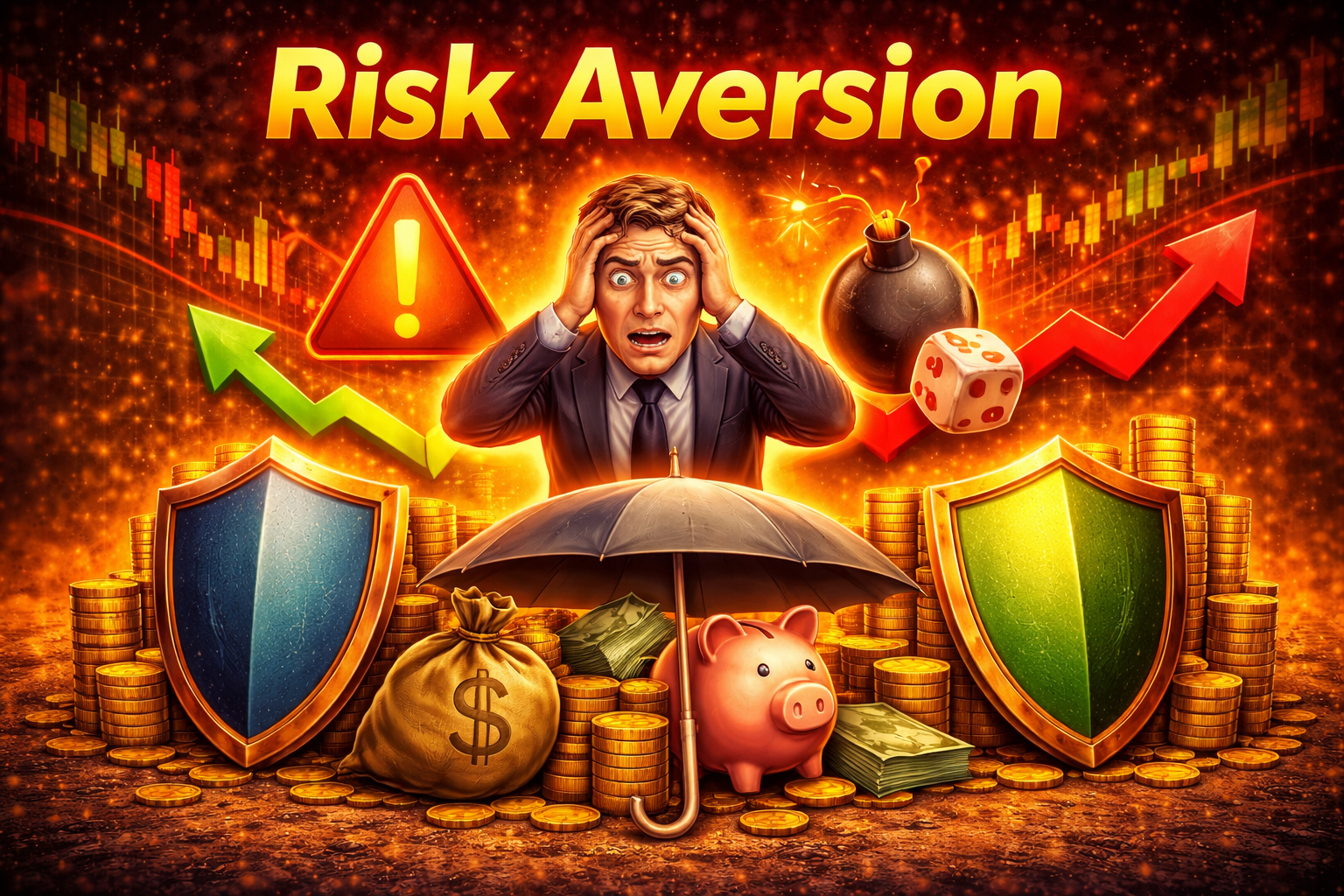
The fear-and-greed index shows whether financial markets are driven more by panic or confidence. It turns market emotion into a single score, helping traders judge when market sentiment is calm, stretched, fearful or overly optimistic.
That matters because price moves are rarely driven solely by fundamentals. Investors react to inflation data, central bank policy, earnings, geopolitics, bond yields, and headlines. In 2026, sentiment has shifted quickly between risk appetite and caution as markets weighed AI-led equity strength, tariff risk, oil volatility and changing interest-rate expectations. A clear sentiment gauge helps traders avoid emotional decisions when markets move fast.
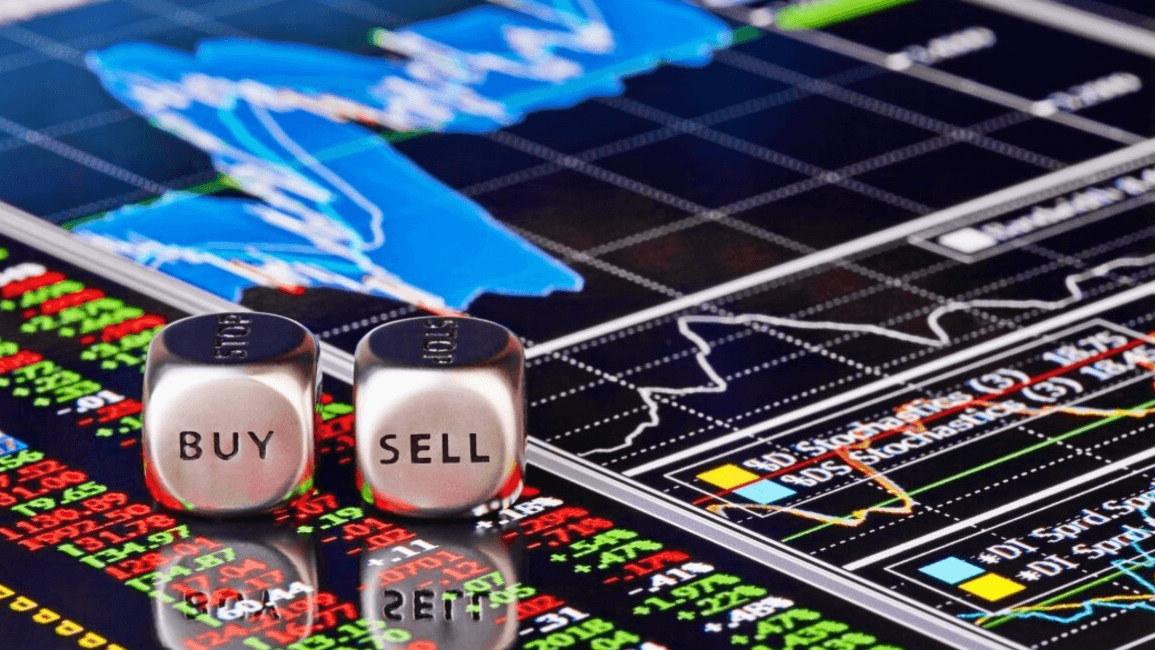
The Fear and Greed Index is a market sentiment indicator. It usually ranges from 0 to 100.
A low score shows fear. A high score shows greed. A middle score suggests sentiment is more balanced.
Extreme fear often follows sharp sell-offs, when investors have already reduced their exposure. Extreme greed often follows strong rallies, when buyers become more confident and risk-taking increases.
The index is popular because it simplifies a difficult question: are investors behaving rationally, or are emotions starting to dominate?
Still, it should not be treated as a direct buy or sell signal. Fear can remain high during a bear market. Greed can persist during a powerful bull trend. The index works best as a context tool alongside price action, volatility, market breadth and macro data.
There is no single formula for every market. The calculation depends on whether the index tracks stocks or another asset class.
For US stocks, the best-known version is the CNN Fear and Greed Index. It uses seven indicators that capture momentum, breadth, credit risk, volatility and safe-haven demand. Research summaries describe the CNN index as a simple average of seven factors: market momentum, stock price strength, stock price breadth, put/call options, market volatility, safe-haven demand and junk bond demand.
This distinction is important. The stock-market version does not rely on Twitter posts, Reddit activity, search trends or public surveys.
As of 6 May 2026, CNN’s live data showed the index near 69, indicating a level of greed. That reading did not mean markets were risk-free. It showed that several sentiment components had recovered after a period of stress.
The fear-and-greed index becomes more useful when viewed through the lens of market cycles.
During major sell-offs, the index often drops into extreme fear. Investors buy put options, volatility rises, breadth weakens and demand for bonds increases. During strong rallies, the opposite tends to happen. Equity momentum improves, junk bond demand rises, volatility falls, and investors become more willing to take risks.
In March 2026, CNN’s index fell into extreme fear, with readings near 15-17 as geopolitical tensions hit risk assets. MarketWatch reported that this was the lowest reading since November and reflected a clearly anxious market.
By early May 2026, sentiment had improved sharply. CNN’s reading had returned to greed, while the VIX remained sensitive to geopolitical headlines. On 4 May 2026, the VIX rose to 18.88 amid renewed concern over the Strait of Hormuz, underscoring that risk appetite can recover quickly but remain fragile.
This is the key lesson: the index does not predict the future. It shows how investors are positioned emotionally today.
The fear and greed index is usually linked to stocks, but traders often compare it with gold because gold behaves differently from risk assets.
When fear rises, investors may move into gold, US Treasuries, the Japanese Yen, the Swiss Franc or the US Dollar. Gold can benefit when markets become defensive, especially if falling real yields make non-yielding assets more attractive.
But the relationship is not automatic.
Gold can rise even when the index shows greed. That can happen when inflation risk increases, central banks continue buying bullion, geopolitical risk remains elevated, or the US Dollar weakens. Gold can also fall during fear if the US Dollar and real yields rise together.
This is why traders should not say, “fear means buy gold” or “greed means sell gold.” The better question is: what is driving the fear?
If fear comes from equity volatility and lower real yields, gold may gain support. If fear comes from a liquidity shock and a stronger Dollar, gold may struggle. The index gives context, but gold still responds to rates, currencies, flows and geopolitical risk.
The best use of the fear-and-greed index is for risk control.
It helps traders ask better questions before entering a trade:
Is the market already crowded in one direction?
Are investors chasing momentum?
Is fear creating a potential value opportunity?
Is greed hiding weak market breadth?
Does volatility confirm or challenge the sentiment reading?
For example, a green reading near 70 while the S&P 500 trades above its long-term moving average may confirm strong trend momentum. But if fewer stocks participate in the rally, the reading may mask narrow leadership.
A fear reading below 25 may suggest that selling pressure is stretched. But traders still need confirmation. Stabilising breadth, lower volatility, improving credit spreads or a clear technical base can give the signal more weight.
In forex, the index can help explain risk appetite. Greed often supports higher-beta currencies such as the Australian Dollar and New Zealand Dollar. Fear can support defensive currencies such as the US Dollar, Japanese Yen or Swiss Franc, depending on the source of stress.
The index should guide exposure, not replace analysis.
The fear-and-greed index has three major limitations.
First, it is not a timing tool. Extreme greed can continue in a strong bull market. Extreme fear can deepen during a crisis.
Second, it does not measure valuation. A fearful market can still be expensive if earnings forecasts are falling. A greedy market can still rise if earnings growth, liquidity and momentum remain strong.
The most useful reading comes from checking the components behind the headline score. A single number is helpful. The reason behind the number is more important.
It is accurate as a sentiment gauge, not as a price forecast. It shows whether investors are behaving defensively or aggressively. It becomes more useful when combined with trend, volatility, earnings, bond yields and market breadth.
It can be, but not automatically. Extreme fear often arises when the sale is already advanced. However, prices can still fall further if liquidity tightens, earnings weaken, or volatility continues to rise. Confirmation matters.
Not by itself. Extreme greed warns that investors may be too confident, but strong markets can stay greedy for long periods. Traders should watch breadth, volume, valuation and resistance levels before reducing exposure.
Yes. Forex traders can use it to judge global risk appetite. Fear often supports safe-haven currencies, while greed can lift higher-yielding or commodity-linked currencies. The signal should be paired with yield spreads and central-bank expectations.
The fear-and-greed index gives traders a simple way to gauge market sentiment. It shows when investors are cautious, confident or at risk of becoming too one-sided.
Its real value is discipline. A low reading can reveal panic. A high reading can warn against chasing prices. A neutral reading can remind traders to focus on fundamentals and technical structure.
Used correctly, the index does not replace analysis. It improves it. The strongest decisions come from combining sentiment with trend, volatility, macro data and strict risk management.
Disclaimer: This material is for general information purposes only and is not intended as (and should not be considered to be) financial, investment or other advice on which reliance should be placed. No opinion given in the material constitutes a recommendation by EBC or the author that any particular investment, security, transaction or investment strategy is suitable for any specific person.