Published on: 2023-11-08
Updated on: 2026-05-07
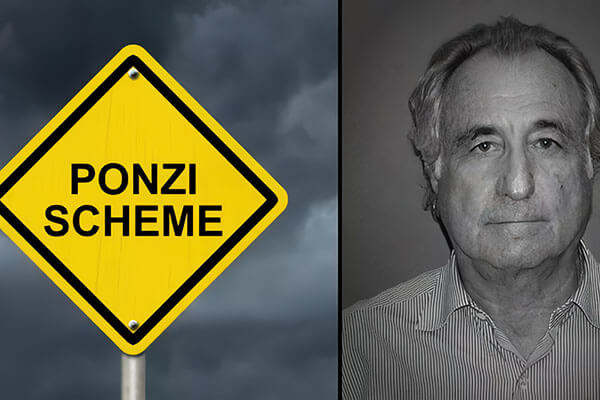
The 2008 collapse of Bernard Madoff's Ponzi scheme remains one of the most important lessons for investors in modern finance. It showed that reputation can hide risk, steady returns can disguise fraud, and even sophisticated investors can ignore warning signs when trust feels more comfortable than verification.
Madoff’s fraud was exposed during the global financial crisis, when investors began demanding cash that did not exist. He pleaded guilty in March 2009 and was sentenced to 150 years in prison in June 2009. The case still matters because today’s scams use different tools, but the same psychology: exclusivity, complexity, and the promise of unusually smooth returns.
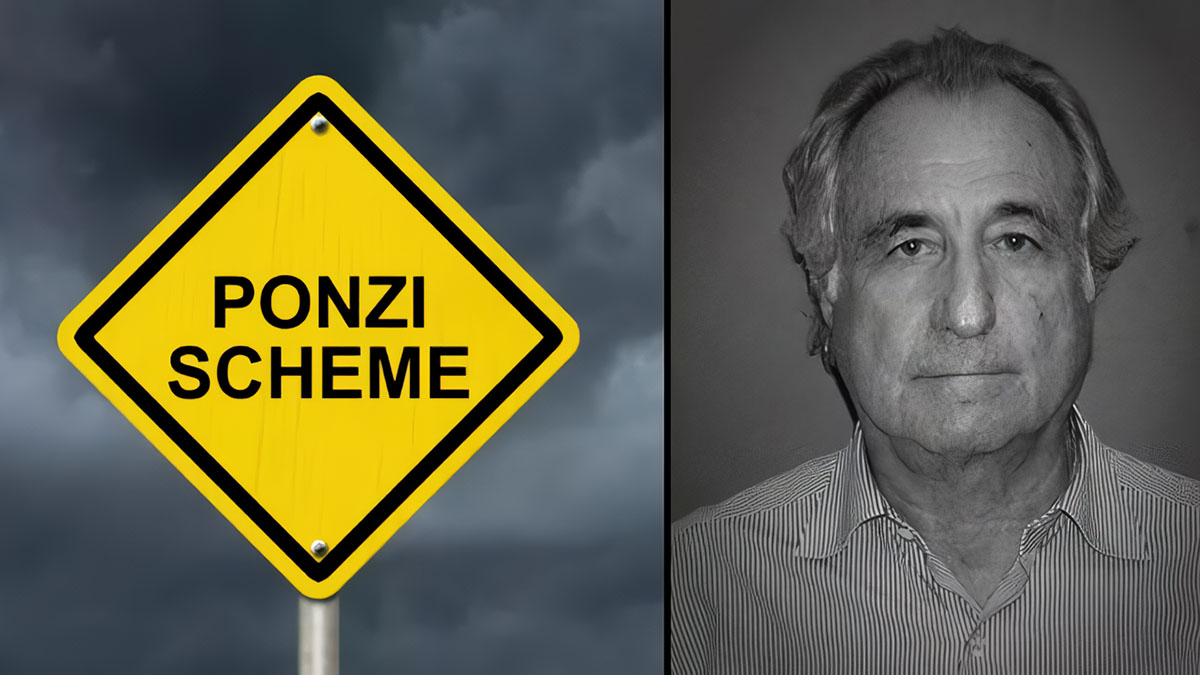
Bernard Madoff used Wall Street credibility to build trust before the fraud collapsed in December 2008.
The scheme relied on fake returns, fabricated statements, and new investor money to meet withdrawals.
The reported $65 billion figure included fictional gains, while actual cash losses were lower but still enormous.
Recovery efforts have become one of the largest financial crime restitution cases ever recorded.
The same red flags now appear in AI trading, fake brokerage apps, and social media investment groups.
Bernard Madoff was not a fringe operator. He founded Bernard L. Madoff Investment Securities in 1960 and became a well-known figure on Wall Street. He also served as chairman of Nasdaq, which gave him the kind of institutional credibility that many investors mistook for safety.
That reputation was central to the fraud. Madoff did not need to chase every investor. Many clients believed access to him was limited. That sense of exclusivity made the investment feel more valuable and made investors less likely to ask hard questions.
His legitimate market-making business also helped create a powerful illusion. The fraud was not sold by an unknown promoter with no credentials. It was run by someone who appeared deeply embedded in the financial system.
A Ponzi scheme uses money from new investors to pay earlier investors. The structure can survive only as long as fresh money keeps coming in and withdrawals remain manageable.
Madoff claimed to use a strategy known as split-strike conversion. In theory, the strategy combines stocks with options to reduce volatility. It sounds technical, but it is not magic. A real strategy still loses money during difficult market conditions. It still produces uneven returns.
Madoff’s reported results were too smooth. Clients received statements showing steady gains across different market environments. That consistency made investors feel safe, but it should have raised suspicion. Markets are noisy. A strategy that appears immune to volatility is often not low-risk. It may simply be unverified.
The fraud worked because investors confused documentation with proof. Account statements looked official. Reported returns looked consistent. Madoff’s reputation looked solid. But the key evidence was missing: independent confirmation that the trades actually existed.
The most uncomfortable part of the Bernard Madoff story is that many victims were not careless. Some were wealthy families, charities, funds, and experienced professionals. They understood markets, but they trusted the wrong signals.
Three forces made the fraud durable.
First, Madoff used social proof. If respected investors were already involved, others assumed the due diligence had been done.
Second, he used scarcity. Some investors felt fortunate to be accepted, which shifted their mindset from analysis to gratitude.
Third, he used stability. Smooth returns are emotionally powerful. They reduce anxiety and make investors reluctant to question the source.
That combination made the scheme difficult to challenge. Anyone asking too many questions risks losing access. In fraud, that pressure is often the point.
The Madoff scandal was also a failure of oversight. The U.S. Securities and Exchange Commission later reviewed how the fraud had escaped detection. Its own Inspector General found that the agency had received detailed, substantive complaints over several years, but no thorough, competent examination was conducted.
This matters because investors sometimes assume regulation removes the need for personal due diligence. It does not. Regulation lowers risk, but it cannot replace independent verification.
The basic questions remain essential. Who holds the assets? Who audits the accounts? Can trades be verified by an outside party? Are returns consistent with the stated strategy?
If the answer is vague, the investment is already too risky.
The Ponzi scheme collapsed in 2008 when the financial crisis triggered heavy withdrawals. Investors wanted liquidity. Madoff did not have the cash.
That is how Ponzi schemes usually fail. They do not collapse because the fraudster suddenly becomes less convincing. They collapse when money flows reverse.
In December 2008, the pressure became unmanageable. Investors were asking for more money than the business could provide. Madoff’s reported account balances were large, but the actual cash behind them was not.
The crisis exposed the central truth: the investment performance was fictional.
The recovery process has been unusually significant. The Madoff Victim Fund completed its tenth and final distribution in December 2024, bringing total payments to more than $4.3 billion for 40,930 victims in 127 countries. Victims covered by the fund recovered 93.71% of their losses from fraud.
Separate work by the SIPA Trustee has continued. As of April 24, 2026, the Madoff Recovery Initiative reported approximately $15.378 billion in recoveries and settlement agreements.
The recovery figures are important, but they should not create a false sense of comfort. Investors waited years for restitution. Some never fully recovered financially or emotionally. Prevention remains far better than compensation.
A fraud does not always look reckless. Often, it looks calm, professional, and exclusive.
Investors should be cautious when an opportunity includes:
Returns that are too steady across different market conditions
Pressure to invest quickly or keep access private
Vague explanations of the strategy
No independent custodian
No clear audit trail
Difficulty withdrawing funds
Requests to send money to personal wallets or unfamiliar platforms
Promises that AI, arbitrage, or insider access can remove risk.
The strongest protection is not cynicism. It is a process of DYOR. Verify registration. Confirm custody. Demand independent statements. Understand liquidity terms. Compare returns with the risk being taken.
If an investment cannot survive basic questions, it should not receive capital.
The central lesson from Bernard Madoff is not “avoid all risk.” Risk is part of investing. The lesson is to avoid risk that cannot be measured, explained, or verified.
Good investments may lose money. Fraudulent investments often pretend they cannot.
A credible manager should welcome due diligence. A legitimate platform should make custody clear. A real strategy should explain both upside and downside. Any investment that asks for trust while avoiding transparency is not offering sophistication. It is asking for blind faith.
Madoff’s fraud lasted because too many people accepted confidence as evidence. Investors should do the opposite. Trust should begin only after verification.
Bernard Madoff’s Ponzi scheme was an investment fraud that used money from newer investors to satisfy withdrawals from earlier investors. Clients received fake account statements showing steady profits, even though the reported trading activity was largely fabricated.
The scheme collapsed during the 2008 financial crisis due to investor requests for large withdrawals. Madoff could not meet those redemptions because the account values shown to clients did not match real cash or real investments.
Investors trusted him because he had Wall Street status, a long career, and a reputation for exclusivity. Many assumed other sophisticated investors had already verified the strategy. That assumption became one of the fraud’s greatest advantages.
The biggest lesson is to verify before trusting. Investors should confirm custody, audits, trade records, withdrawal terms, and regulatory status. Steady returns are not proof of safety. Sometimes they are the first warning sign.
The Bernard Madoff Ponzi scheme's 2008 collapse was not only a story about fraud. It was a story about misplaced confidence. Investors trusted reputation, smooth returns, and exclusivity more than independent verification.
That lesson is more important in 2026 than it was in 2008. Fraud now moves faster, looks cleaner, and reaches investors through digital platforms. The defence remains the same: ask hard questions, verify every claim, and never confuse access with safety.
Disclaimer: This material is for general information purposes only and is not intended as (and should not be considered to be) financial, investment or other advice on which reliance should be placed. No opinion given in the material constitutes a recommendation by EBC or the author that any particular investment, security, transaction or investment strategy is suitable for any specific person.