Published on: 2026-04-02
Updated on: 2026-04-02
Junk bonds, in simple terms, are corporate bonds issued by weaker borrowers, so they must pay more to attract investors.
That higher yield can look tempting, especially when safe bonds offer less income, but the extra return is compensation for real credit risk.
For beginners, junk bonds matter because they sit between safer bonds and equities. They still pay coupons like traditional bonds, yet they often react to the economy more like a risk asset.
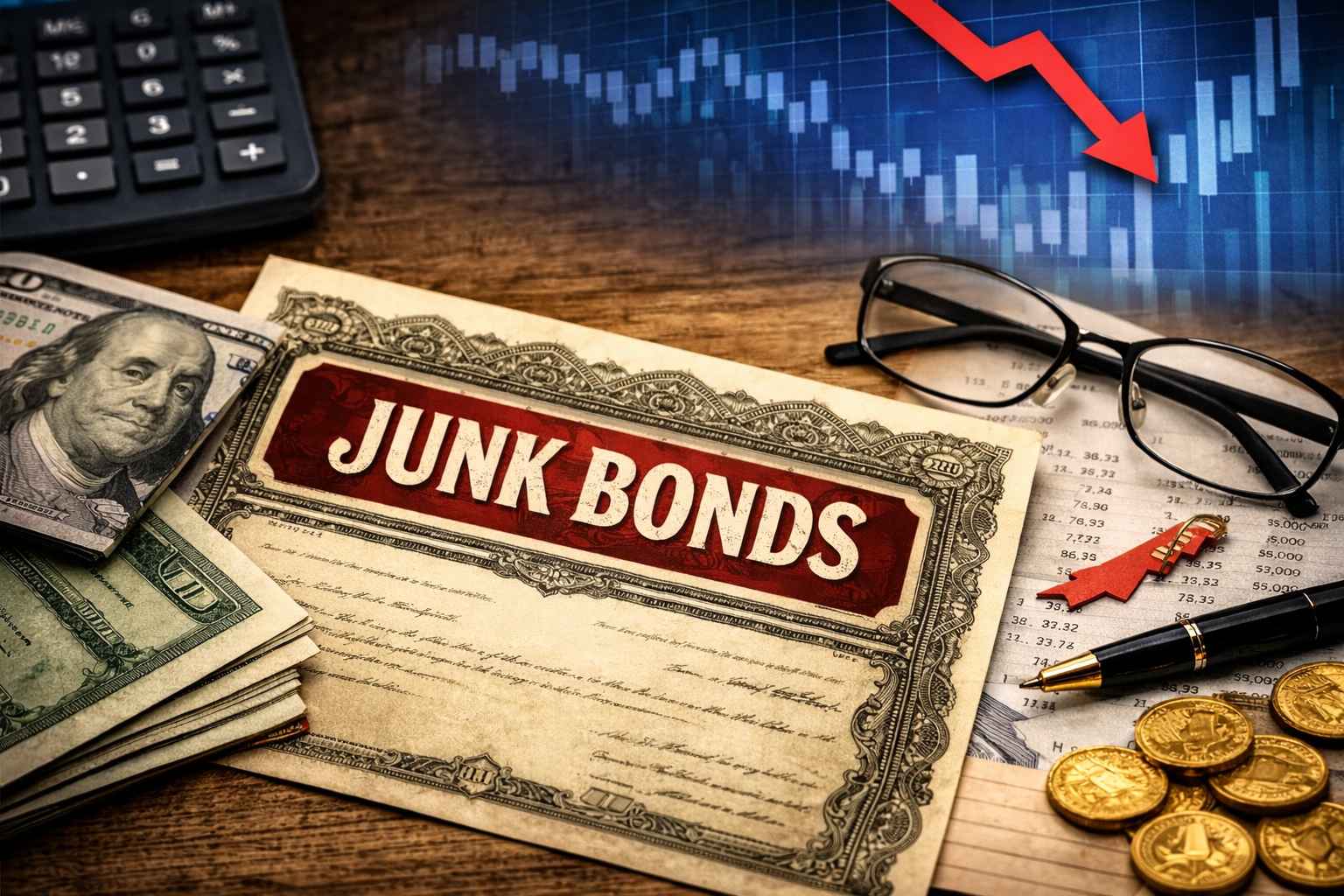
Junk bonds offer higher income because investors demand extra compensation for higher default risk.
They sit below investment grade, so price swings can be sharper when growth slows or credit conditions tighten.
The easiest way to understand them is through three lenses: credit rating, spread, and issuer quality.
Beginners usually get cleaner exposure through a diversified fund or ETF than through a single bond.
A junk bond is a corporate bond that sits below investment grade, meaning the issuer is viewed as financially weaker than a top-quality borrower.
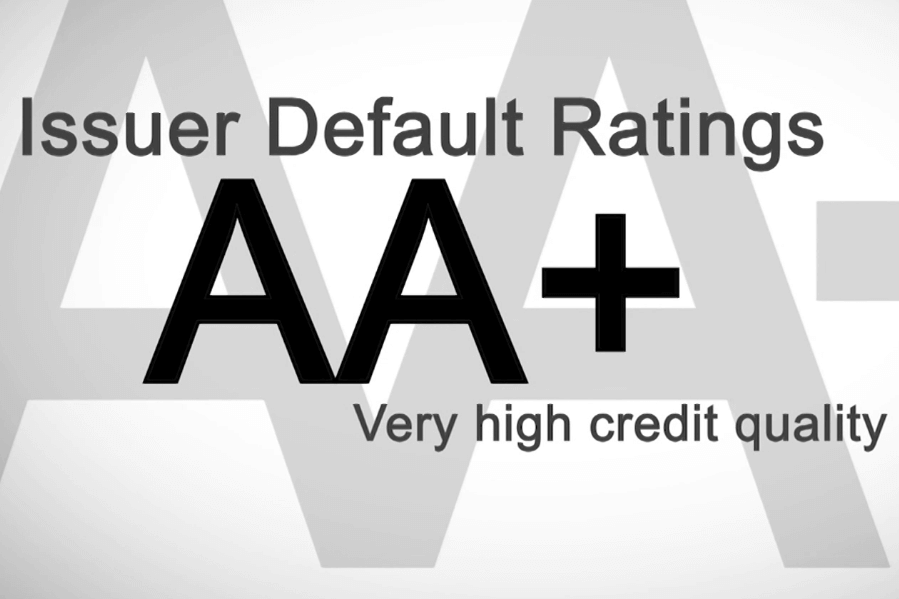
These bonds are commonly rated Ba or lower by Moody’s and BB+ or lower by S&P and Fitch. Because credit risk is higher, investors require a higher yield to hold the asset.
That higher yield is the defining feature of the junk bond market. Companies with less stable balance sheets must pay more to borrow, while investors accept that extra risk in return for greater income potential.
The result is a part of the bond market that can offer attractive returns, but with a much thinner margin for error.
The short answer is default risk. High-yield issuers are more likely than investment-grade issuers to experience financial stress, refinance on worse terms, or miss payments.
There is also a pricing effect. Bond prices and yields move in opposite directions, so when investors get nervous and sell riskier credit, prices fall, and yields rise. That is why junk bond yields often look generous right when risk is rising.
| Feature | Investment-grade bonds | Junk bonds |
|---|---|---|
| Credit quality | Stronger issuer profile | Weaker issuer profile |
| Typical yield | Lower | Higher |
| Default risk | Lower | Higher |
| Market behavior | More defensive | More credit-sensitive |
| Beginner appeal | Stability | Income potential |
The key distinction is not the coupon. It is the credit profile behind the coupon.
FINRA notes that high-yield bonds can also move in the same direction as stocks, so they may not diversify a stock-heavy portfolio as much as many beginners expect.
Credit ratings are shorthand for financial strength. A higher rating usually indicates a lower perceived default risk. A weaker rating signals that investors want higher yield, stronger covenants, or both.
Beginners should also remember that “junk” is a wide category. A bond near the top of the high-yield market is very different from one deep in distressed territory.
That is why the phrase "junk bond risks" covers more than just default: it also includes liquidity, refinancing pressure, and economic sensitivity.
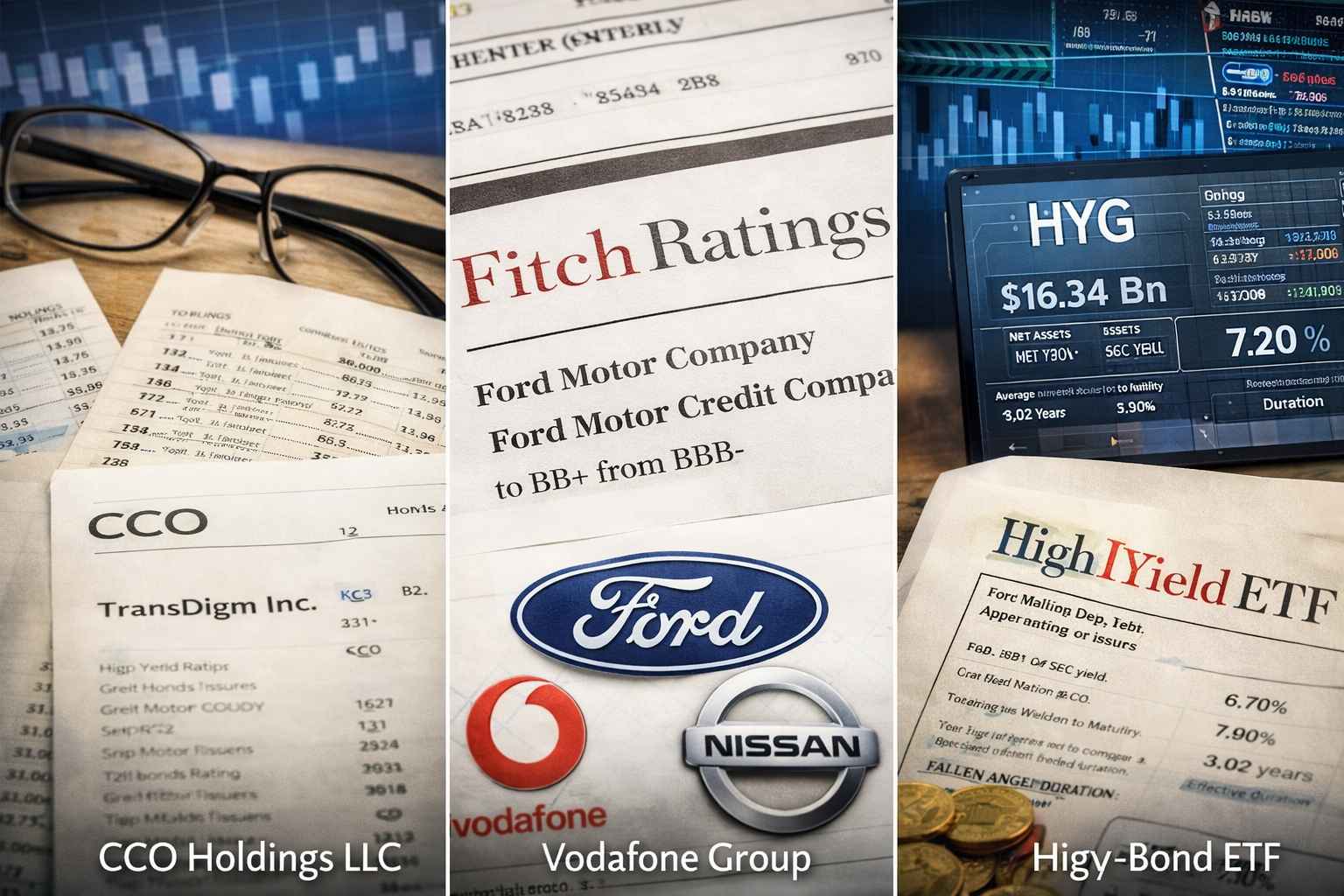
The easiest live example is to look inside a major high-yield ETF. As of March 31, 2026, HYG held 1,321 bonds, with top issuer exposures including CCO Holdings LLC and TransDigm Inc.
That shows what junk bond investing often looks like in practice: exposure to leveraged corporate borrowers across many sectors rather than a single distressed name.
A fallen angel is a bond that started life as investment grade and later slipped into junk territory. Ford became a widely cited example in 2020, when Fitch cut Ford and Ford Credit to BB+ from BBB-.
Some fallen angels include:
Ford Motor Co.
Vodafone Group
Nissan Motor Co.
For beginners, a fund is often easier to understand than a single bond. As of April 1, 2026, HYG had about $16.34 billion in net assets.
As of March 31, 2026, it showed a 30-day SEC yield of 6.70%, an average yield to maturity of 7.20%, and an effective duration of 3.02 years. That makes HYG a practical example of how investors get diversified exposure to the high-yield market.
The biggest risk is still default risk. If the issuer cannot meet its obligations, bondholders may face delayed payments, restructuring, or losses.
The second is liquidity risk. High-yield bonds can be harder to sell quickly at a fair price, especially during market stress. The SEC also warns that redemptions in high-yield funds or ETFs can force managers to sell bonds into weak markets, which can pressure fund prices.
The third is economic risk. When investors rush into safer assets, junk bonds often get sold in a classic flight to quality. That is one reason high-yield credit can weaken well before defaults actually show up.
Interest-rate risk still matters, but usually less than with longer-dated high-quality bonds. High-yield bonds often have shorter maturities and higher coupons, so their behavior is driven more by credit conditions than by rates alone.
Start with the right question: why is this bond paying me more? If the answer is simply “because the issuer is weaker,” you are thinking about junk bonds the right way.
For most beginners, a diversified ETF or mutual fund is easier than picking a single issue. You spread exposure across many bonds, and a professional manager or index methodology handles the selection. That does not remove risk, but it does reduce the damage one bad issuer can cause.
If you do buy an individual bond, read the prospectus and pay attention to rating, maturity, seniority, and covenant protection. In junk bonds, the fine print matters almost as much as the yield.
A junk bond is a corporate bond rated below investment grade. It offers a higher yield because the issuer carries greater credit risk.
Because they are credit-sensitive. When investors worry about growth or defaults, junk bonds can fall alongside equities.
It means investors want more compensation for taking credit risk. Wider spreads usually signal rising concern about defaults, liquidity, or the economy.
Usually yes. An ETF reduces single-issuer risk by spreading exposure across many bonds, though the fund can still lose value if credit markets weaken.
No. They can appeal in many rate environments. The key question is whether the extra yield properly compensates for the credit risk.
Junk bonds are simply below-investment-grade corporate bonds that pay more because the issuer is riskier. For a beginner, the best way to understand them is to focus on three things: the rating, the spread, and the borrower's quality.
The examples make the concept clearer. A diversified ETF like HYG shows how the market packages high-yield exposure today. A fallen angel like Ford shows that credit quality can deteriorate and recover.
And the broader US high-yield market, with a yield above 7% at the end of March 2026, shows why the asset class continues to attract income-focused investors. The yield can be real, but so is the risk.
Disclaimer: This material is for general information purposes only and is not intended as (and should not be considered to be) financial, investment or other advice on which reliance should be placed. No opinion given in the material constitutes a recommendation by EBC or the author that any particular investment, security, transaction or investment strategy is suitable for any specific person.