Published on: 2023-10-20
Updated on: 2026-05-12
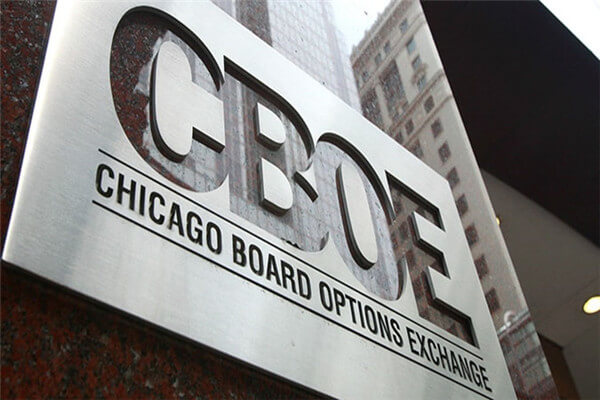
The Chicago Board Options Exchange (CBOE) is where modern investors learned to trade risk, not just direction. Known today as Cboe, the exchange helped turn options from a niche professional tool into one of the most active parts of the U.S. financial market.
That matters because options now shape how traders hedge portfolios, price volatility, react to earnings, and manage short-term market shocks. In 2025, U.S.-listed options volume reached a record 15.2 billion contracts, while Cboe’s U.S. options exchanges handled 4.6 billion contracts for their sixth straight annual record. The Chicago Board Options Exchange is no longer just a historic Chicago institution. It is a live engine of global risk pricing.
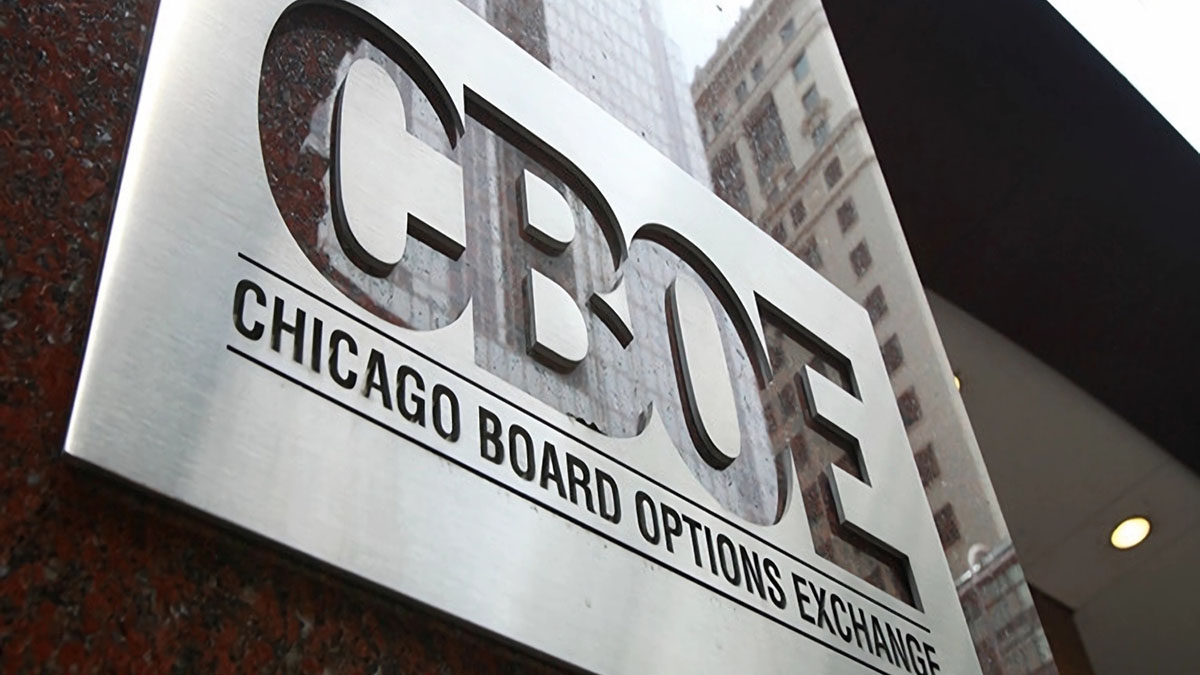
CBOE was founded in 1973 as the first U.S. exchange for standardised listed options.
The exchange is best known for equity options, SPX options, VIX products, ETF options, and index derivatives.
The CBOE Volatility Index, or VIX, remains one of the world’s most watched measures of expected U.S. equity-market volatility.
SPX options averaged 3.9 million contracts per day in 2025, underscoring Cboe's centrality to institutional hedging.
SPX 0DTE options averaged 2.3 million contracts daily in 2025, making same-day expiry trading a defining modern trend.
CBOE US products are now used for hedging, income strategies, event trading, volatility exposure, and portfolio protection.
The Chicago Board Options Exchange, often searched as the Chicago Board of Options Exchange, Chicago options exchange, Chicago Board Options Exchange, or CBOE US, is an options marketplace operated by Cboe Global Markets.
Its original purpose was to make options trading more transparent and standardised. Before the listed options became common, many options were traded privately, with less consistent pricing and lower liquidity. CBOE changed that by creating an organised venue where contracts could trade under standardised terms, with visible prices and centralised clearing.
For investors, this matters because options are contracts on risk. A call option gives the buyer the right to buy an asset at a set price. A put option gives the buyer the right to sell. The buyer pays a premium. The seller receives the premium and assumes an obligation if the option is exercised.
That structure allows investors to do more than buy or sell stocks. They can hedge a portfolio, trade a market view with limited upfront capital, seek income through option-selling strategies, or position for volatility around events such as inflation data, Federal Reserve meetings, or earnings reports.
CBOE opened in 1973 as the first U.S. exchange dedicated to standardised listed options. It began with call options on a small group of stocks, then expanded as investors demanded more tools to manage market risk.
Put options arrived in 1977, giving traders a clearer way to hedge downside exposure. LEAPS followed in 1990, giving investors longer-dated option contracts. The CBOE Volatility Index was introduced in 1993 and later became the market’s shorthand for expected volatility. VIX futures began trading in 2004 on Cboe Futures Exchange, creating a listed futures market for volatility exposure.
Cboe introduced SPX Weeklys in 2005, giving traders shorter-dated S&P 500 Index options. Over time, that product set expanded into the daily-expiry structure that helped fuel the rise of 0DTE trading.
The value of the Chicago Board Options Exchange is not only its size. Its importance stems from the types of risks it allows investors to trade.
A long-term investor can buy SPX puts to reduce portfolio downside during a market selloff. A fund manager can use index options to rebalance exposure without selling underlying holdings. A trader can use weekly options to define risk around a jobs report, CPI release, or major earnings announcement. A volatility trader can use VIX options or futures to express a view on expected turbulence rather than market direction.
This flexibility is why options volume has grown so quickly. Investors want more precise tools. Stocks offer direct exposure. Options allow exposure to direction, timing, volatility, and probability.
That precision cuts both ways. Short-dated options can lose value quickly. A trader can be right on direction but wrong on timing and still lose money. Option sellers can face large losses during sharp market moves. CBOE makes risk tradable and transparent, but it does not make risk disappear.
Cboe lists a wide range of products, but several categories define its market role.
Equity options are contracts linked to individual stocks. Traders use them around earnings, corporate announcements, sector moves, and momentum shifts. They can be used for speculation, hedging, covered calls, or protective puts.
ETF options give investors exposure to broad themes such as technology, energy, bonds, commodities, or market indexes. They are popular because ETFs often provide deeper liquidity than single-stock alternatives in the same sector.
SPX options are among Cboe’s flagship products. They track the S&P 500 Index and are widely used by institutions to manage U.S. equity exposure. SPX options are cash-settled and European-style, which makes them useful for portfolio hedging and large-scale index strategies.
The CBOE Volatility Index measures expected 30-day volatility in the S&P 500 based on option prices. VIX options and futures allow investors to trade volatility directly. They are often watched during selloffs because demand for downside protection can lift implied volatility.
FLEX options allow eligible investors to customise certain contract terms, including strike prices and expiration dates. They are often used by institutions and structured-product desks that need more tailored exposure than standard listed contracts provide.
Weekly options changed how investors trade short-term risk. Instead of waiting for monthly expirations, traders can now use contracts that expire within days or even on the same trading day.
This is where 0DTE options enter the story. A 0DTE option has zero days to expiration. It expires the same day it is traded. These contracts have become especially popular in SPX because they allow traders to position for intraday moves, macro releases, and short-term volatility shifts.
In 2025, SPX 0DTE options averaged 2.3 million contracts daily, representing 59% of total SPX options volume. That figure shows how much the market has shifted toward shorter time frames and more precise risk-taking.
The growth is powerful, but it requires discipline. Same-day options have a limited time to recover from adverse price moves. Their value can change quickly as the market moves, volatility shifts, or the clock runs down.
Cboe combines electronic trading with open-outcry trading in selected products. Electronic markets provide speed, transparency, and broad access. Open-outcry trading can still help with complex institutional orders that require human negotiation and liquidity sourcing.
Cboe operates four U.S. options exchanges: Cboe Options, C2 Options, BZX Options, and EDGX Options. These venues support different trading models and fee structures, helping brokers route orders based on execution quality, liquidity, and cost.
For everyday investors, the key trading variables are liquidity, spread, expiration, strike price, and implied volatility. A liquid option with tight spreads is usually easier to enter and exit. A thinly traded option can be costly even if the market view is correct.
CBOE’s future will likely be shaped by three forces: shorter expirations, volatility products, and global market access.
The 2025 volume data shows that options are now a mainstream trading and risk-management tool, not a side market. In early 2026, Cboe also reported strong business momentum, including 29% net revenue growth in the first quarter. That reinforces the commercial strength behind its options, data, and market-infrastructure businesses.
The next stage will not be about making options more complex. It will be about making them more accessible, more liquid, and more precise. SPX, VIX, weekly options, and 0DTE contracts already show that investors want tools that match the speed of modern markets.
The challenge is education. More access does not automatically create better trading decisions. Investors need to understand time decay, volatility pricing, liquidity, and position sizing before using short-dated options.
CBOE stands for the Chicago Board Options Exchange. It is now part of Cboe Global Markets and is best known for listed options, SPX options, VIX products, ETF options, and market data.
Many readers search for the Chicago Board of Exchange or the Chicago Board of Options, but the correct name is the Chicago Board Options Exchange. Today, it operates under Cboe Global Markets.
The CBOE Volatility Index, or VIX, measures expected 30-day volatility in the S&P 500 using option prices. Traders often watch it as a gauge of market stress and hedging demand.
No. Some searches refer to a stock market index with weekly options introduced in 1992, but SPX Weeklys were introduced by Cboe in 2005. The 1992 wording is a common source of search confusion.
No. Many retail traders can access listed options through brokers. However, products such as SPX, VIX, and 0DTE options require careful risk management because price changes can be fast and unforgiving.
The Chicago Board Options Exchange changed financial markets by making options standardised, visible, and tradable at scale. Its influence now extends far beyond Chicago. Through SPX options, VIX products, weekly expirations, and 0DTE contracts, CBOE helps define how investors price risk in real time.
For modern traders, the lesson is clear. CBOE is not just an exchange. It is a framework for understanding market expectations, volatility, and protection. Used well, its products can sharpen risk management. Used carelessly, they can magnify losses quickly. That balance is exactly why CBOE remains central to the market in 2026.
Disclaimer: This material is for general information purposes only and is not intended as (and should not be considered to be) financial, investment or other advice on which reliance should be placed. No opinion given in the material constitutes a recommendation by EBC or the author that any particular investment, security, transaction or investment strategy is suitable for any specific person.