Published on: 2026-05-12
Updated on: 2026-05-12
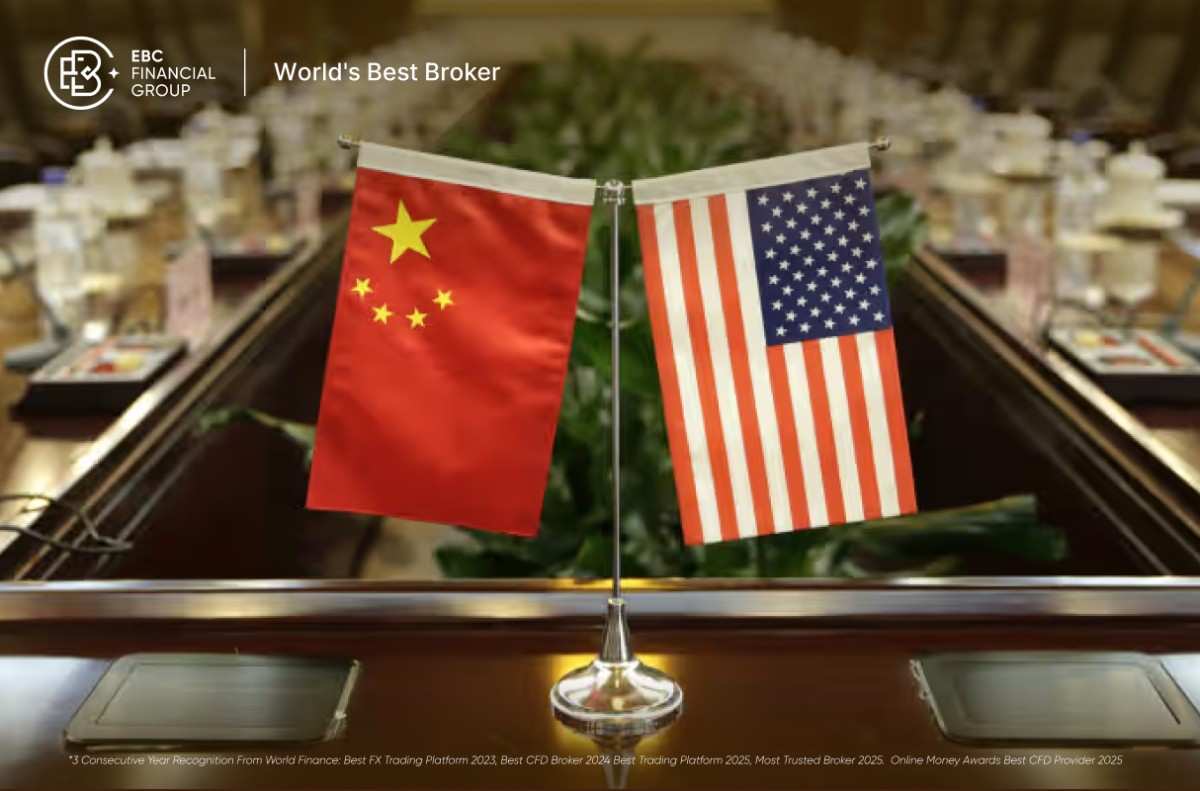
The tradeable signal from Trump’s China talks is not the executives entering the room, but the company still kept outside the deal lane. Jensen Huang’s absence separates stocks with receipt-based catalysts from stocks trapped in policy risk.
Boeing can re-rate on a signed aircraft order.
Soybean futures can move based on purchase volumes.
Visa and Mastercard can re-rate on operational access language.
NVIDIA needs export-control relief, not diplomatic warmth.
Jensen Huang’s missing seat shows which China trades can hold: buy the sectors with receipts, discount the sectors still behind the security wall.
The trade base is still large enough to justify deal-making, but too impaired to imply normalisation. US goods trade with China totalled $414.7 billion in 2025, while US exports to China fell 25.8% to $106.3 billion and imports from China fell 29.7% to $308.4 billion.
The goods deficit narrowed to $202.1 billion, but lower flows did the work. That combination explains the summit’s structure: Washington and Beijing need commercial channels, but only in sectors that do not transfer strategic leverage. (1)

The easy trade is to buy anything with exposure to China. CEOs are travelling, deal language is returning, and Washington wants visible commercial wins. That sequence can lift broad risk appetite after a long stretch of tariffs, supply-chain rerouting and policy fatigue.
The sharper read is far narrower. The delegation ranks sectors by political negotiability. Apple, Tesla, Boeing, Wall Street firms, Visa and Mastercard operate in channels where both governments can create commercial space without surrendering strategic leverage. Consumer access, aircraft orders, payment rails, investment forums and farm purchases are visible, countable and politically saleable.
NVIDIA operates in a different register. It does not merely sell hardware in China. It sells the computing layer beneath the AI race. A concession on advanced chips would not read like ordinary market access. It would read like a shift in the technology balance.
That is why Huang’s absence carries more information than another executive’s attendance. Retail reads absence as optics. Institutions read it as perimeter control.
Boeing needs a customer. NVIDIA needs a license architecture. That difference separates the commercial lane from the strategic lane.
A Boeing order can be announced as jobs, exports and industrial support. It fits the old summit model: large-ticket purchases, bilateral optics and headline numbers. A soybean commitment does the same for agriculture. A payment-network opening can be framed as financial access. A banking or asset management channel can sit within an investment forum.
Advanced chips do not fit that model. US export controls released in October 2023 were designed to restrict China’s ability to purchase advanced computing chips and manufacture advanced chips critical for military advantage. BIS also tied the controls to supercomputing applications, semiconductor manufacturing equipment and PRC-linked end users.
That policy language changes the valuation framework for Nvidia’s China exposure. Demand is not the binding constraint. Approval is.
NVIDIA’s own filings sharpen the point. Blackwell systems, including GB200 NVL 72, GB200 NVL 36 and B200, require licenses for shipment to China and certain other country groups, and Nvidia said it had not received licenses to ship those restricted products to China. The company also said its China data-center revenue grew in fiscal 2025 but remained well below levels before the October 2023 export-control regime. (3)
Boeing can sell if China signs. NVIDIA can sell only if the rules allow it, China accepts it, and both governments tolerate the optics.
The trader map identifies which assets have direct exposure to the summit before the headlines land. It is not a buy list. It is a confirmation dashboard: which sectors have a real catalyst, what evidence traders need, and what would invalidate the setup.
| Theme | Market Proxy | What Traders Need to See | What Invalidates It |
|---|---|---|---|
| Aviation thaw | BA | Signed aircraft order, delivery schedule, regulatory clearance | Vague purchase language without order size |
| Agriculture relief | Soybean futures, ADM, BG | Purchase volumes, crop timing, tariff details | Broad pledge without tonnage |
| Payments access | V, MA | Licensing access, transaction-processing approval, cross-border rules | Forum language without operating approvals |
| Financial channel | GS, C, BLK | Investment-board details, capital-market access, approval mechanism | No ownership, licensing or approval pathway |
| AI ceiling | NVDA, AMD, SMH | Export-control revision, license approvals, accepted China-specific chips | No licensing change |
A confirmed Boeing order has a different market value from a diplomatic purchase pledge. Soybean tonnage carries a stronger signal than a broad promise to buy more US farm goods. Payment-access rules matter more than a forum that meets without operational authority.
For semiconductors, the test is stricter: no licensing change means no China-policy rerating.
The Board of Trade proposal is the institutional version of the same split. AP reported that US Trade Representative Jamieson Greer discussed the value of a government-to-government Board of Trade with Chinese Vice Premier He Lifeng, with the board aimed at improving trade in goods without raising national security concerns. Agriculture fits that lane. Computer chips and sensitive technology do not.
That is a quota machine with diplomatic branding.
Free trade expands optionality across sectors. Managed trade concentrates relief in approved categories. It can stabilise agriculture, aircraft, energy, payments and selected financial services, but it also confirms that strategic industries remain outside the normal commercial bargain.
Traders should read the communiqué twice. First, check whether the announcement includes volumes, timelines and approvals. Second, check whether the sectors named sit inside the commercial lane or behind the security wall.
A long list of purchases does not validate a full China-risk rally if advanced chips, rare earths and Taiwan-sensitive technology remain excluded.
The if/then framework separates headlines worth buying from headlines likely to fade. Once the communiqué, deal list or executive readout lands, the market question is not whether the tone improved. The question is whether the announcement changes revenue visibility, access rules, or policy constraints.
| If This Happens | Then Read It As | Market Implication |
|---|---|---|
| Boeing order includes size, delivery timing and regulatory clearance | Real commercial thaw in aviation | BA has the cleanest event-driven upside |
| Agricultural purchases include tonnage and crop timing | Demand confirmation, not just diplomacy | Soybean futures and farm-linked exporters get the faster trade |
| Payments language includes operating approvals | Market-access progress | V and MA deserve a stronger rerating than banks |
| Board of Trade becomes permanent | Quota-managed trade | Approved sectors benefit; policy-sensitive sectors remain capped |
| Nvidia rallies without export-control changes | Beta, not policy relief | Treat NVDA strength as AI momentum unless licensing language changes |
| Semiconductors, China tech and cyclicals all rally after a vague deal | Overgeneralised thaw trade | Fade risk sits in stocks without direct catalysts |
If Washington and Beijing can negotiate Boeing jets, soybeans, and Wall Street access while keeping AI chips outside the deal, is this the beginning of a trade thaw or the formal architecture of a colder rivalry?
(1) https://ustr.gov/countries-regions/china-mongolia-taiwan/peoples-republic-china
(2) https://apnews.com/article/trump-xi-china-summit-trade-tariffs-2eee658298ba8f064fe232e8832bd2ea
(3) https://www.sec.gov/Archives/edgar/data/1045810/000104581025000023/nvda-20250126.htm