Published on: 2025-12-11
Updated on: 2025-12-11
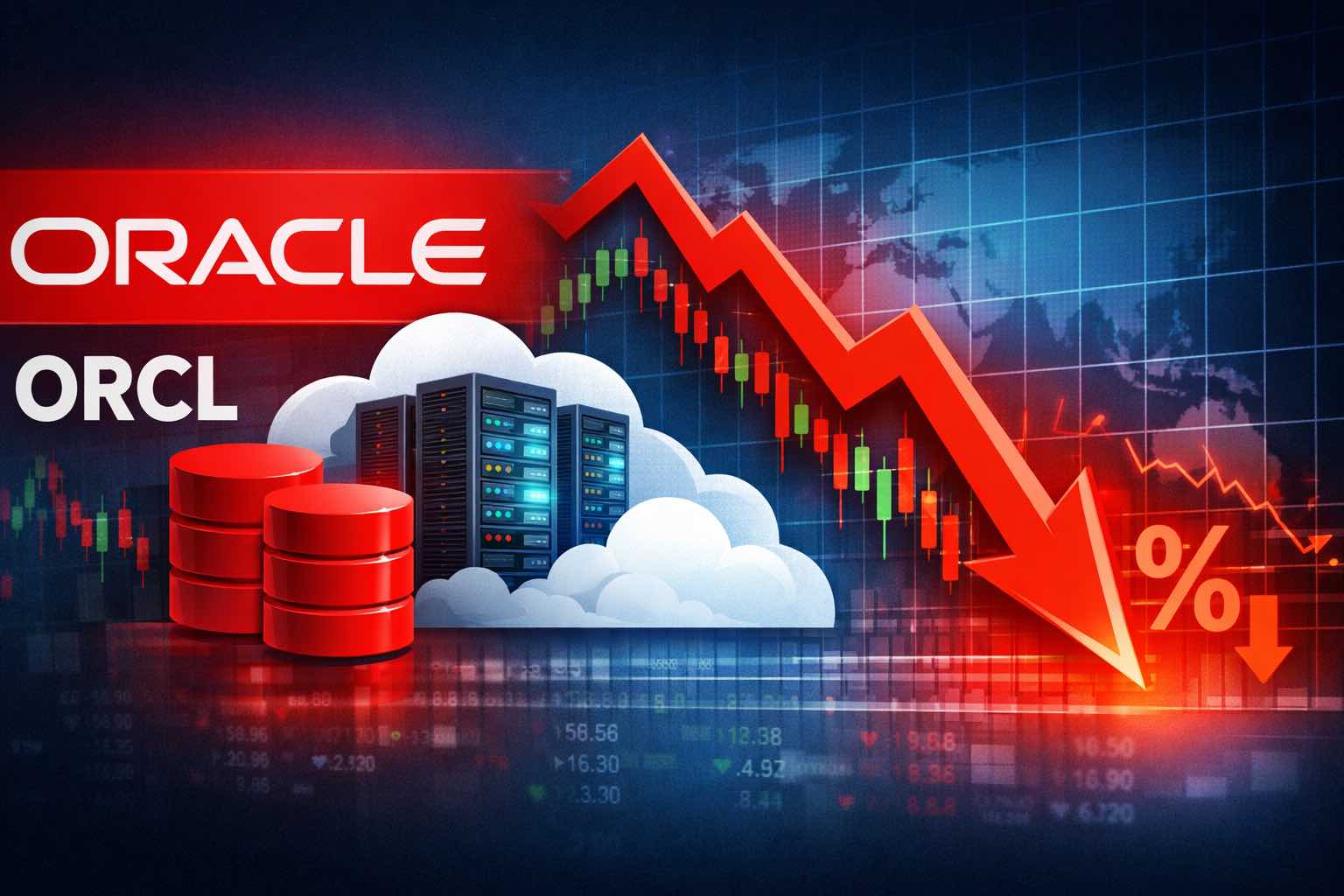
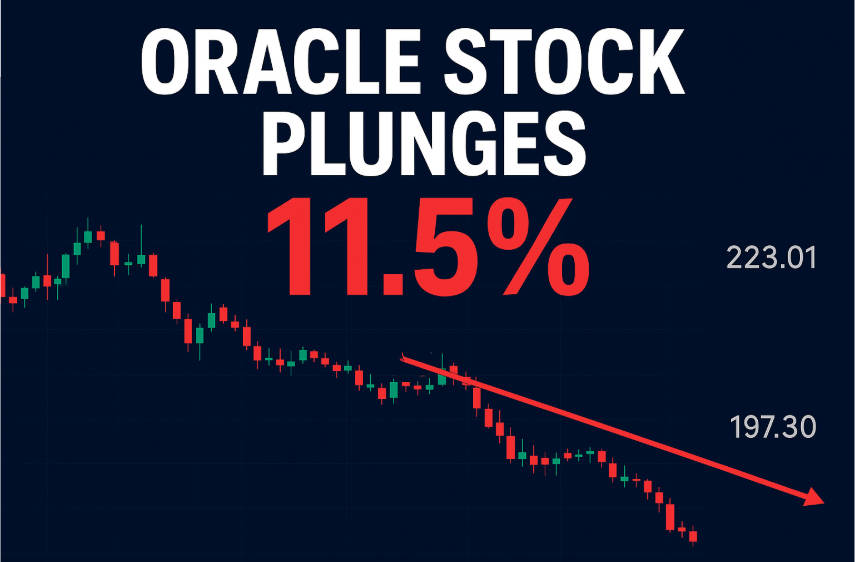
Oracle closed today's regular session slightly higher but suffered a sharp reversal in after-hours trading, plunging roughly 11.5% from about $223.01 at the close to near $197 after the company's fiscal Q2 results and updated spending plans.
The sell-off reflected investor concern that a revenue miss combined with sharply higher capital spending to build AI data centres could pressure Oracle's near-term cash flow and returns, even though the company highlighted a record backlog of AI-related contracts.
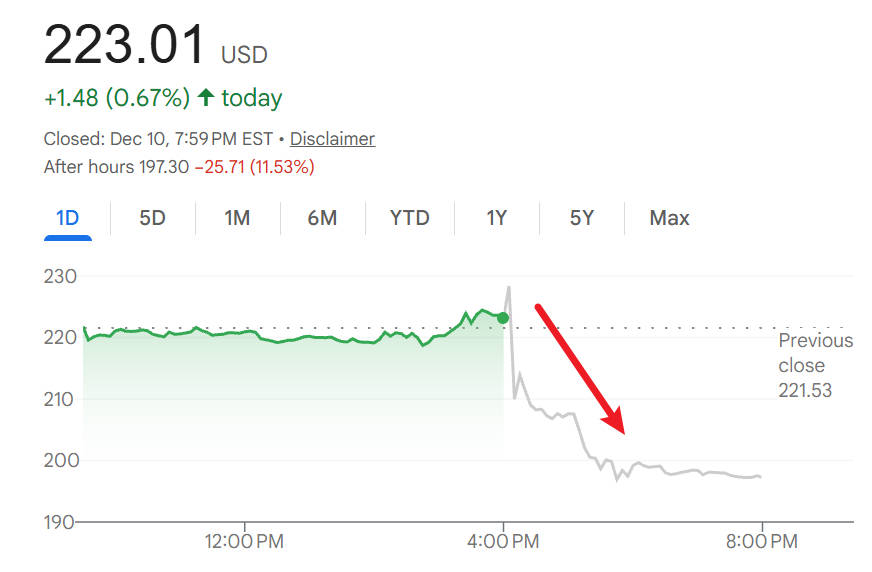
Regular session close: ~$223.01 (+0.67%).
After-hours price: dropped roughly 11.5% to near $197 (≈ −$25.71).
Quarterly revenue: ~$16.1 billion (up ~14% YoY) — slightly below some analyst estimates.
Adjusted EPS: $2.26 (beat consensus), boosted in part by a $2.7B gain from selling a stake in Ampere.
Remaining Performance Obligations (RPO/backlog): record $523 billion, driven by large AI contracts.
CapEx outlook: Oracle raised or disclosed a massive step-up in infrastructure spending, reporting capex that surged to multi-billions this quarter and public coverage citing an annual plan near $50 billion, which alarmed investors.
At first glance the report is mixed: adjusted EPS beat estimates, but total revenue came in slightly below the consensus many investors relied upon. The EPS beat was partly driven by a one-time gain (sale of Ampere stake), which led some investors to discount the beat as not fully representative of underlying operational momentum.
That combination of perceived earnings-quality issues and a revenue shortfall often triggers sharper-than-normal moves in after-hours trading when large institutions and derivatives traders immediately adjust positions.
Oracle is doubling down on building data-centre capacity to support AI workloads for major customers. Management revealed a dramatic increase in spending: the quarter's capex run rate was far above expectations, and coverage reports point to plans approaching $50 billion of investment to build and lease capacity for AI clients over the next year, a scale that surprised the market.
This type of front-loaded investment can depress free cash flow and raise short-term leverage concerns, even if it helps secure long-term revenue streams. Investors appear to be pricing in the possibility that returns on these investments may take longer than expected to materialise.
Oracle reported a record RPO/backlog of $523 billion, highlighting massive future revenue potential from recent large AI contracts, including deals linked to Nvidia and Meta. Yet the backlog alone was not enough to ease concerns about current revenue and cash-flow pressures.
In other words, the market rewards future visibility, but not at the cost of immediate financial strain or a riskier balance sheet. This tension between long-term promise and short-term costs helps explain why Oracle could post a record backlog while its shares still fell sharply after hours.
Two key themes emerged after the earnings release:
Some contracts involve co-dependence with partners (e.g., suppliers who are also customers), creating a complex revenue and margin picture.
Oracle's plan to underwrite massive AI infrastructure for a handful of large customers raises questions: who bears the economic risk, and when will Oracle earn attractive returns? The speed and scale of the capex increase prompted several traders to adjust near-term estimates or flag higher downside risk.
After-hours trading is less liquid than the regular session, and sentiment can swing sharply on headline news. Options markets had already priced in a sizeable move, so when revenue came in below expectations and capex projections surprised, algorithmic trading and options hedging likely amplified the decline. Expect higher intraday volatility tomorrow as the market adjusts to the news under normal trading conditions.
If you're following Oracle, here are the key items to monitor:
Capex plans and financing:
Look for management commentary on the timing of investments and when they are expected to generate cash, which is critical for valuation.
FY26 guidance updates:
Even if overall revenue guidance remains unchanged, any adjustments to margins or free-cash-flow expectations could be significant.
Customer concentration and contract structure:
Investors want to know whether the backlog consists of durable, high-margin contracts or revenue dependent on vendor relationships and accounting practices.
Credit metrics and debt levels:
Increased capex often requires more borrowing or asset leases, so watch Oracle’s debt and credit spreads for signs of financial stress.
Oracle is positioning itself in the AI cloud market by expanding capacity and signing major clients. If it captures a significant and lasting share of AI infrastructure demand, the long-term upside could be substantial, supported by management's record backlog.
However, the risks are notable: front-loaded investments can weigh on short-term returns and increase leverage risk if revenue or margins fall short. For value-oriented investors, the key question is whether the recent price drop presents a long-term buying opportunity or indicates deeper structural challenges. For traders, the near term will likely be shaped by volatility and news flow.
Oracle shares plunged mainly due to a slight revenue miss and a major spike in capital expenditure tied to AI data-centre expansion, raising concerns about short-term cash flow despite strong long-term backlog growth.
Yes. Oracle delivered an adjusted EPS beat, partly boosted by a one-time gain from selling its Ampere stake. However, investors discounted the beat because revenue came in just below expectations and spending pressures overshadowed the positive headline.
The biggest concern was Oracle's sharply higher capital spending plan for AI infrastructure. Investors fear heavy upfront investment may compress margins and free cash flow, creating short-term balance-sheet pressure even as the company reports record future revenue commitments.
Oracle reported strong cloud performance and continued AI-driven demand, contributing to a record $523 billion backlog. However, markets focused less on long-term potential and more on whether the company can convert this demand efficiently and profitably in the near term.
Key items include updated guidance on margins, free-cash-flow trends, and capex timing, alongside details on major AI contracts. Investors will also monitor Oracle's debt levels as large-scale infrastructure rollout may require additional financing.
Oracle's after-hours plunge of roughly 11.5% is a classic market reaction to mixed signals: strong future bookings and an EPS beat (partly one-time), but a revenue miss and a steep increase in capital spending that raise near-term cash-flow and leverage concerns.
As a result, buyers who embraced Oracle's AI narrative earlier paused to reassess the timeline and risk of those investments, unleashing a fast, deep sell-off in extended trading.
Disclaimer: This material is for general information purposes only and is not intended as (and should not be considered to be) financial, investment or other advice on which reliance should be placed. No opinion given in the material constitutes a recommendation by EBC or the author that any particular investment, security, transaction or investment strategy is suitable for any specific person.