Published on: 2026-04-14
Oracle stock rose 12.7% to $155.62 on April 13, 2026, making it the top performer in the S&P 500 that day.
The rally followed AI and utilities product announcements at Oracle Customer Edge Summit, held April 12 to 14 in Austin, Texas.
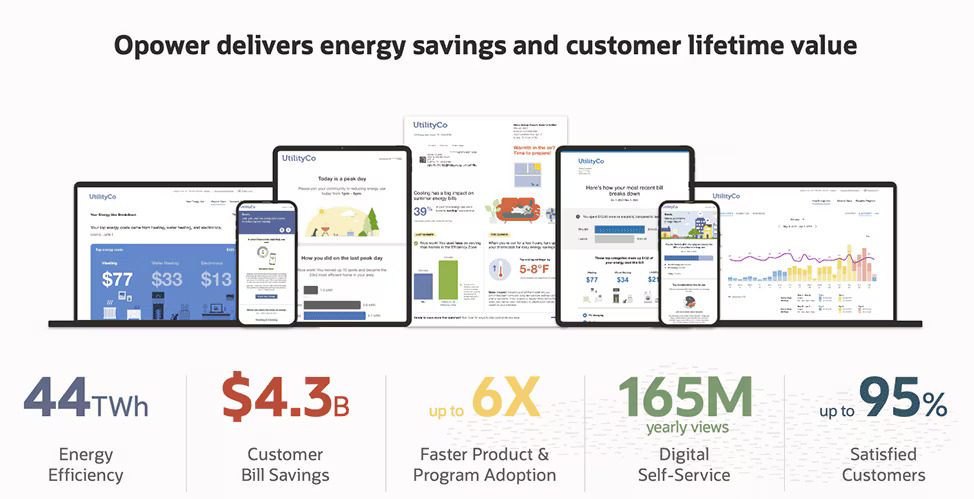
Oracle said its Opower platform now reaches 44.6 million North American households and helped deliver $369 million in residential bill savings in 2025.
Bloom Energy said Oracle intends to procure up to 2.8 gigawatts of fuel-cell capacity, with 1.2 gigawatts already contracted for U.S. projects.
Oracle’s fiscal 2026 third-quarter results showed $17.2 billion in revenue, $8.9 billion in cloud revenue, $4.9 billion in cloud infrastructure revenue, $553 billion in remaining performance obligations, and non-GAAP EPS of $1.79.
On April 13, 2026, shares of Oracle Corporation (NYSE: ORCL) climbed roughly 12.7% to close at $155.62, making it the top performer in the S&P 500 that session.
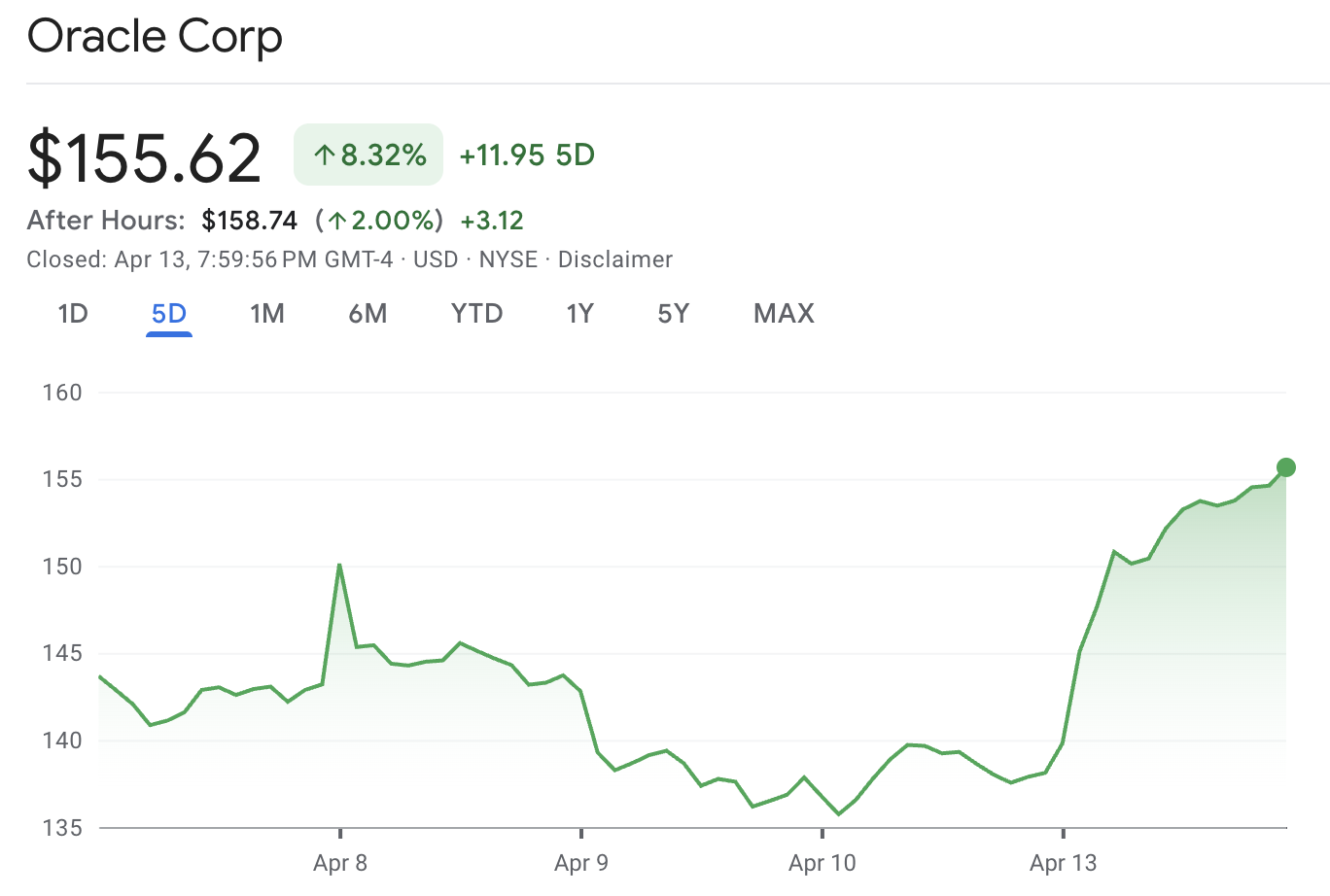
The move comes as the company’s annual Customer Edge Summit runs April 12 to 14 in Austin, Texas, where Oracle has been rolling out major product announcements targeting the utilities sector and AI infrastructure.
The stock had been under pressure coming into this week and was still down about 20% in 2026 even after Monday’s rally. Today’s rally suggests that institutional investors found a level where the fundamentals justified stepping back in.
Today’s move is not happening in isolation. Oracle’s third quarter of fiscal 2026 results, reported earlier this year, gave the market a strong fundamental backdrop to lean on.
Q3 fiscal 2026 highlights:
Revenue: $17.2 billion
Cloud revenue: $8.9 billion
Cloud infrastructure revenue: $4.9 billion
RPO: $553 billion
Non-GAAP EPS: $1.79
The RPO figure is particularly important. It represents locked-in future revenue from signed contracts, and a number that size signals that Oracle’s enterprise AI deals are real and already on the books.
Management has guided for total fiscal 2027 revenue of approximately $90 billion, implying continued strong growth. Oracle’s cloud infrastructure segment is widely seen as the primary engine behind that target.
The Oracle Customer Edge Summit is an annual industry event where Oracle brings together utilities executives, energy professionals, and technology partners to showcase its enterprise software and AI platforms.
This year’s event, held in Austin from April 12 to 14, is centered on Oracle’s Utilities Industry Suite and the Opower AI platform. It has attracted notable partners, including energy company Exelon, which highlighted its ongoing work with Oracle during the summit.
Oracle was not pitching AI as an abstract productivity tool. It was showing how AI can reduce billing friction, improve project oversight, strengthen audit trails, and help utilities manage more complex networks with better data.
Three announcements stood out:
Opower scale: Oracle said nearly 45 million North American households now benefit from Opower programs.
Measured savings: The company said those programs produced nearly $4.3 billion in total customer bill savings since inception and $369 million in 2025 alone.
Aconex updates: Oracle introduced features that keep comments, approvals, inspections, and related documents tied to a single system of record.
Opower is also proving its commercial value beyond just consumer programs. The platform helped Evergy, the Kansas and Missouri utility, pre-enroll 30% of its customers in time-of-use rate plans. Around 80% of those enrollments happened through digital self-service, cutting call center costs by more than $2 million.
Oracle also confirmed that six of the ten largest U.S. utilities now use its Advanced Distribution Management System. Water solutions from the same platform reach more than 500 million customers across 60 countries.
Oracle used the summit to introduce new AI capabilities across its Utilities Industry Suite. The aim was straightforward: help utilities lower costs, manage more complex networks, and improve customer service by better leveraging data.
The main updates included:
GenAI Asset Summarization to speed up maintenance and operational decisions
Enhancements to the Utilities AI Data Platform to unify data across customer, grid, and asset operations
AI-powered anomaly detection and in-memory processing for meter data management
The Oracle Affordability Solution for utilities managing customer assistance programs
Grid management enhancements through Oracle Network Management System
Oracle also released new Aconex capabilities for capital projects. The company said the updates simplify document reviews, add more structured inspection and test plan workflows, and strengthen traceability by keeping reviews, approvals, inspections, and supporting documents connected in one place.
This matters because it broadens the story beyond utilities. Investors are starting to see Oracle as an AI supplier for industries where project oversight, audit trails, and infrastructure control are core buying priorities.
Beyond the Customer Edge Summit announcements, a separate disclosure added further momentum to ORCL shares after the close.
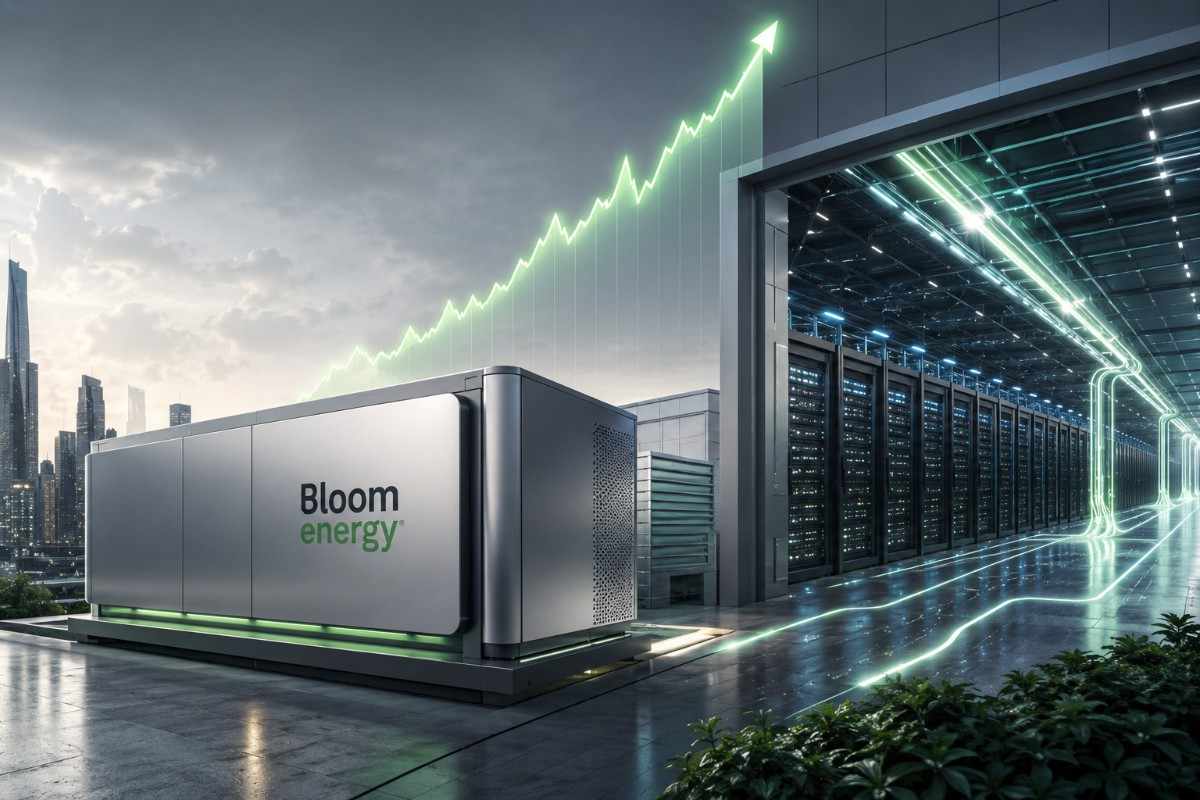
Bloom Energy announced an expanded partnership with Oracle under which Oracle intends to procure up to 2.8 gigawatts of fuel-cell capacity. An initial 1.2 gigawatts has already been contracted, with deployment underway across Oracle projects in the United States.
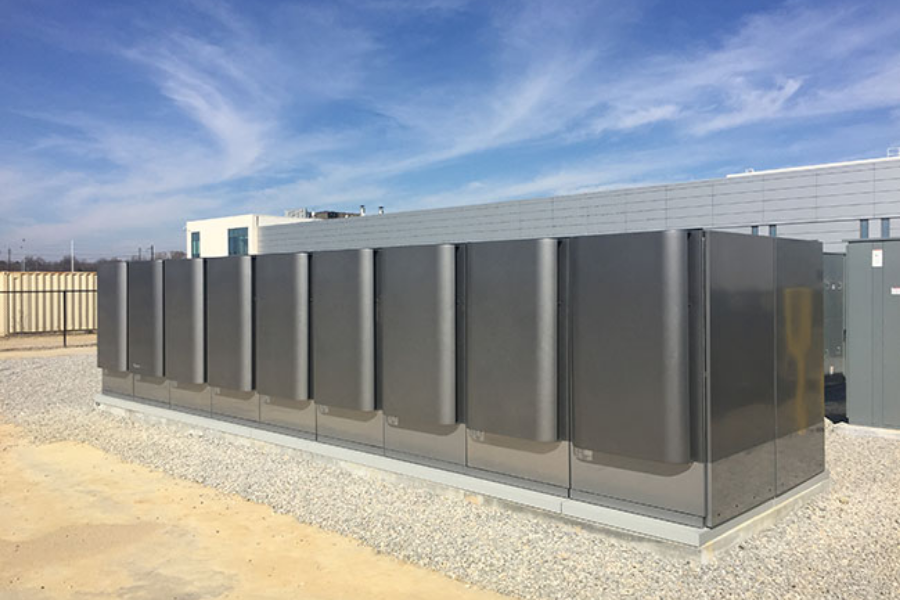
The deal builds on an earlier collaboration. In a previous project, Bloom Energy delivered a fully operational fuel cell system to Oracle in 55 days, well ahead of the standard 90-day timeline. Speed of deployment matters when hyperscaler demand for AI compute is outpacing traditional energy infrastructure timelines.
The partnership positions Oracle to power its AI cloud operations with cleaner, more reliable onsite energy while reducing grid dependency. Bloom Energy shares surged more than 14% in after-hours trading on this news, hitting above $200 for the first time.
Oracle rose after AI and utilities announcements at Customer Edge Summit and a Bloom Energy update tied to Oracle’s U.S. AI and cloud infrastructure expansion.
Opower is Oracle’s utility customer engagement platform. Oracle said it reaches 44.6 million North American households and helped deliver $369 million in residential bill savings in 2025.
Oracle introduced AI features for utilities, including GenAI Asset Summarization, meter-data upgrades, affordability tools, grid-management improvements, and new Aconex workflow features for project control.
Bloom Energy said Oracle can procure up to 2.8 gigawatts of fuel-cell capacity, with 1.2 gigawatts already contracted for Oracle’s U.S. AI and cloud projects.
The bull case is strong cloud growth, a large backlog, and deeper exposure to AI infrastructure. The main risks are execution, capital intensity, and proving that these new projects turn into lasting revenue.
Oracle’s jump on April 13 was driven by more than a simple AI bounce. Investors responded to product announcements with measurable utility outcomes, new Aconex capabilities for project control, and a Bloom Energy agreement that tied Oracle’s AI growth story to real power capacity.
That combination gave the rally more substance than a typical event-day move. Oracle already had strong cloud momentum going into the summit, and the latest announcements helped connect that momentum to industry demand for practical, scalable solutions that are harder for competitors to displace.
Disclaimer: This material is for general information purposes only and is not intended as (and should not be considered to be) financial, investment or other advice on which reliance should be placed. No opinion given in the material constitutes a recommendation by EBC or the author that any particular investment, security, transaction or investment strategy is suitable for any specific person.