Published on: 2026-04-21
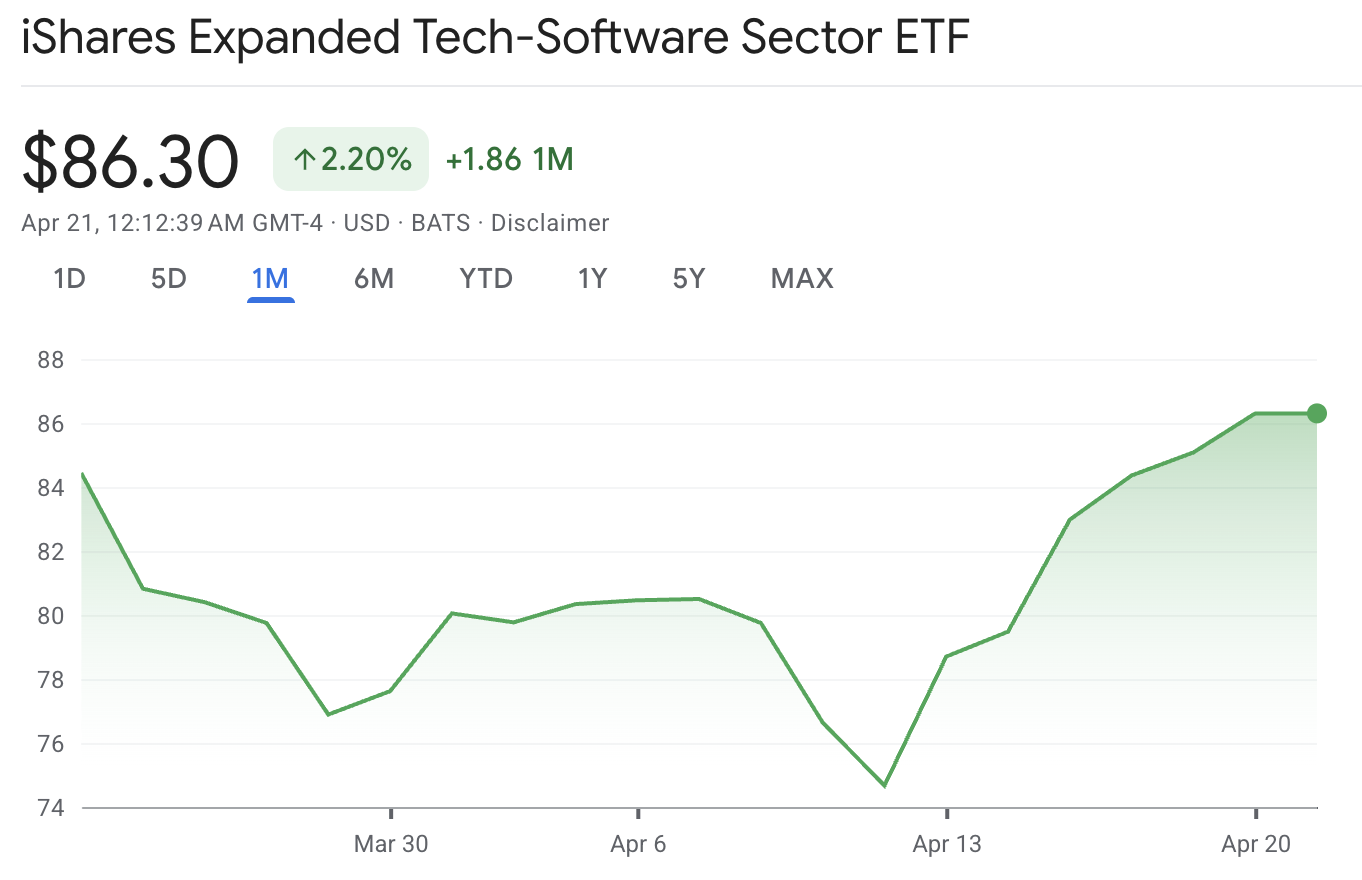
A battered software ETF has become one of the market’s most compelling reversal trades. The iShares Expanded Tech-Software Sector ETF, or IGV, was trading at $86.30 on April 21, after falling to a 52-week low of $74.62 earlier this month. Even after that rebound, the fund still sits well below its $117.79 52-week high and remains down 19.42% year to date on a NAV basis, which leaves the move looking powerful but not yet complete.
The timing explains why investors are paying attention again. Software had been one of the market’s hardest-hit growth pockets as investors reworked their assumptions on how generative AI could affect pricing power, product moats, and the durability of incumbent software businesses.
By April 17, IGV was on track for its best week since October 2001, a sign that the selling had become stretched enough for a forceful reversal once the panic started to cool.
IGV has rebounded sharply, but the damage still matters. The fund has climbed well off its lows, yet it remains far below its 52-week peak and still carries a steep negative year-to-date return.
This is a concentrated software bet, not a broad tech tracker. IGV holds 113 stocks, but its top 10 positions account for 60.47% of the portfolio.
Valuation is still premium. The March 31 fact sheet shows a 31.71x P/E ratio, 5.71x P/B ratio, and 1.23 three-year beta, which is not distressed pricing after a selloff.
Leadership is carrying the rebound. The largest holdings include Palantir, Microsoft, Oracle, Salesforce, and Palo Alto Networks, giving the fund a quality bias that matters when investors rotate back into growth.
| Metric | Latest figure |
|---|---|
| Price | $86.30 |
| Intraday range | $84.20 to $86.57 |
| 52-week range | $74.62 to $117.79 |
| YTD NAV return | -19.42% |
| Net assets | $10.38 billion |
| Expense ratio | 0.39% |
| Shares outstanding | 129.7 million |
| Holdings | 113 |
| Top 10 weight | 60.47% |
| P/E ratio | 31.71x |
Those figures show the tension in the trade. IGV offers deep liquidity and direct exposure to North American software, but it also comes with concentrated leadership and premium valuation, which can magnify both upside and disappointment.
The earlier selloff was not random. Investors spent much of the first quarter repricing software around a harsher AI narrative, especially in categories tied to coding, automation, digital design, workflow, and enterprise productivity.
By early April, the market had started to treat many incumbents as though AI-native challengers would pressure monetization much faster than the sector could adapt. That left software oversold enough that even a modest change in expectations could trigger a sharp snapback.

The rebound reflects a change in calibration rather than a full resolution of the debate. Investors are no longer trading software as if every established platform is on the verge of immediate displacement.
That does not remove the structural AI threat, but it does suggest the previous selloff had started to price in a more catastrophic outcome than current operating conditions justify.
IGV is also benefiting from a stronger macro tape. The Nasdaq had just completed a 13-day winning streak, its longest since 1992, before slipping on April 20.
That kind of backdrop typically improves appetite for growth, especially in sectors that had already been marked down hard. For investors looking to rebuild exposure to software without making a single-stock call too early, IGV becomes a natural landing place.
IGV is not being rescued by speculative fringe names. Its five largest positions are Palantir (8.82%), Microsoft (8.36%), Oracle (8.24%), Salesforce (7.40%), and Palo Alto Networks (5.48%). Those are businesses with scale, entrenched customer bases, and credible paths to absorb AI into existing product ecosystems. When investors come back to software after a hard selloff, those are exactly the names that tend to attract capital first.
The rebound also began from a severely damaged level. A fund does not line up for its best week in nearly 25 years unless positioning has become stretched and sentiment has turned one-sided. That is important to keep in mind because the first move higher in a broken sector is often driven by relief, but it can still extend if the market decides the previous drawdown overshot the real deterioration in fundamentals.
The sharp drawdown did not make IGV cheap. A 31.71x P/E ratio and 5.71x P/B ratio still imply that investors are paying for resilience, quality, and future growth. That leaves the ETF exposed if software spending softens, enterprise budgets tighten, or AI tools start to compress pricing faster than the market now expects.
The rally has improved sentiment, but it has not solved the valuation problem.
The fund’s structure is another constraint. Application software accounts for 60.35% of the portfolio and systems software for 35.96%, which means performance still depends heavily on a relatively narrow slice of the software universe.
A more convincing recovery would involve broader participation across the ETF, not just strength from the same large-cap names institutions trust first. Until that broadening appears, the move still looks more like early repair than a fully confirmed new bull leg.
The next test is earnings, not price alone. Investors will need to see whether software companies can defend pricing, hold demand steady, and show that AI is becoming a revenue support rather than a margin threat. If those signals arrive, IGV has room to extend the rebound. If they do not, this rally may end up looking like a sharp relief move inside a longer rebuilding phase.
IGV’s rebound is meaningful, but it is not yet decisive. The fund has recovered from an exaggerated AI-driven selloff, and its exposure to large, credible software franchises gives it a sturdier base than many damaged growth trades.
Even so, the numbers still demand caution: $10.38 billion in assets, 113 holdings, 60.47% concentration in the top 10, and a 31.71x earnings multiple all point to a vehicle that can keep rising if confidence improves, but can also lose altitude quickly if earnings and breadth fail to confirm the bounce.