Published on: 2026-04-23
Updated on: 2026-04-23
Gap risk is the risk that an asset jumps from one price level to another without trading through the intervening prices. It usually appears when new information reaches the market while trading is closed, restricted, or thinly traded, so the next available price can be far above or below the last traded price.
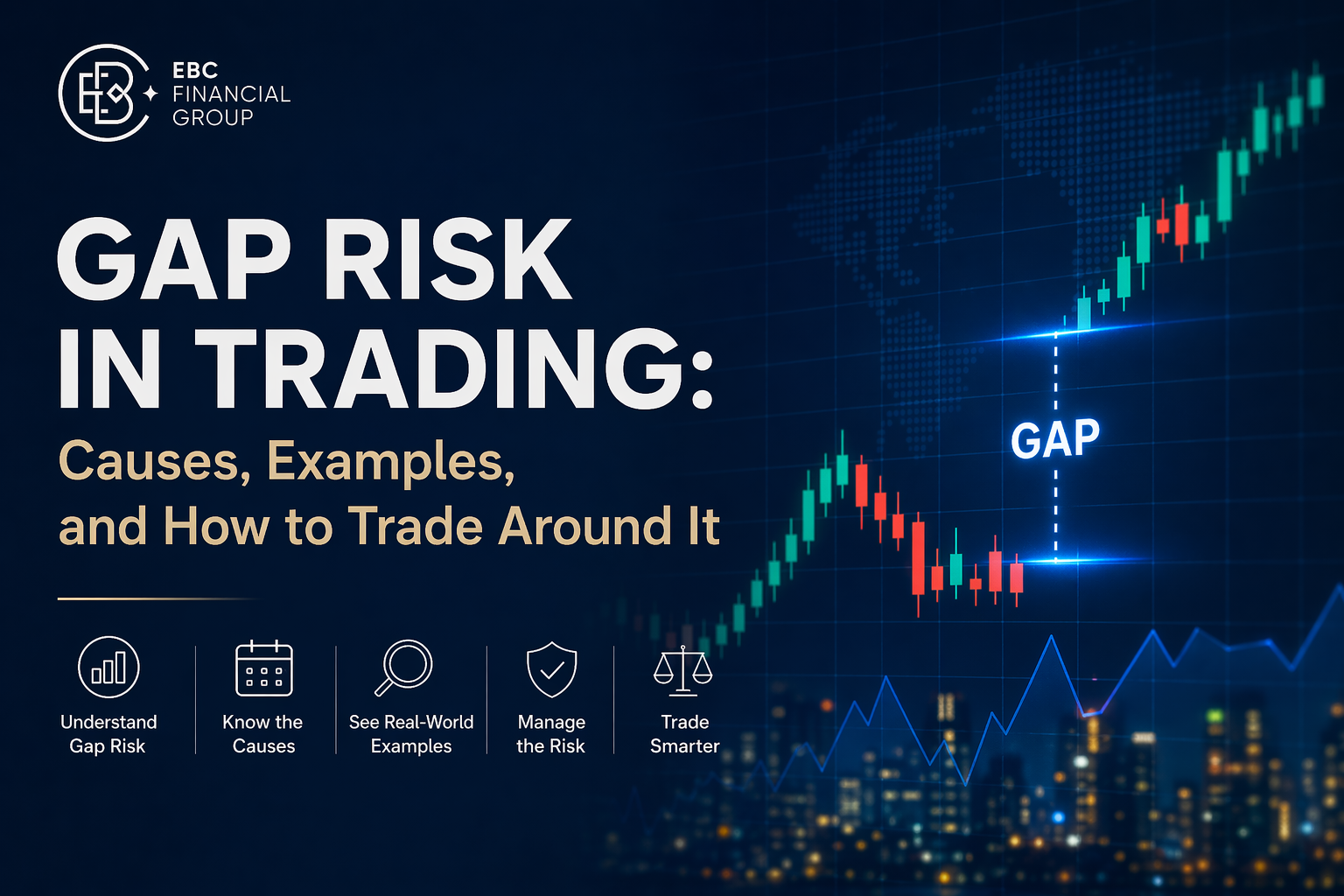
Gap risk happens when the next traded price is materially different from the previous close or session price.
It is most common around earnings announcements, economic data releases, central bank decisions, geopolitical events, weekends, and holidays.
Standard stop-loss orders can help control risk, but they do not guarantee execution at the stop price if the market gaps.
Gap risk differs by market structure: it is usually highest in equities, lower in foreign exchange during the trading week, and still relevant in futures around session breaks and weekends.
Traders manage gap risk through position sizing, event awareness, lower overnight exposure, and disciplined risk management.
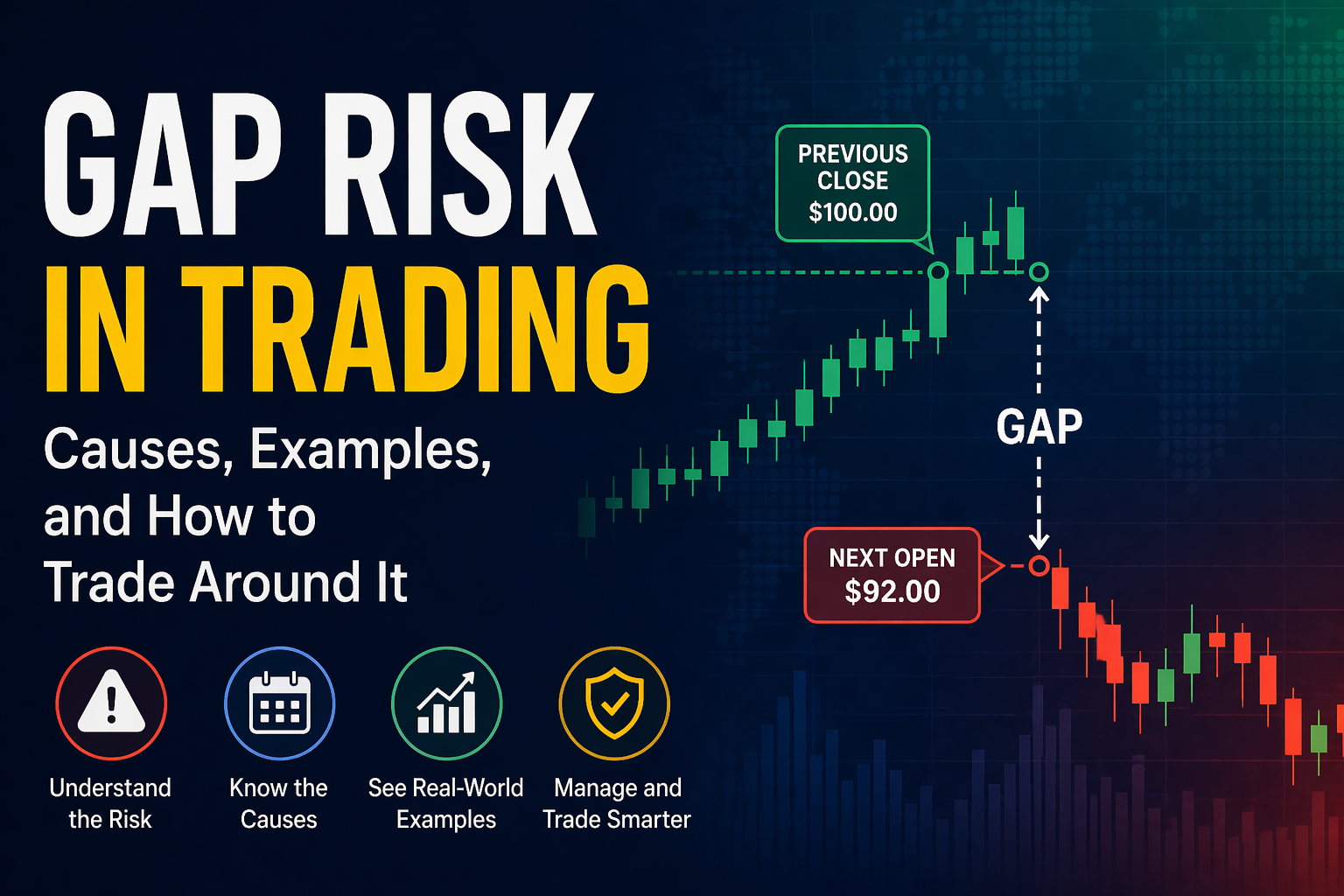
A price gap is a discontinuity on a chart. It occurs when an asset closes at one price, and the next trade occurs at a meaningfully different price, with no trading in between. Gap risk is the risk of being exposed to that jump.
For example, if a stock closes at $100 and opens the next session at $92 after an earnings release, the $8 difference is a gap down. A trader holding a long position would take a larger loss than expected. A short seller faces the same risk in reverse if a stock gaps higher on positive news.
Gap risk is usually caused by a fast repricing of expectations when trading is closed or liquidity is thin. Common triggers include:
Public companies often report after the regular session. If the results or guidance materially change expectations, the stock may reopen sharply higher or lower.
Inflation reports, employment data, interest rate decisions, and other macro releases can quickly change pricing across currencies, indices, bonds, and stocks.
Elections, sanctions, military escalation, tariff announcements, and unexpected policy changes can reprice multiple markets at once.
Some trading does happen before and after the main session in certain markets, but liquidity is usually thinner, and spreads can widen. That makes sharp price adjustments more likely when new information hits.
The longer a market is closed, the more opportunity there is for new information to build up. That is why gap risk often increases before weekends and long holiday breaks.
A listed company reports weaker-than-expected earnings after the close, and the stock opens 10% lower the next morning.
A central bank surprises the market outside peak trading hours, and a currency pair reopens at a very different level.
A geopolitical shock occurs over the weekend, and index markets reopen lower amid broad risk aversion.
Gap risk matters because it can break a trade plan built around smooth price movement.
The main effects include:
Stop-loss execution risk: A stop-loss order can trigger at the gap, but fill at the next available price.
Larger-than-planned losses: Actual loss may exceed the amount implied by the stop level.
Margin pressure: Leveraged accounts can face margin calls or forced reductions.
Emotional decision-making: Sudden overnight losses can lead to reactive trading and poor discipline.
Gap risk is not the same across markets. It depends on trading hours, liquidity, and the way price discovery occurs.
Gap risk cannot be removed completely, but it can be reduced. Practical controls include:
Smaller positions reduce the damage if the market opens well beyond the expected exit level.
Check the economic calendar, earnings schedule, and major policy events before deciding to hold a position overnight.
If the event risk is not part of the trade thesis, some traders reduce or close positions before the market closes.
Stop-loss orders are still useful, but they should be treated as risk-control tools, not price guarantees.
Spreading exposure across assets, or using hedges where appropriate, can reduce the impact of a single adverse gap.
The more leverage a position uses, the more damaging an overnight gap can be.
Gap risk and slippage are related but not the same. Gap risk is a discontinuous price jump between one trading point and the next. Slippage is the difference between the expected execution price and the actual execution price when an order is filled. Slippage can occur during normal trading, especially in volatile or low-liquidity conditions.
Not with certainty. Traders cannot know in advance exactly when a surprise event will happen or how large the repricing will be. What they can do is identify periods when gap risk is more likely, such as earnings announcements, central bank meetings, major data releases, and long market closures.
Gap risk is the chance that a market opens or resumes trading at a very different price from the last traded price, with no trading in between.
They usually happen when important news arrives while the market is closed or when liquidity is too thin to absorb orders smoothly.
No. A standard stop-loss can trigger, but it may fill at a worse price than expected if the market gaps beyond the stop level.
Equities usually face the highest gap risk because of fixed trading sessions and earnings-driven repricing. Indices can also gap sharply. Foreign exchange tends to have lower weekday gap risk, but weekend gaps still matter.
The most practical methods are smaller position sizes, better event awareness, reduced overnight exposure, disciplined risk management, and cautious use of leverage.
Gap risk is a normal part of market structure, not an unusual exception. Whenever trading pauses or liquidity thins, markets can reprice abruptly as new information is absorbed. Traders do not need to predict every gap, but they do need to respect the conditions that make gaps more likely.
The practical goal is simple: keep exposure at a level the account can survive, especially around known event risk. That is what turns gap risk from a hidden vulnerability into a planned part of trading discipline.