Published on: 2026-04-23
The DAX Performance Index lost momentum on April 22–23 as a short-lived relief rally gave way to renewed concern over oil, shipping disruption, and Germany’s energy exposure.
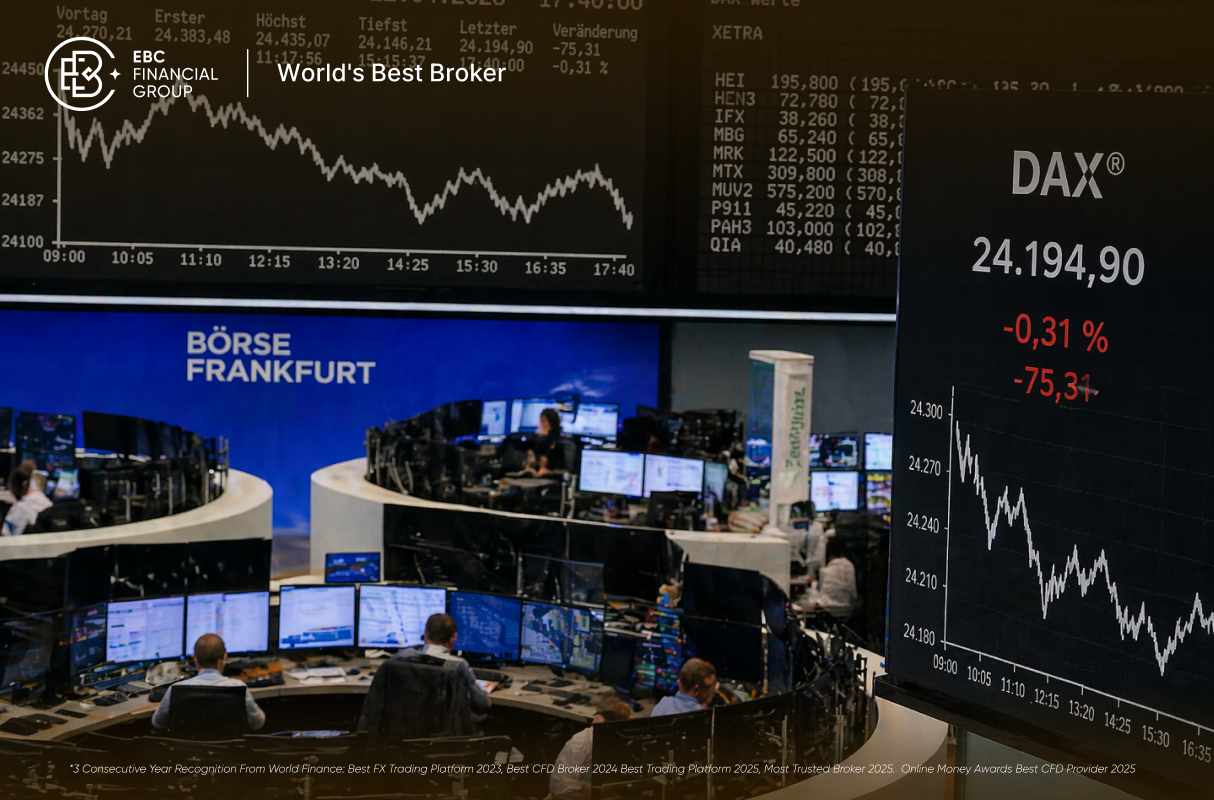
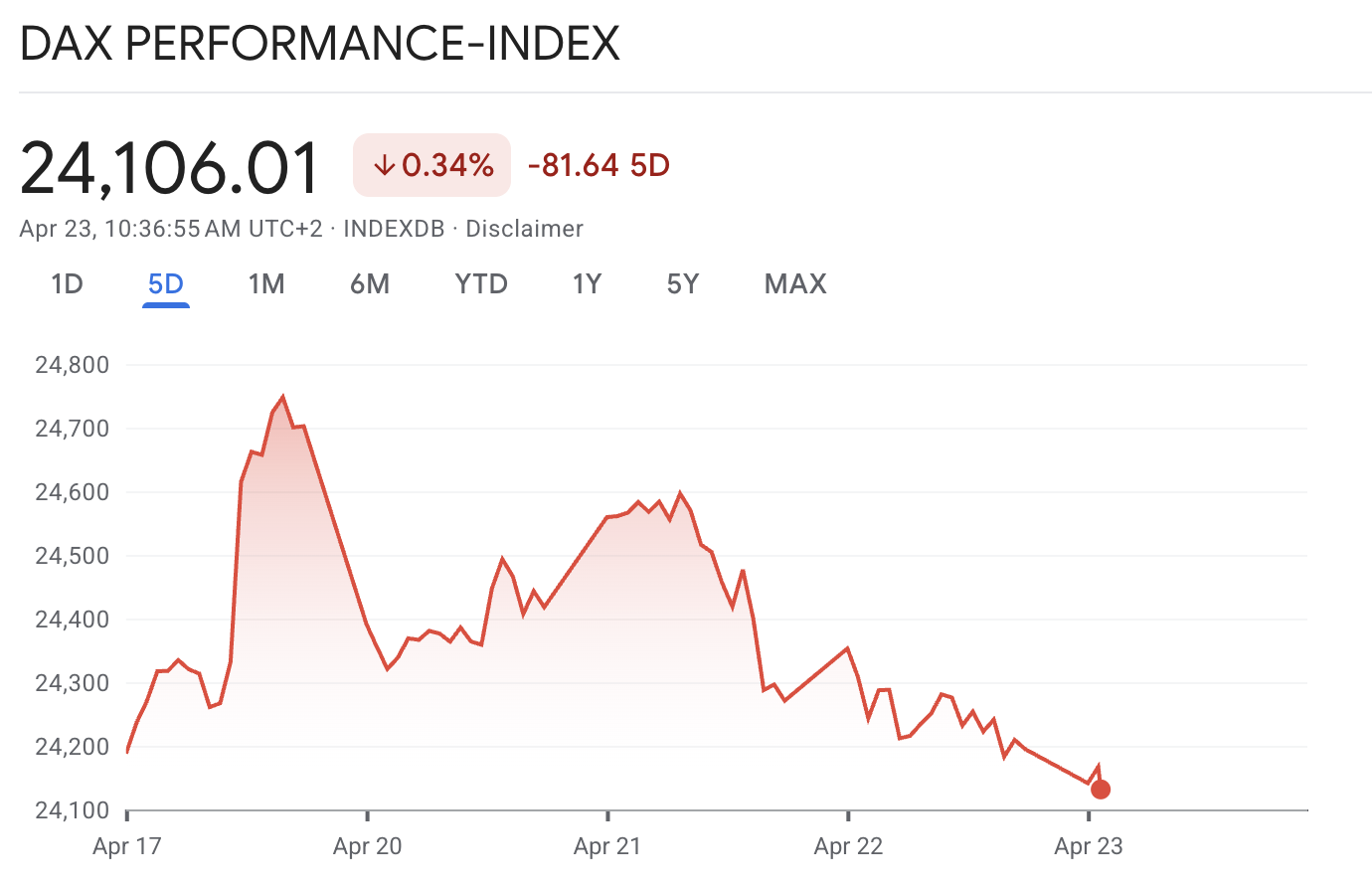
Germany’s blue-chip benchmark closed at 24,194.90 on April 22 and traded around 24,098.47 in morning trade on April 23, leaving it about 5.1% below its January 13 high of 25,507.79. The move was not a collapse. It was a retracement, but a meaningful one for a market that had just staged a sharp rebound.
That matters because the DAX is not just a headline equity gauge. It is the total-return version of Germany’s main blue-chip index, one of the few major country benchmarks that automatically includes dividends in its most-used version.
It tracks the 40 largest companies on Frankfurt’s regulated market, which means a pullback in the DAX Performance Index reflects pressure on Germany’s core listed corporate sector, not just a narrow pocket of speculative stocks.
The DAX closed at 24,194.90 on April 22 and traded near 24,098.47 on April 23 morning, extending a pullback from its 25,507.79 January peak.
The main macro driver was a renewed oil and shipping risk premium as the Strait of Hormuz remained unstable and Brent traded above $103.
Germany is especially exposed because the DAX is heavily weighted toward industrials, insurers, technology, energy, and autos, all of which are sensitive to energy costs, trade flows, and growth expectations.
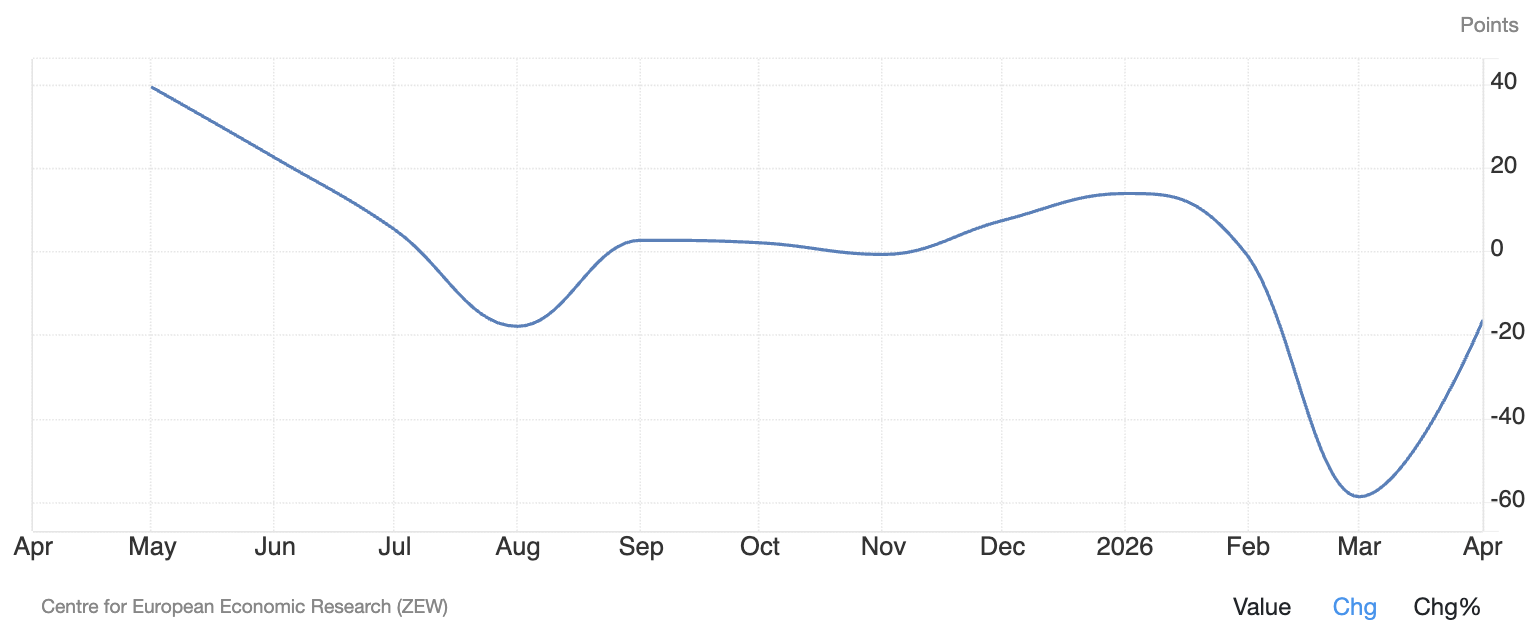
Investor sentiment deteriorated sharply in April, with Germany’s ZEW economic sentiment index falling to -17.2 from -0.5 in March, the weakest reading in more than three years.
Stock-specific pressure also mattered. Deutsche Telekom came under pressure after reports of a possible combination with T-Mobile US, while investors were waiting for SAP’s first-quarter results due later on April 23.
The immediate story was a reversal in mood. European stocks moved lower as investors reassessed the Middle East outlook, fresh earnings, and the economic implications of sustained high oil prices.
Reuters reported that European equities underperformed Wall Street because surging oil was hitting major exporters, with Germany singled out as especially vulnerable. That helps explain why the DAX softened even as U.S. benchmarks were still printing record highs.
AP’s April 23 market report captured the wider backdrop clearly. Oil climbed again, with Brent at $103.34 and WTI at $94.35, after renewed conflict around the Strait of Hormuz and continued disruption to maritime traffic. For Germany, that is not a marginal issue. Higher oil and gas prices hit manufacturers, transport-intensive companies, chemicals producers, and the broader cost base of an export-led economy.
Here is the cleanest way to frame the move:
| Date | DAX level | Move | Main market driver |
|---|---|---|---|
| Jan. 13, 2026 | 25,507.79 | Peak | Early-2026 rally high |
| Apr. 22, 2026 | 24,194.90 | -0.31% day | Oil back above $100, renewed caution |
| Apr. 23, 2026 | 24,098.47 | lower in morning trade | Shipping risk, earnings focus, weaker sentiment |
The table shows the key point. The DAX is still far above last year’s lows, but the market has been unable to hold the optimism that followed the brief reopening of the Strait of Hormuz on April 17. Relief buying faded quickly once traders saw that energy and shipping conditions were still unstable.
Germany’s market structure helps explain the underperformance. According to STOXX, the DAX’s largest sector weights include industrial goods and services at 25.4%, insurance at 14.1%, technology at 12.9%, energy at 6.9%, and automobiles and parts at 5.6%.
That leaves the index highly exposed to any combination of higher energy costs, weaker global demand, supply-chain stress, and shipping disruption.
That sensitivity showed up in the macro data as well. Germany’s ZEW investor sentiment index dropped to -17.2 in April from -0.5 in March, far worse than expected, as investors began to price in the broader consequences of the Iran war. Reuters’ report on the survey noted that expectations deteriorated especially sharply for chemicals and pharmaceuticals and for steel and metal producers.
Those are exactly the kinds of industries investors watch when judging whether Germany’s industrial recovery can withstand another energy shock.
In other words, the DAX was not just reacting to a geopolitical headline. It was repricing the possibility that Germany’s recovery will be slower, more inflation-prone, and more margin-constrained than investors had hoped two weeks ago.
Macro stress was the main driver, but company news kept investors cautious. Reports that Deutsche Telekom was exploring a possible combination with T-Mobile US pushed the stock lower, adding another source of pressure to the index.
At the same time, SAP, the DAX’s largest company by market value, was due to release first-quarter results on April 23, giving investors another reason to trim risk rather than chase the market higher into earnings.
The DAX faced a classic three-layer headwind: rising energy risk, weaker German sentiment, and event risk from large-cap corporate names. Markets rarely need a single dramatic trigger when several smaller pressures are all leaning in the same direction.
The DAX Performance Index is not the same as a pure price index. STOXX says the DAX is one of the few major country benchmarks whose most popular version takes dividends into account, fully reflecting the total return of the underlying portfolio.
That means a decline in the DAX Performance Index is occurring despite the support that reinvested dividends provide over time.
A softer DAX Performance Index suggests that the market’s reassessment was strong enough to outweigh the structural benefit of Germany’s dividend-paying blue chips. It is a reminder that when energy, trade, and growth fears return at the same time, even high-quality large caps struggle to hold their ground.
The DAX Performance Index pulled back on April 22–23 because investors stopped treating Germany as a simple relief-rally trade. Oil rose back above $100, shipping through the Strait of Hormuz remained unstable, German sentiment deteriorated sharply, and investors headed into a fresh earnings stretch with less conviction.
The index is still elevated in a longer-term sense, but the move shows how quickly Germany’s market can reprice when the energy and export outlook turns less favorable.