Published on: 2026-04-23
Updated on: 2026-04-23
ServiceNow stock sank about 12% in after-hours trading on April 22, even after the software group delivered a first-quarter beat and raised its subscription revenue outlook.
The selloff showed that investors were willing to look past strong demand and AI momentum once weaker margins, Armis dilution and delayed Middle East deals reset the earnings story.
ServiceNow closed the regular session at $103.07 and traded near $90.23 in overnight action, a drop of about 12.5%.
First-quarter revenue rose 22% to $3.77 billion, while subscription revenue reached $3.67 billion and adjusted EPS came in at $0.97.
The company lifted full-year subscription revenue guidance to $15.735 billion to $15.775 billion, showing demand did not break.
Management said delayed on-premises deals in the Middle East created a 75-basis-point headwind to subscription revenue growth in the quarter.
The larger issue was profitability: Armis is expected to cut 2026 operating margin by 75 basis points and free cash flow margin by 200 basis points.
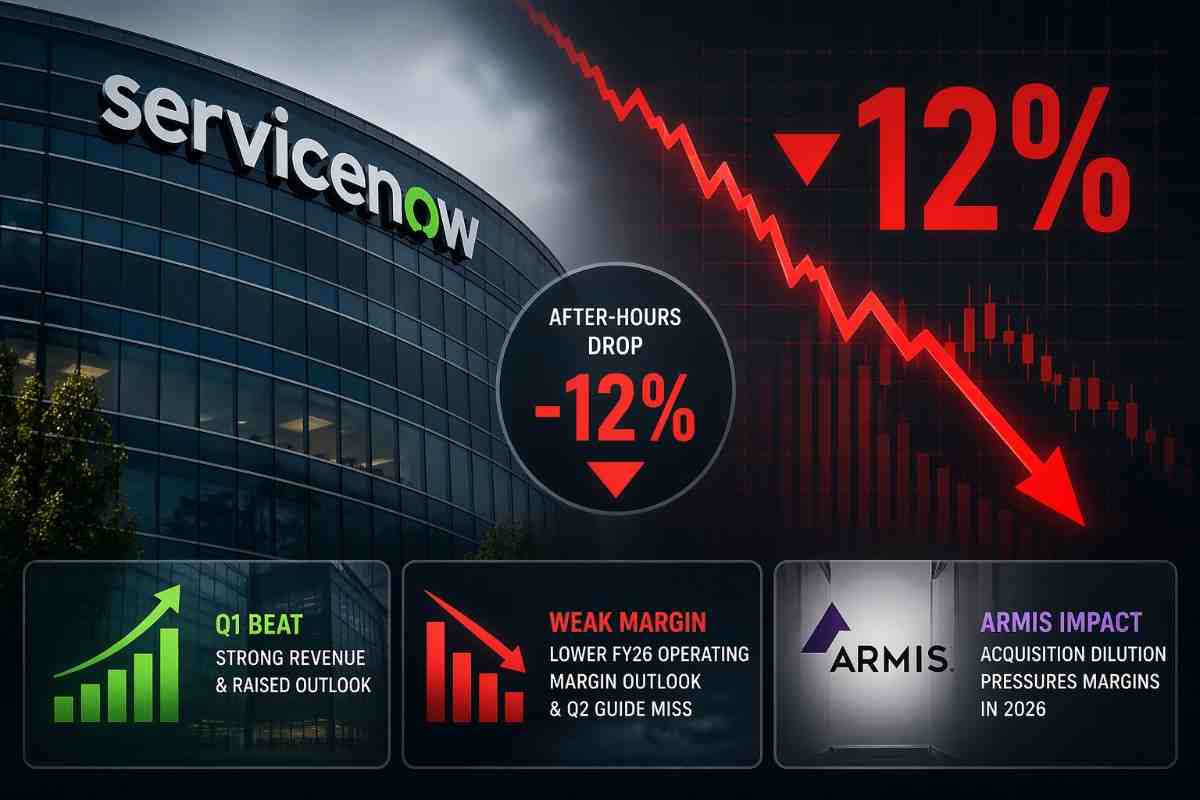
ServiceNow stock fell because investors judged the quarter less on the beat and more on what changed in the 2026 earnings profile. Revenue, backlog and AI adoption remained strong, but the new margin path made the growth story look less efficient and more dependent on acquisition integration.
It delivered 22% revenue growth, met or beat expectations across the core lines, and raised its full-year subscription outlook. Under normal conditions, that combination would have supported the shares.
Instead, the market treated the report as a reset in earnings quality. Investors were not questioning whether ServiceNow can keep growing. They were questioning how clean it can grow from here.
The first-quarter numbers were strong enough to support the bull case on demand. The surprise was not in revenue. It was in the market’s willingness to look through the top line and focus on the lower-margin shape of future growth.
| Metric | Q1 2026 | Market Read |
|---|---|---|
| Total revenue | $3.77 billion | Strong 22% growth |
| Subscription revenue | $3.67 billion | Ahead of guidance |
| Adjusted EPS | $0.97 | Met or slightly beat |
| Current RPO | $12.64 billion | Backlog remained healthy |
| Total RPO | $27.7 billion | Visibility stayed strong |
| FY26 subscription guidance | $15.735B to $15.775B | Raised |
| After-hours share move | About -12% | Profitability took over the narrative |
These figures explain why the stock reaction looked harsh on the surface. ServiceNow still has healthy enterprise demand, a resilient subscription engine and strong backlog visibility.
AI was also one of the stronger parts of the quarter. ServiceNow said customers generating more than $1 million in ACV for Now Assist rose 130% year over year, and management signalled that its 2026 AI revenue target could move above earlier expectations. That should have supported sentiment, but it was not enough to offset the change in the margin story.
In short, the market did not punish ServiceNow for missing demand. It punished the company for making growth look more expensive.
Margins were the main catalyst, shifting the story from a beat-and-raise to a transition year. Investors can tolerate temporary regional disruption. They are far less forgiving when an acquisition clouds operating leverage and pushes out the timeline for margin expansion.
ServiceNow said delayed closures of several large on-premises deals in the Middle East cut subscription revenue growth by 75 basis points. That hurt sentiment, but by itself, it was manageable, especially since the company still raised annual subscription guidance.
The bigger issue was Armis. ServiceNow agreed to acquire the cybersecurity company for $7.75 billion in cash in December 2025, and the deal closed on April 20, 2026, just before the earnings release.
Management said Armis will reduce the 2026 operating margin by 75 basis points and free cash flow margin by 200 basis points. Outside coverage also highlighted a second-quarter operating margin outlook of 26.5% versus a 30.1% Wall Street view. That is the gap investors sold.
The earnings beat was backwards-looking. The margin outlook was forward-looking and weaker.
AI growth remained one of the strongest parts of the quarter, but it was not the marginal driver of the share price. Investors did not reject the AI story. They questioned whether ServiceNow could preserve its premium software economics while absorbing acquisition-related dilution.
That distinction matters for a stock like ServiceNow. Investors have long been willing to pay for strong growth, high margins, and predictable enterprise demand. Once one leg of that story weakens, the multiple can come under pressure even if revenue remains healthy.
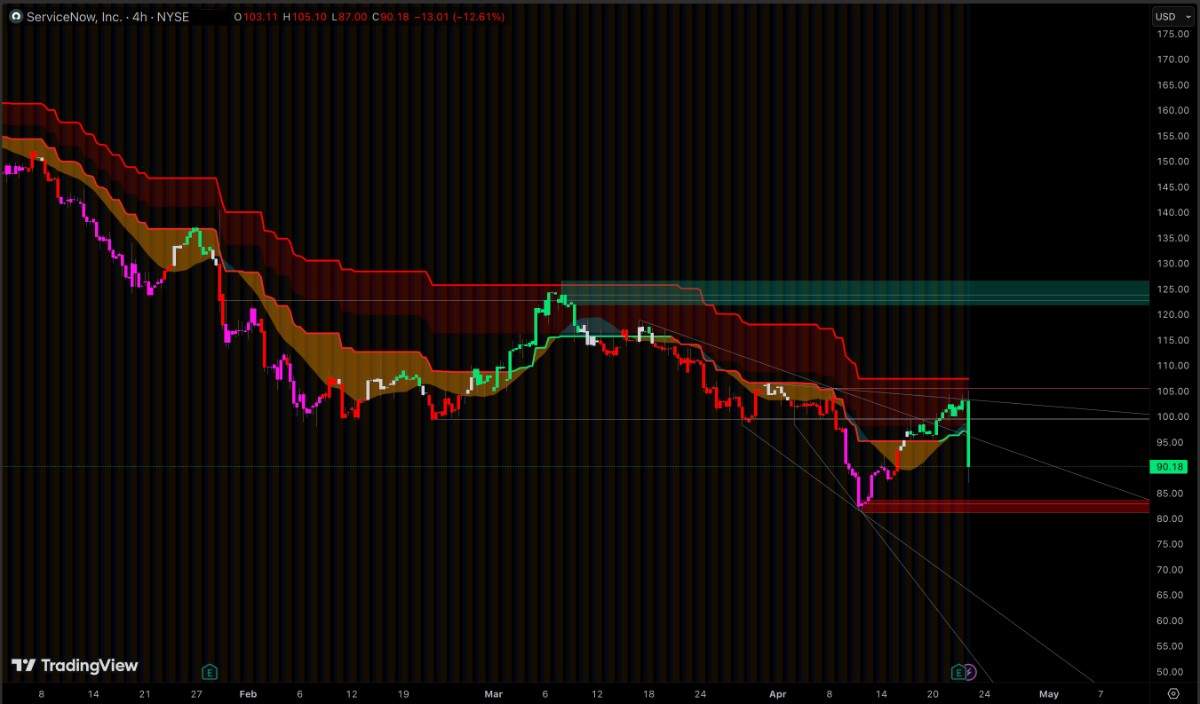
The next test is whether management can prove the margin pressure is temporary rather than structural. ServiceNow has already said AI efficiencies and platform leverage should help normalize margin expansion in 2027.
If that view holds, the selloff may eventually look like an overreaction to a transition quarter. If not, the stock may keep trading as a software name with strong growth but less clean economics than investors previously assumed.
Additionally, ServiceNow stock had already fallen roughly 34% in 2026 before this earnings reaction, leaving sentiment fragile into the report. That backdrop made the shares more vulnerable to any sign that growth was becoming more acquisition-led or less efficient.
In that environment, even a raised revenue outlook was not enough to offset a lower-quality profit path.
ServiceNow stock sank after earnings, not because the quarter was weak, but because investors decided the new growth path looked less profitable.
The company still posted strong subscription growth, healthy backlog metrics and robust AI adoption. But in a software market that is increasingly focused on efficiency as much as expansion, Armis-related margin dilution outweighed the beat.
The immediate question is no longer whether ServiceNow can keep growing. The quarter answered that. The question now is whether management can prove that Armis is a temporary drag on margins rather than a lasting change in the economics investors had come to expect from the company. Until that is clearer, ServiceNow stock may struggle to reclaim its premium.