Published on: 2025-12-12
Updated on: 2025-12-12
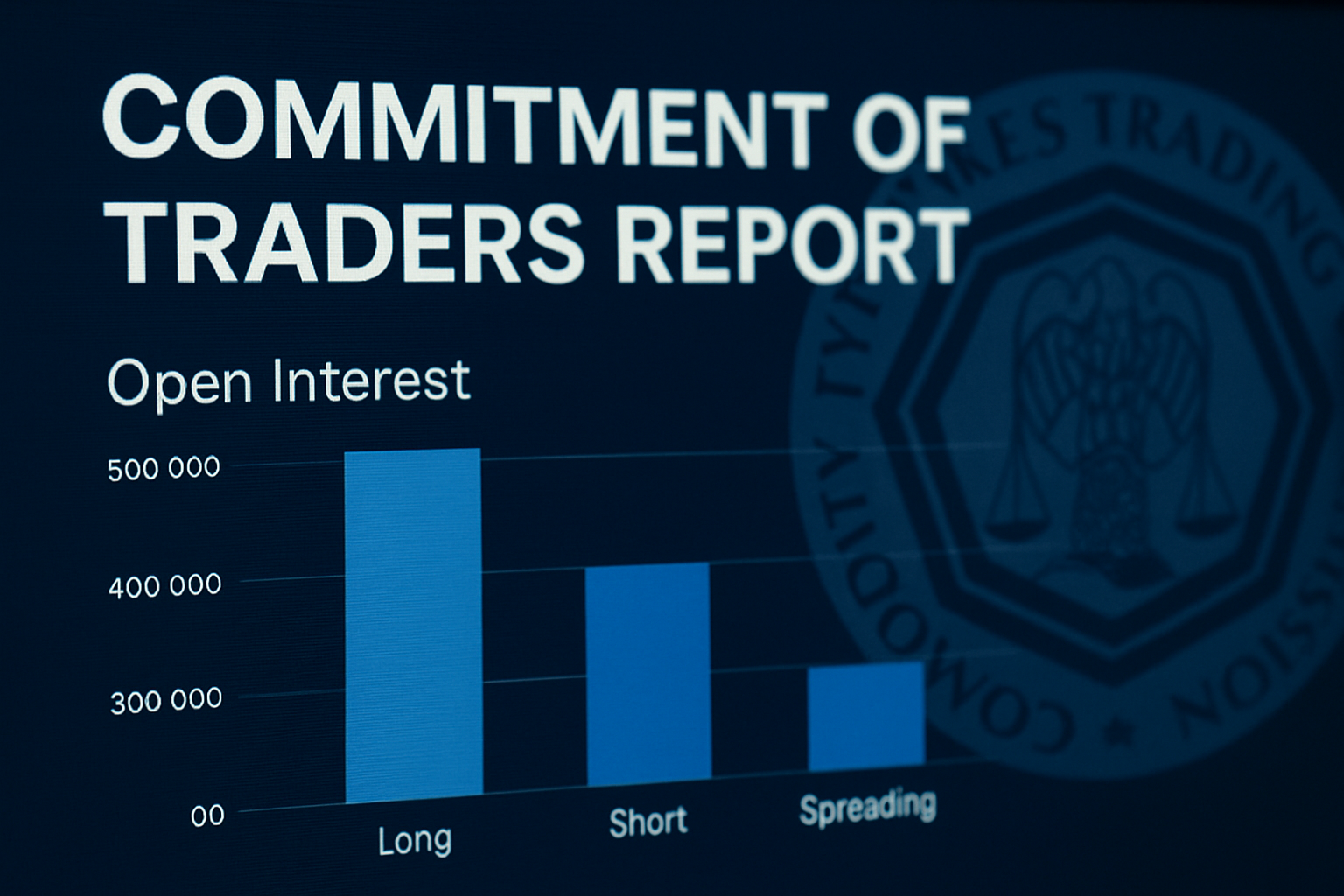
The Commitment of Traders report, or COT, is a weekly publication from the US Commodity Futures Trading Commission that shows how different groups of traders are positioned in futures markets.
It separates large institutions, funds, and commercial firms from smaller traders so that anyone can see which side of the market holds more exposure. COT matters because it gives a clear look at crowd positioning.
When used well, it helps traders understand long term pressure behind trends and where sentiment may be shifting.
The everyday life picture: knowing which teams are on the field
Think of a local sports league. If you watched only the score but never knew which team held the ball or which players were on attack, you would miss half the picture.
The COT report fills this gap. It shows which groups carry heavy positions, which groups are reducing risk, and which groups are increasing it. This picture helps traders sense the balance of power rather than relying only on price.
The COT report breaks futures traders into key categories such as commercial hedgers, managed money funds, and smaller traders. Commercial hedgers use futures to protect real business activities, for example farmers or producers.
Managed money funds include trend following funds, commodity trading advisers, and other investment managers that trade for profit instead of hedging. The report shows long, short, and net positions for each group.
 Traders see COT every Friday. It reflects positions from the previous Tuesday. Many long term and swing traders use it to understand broader sentiment because futures markets influence currency, commodity, and index prices. COT does not give entry signals by itself.
It provides context so traders can judge whether a trend is crowded or if a shift in positioning is underway.
Several factors drive changes in COT positioning throughout the week.
 1. Price Trends
When a trend strengthens, managed money funds often add to positions. Rising prices can lead to more long positions while falling prices can pull in more shorts.
Commercial firms adjust futures based on business conditions. When a producer expects higher output, hedging activity may increase and change COT totals.
Shifts in risk appetite, geopolitical developments, or economic data can push funds to add or reduce exposure. These changes show up in the net positions.
Because the report is weekly, changes appear step by step rather than in real time.
COT shapes trading decisions by showing where major market pressure sits. When managed money holds a strong net long position in a commodity or currency, it signals confidence in the trend.
Traders may prefer to look for buy setups during strong positive positioning. When positioning becomes extreme, it can warn that a trend is crowded. If net longs start falling even as price keeps rising, the trader may prepare for slower momentum.
COT also helps with exits. A trader holding a long position may choose to reduce size if the report shows consistent unwinding by funds. It helps control risk because it signals when the larger market is stepping back.
Strong trend with rising managed money exposure.
Positioning pulls back in line with price corrections.
Acting on a single weekly change without watching the chart.
Treating extreme positioning as an automatic reversal sign.
Imagine gold futures trading in 2000. The COT report shows managed money holds 250,000 long contracts and 50,000 short contracts.
Net long is 200,000. One week later the price rises to 2025 and net long jumps to 230,000. This supports the uptrend. Another week passes. Price reaches 2030 but net long falls sharply to 180,000.
This tells the trader that large funds are taking profits even though the price is still rising. The trader may tighten the stop or reduce size, expecting that momentum could weaken soon.
A simple routine helps turn the weekly report into practical steps.
Look at the latest COT release and focus on net positions for commercial hedgers and managed money.
Compare this week with previous weeks. Rising net positions often show strengthening sentiment.
Match the data with the long term chart. Price and positioning should point in similar directions.
Mark any signs of extremes such as multi year highs or lows in positioning.
Confirm that your planned trade aligns with the broader direction shown in the data.
Checking it once each week is enough because COT does not change daily.
Trading the report directly. COT is slow moving, so it is not an entry tool. Using it alone causes mistimed trades.
Ignoring the delay. Data is from Tuesday and released Friday, which can hide midweek changes.
Treating extremes as turning points. Extreme net positions can stay in place for months during strong trends.
Forgetting commercial hedgers are not speculators. Their activity reflects business needs, not price forecasting.
Not matching COT with charts. Without price action, COT becomes difficult to interpret.
Open Interest: Shows how many futures contracts exist, which helps explain positioning strength.
Volume: Confirms when heavy trading lines up with shifts in COT data.
Futures Curves: Help explain why commercial hedgers shift positions.
Managed Money Flows: Often move with COT trends in futures.
Risk Appetite Indicators: Help explain why funds add or reduce exposure.
COT is updated weekly, so it moves much slower than intraday price action. Short term traders can still use it for background context, but they should not expect it to give immediate buy or sell signals. It is best suited for swing and position traders who follow broad sentiment.
The CFTC collects data from futures exchanges and clearing firms, which requires processing and verification. Because of this, the report reflects Tuesday’s positions and is released on Friday. Traders should treat it as a structural view of the market rather than a real time indicator.
A long extreme shows that funds have built a large bullish position. This often aligns with strong trends. However, extremes can signal that the trend is crowded and may struggle to continue without new buyers. Traders watch for weakening net positions as an early caution sign.
Not usually. Commercial hedgers use futures to protect physical business activities, not to forecast prices. Their positions can still be informative, because growing hedging activity can reflect underlying supply or demand changes.
Most traders review it once per week when the new data arrives. Checking it more often does not add insight because the numbers do not change until the next release. What matters is tracking week to week shifts and comparing them with the long term chart.
The Commitment of Traders report shows how major groups in futures markets hold their positions and how sentiment builds or fades.
When used with a clear chart and a simple routine, it helps traders understand long term forces that support or weaken trends. It should not be used for quick entries. It is most valuable when paired with steady observation and disciplined risk control.
Disclaimer: This material is for general information purposes only and is not intended as (and should not be considered to be) financial, investment or other advice on which reliance should be placed. No opinion given in the material constitutes a recommendation by EBC or the author that any particular investment, security, transaction or investment strategy is suitable for any specific person.



World's Best Broker