Published on: 2023-11-17
Updated on: 2026-05-05
What does the dollar index DXY mean for markets? It shows whether the US Dollar is strengthening or weakening against a fixed basket of major currencies. That number matters because it links rate expectations, risk appetite, commodity pricing, and global funding conditions.
DXY is not “the dollar versus the world.” It is a tradable, euro-heavy index built around six developed-market currencies. Its stable basket helps traders compare today’s dollar moves with past cycles, from the 1985 peak to the 2022 inflation shock and the softer-dollar regime of 2025–2026.
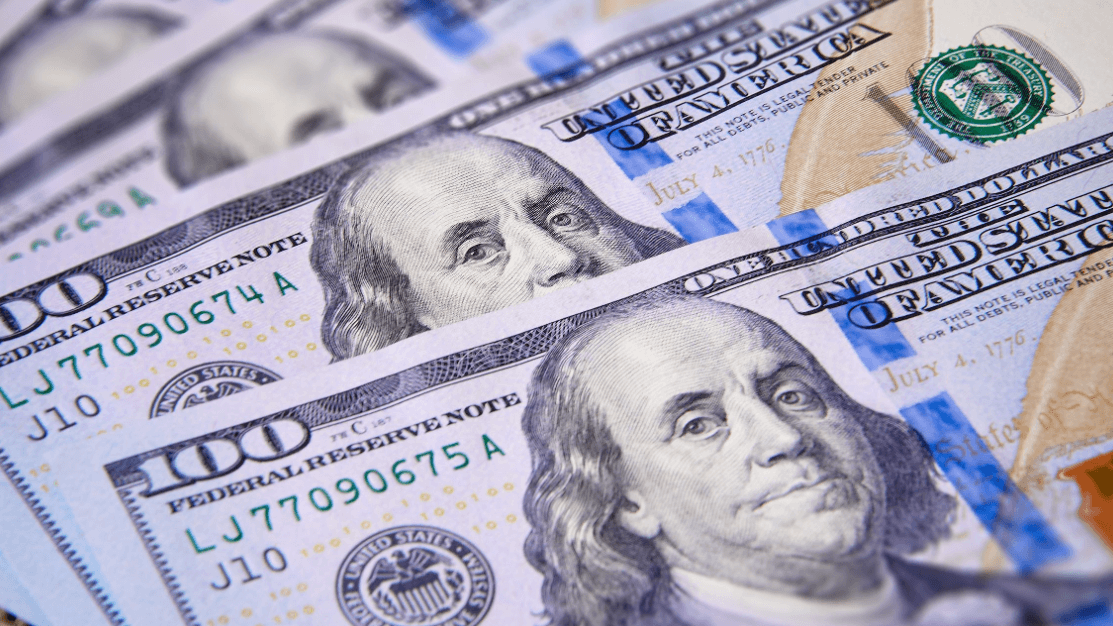
DXY tracks the US Dollar against six currencies, with the euro accounting for 57.6% of the index's weight.
Above 100 means the dollar is stronger than its March 1973 base level; below 100 means it is weaker.
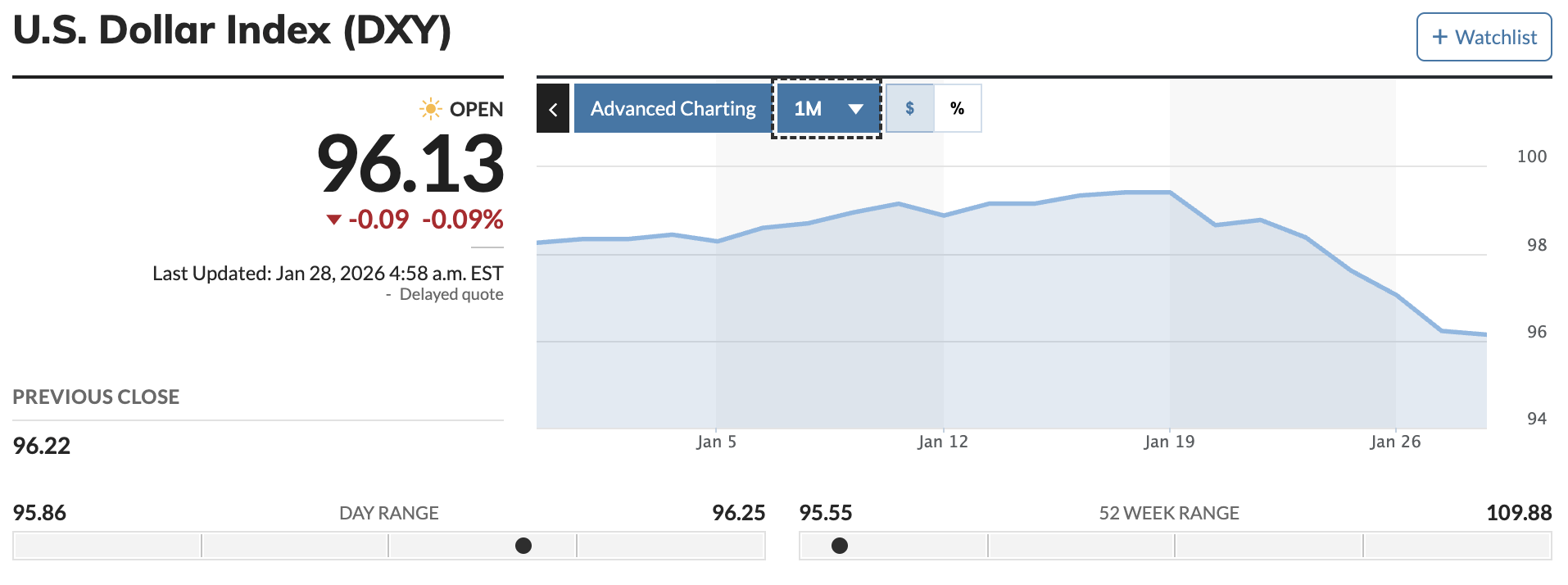
In early May 2026, DXY traded near 98, below its 2022 peak but above its early-2026 low.
Interest-rate differentials, Treasury yields, inflation surprises, and EUR/USD moves are the biggest drivers.
DXY is useful for dollar sentiment, while Fed broad dollar indexes better reflect trade exposure.
The US Dollar Index, often called DXY or USDX, measures the dollar’s value against the euro, Japanese yen, British pound, Canadian dollar, Swedish krona, and Swiss franc. When DXY rises, the dollar is gaining value against this basket. When it falls, the dollar loses value.
The index is widely used in FX trading, macro research, commodity analysis, and portfolio hedging. It shows whether price action is being driven by broad dollar strength, foreign-currency strength, or global risk appetite.
DXY has limits. It excludes the Chinese yuan, Mexican peso, South Korean won, Singapore dollar, and many other currencies that matter to trade and capital flows. Treat it as a liquid market benchmark, not a complete economic index.
DXY is dominated by Europe. The euro alone accounts for more than half of the basket, so EUR/USD has the largest impact on the index. A strong euro can pull DXY lower even when the dollar is firm elsewhere. ICE notes that the USDX composition changed only once, in January 1999, when the euro replaced several legacy European currencies and the 57.6% European exposure was retained.
A rising DXY does not mean every currency is falling against the dollar. It means the dollar is stronger against this specific basket. If exposure is to USD/CNH, USD/MXN, or USD/SGD, DXY may provide context, but it should not be the primary hedging reference.
DXY is calculated as a geometric weighted average, not a simple arithmetic average. The index was normalised to 100 in March 1973, when major currencies entered the modern floating-rate era.
A DXY level of 120 implies the dollar is roughly 20% stronger than the base period against the basket. A level of 80 implies it is roughly 20% weaker. The formula also reflects FX quoting conventions. EUR/USD falls when the dollar strengthens, while USD/JPY rises.
DXY reacts quickly to the expected path of the Federal Reserve relative to the ECB, Bank of Japan, Bank of England, and other central banks. If US yields rise faster than foreign yields, dollar cash becomes more attractive, and DXY usually gains.
This mattered in 2026. After several cuts in late 2025, the Fed held the federal funds target range at 3.50% to 3.75% at its late-April 2026 Fed meeting. That kept rate differentials important, especially as inflation remained above target.
Inflation can move DXY in two directions. If inflation pushes the Fed toward tighter policy, the dollar may strengthen. If inflation damages confidence in US assets, the dollar can weaken. March 2026 showed that tension: US CPI rose 3.3% year on year, while energy prices jumped sharply.
A resilient US economy usually supports DXY when Europe or Japan looks weaker. Strong payrolls, services activity, or retail sales can lift Treasury yields and pull capital into dollar assets.
The dollar also often rises during market stress because investors demand liquidity, Treasury collateral, and dollar funding. But safe-haven flows are not automatic. The Swiss franc or Yen can outperform the dollar, weighing on the DXY because both currencies are in the basket.
A rising DXY signals dollar appreciation against the basket. It can make foreign travel, imported goods, and overseas purchases cheaper in dollar terms. It can also reduce import-price pressure but create a headwind for US exporters.
For companies, the effect depends on revenue geography. A US multinational with large overseas sales may report weaker translated revenue when foreign earnings are converted back into dollars.
For commodities, a stronger dollar can pressure gold, oil, copper, and agricultural markets because many global buyers pay in local currencies for goods priced in dollars. Supply shocks, geopolitical risk, and inventory cycles can still overwhelm currency effects.
For emerging markets, a rising DXY can tighten financial conditions. Countries and companies with dollar debt face higher local-currency repayment burdens, and hedging costs can rise when dollar funding becomes scarce.

A falling DXY means the dollar is weakening against the basket. This can support US exporters and lift the translated value of overseas earnings. It can also ease financial conditions outside the United States when the decline reflects lower US rate expectations.
A weaker dollar often helps commodities because non-US buyers gain purchasing power. Gold can benefit if DXY falls alongside lower real yields. The risk is imported inflation. If dollar weakness is persistent, imported goods can become more expensive.
DXY is popular because it is liquid, familiar, and tradable through futures, options, and exchange-traded products. But it is not the only dollar benchmark.
The Federal Reserve’s broad dollar index uses a wider set of major US trading partners and is more relevant for trade, inflation, and competitiveness analysis. In May 2026, that broad index remained far above its 2006 base, suggesting the dollar can look different through a trade-weighted lens than through the DXY.
Use DXY to read market sentiment. Use trade-weighted indexes to judge the dollar’s impact on prices, trade, and competitiveness.
The dollar index shows whether the U.S. dollar is rising or falling against a fixed basket of six major currencies. A higher DXY means the dollar is stronger against that basket.
No. USD is the currency. DXY is an index that measures USD performance against six currencies. It is a benchmark for dollar strength, not a currency pair.
The euro accounts for 57.6% of the DXY, so EUR/USD is the largest driver of day-to-day index moves. This makes DXY highly sensitive to euro-area growth, inflation, and ECB policy expectations.
Not always. DXY compares the dollar only to six currencies. If your currency is not in the basket, it may move differently. Check your specific USD pair before hedging or trading.
The dollar index DXY mean is simple at the surface: it measures US Dollar strength against six major currencies, anchored to a 1973 base. Its market value is deeper. DXY links FX, rates, inflation, commodities, equities, and global liquidity into one benchmark.
The key is to respect both its usefulness and its limits. DXY is excellent for reading major-currency dollar sentiment, especially when euro and yen moves dominate global FX. It is less complete as a trade benchmark because it excludes several major US trading partners.
Disclaimer: This material is for general information purposes only and is not intended as (and should not be considered to be) financial, investment or other advice on which reliance should be placed. No opinion given in the material constitutes a recommendation by EBC or the author that any particular investment, security, transaction or investment strategy is suitable for any specific person.