Published on: 2026-02-12
Updated on: 2026-02-12
Markets have been leaning toward one idea: inflation is easing, and the Federal Reserve can start cutting later in 2026 without inflation flaring up again.
Friday’s Consumer Price Index (CPI) will test whether that idea holds.
It also lands at the end of a compressed US data week. The delayed January jobs report is due on 11 February, then January CPI follows on 13 February at 8:30 a.m. ET.
This January print comes with an extra complication. Seasonal adjustment factors are updated with the January CPI release, and that annual recalculation can revise seasonally adjusted CPI series going back as far as five years. That does not change the raw inflation experience, but it can change the look of trend charts and muddy the first reaction.
The point is not that CPI decides everything. The point is that it often decides the tone. If markets change their mind about the Fed’s next move, the first clean signal usually appears in short-dated US yields, then spreads into the dollar, and only then into assets that hate rate uncertainty.
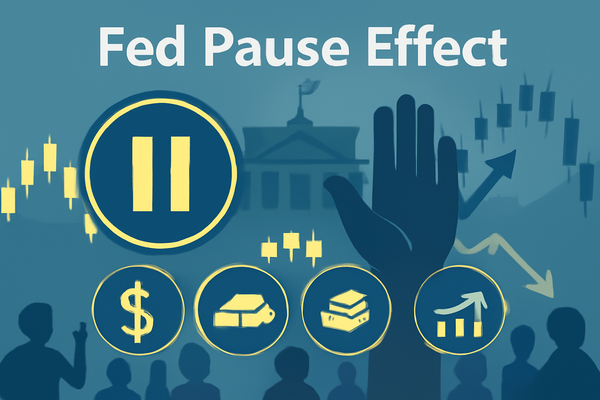
At its 28 January meeting, the Fed kept the federal funds target range at 3.5% to 3.75% and repeated that future moves depend on incoming data, the evolving outlook, and the balance of risks.
Since then, the public message from Fed officials has largely been patience. Recent remarks from voting policymakers have framed the current rate range as appropriate, with a bias toward waiting for clearer evidence on inflation and labour conditions before making the next move.
That sets up the real debate into Friday. The market is trying to balance two ideas at once. The first is that inflation is cooling enough for cuts later in 2026 to stay on the table. The second is that the last mile remains sticky, so the Fed stays cautious for longer.
Friday’s CPI will not settle the whole argument. It can still tilt it hard, because CPI lands earlier than the Fed’s preferred inflation gauge and often becomes the quickest trigger for repricing rate expectations.
CPI gets this much attention for a simple reason. The Fed’s 2% target is measured using PCE inflation, but CPI arrives earlier and often becomes the quickest trigger for repricing rate expectations.
CPI is a long report. Most of it is details that matter later. The market usually reacts to a smaller set of signals that answer one question: is inflation pressure persistent, lagging reality, or simply noisy?
Sticky inflation is the part that tends to fade slowly. Service prices can stay firm because they are tied more closely to domestic demand and wages than to global supply chains.
If the sticky parts stop cooling, markets often start doubting whether cuts can arrive on schedule. Even a calm-looking headline can still hide a sticky problem.
Shelter is large in CPI and it moves slowly. It is often the reason CPI feels stubborn long after private measures of rent growth have cooled.
The US Bureau of Labor Statistics (BLS) explains how shelter is measured in CPI and why owners’ equivalent rent and rent of primary residence are central to the shelter story.
The noisy bit: goods and energy
Goods prices can swing with discounting and supply conditions. Energy can swing with geopolitics and weather. Both can dominate headlines, even when the “big picture” has not changed.
On CPI day, headlines still matter because markets trade what prints on the page, at speed.
Myth: Headline CPI decides everything.
Reality: Whilst headline figures grab attention, it is the sticky components and the subsequent movement in Treasury yields that often determine the lasting trend. A hot headline number driven entirely by volatile energy costs may generate initial volatility, but if core services show cooling and bond yields do not move materially, much of the drama elsewhere is likely to fade.
Myth: The first move is the true move.
Reality: Initial reactions are often driven by positioning and algorithmic trading. The bond market's follow-through over the subsequent 30 minutes to several hours is often viewed as a significant signal.. If yields spike but then retreat, or if they barely budge despite a surprising print, that tells a more important story than the first few minutes of price action.
Myth: One hot category means inflation is “back”.
Reality: Details matter, and reversals are common. A single elevated component, especially in the noisy category, does not necessarily signal a broad-based resurgence of inflation. What matters is whether the increase is isolated or part of a broader pattern across multiple categories, particularly the sticky ones.
One extra CPI-day trap belongs in this box for January. Seasonal factors are updated with the January CPI release, and that routine process can revise seasonally adjusted series back several years. It can change the shape of “trend” charts and amplify noise in the first reaction.
A simple sequence keeps the release readable:
Headline month-on-month, then core month-on-month
Headline drives headlines. Core often shapes the rate path debate.
Sticky inflation: cooling, stalling, or reheating
Markets are not just looking for lower inflation. They are looking for lower inflation in the parts that tend to persist.
The 2-year yield reaction, and whether it holds
A practical reason sits behind this. Research published by the Federal Reserve uses changes in the nominal 2-year Treasury yield on key policy communication days as a proxy for shifts in the expected future path of the policy rate. In plain terms, the 2-year yield is a strong real-time thermometer for rate expectations.
If yields barely move, much of the drama elsewhere often fades
FX and equities can spike on headlines. If the bond market shrugs, the spike often loses energy.
No print guarantees a move. Markets respond to surprises versus expectations, and the reaction depends on positioning. Still, some patterns repeat often enough to be useful.
If CPI comes in hotter than expected, and the detail suggests sticky inflation is not easing:
Rates pricing: cuts tend to get pushed out.
2-year yield: often jumps, especially if the sticky parts drive the surprise.
US dollar: often firms as rate expectations rise.
US indices: can get twitchy if yields move sharply higher.
Gold: can come under pressure if real yields rise.
This is the reset scenario because it challenges the idea that easing is a smooth, linear path.
If CPI broadly matches expectations:
Rates pricing: tends to shift less, unless the detail changes the story.
US dollar: can be mixed, often reflecting earlier positioning.
US indices: may see a relief move if traders were braced for a shock.
Gold: often follows yields, so stability in yields usually matters more than the headline.
This is the scenario where the market often moves on quickly.
If CPI is cooler than expected, particularly if the sticky parts also soften:
Rates pricing: cuts can get pulled forward.
2-year yield: often drops.
US dollar: often softens.
US indices: often like it at first, especially rate-sensitive names.
Gold: often benefits if real yields fall and risk tone improves.
The key is “cool in the sticky parts”, not only “cool in the headline”.
CPI day often follows a rhythm.
The first burst is about speed. Algorithms read the numbers, and traders adjust positions quickly. This phase can overshoot.
This is where the market decides whether the CPI print changes the rate path. If the 2-year yield moves and holds, other markets typically treat it as confirmation.
A move that holds into the close often has more meaning than an early spike that fades. That is why “first move” and “real move” can look different.
For January CPI, the seasonal-factor update adds another reason for caution about the first move. Revisions can change the “feel” of the trend once the dust settles.
A simple order helps cut through the noise:
2-year Treasury yield
The 2-year Treasury yield is widely regarded as a key indicator to monitor because it directly reflects expectations for Fed policy over the next 12 to 24 months. A sustained move of more than 5 to 10 basis points in either direction would represent a material shift in rate expectations and would likely drive corresponding moves across other asset classes.
USD reaction
The US dollar's response will depend primarily on how the CPI data influences the interest rate outlook. If the data pushes rate cuts further into the future, the dollar may strengthen against major currencies such as the euro, yen, and pound. If the data accelerates cut expectations, the dollar would likely weaken. The DXY index, which measures the dollar against a basket of six major currencies, is the most widely watched gauge for this reaction.
US indices versus yields
Equity indices such as the S&P 500 and Nasdaq will react not only to the CPI number itself but also to the movement in yields. If yields rise sharply, even a cool CPI reading may not support equities because the higher discount rate offsets the benefit of potential rate cuts. Conversely, if yields fall alongside a cool CPI print, equities could see support. The relationship between yields and equity performance will be particularly important for rate-sensitive sectors such as technology and real estate.
Gold through real yields and risk tone
Gold's behaviour on Friday will be driven by changes in real yields (nominal yields minus inflation expectations) and the broader risk sentiment. If nominal yields rise more than inflation expectations, real yields increase, which is typically negative for gold. If inflation expectations rise faster than nominal yields, or if nominal yields fall, real yields decline, which supports gold. Additionally, if the CPI data sparks risk-off sentiment due to concerns about persistent inflation or aggressive Fed policy, gold may benefit from safe-haven demand even if real yields are not particularly favourable.
Friday's CPI release is the market's verdict on the current rates story. For weeks, traders have been operating under the assumption that inflation is on a gradual cooling path, allowing the Fed to consider modest policy easing later in 2026 without fear of reigniting price pressures. That assumption underpins the positioning across bonds, currencies, equities, and commodities.
If the verdict changes, everything downstream has to adjust. Rate cut expectations get pushed out or pulled forward. The dollar strengthens or weakens accordingly. Equity valuations get recalculated based on new discount rates. Gold responds to shifts in real yields and safe-haven flows. The sequence is usually predictable, but the magnitude and persistence of the moves depend on whether the bond market confirms the initial reaction.
What matters is not just the headline number, but the composition of that number. Progress in the sticky components signals genuine disinflation that the Fed can trust. Continued elevation in services inflation, particularly core services excluding housing, keeps the central bank cautious. Noise from energy and volatile goods can create short-term volatility but rarely changes the trend on its own.
The structure of Friday's trading will follow a familiar pattern: an initial burst of volatility as algorithms and positioned traders react, followed by a more measured assessment as the details are digested and the bond market weighs in. The moves that survive that process are the ones that matter. The moves that fade are the ones that were driven by positioning rather than a genuine shift in the economic outlook.
For anyone watching global markets, Friday is the day when the current inflation narrative either gets reinforced or reset. The stakes are high because rate expectations are the anchor for virtually every other asset price. When that anchor shifts, the ripples move fast and far. Many market participants will be watching the details, the 2-year yield, and whether the first move becomes the real move.
Disclaimer & Citation
Disclaimer: This material is for information only and does not constitute a recommendation or advice from EBC Financial Group and all its entities ("EBC"). Trading Forex and Contracts for Difference (CFDs) on margin carries a high level of risk and may not be suitable for all investors. Losses can exceed your deposits. Before trading, you should carefully consider your trading objectives, level of experience, and risk appetite, and consult an independent financial advisor if necessary. Statistics or past investment performance are not a guarantee of future performance. EBC is not liable for any damages arising from reliance on this information.
Forward-looking statements: Any statements regarding future market conditions, Federal Reserve policy, or asset price movements are based on current expectations and assumptions and involve known and unknown risks and uncertainties. Actual outcomes could differ materially. EBC undertakes no obligation to update any forward-looking statements.