Published on: 2026-04-24
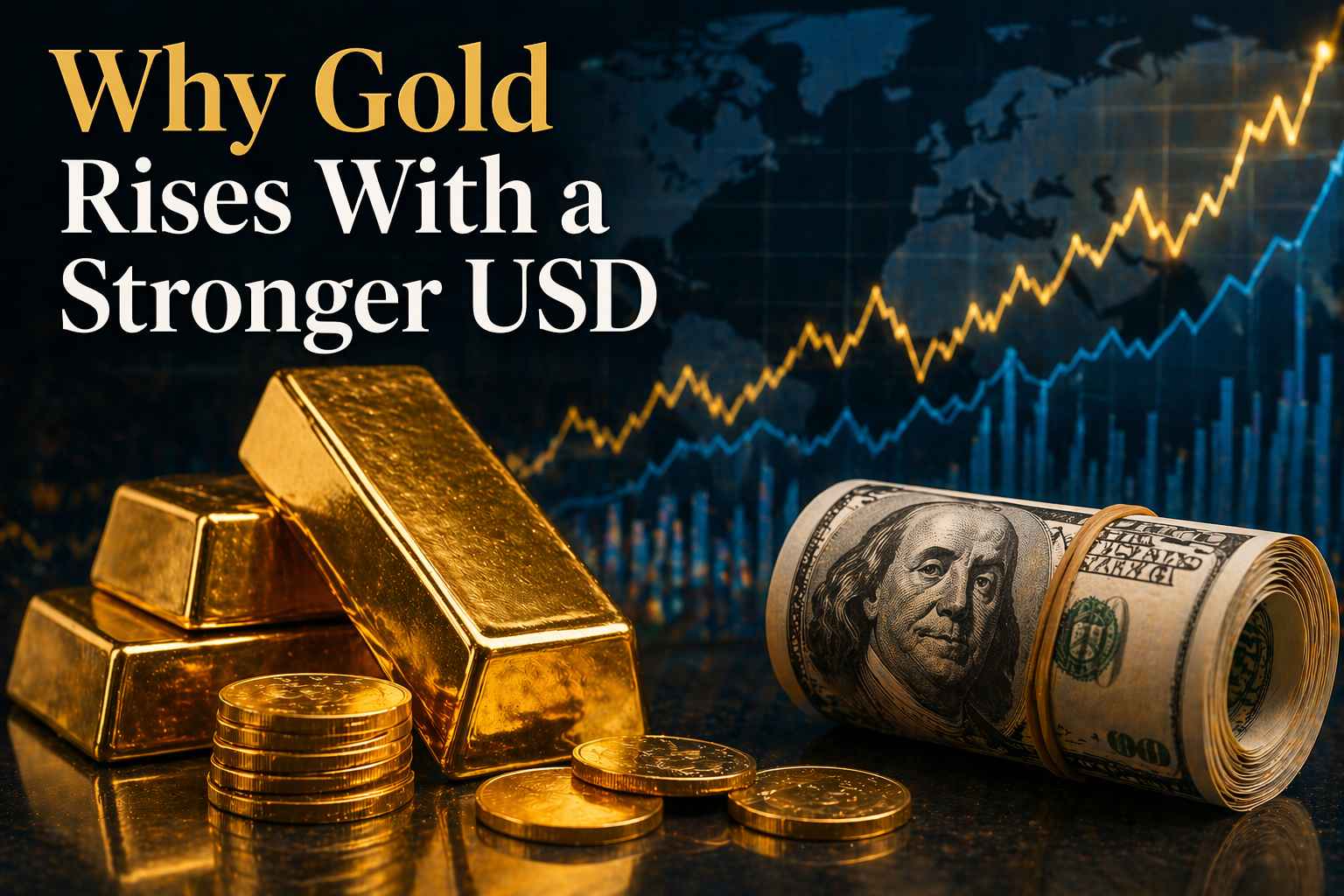
Gold-dollar correlation is often treated as one of the cleanest relationships in financial markets. A stronger US dollar usually pressures bullion, while a weaker dollar tends to support it. Yet gold can still rise with a stronger USD when the market is not simply pricing currency movement, but confidence risk.
That distinction matters now. Gold eased to around $4,697 per ounce on 24 April 2026, but remained more than 41% higher year-on-year. Comex gold also settled at $4,705.10 on 23 April, still up 41.21% from a year earlier, even as the WSJ Dollar Index rose to 95.66, its highest close since 10 April.
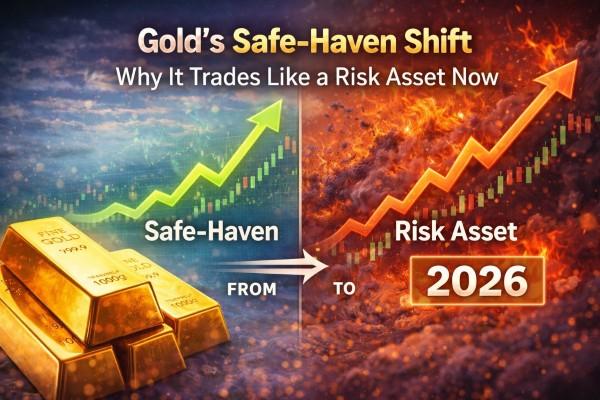
The message is clear: gold is no longer trading only as an anti-dollar asset. It is trading as a confidence hedge.
Gold’s inverse relationship with the US dollar is a tendency, not a permanent rule.
A stronger USD can coexist with higher gold prices when safe-haven demand dominates currency pressure.
Gold’s 41% year-on-year gain shows structural demand remains strong despite short-term dollar resilience.
Central bank buying has added a deeper reserve-demand layer beneath gold’s price structure.
A gold rally during dollar strength often signals a shift from currency pricing to confidence hedging.
Gold is priced globally in US dollars. When the dollar strengthens, bullion becomes more expensive for buyers using euros, pounds, yen, yuan, or other currencies. That foreign-exchange effect can reduce demand and pressure gold prices.
A strong dollar can also reflect tighter financial conditions. When dollar cash becomes more attractive, non-yielding assets face stronger competition. Gold does not pay interest, dividends, or coupons, so its appeal can weaken when the return on cash or other defensive assets improves.
This explains the traditional rule: dollar up, gold down. It is useful, but incomplete.
Gold is not only a dollar-priced commodity. It is also a reserve asset, a geopolitical hedge, a store of value, and an asset outside the credit system. Those roles become more important when uncertainty rises.
The gold-dollar correlation breaks when bullion is driven by forces stronger than currency pressure. In those periods, gold does not rise because the dollar is weak. It rises because the demand for protection is strong.
The US dollar often strengthens during market stress because it remains the world’s primary reserve and funding currency. Institutions need dollar liquidity for settlement, collateral, trade finance, and balance-sheet protection.
That kind of dollar strength does not always signal confidence. It can signal caution.
When the dollar rises because global investors are reducing risk, the move may reflect a defensive scramble for liquidity rather than optimism about growth.
Gold answers a different need. It has no issuer, no credit liability, and no direct counterparty exposure. That makes it valuable when confidence in currencies, fiscal discipline, financial institutions, or geopolitical stability weakens.
This is why gold and the dollar can rise together. The dollar satisfies the need for liquidity. Gold satisfies the need for trust.
Gold can rise alongside a stronger US dollar when the market is seeking several forms of protection at once.
This usually happens when:
Geopolitical risk lifts demand for defensive assets.
Central banks increase gold reserves for diversification.
Inflation risk remains high despite dollar strength.
Fiscal credibility concerns raise demand for hard assets.
Market stress creates demand for both liquidity and protection.
Bullion holds support despite a stronger currency backdrop.
In those conditions, dollar strength is not necessarily bearish for gold. It may be part of the same defensive impulse.
The cleaner interpretation is that gold is no longer trading only as an anti-dollar asset. It is trading as a confidence hedge.
That shift changes the meaning of price action. A gold rally during dollar weakness is conventional. A gold rally during dollar strength is more revealing because bullion is rising against a major headwind.
This kind of move suggests that another force is dominating the usual currency effect. That force may be geopolitical risk, inflation anxiety, reserve diversification, or concern over the stability of financial assets.
Gold’s current behaviour fits that broader framework. Even after easing on 23 and 24 April, bullion remained sharply higher from a year earlier, showing that the long-term demand base has not disappeared.
Central bank buying has become one of the most important structural forces behind gold. Official-sector demand reached 863 tonnes in 2025, with net purchases of 230 tonnes in Q4 alone, showing durable appetite even after a rapid price rally.
This matters because central banks do not usually behave like short-term speculators. Their gold purchases are tied to reserve diversification, sanctions risk, currency stability, and long-term balance-sheet strategy.
That creates a deeper layer of demand beneath daily dollar movements. A stronger dollar may still pressure tactical gold flows, but it does not automatically erase strategic demand from institutions seeking a neutral reserve asset.
| Market Regime | US Dollar Behaviour | Gold Behaviour | Main Driver |
|---|---|---|---|
| Normal risk environment | Stronger | Weaker | Currency pressure dominates |
| Stress environment | Stronger | Stronger | Liquidity and protection are both in demand |
| Inflation uncertainty | Firm or mixed | Stronger | Purchasing-power protection dominates |
| Liquidity squeeze | Stronger | Volatile | Cash demand rises first, gold stabilises later |
The key question is not only whether the dollar is rising. The more important question is why the dollar is rising.
If the dollar rises because growth is strong and risk appetite is healthy, gold may struggle. If the dollar rises because uncertainty is rising, gold can remain supported.
Inflation risk can also weaken the normal gold-dollar relationship. If inflation pressure comes from energy shocks, supply disruption, fiscal expansion, or geopolitical instability, the dollar may rise as a safe-haven asset while gold rises as a purchasing-power hedge.
This helps explain why gold can remain resilient even when higher inflation expectations support the dollar. The same inflation fear that strengthens defensive dollar demand can also increase demand for bullion.
Gold is therefore not just reacting to the currency itself. It is reacting to the reason behind the currency move.
Gold strength during dollar strength should not be dismissed as irrational. It can be a signal that the market regime has changed.
The signal is more constructive when gold holds support despite a firm dollar, reclaims resistance without currency support, or remains elevated while geopolitical and inflation risks persist.
In that setting, demand is strong enough to absorb the dollar headwind. That often points to confidence hedging rather than short-term speculation.
The signal is less reliable when gold strength is driven by thin liquidity, short covering, or temporary headline risk. A firm dollar can still cap bullion if broader risk appetite improves and defensive demand fades.
This is why gold-dollar correlation matters. Price shows the move. Correlation helps explain the regime behind the move.
Gold is priced in US dollars, so a stronger dollar makes bullion more expensive for non-dollar buyers. A firm dollar can also reflect tighter financial conditions, which may reduce demand for non-yielding assets such as gold.
Yes. Gold and the US dollar can rise together when markets demand both liquidity and protection. The dollar benefits from its reserve-currency role, while gold benefits from safe-haven demand, inflation concern, or confidence risk.
A gold-dollar correlation break occurs when gold stops moving inversely to the US dollar. This often happens when safe-haven flows, central bank demand, inflation hedging, or geopolitical risk overpower normal currency pressure.
No. A stronger USD can pressure gold in normal conditions, but it is not always bearish. If the dollar is strengthening because uncertainty is rising, gold can also attract defensive demand.
Central bank buying supports gold because it is usually strategic rather than speculative. Reserve managers often buy bullion for diversification, sanctions protection, and long-term balance-sheet resilience, which can reduce gold’s dependence on short-term currency moves.
Gold can rally even when the dollar refuses to fall because the market is not always pricing one relationship. It is often pricing several risks at once.
The old rule still matters. Dollar strength can pressure bullion when currency effects and tighter financial conditions dominate. But when confidence risk rises, gold’s role changes. It becomes less of an anti-dollar trade and more of a hedge against uncertainty.
That is the real lesson behind the gold-dollar correlation break. When gold rises with a weaker dollar, the move is expected. When gold rises with a stronger USD, the signal is more powerful. It suggests that safe-haven demand, central bank buying, and inflation fear are strong enough to overpower normal correlations.