Published on: 2026-04-28
Arc Resources has moved from Canadian gas producer to takeover-spread trade after Shell agreed to buy the company in a transaction valued at about US$16.4 billion, including debt and leases. The market reaction was immediate but uneven: ARC surged toward the offer value, while Shell slipped as investors weighed dilution, integration risk and the delayed payoff from a larger North American gas platform.
The split response tells the real story. ARC shareholders are being paid a premium for scarce Montney acreage, liquids-rich production and long-duration reserves. Shell shareholders are being asked to fund that premium through a deal structured mostly in stock, with free cash flow accretion expected from 2027 onward.
Why it matters: Arc Resources surged because Shell offered a takeover premium for its Montney gas assets, while Shell fell as investors weighed dilution, acquisition cost and the delayed payoff from LNG-linked free cash flow.
Shell agreed to acquire ARC Resources for about US$16.4 billion, including assumed debt and leases.
ARC shareholders will receive C$8.20 in cash plus 0.40247 Shell shares for each ARC share.
The announced offer valued ARC at C$32.80 per share, a 27% premium to its April 24 close and a 20% premium to its 30-day VWAP.
After Shell’s April 27 share-price pullback, the effective ARC consideration moved closer to about C$32.34 to C$32.39 per share.
Shell gains around 370 kboe/d of production and raises its production growth target to 4% CAGR through 2030.
ARC’s rally reflects takeover value. Shell’s weakness reflects dilution, execution risk and investor demand for proof of returns.
ARC’s surge was a takeover repricing, not a normal commodity rally. The offer gives shareholders a defined value framework, with one-quarter of the consideration in cash and three-quarters in Shell shares. That shifts ARC’s trading profile away from day-to-day Canadian gas prices and toward the remaining deal spread, Shell’s share price and the probability of closing.
ARC closed at C$31.22 on April 27, up 21.15%, but still below both the original C$32.80 reference value and the lower implied value after Shell’s own decline. That remaining gap is important. It reflects deal risk, currency movement, regulatory timing and the fact that most of the consideration is tied to Shell equity.
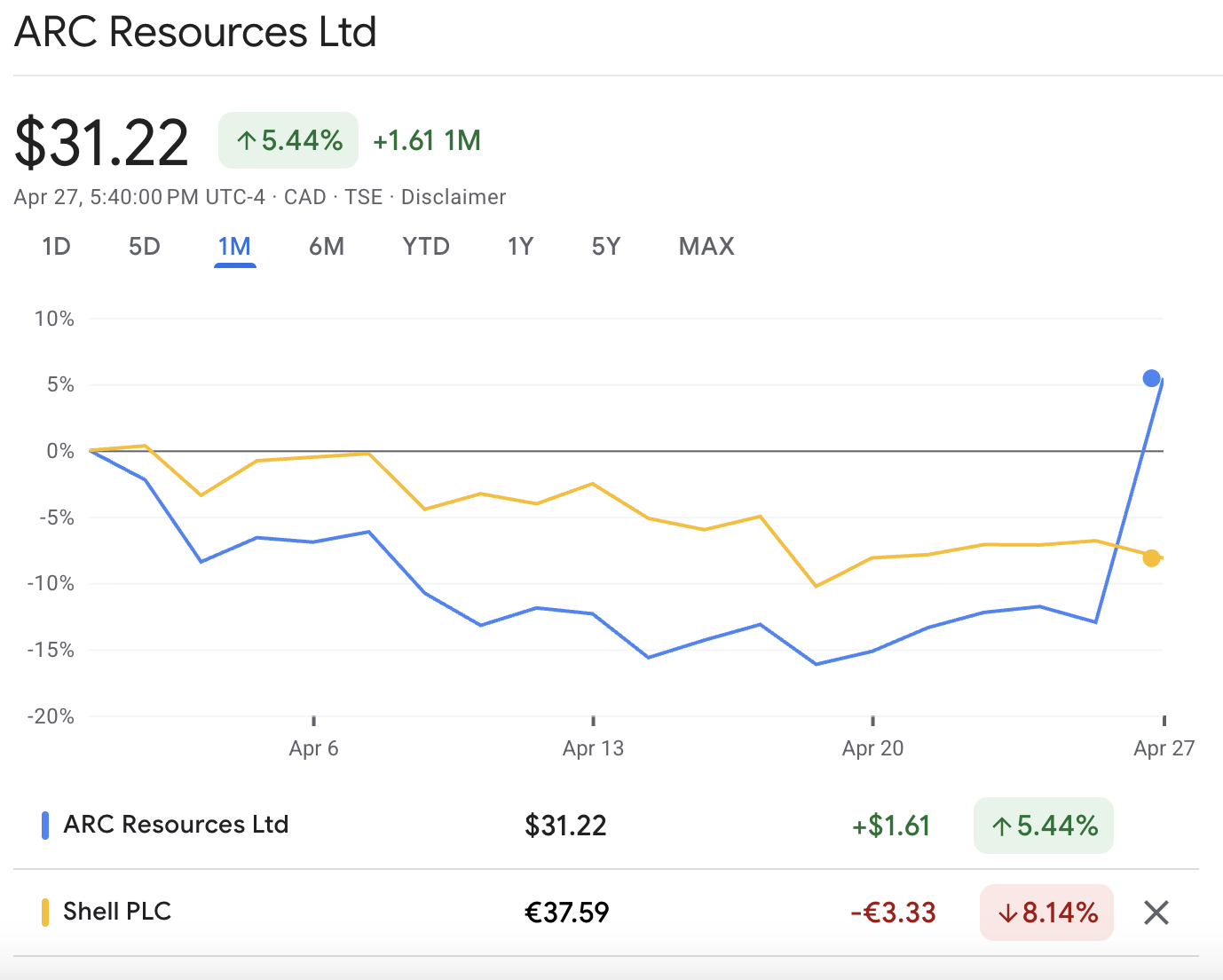
Shell’s reaction was different because buyers carry the burden of proof. The company expects to fund the equity value with roughly US$3.4 billion in cash and US$10.2 billion in Shell shares, including the issuance of about 228 million ordinary shares. That structure protects cash but creates immediate dilution before synergies and production benefits are visible.
| Market Question | ARC Resources | Shell |
|---|---|---|
| Immediate impact | Takeover premium captured | Acquisition cost absorbed |
| Main stock driver | Deal spread | Capital discipline |
| Key uncertainty | Closing and Shell share value | Free cash flow accretion |
| Investor lens | Scarcity value | Dilution and returns |
| Time horizon | Near-term completion | 2027 onward execution |
The market is making a clear distinction between asset quality and buyer economics. ARC has monetised a strategic Canadian gas position at a premium. Shell has secured control of that position, but must now prove it can earn more than it paid.
Shell is buying depth in the Montney, one of North America’s most important gas and liquids basins. ARC brings more than 1.5 million net acres, which will combine with Shell’s roughly 440,000 net acres in the formation. The deal also adds around 2 billion barrels of oil equivalent of proved plus probable reserves.
The strategic appeal is not only production volume. ARC’s portfolio is liquids-rich enough to improve revenue quality. Around 40% of 2025 production was liquids, but liquids generated roughly 70% of revenue. That matters because condensate and other liquids can support cash flow when North American natural gas prices weaken.
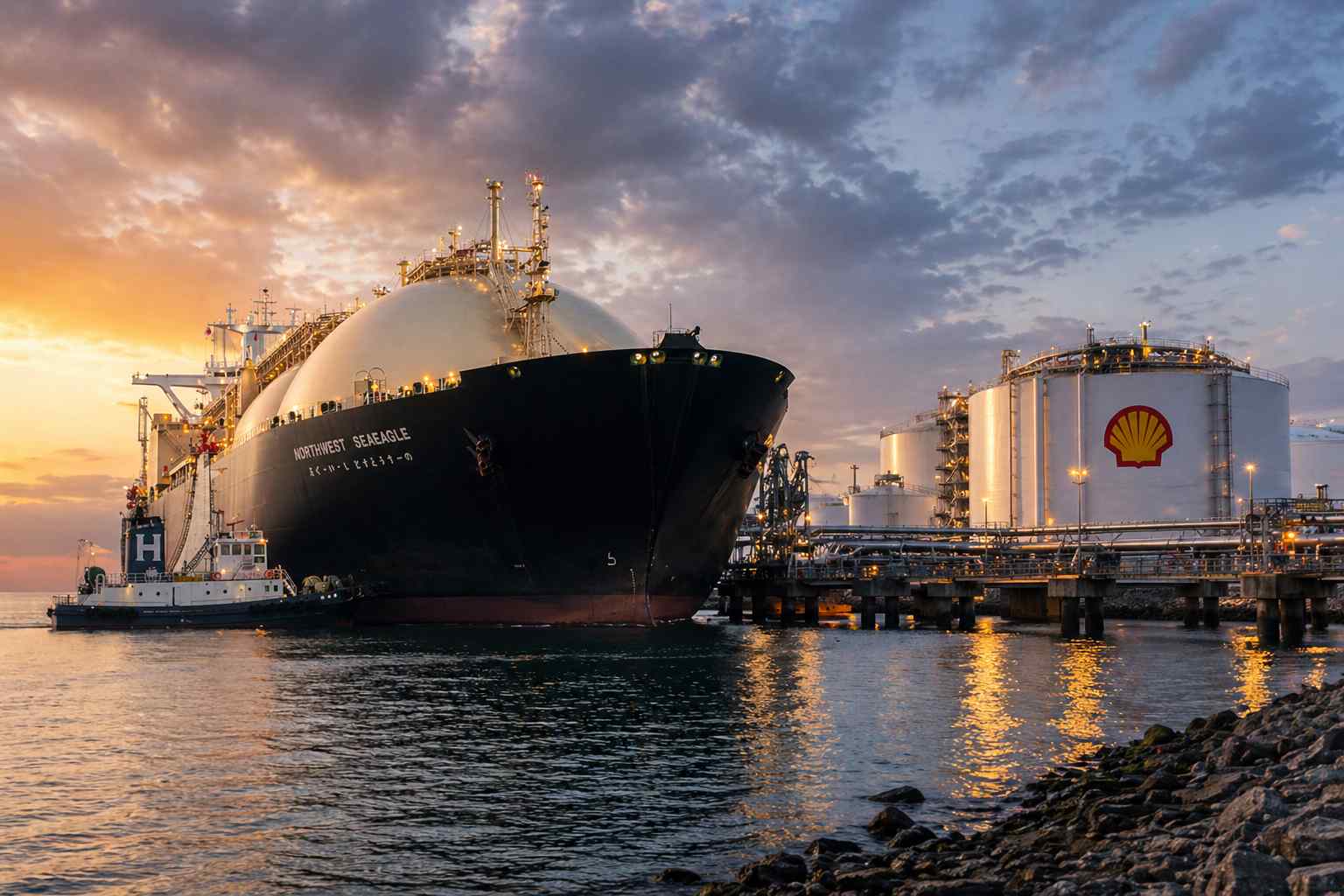
The LNG connection is equally important. Shell’s Groundbirch assets already supply gas to LNG Canada, where Shell holds a 40% interest. ARC’s gas reserves strengthen Shell’s feedgas optionality and deepen its integrated gas strategy, linking Western Canadian production more closely to global LNG demand.
The acquisition marks Shell’s biggest transaction since BG Group and shows that global energy majors are again willing to buy resource depth when the assets fit a long-term gas strategy. Shell exited the Permian through a sale to ConocoPhillips in 2021, but this deal brings it back into a major North American shale position through gas rather than oil.
That shift matters. LNG demand, reserve life and supply security now carry greater strategic weight than pure short-cycle shale growth. Canada also offers political stability, mature infrastructure and proximity to Pacific LNG routes. For Shell, ARC is not a simple bolt-on. It establishes Canada as a more central gas growth platform.
The first risk is approval. The transaction still needs ARC shareholder approval, court approval and regulatory clearance. ARC shareholders are expected to vote in July 2026, with closing expected in the second half of 2026.
The second risk is Shell’s share price. Because 75% of the consideration is paid in Shell shares, ARC’s final value will move with Shell’s equity performance and exchange rates. A weaker Shell share price lowers the effective deal value, while a stronger one improves it.
The third risk is execution. Shell expects about US$250 million in annualized synergies within one year of closing and says the deal should be accretive to free cash flow per share from 2027. Those targets now become the scorecard. If Canadian gas prices weaken, LNG timelines shift or integration costs rise, investor patience could narrow quickly.
ARC rose because Shell offered a takeover premium. The announced offer valued ARC at C$32.80 per share, well above its pre-announcement level, giving investors an immediate price anchor.
Shell is paying the premium and issuing new shares. Investors focused on dilution, capital discipline and the need to prove that ARC can add free cash flow after integration.
Yes. Since 75% of the consideration is in Shell shares, ARC holders remain exposed to Shell’s share price until closing.
Shell wants ARC for Montney gas scale, liquids-rich production, reserve depth and LNG-linked optionality in Canada. The deal strengthens Shell’s integrated gas strategy.
ARC Resources has become a scarcity asset with a takeover price attached. Shell has become the buyer under review. That explains why ARC surged while Shell lagged.
The acquisition gives Shell a larger Canadian gas platform, stronger LNG feedgas optionality and a longer reserve runway. The price is dilution, deal risk and a higher execution bar. If Shell delivers the promised synergies and free cash flow accretion, the deal could strengthen its gas-led growth strategy. Until then, ARC trades on deal certainty, while Shell trades on trust.
Shell: “Shell announces agreement to acquire Canadian energy company ARC Resources Ltd.”
https://www.shell.com/news-and-insights/newsroom/news-and-media-releases/2026/shell-announces-agreement-to-acquire-canadian-energy-company-arc-resources.html
ARC Resources: “ARC Resources Ltd. announces agreement to be acquired by Shell plc”
https://www.arcresources.com/news-releases/arc-resources-ltd-announces-agreement-to-be-acquired-by-shell-plc/