Published on: 2026-04-28
The United States, Indonesia, and Canada all created sovereign wealth funds within 12 months. Trump signed the executive order in February 2025, Indonesia launched Danantara with $900 billion in assets in February 2025, and Canada’s Mark Carney announced the Canada Strong Fund with $25 billion in initial capital today, April 27, 2026.
Global sovereign wealth fund assets hit a record $15 trillion in 2025, according to Global SWF. Sovereign investors collectively deployed $66 billion into AI and digital infrastructure, with Gulf funds accounting for 43% of all global capital deployments.
Norway’s fund crossed $2 trillion and holds 1.5% of every publicly listed company on earth. Saudi Arabia’s PIF committed $36.2 billion in deals in 2025. Abu Dhabi’s Mubadala invested a record $32.7 billion across 40 transactions.
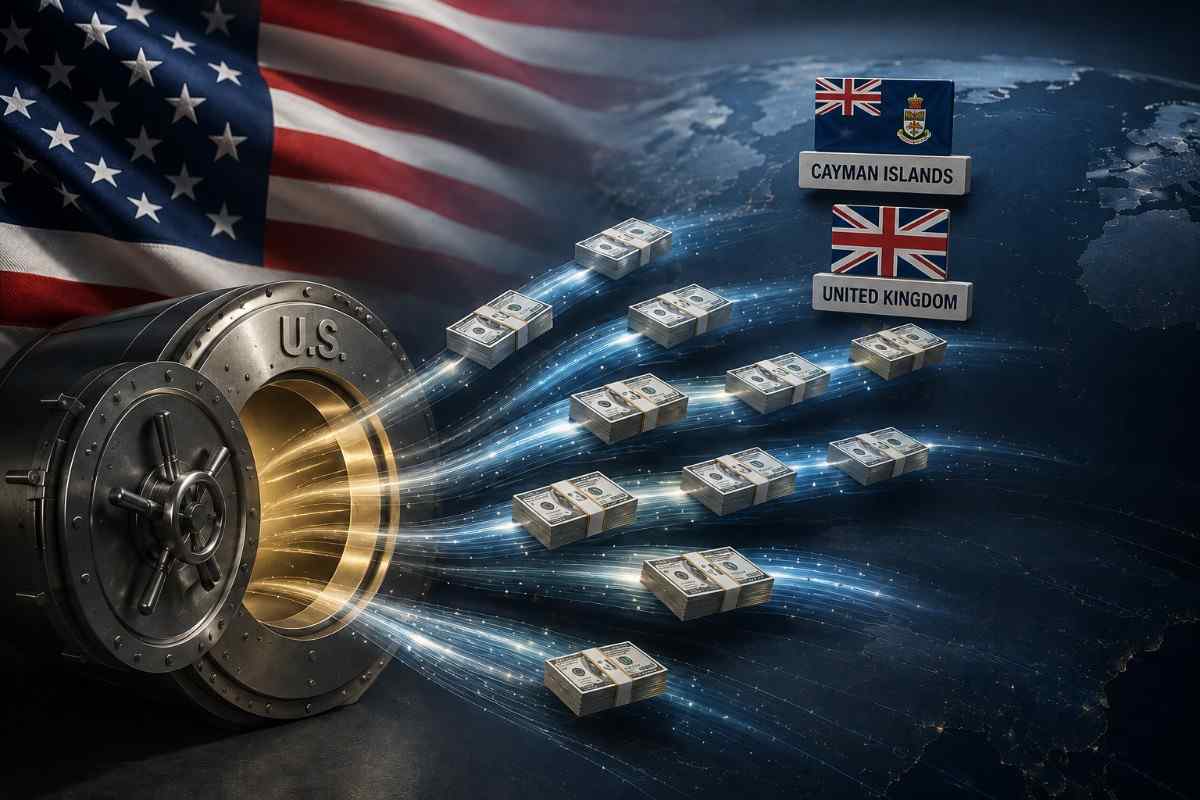
The U.S. attracted $131.8 billion in sovereign capital in 2025, nearly double the prior year. China saw inflows collapse to $4.3 billion from $10.3 billion. Capital is flowing toward strategic sectors, primarily AI, semiconductors, critical minerals, and energy infrastructure.
Three countries created sovereign wealth funds within 12 months. The United States signed an executive order in February 2025. Indonesia launched Danantara with $900 billion in assets the same month. And this morning, April 27, 2026, Canada’s Prime Minister Mark Carney announced the Canada Strong Fund with $25 billion in initial federal capital, explicitly designed to finance “nation-building projects” in energy, critical minerals, agriculture, and infrastructure.
That sequence is worth studying because these are not oil-rich Gulf states parking surplus revenue. These are the world’s largest market economy, Southeast Asia’s biggest economy, and America’s closest trading partner, all deciding within a single year that private markets alone can no longer secure their strategic economic interests. The old model, where governments set policy and private capital allocated itself, is giving way to something different.
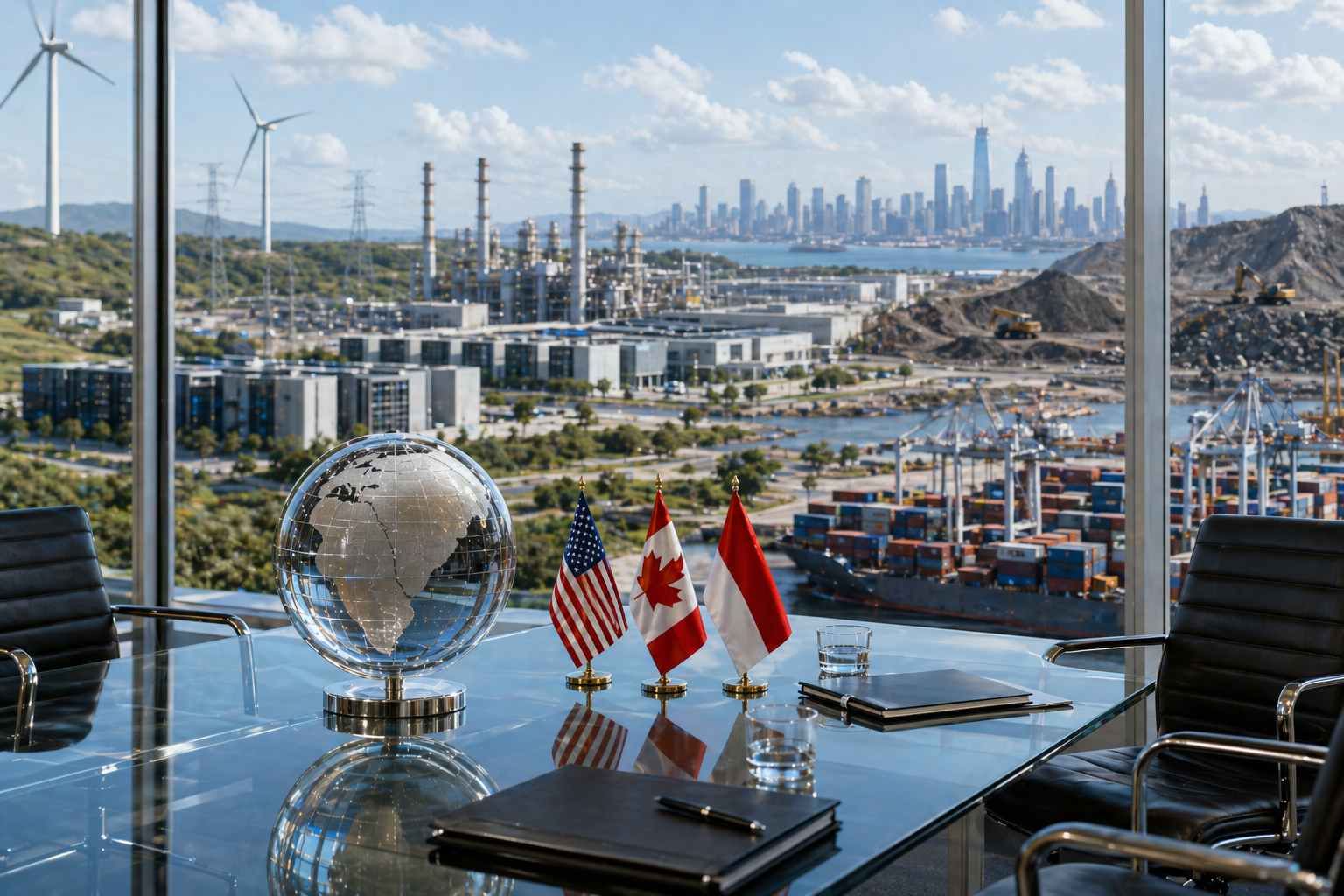
Global sovereign wealth fund assets hit a record $15 trillion in 2025, according to Global SWF’s annual report published in January 2026. That figure is larger than the entire global hedge fund industry and most private equity firms combined.
The scale of individual funds tells a more specific story. Norway’s Government Pension Fund Global crossed $2 trillion and now holds stakes in 7,200 companies across 60 countries, owning approximately 1.5% of every publicly listed stock on earth.
It generated $247 billion in profit in 2025 alone. Saudi Arabia’s Public Investment Fund committed $36.2 billion in deals, making it the single largest dealmaker among sovereign funds. Abu Dhabi’s Mubadala invested a record $32.7 billion across 40 transactions.
The seven largest Gulf sovereign funds deployed $126 billion in total capital in 2025, representing 43% of all global sovereign wealth fund investments, the highest proportion ever recorded.
Two destinations dominated sovereign capital flows in 2025: the United States and artificial intelligence.
The U.S. attracted $131.8 billion in sovereign investments, nearly double the $68.9 billion recorded in 2024. That surge coincided with a recovering S&P 500 and growing sovereign interest in AI infrastructure, semiconductor manufacturing, and energy assets. Sovereign investors collectively deployed $66 billion into AI and digital infrastructure in 2025. Mubadala led with $12.9 billion in AI and digitalization investments, followed by the Kuwait Investment Authority at $6 billion and the Qatar Investment Authority at $4 billion.
The contrast with China is sharp. Sovereign capital flowing into China dropped to $4.3 billion from $10.3 billion in 2024, a 58% decline driven by geopolitical risk and underperforming returns. Capital is migrating toward jurisdictions perceived as strategically stable, and the U.S. is capturing the majority of that flow.
Gulf sovereign wealth funds have also taken direct equity stakes in frontier AI companies. Funds from Oman, Qatar, Saudi Arabia, Singapore, and the UAE have acquired positions in OpenAI, Anthropic, and xAI. These are not passive portfolio allocations. They are strategic bets on the companies building the infrastructure of the next technological era, made by investors with 30-year time horizons and no quarterly earnings pressure.
Each of the three new sovereign wealth funds reflects a different strategic logic, but all three share a common conclusion: governments need direct capital deployment tools that private markets do not provide.
United States: Trump’s February 2025 executive order directed the creation of a U.S. sovereign wealth fund, a move that acknowledged even the world’s deepest capital markets cannot guarantee strategic outcomes in semiconductors, critical minerals, and defense technology without state-directed investment. The fund’s structure and capitalization remain under development, but the signal was immediate: Washington intends to compete directly with Gulf and Asian sovereign capital for control of strategic assets.
Indonesia: Danantara launched in February 2025 with $900 billion in assets under management, making it the seventh-largest sovereign wealth fund on earth from day one. The fund took control of government holdings in state-owned enterprises across banking, mining, energy, and telecommunications.
Its first investments targeted nickel processing, petrochemicals, and AI infrastructure, all sectors where Indonesia wants to capture domestic value rather than allowing foreign capital to extract it. The fund has signed partnership agreements with sovereign funds from Qatar, China, Saudi Arabia, Japan, and the UAE, positioning Indonesia as a node in multiple capital networks simultaneously.
Canada: Carney’s announcement this morning is the most revealing of the three. The Canada Strong Fund, backed by $25 billion in initial federal capital, will invest in clean and conventional energy, critical minerals, agriculture, and infrastructure.
Carney described it as “a national savings and investment account” that will be “professionally managed and operate as an arm’s length independent Crown corporation.” The fund will also offer a retail investment product, allowing individual Canadians to buy in and earn dividends.
The timing is deliberate. Canada created this fund in direct response to U.S. tariff pressure and the realization that relying on a single trading partner for 75% of exports creates a vulnerability that private capital cannot hedge. Carney has explicitly framed Canada’s economic strategy around diversification away from dependence on the United States.
When a government-backed fund with $900 billion and no redemption pressure enters a bidding process against a private equity firm with a five-year exit timeline, the structural advantage belongs to the sovereign. Not because the sovereign is smarter, but because it can hold longer, price differently, and absorb short-term losses that a fund with LP commitments cannot.
This dynamic is already visible across the most strategic sectors. Gulf sovereign funds are winning multi-billion-dollar acquisitions in technology, healthcare, and energy transition assets at valuations that private capital cannot justify on a five-to-seven-year return basis. Mubadala put $12.9 billion into AI and digital assets in a single year. PIF is building entire cities and investing directly in semiconductor manufacturing.
The industries that matter most to national security and economic competitiveness, semiconductors, AI infrastructure, critical minerals, energy generation, and defense technology, are increasingly being acquired and controlled by sovereign capital.
For private investors, the competitive landscape in these sectors has fundamentally changed. The question is no longer which fund has the best deal team. It is which fund has the longest time horizon and the deepest pockets, and the answer is increasingly a government.
Sovereign wealth funds have become the primary tool through which nations project economic power without military force. Saudi Arabia uses PIF to transform its economy away from oil dependence. The UAE uses Mubadala and ADIA to position Abu Dhabi as a global technology and finance hub.
Indonesia uses Danantara to control its critical minerals value chain and negotiate directly with Washington and Beijing for strategic access. Canada created its fund as a defensive measure against American economic pressure. The U.S. created one to compete with all of them.
This competition will accelerate. The nation that deploys sovereign capital most effectively into the industries that define the next 30 years, AI, energy, critical minerals, robotics, and biotechnology, captures the economic value of the era.
The $15 trillion already in sovereign hands is growing, concentrating, and moving into sectors where returns are measured in decades and strategic advantage, not just financial performance.
Three sovereign wealth fund announcements in 12 months, from three countries with fundamentally different economies, all converging on the same conclusion: governments need to own stakes in the industries that will determine national prosperity.
The $15 trillion in global sovereign assets is already reshaping deal flow in AI, semiconductors, energy, and critical minerals. Private capital still dominates global markets in aggregate, but in the sectors that define strategic competitiveness, sovereign funds are setting the terms. The old division between state-directed and market-driven economies is dissolving.
What is emerging in its place is a hybrid model where governments invest directly alongside, and increasingly ahead of, private capital. Canada’s announcement this morning confirms that this shift is no longer limited to petrostates and authoritarian systems. It has reached the democracies.