Published on: 2026-02-25

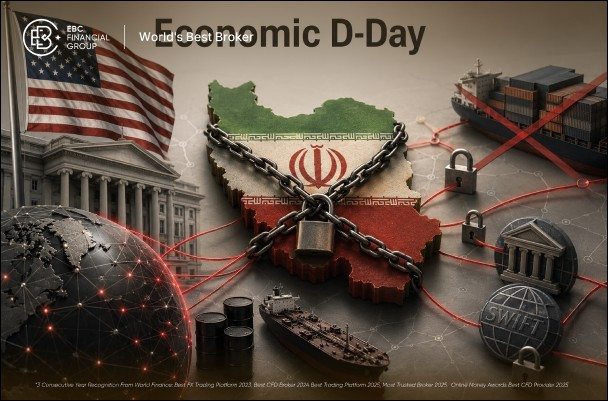
In 2026, foreign exchange (FX) markets are increasingly pricing in 'permission risk,' where the probability of capital being delayed, blocked, or rerouted is as significant as growth differentials.
The initial impact of regulatory changes typically affects forwards, basis, and options rather than spot rates. New rules alter hedging horizons, collateral requirements, and market access, leading to repricing in FX market infrastructure before headline exchange rates adjust.
Policy fragmentation remains closely linked to the US dollar, even when the underlying thesis is not explicitly dollar-centric. Most global hedging and settlement continue to rely on USD liquidity, so corridor-level restrictions can increase USD funding premia.
Over the next 12 to 18 months, new catalysts such as EU outbound review deadlines, harmonization of EU inbound screening, and stricter security screening in Asia are expected to sustain volatility, particularly around policy-driven events.
The 'trade war' narrative does not fully capture the primary drivers of marginal FX pricing in early 2026. While tariffs remain relevant, markets are increasingly focused on the evolving rules governing cross-border ownership, including which investors may acquire specific assets, in which sectors, through which entities, and under what reporting obligations. This transition shifts FX from a focus on macroeconomic differentials to a market that prices regulatory path dependency and convertibility premia, particularly in corridors involving sensitive technologies.
| Metric or Policy Marker | Latest Read | Date | Impact on Forex Market |
|---|---|---|---|
| Global OTC FX Turnover | $9.6 Trillion Per Day | April 2025 | Depth is huge, but hedging waves show up fastest in forwards and swaps. |
| US Dollar Share of Global FX Turnover | 89.2% of Trades | April 2025 | Fragmentation transmits through USD funding and settlement. |
| Federal Funds Target Range | 3.50% to 3.75% | Jan 28, 2026 | High carry incentives remain, but easing expectations are no longer one-way. |
| ECB Deposit Facility Rate | 2.00% | Feb 2026 | Europe is stable on rates, so policy risk becomes a larger FX driver vs. pure differentials. |
| Bank of Japan Overnight Call Rate Guidance | Around 0.75% | Jan 23, 2026 | Japan’s normalization changes JPY hedging costs, but policy divergence still matters. |
| RMB Share of Global Payments (SWIFT) | 2.73% | Dec 2025 | RMB usage is rising, but internationalization remains constrained by market structure. |
| EU Outbound Investment Review Deadline | Comprehensive Report Due | Jun 30, 2026 | A near-term catalyst for a possible EU-level outbound control regime. |
| Gold Share of Total Official Reserves | 20% | End-2024 | Reserve strategy is increasingly shaped by sanctions and settlement resilience. |
A significant development for FX markets is the policy shift from taxing cross-border goods to regulating cross-border capital formation. The United States has implemented a formal outbound investment security regime targeting specific transaction types in three strategic sectors: semiconductors and microelectronics, quantum information technologies, and artificial intelligence related to China-linked jurisdictions. This regime includes prohibitions and notification requirements, enforced by substantial penalties.
Europe is advancing on two parallel tracks. First, it is nearing the adoption of a harmonized EU inbound FDI screening framework, which aims to reduce disparities among Member States and increase baseline friction for strategic-sector transactions. (European Parliament) Second, the European Commission’s outbound investment recommendation includes a defined timeline, with progress reporting and a comprehensive report due by June 30, 2026, to determine whether additional EU or national measures are warranted.
Asia is also implementing stricter measures. Japan is currently considering the establishment of a centralized screening body, modeled on the Committee on Foreign Investment in the United States (CFIUS), as part of its economic security policy. This initiative would likely formalize and expedite the review of sensitive inbound transactions. The implication for FX markets is clear: an increasing number of corridors will exhibit a persistent policy premium, even in the absence of new tariff announcements.
In practice, these regulatory regimes seldom halt capital flows entirely; instead, they redirect them. When outbound investment into restricted China-linked targets becomes more difficult, capital is reallocated toward permitted alternatives such as domestic capital expenditures, allied markets, or 'friend-shore' manufacturing corridors. Consequently, the most tradable FX impacts often manifest in currency pairs associated with these rerouted flows, rather than in broad US Dollar Index (DXY) movements.
FX markets apply a discount when investors anticipate potential obstacles to repatriation, exit, settlement, or compliance clearance. This phenomenon is observable in the form of wider onshore-offshore spreads and persistent basis differentials when investor groups encounter varying access constraints.
Data from the Bank for International Settlements (BIS) indicate that hedging demand can increase rapidly and disproportionately in forwards and swaps. (bis.org) Capital frictions extend transaction timelines and increase 'wait-and-see' optionality, prompting corporates and funds to hedge earlier and for longer durations. As a result, the spot market may appear stable while forward points and basis adjust in response to underlying risks.
Given that the US dollar is involved in nearly 90% of FX trades, segmentation at the corridor level often results in a USD funding issue. During periods of market stress, official backstops become critical. The Federal Reserve’s swap lines are specifically designed to support dollar liquidity abroad when global funding markets experience strain.
The CNH-CNY gap remains a useful barometer of how the market is pricing access and liquidity. BIS research documents that differences in policy and liquidity can drive persistent pricing differentials between onshore and offshore RMB markets.
The key signal is not average implied volatility. It is skewed and risk reversals around known policy catalysts (for example, EU outbound review deadlines or U.S. enforcement actions). When investors fear “sudden stops” in capital channels, they buy asymmetric protection, and that premium can persist.
The most likely scenario involves incremental expansion, including tighter definitions, increased reporting requirements, and broader screening coverage, while policymakers avoid comprehensive capital controls that could destabilize funding markets. Europe’s outbound review timeline maintains this dynamic through mid-2026, with the potential for further EU-level action depending on the findings.
If outbound investment regimes expand to include additional sectors, more 'countries of concern,' or stricter enforcement, FX markets are likely to price higher corridor premia through wider basis and increased forward volatility. This dynamic can strengthen the dollar due to heightened funding demand, even if US macroeconomic data weaken, as fragmentation increases the cost of dollar intermediation.
Even favorable outcomes, such as clearer screening thresholds and expedited approvals, do not eliminate the policy premium. Instead, they enhance its tradability. Markets are able to hedge against established rules but face challenges when dealing with discretionary risk.
Reserve diversification is increasingly motivated by sanctions resilience and settlement optionality, rather than by carry or duration. The ECB reports that gold’s share of total official reserves rose to 20% at end-2024, surpassing the euro’s share at market valuations. (European Central Bank) That is not a day-to-day FX driver, but it is a structural tailwind for a world where policymakers assume capital channels can be weaponized.
At the margin, these trends support increased experimentation with bilateral settlement arrangements and greater interest in nontraditional reserve assets. SWIFT data indicate that RMB payments are growing but still account for a small share of global payments, reinforcing the view that the capital account structure, rather than trade invoicing alone, is the primary constraint.
Not consistently. The initial impact typically occurs in forwards, cross-currency basis, and options skew, as regulatory changes affect hedging horizons and funding access. Spot rates generally respond later, usually when rerouted flows become persistent or when policy uncertainty broadly affects risk appetite.
Currencies tied to partially segmented financial systems, heavy external funding needs, or geopolitically sensitive corridors tend to show the earliest “policy premium.” The signal is rarely just the spot print. Watch basis, onshore-offshore spreads, and tail hedging costs around policy deadlines.
The US dollar remains the dominant currency for settlement and hedging in global FX turnover. When corridor risk increases, institutions typically require additional USD liquidity and collateral, which can strengthen the dollar through funding channels even in the absence of a growth shock.
Europe’s outbound investment review timeline is a clear calendar event: Member States’ comprehensive report is due by June 30, 2026, explicitly to inform whether additional EU or national controls are needed. That creates a policy-volatility window around mid-2026.
Monitor 'capital war' risk in a manner similar to credit risk rather than traditional macroeconomic risk. Track basis, forward points, options skew, and onshore-offshore spreads, and align exposures with policy calendars, including screening rule updates, enforcement actions, and legislative deadlines. The market typically signals stress through these channels before significant movements in spot rates occur.
The current FX market is transitioning from pricing tariffs to pricing capital permissions. In 2026, outbound screening regimes, tougher inbound FDI review, and sanctions-adjacent compliance risk are reshaping where long-horizon capital can go and how it must be hedged. The actionable takeaway is forward-looking: watch the plumbing. Forwards, basis, and skew are where “capital wars” surface first, and mid-2026 policy deadlines are likely to keep that premium alive.
Disclaimer: This material is for general information purposes only and is not intended as (and should not be considered to be) financial, investment or other advice on which reliance should be placed. No opinion given in the material constitutes a recommendation by EBC or the author that any particular investment, security, transaction or investment strategy is suitable for any specific person.