Published on: 2026-02-25
Updated on: 2026-02-25
After a long period of dominance, the tech sector is now facing significant headwinds. If you have been watching the news, you have likely seen the headlines: software stocks are tumbling, and billions in market value have evaporated in a matter of weeks.

While many investors may view this period with concern, experienced traders often see a downturn as an opportunity to implement strategies such as shorting US technology stocks.
By late February 2026, U.S. tech has become more volatile and more selective. Software and high-valuation growth stocks have taken the brunt of the selling, while headline risk has increased around tariffs and the pace of artificial intelligence (AI)-driven disruption.
Technology sector corrections are seldom attributable to a single factor. The current downturn is driven by a combination of investor positioning, policy-related risks, and evolving narratives surrounding artificial intelligence (AI).
A primary factor is increasing apprehension regarding artificial intelligence. Previously, AI served as a catalyst for record gains in technology stocks, but the prevailing narrative is evolving. Investors are now recognizing the disruptive potential of AI, acknowledging that it may not benefit all companies equally. There is concern that advanced AI tools could undermine the business models of established software firms, rendering their products obsolete or compelling them to reduce prices.
This anxiety has led to a massive selloff. As the downturn continues, short sellers are expanding their positions against the sector.
Tariffs and trade uncertainty can rapidly impact the technology sector due to its global supply chains and demand. When policy-related risks increase, markets typically reduce exposure to heavily concentrated growth positions.
When investors prioritize near-term cash flow over long-term growth prospects, highly valued technology companies often experience price corrections. The recent repricing of mega-cap firms demonstrates that even established companies can experience significant declines when market expectations change.
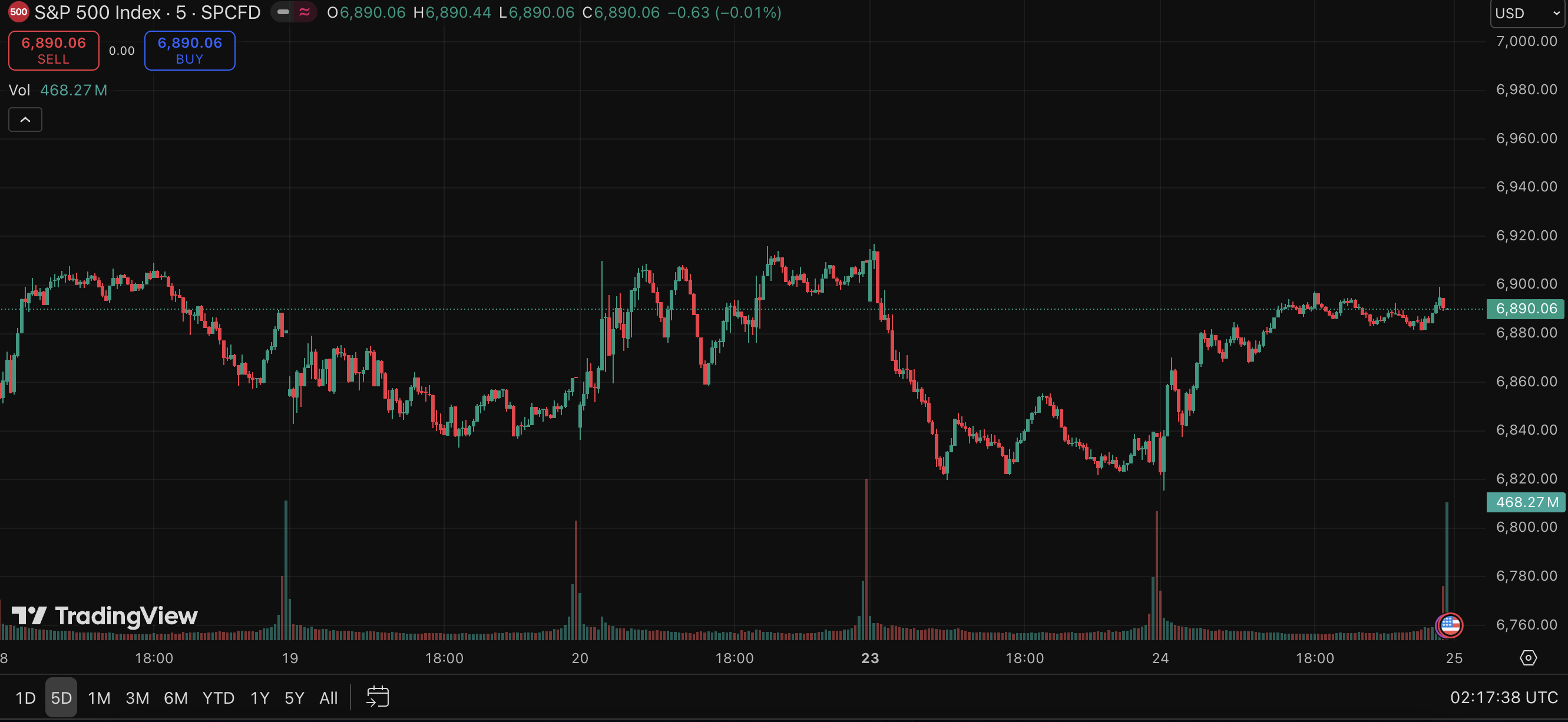
Market Snapshot: What Traders Are Seeing (late Feb 2026)
| Indicator | Latest read | Why it matters for short setups |
|---|---|---|
| S&P 500 close (Feb 24, 2026) | 6,890.07 (+0.8%) | Rebounds can trigger short-covering rallies. |
| Nasdaq close (Feb 24, 2026) | 22,863.68 (+1.0%) | Tech can bounce hard even in a weak tape. |
| Nasdaq YTD (as reported) | -1.6% | Shows uneven leadership and fragile risk appetite. |
| Software segment performance | Sharper drawdowns than broad tech | Downtrend is most visible in software and high-multiple growth. |
| 10-year U.S. Treasury yield (Feb 24, 2026) | ~4.03% | Higher yields can pressure long-duration valuations. |
While understanding the theory behind short selling is important, executing profitable trades in volatile markets requires a clear strategy. If you anticipate that the current downtrend in US technology stocks will persist, it is essential to develop a structured approach. The following outlines how to identify opportunities and utilize EBC Financial Group's platform to implement your strategy.
Not all declining stocks are suitable candidates for short selling. It is important to identify companies with distinct vulnerabilities. In the current environment, this often involves targeting software firms with elevated valuations that are particularly susceptible to AI-driven disruption. Focus on companies whose stock prices have fallen below key moving averages or have issued earnings guidance indicating potential future weakness.
As noted earlier, stocks like Microsoft, Oracle, and Broadcom have seen significant increases in short interest, meaning many professional traders are already positioning for further declines.
After identifying a suitable target, the next step is to select the specific stock to short-sell.
Analyze the Market: Use the advanced charting tools available on MT4 or MT5 platforms to validate a bearish outlook. Identify resistance levels or technical patterns that suggest a continuation of the downtrend.
Place the Sell Order: Within the trading platform, select the desired stock and execute a sell order at the current bid price. This action initiates the short position.
Set Risk Parameters: Prior to confirming the trade, establish a stop-loss order. This is essential, as losses on short sales can be unlimited. A stop-loss order automatically repurchases shares if the price reaches a predetermined level, thereby limiting potential losses. Additionally, consider setting a take-profit order at a lower price target to automatically close the position and secure gains.
Monitor and Close: Continuously monitor the position. If the stock price declines as anticipated, manually close the position by executing a buy order at the lower price. The resulting difference, after deducting applicable fees, constitutes the profit.
When short selling through a broker, the trader borrows an asset to sell it, incurring specific costs. The primary expense is the spread or commission, which varies by account type.
Additionally, holding a borrowed position incurs overnight financing charges, also referred to as swap rates, which are applied for each day the position remains open. If the shorted stock issues a dividend, the trader is responsible for paying the equivalent dividend amount to the lender.
Successful short sellers are distinguished not by consistently accurate predictions, but by effective risk management. The technology sector is characterized by high volatility, and bear-market rallies can result in sharp price increases even during a downtrend. It is essential to use stop-loss orders and to avoid risking more capital on a single trade than can be reasonably afforded. Consider overall market sentiment; if broader market indicators suggest a reversal, reducing short exposure may be prudent.
Short selling is most effective when traders possess a thorough understanding of the associated risks. During a technology sector downturn, three primary approaches are commonly employed.
These are companies with elevated expectations and significant investor positioning, where the prevailing narrative is being questioned. A typical strategy involves waiting for a modest rebound toward a resistance level, initiating a small position, and establishing a clear stop-loss. It is advisable to avoid increasing exposure to a losing short position, as short squeezes are frequent in the technology sector.
To mitigate the risk associated with individual company earnings, traders may utilize a basket approach. Many experienced traders monitor broad Nasdaq exposure or technology-sector benchmarks instead of focusing on a single stock.
Common vehicles to track and trade:
Nasdaq-linked exposure (often tracked via QQQ)
U.S. tech sector exposure (often tracked via XLK)
Some traders maintain selective long positions in leading AI beneficiaries while shorting weaker sub-sectors, such as overvalued software or unprofitable growth companies. This approach can reduce overall market exposure, but it is not without risk and necessitates strict risk management.
For those seeking to short U.S. technology stocks efficiently, EBC Financial Group offers access via US Stock Contracts for Difference (CFDs), enabling traders to speculate on price movements without owning the underlying shares. This structure is frequently utilized when anticipating a decline in value.

EBC lists US Stock CFDs on major U.S. companies, including:
Apple (AAPL)
Tesla (TSLA)
Meta Platforms (META)
NVIDIA (NVDA)
Google (Alphabet) (GOOGL)
Microsoft (MSFT)
Amazon (AMZN)
These instruments allow traders to speculate on price movements without holding the underlying shares, which is particularly advantageous when expecting a decrease in value.
Register and choose an account type. Visit the EBC Financial Group website.
Complete verification. Finish the KYC process to activate your account.
Fund the account. Deposit through the Client Portal, with a minimum of $50.
Download MT4 or MT5. Select your preferred platform and log in.
Select a stock to trade. Place buy or sell orders directly from the order window. Prioritize trade size and exit levels.
Manage risk before profit. Use prudent position sizing and predefined exit strategies, especially during major events.
Risk disclaimer: CFDs are complex instruments and carry a high risk of losing money rapidly due to leverage. This material is for general information only and is not investment advice.
Traders frequently prioritize spreads and technical analysis, sometimes overlooking the importance of counterparty quality. In volatile markets, regulatory oversight and operational standards are critical considerations.
EBC highlights top-tier oversight across major entities, including:
Financial Conduct Authority (FCA, UK)
Australian Securities and Investments Commission (ASIC)
Cayman Islands Monetary Authority (CIMA)
Shorting US tech stocks means opening a position that benefits if the price falls. With stock CFDs, traders typically short by placing a Sell order, then managing the trade with predefined exits such as stop-loss and take-profit levels.
The current weakness is concentrated in software and high-valuation growth, while mega-cap tech has also lost momentum. Policy headlines and AI-related uncertainty have increased volatility and made rebounds less reliable.
EBC’s US Stock CFDs include major names such as Apple, Tesla, Meta, NVIDIA, Alphabet, Microsoft, and Amazon.
Open an account, complete verification, fund through the Client Portal, and execute trades on MT5. The portal is used for funding and withdrawals, while MT5 is used for trading.
Short selling allows you to take advantage of falling markets, and EBC Financial Group provides platform access to trade in both directions. With regulated entities including the FCA (UK), ASIC (Australia), and CIMA (Cayman Islands), client fund arrangements referenced with Barclays (where applicable), access to major US stock CFDs on MT4/MT5, and awards cited for execution and platform delivery, EBC is positioned for traders operating in volatile market conditions.
Do not let a market downturn catch you off guard. Prepare yourself to trade in any direction.
Disclaimer: This material is for general information purposes only and is not intended as (and should not be considered to be) financial, investment or other advice on which reliance should be placed. No opinion given in the material constitutes a recommendation by EBC or the author that any particular investment, security, transaction or investment strategy is suitable for any specific person.