Published on: 2025-12-30
Updated on: 2025-12-30
An interest rate is the cost of borrowing and the return on lending. Interest rates influence bond yields, stock valuations through discounting, and currency demand through yield differences.
This single figure influences borrowing and saving decisions across the economy and plays a central role in how financial markets price risk, returns, and currencies. For traders, interest rates help explain why prices move, why capital flows between markets, and why some trends last longer than others.
Within financial markets, interest rates serve as a reference point for the cost of money. Central banks set a key policy rate through monetary policy, which influences how easily banks, companies, and investors can borrow or lend.
Traders focus less on household loans or savings products and more on how these rates affect capital flows, demand for financial assets, and the relative strength of currencies.
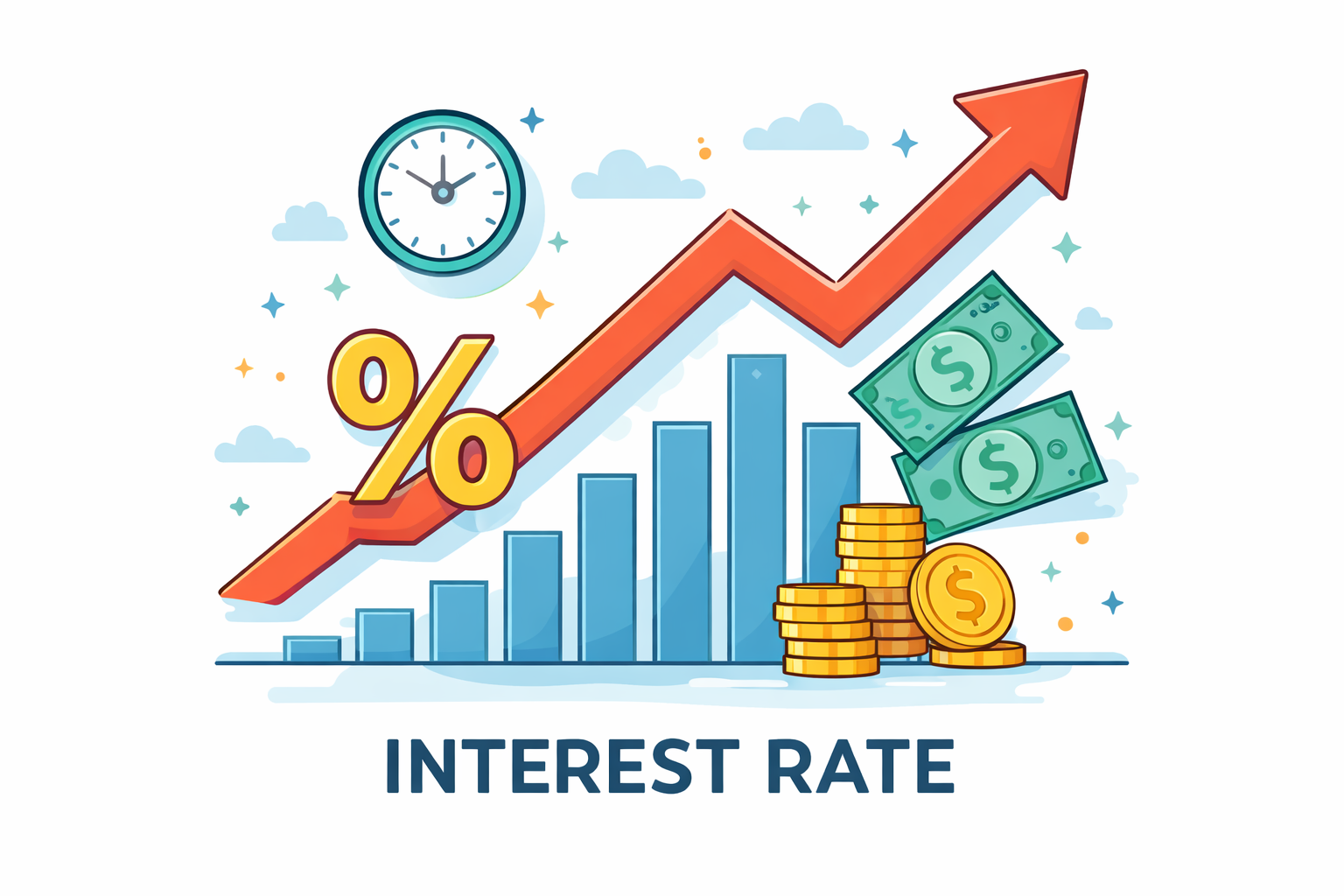
Rates influence how attractive one market is compared with another. A higher setting can draw investment toward that economy, while a lower setting can push funds away in search of better returns elsewhere.
Traders track these levels through central bank releases, policy statements, and market pricing tools, because even small adjustments can change sentiment and direction across currencies, bonds, and equity markets.
Interest rates come in different forms, depending on who sets them, how they change, and where they are used. Understanding these types helps traders read market signals more clearly and avoid confusion when rates are mentioned in the news or on trading platforms.
This is the main rate set by a country’s central bank. It guides the whole financial system by influencing how expensive or cheap money is for banks.
Used to control inflation and economic growth
Strongly affects currencies, bonds, and stock markets.
Often called the benchmark or base rate.
Traders watch this rate closely because changes can move markets within seconds.
Market interest rates are set by supply and demand, not by a single authority. They change constantly as investors buy and sell financial assets.
Examples include government bond yields and interbank lending rates.
Reflect expectations about growth, inflation, and future policy moves.
Can move ahead of official central bank decisions
These rates show what the market believes will happen next.
A fixed interest rate stays the same for a set period.
Common in fixed loans or long-term bonds
Payments or returns do not change even if the economy shifts.
Provides certainty but less flexibility
From a trading view, fixed rates matter most in longer-term investments.
A variable interest rate can change over time, usually linked to a benchmark.
Moves up or down with policy or market rates
Common in floating loans and short-term credit
Creates uncertainty but can reduce costs when rates fall
Markets often react faster to products tied to variable rates.
The nominal rate is the stated rate before adjusting for inflation.
Shown in headlines and official announcements
Does not reflect real buying power
Easy to compare across countries
Traders use nominal rates for quick comparison but not for full analysis.
The real interest rate adjusts for inflation.
Calculated as nominal rate minus inflation
Shows the true return or the true cost of borrowing
Important for long-term capital flows
Currencies tend to perform better when real rates are positive and stable.
Interest rates also differ by time length.
Short-term rates affect money markets and daily trading.
Long-term rates affect bonds, housing, and investment planning.
The gap between them forms the yield curve.
Traders watch changes between short and long rates for early warning signals.
Interest rates do not change by chance. They move in response to economic signals and policy decisions that guide how money is used in the economy.
When prices rise too quickly, central banks usually increase interest rates to reduce spending and borrowing. When price growth slows or falls, they may lower rates to encourage people and businesses to spend more.
A strong economy with steady job creation often supports higher interest rates. A weak economy or rising unemployment usually leads to lower rates, as policymakers try to support activity and confidence.
Interest rates can shift even without an actual decision. Speeches, meeting minutes, and official statements shape expectations. A small change in wording can cause markets to adjust before any rate move happens.
Financial stress, banking concerns, or geopolitical events often push central banks to act more cautiously. In these cases, rate increases may be delayed, paused, or reversed to protect stability.
Interest rates shape price direction and timing. When rates rise, a country’s currency often strengthens because higher returns attract capital. When rates fall, the currency often weakens. This affects entry points, exits, and trade duration.
Rates also affect risk and cost. Higher rates can increase overnight holding costs on some trades. They can also pressure stock markets by raising borrowing costs for companies. Lower rates usually support stocks but may weaken the currency.
Stable rate outlook, clear central bank guidance, and predictable reactions.
Surprise rate decisions, mixed signals, or sudden changes in expectations.
Understanding the rate environment helps traders avoid poor timing and unmanaged risk.
Suppose a country has an interest rate of 1 percent. Investors earn little by holding the currency. Now inflation rises, and the central bank raises the rate to 3 percent. This makes holding that currency more attractive.
A trader buys the currency after the rate hike. Demand increases because global investors want a higher return. The currency rises against others with lower rates. If the trader entered before the decision, the move may be sharp and fast. If the trader entered late, the price may already reflect the change. The rate level matters, but the change and the expectation matter even more.
Inflation: Rising prices often lead to higher interest rates.
Central bank policy: Decisions and guidance shape rate paths.
Bond yields: Closely linked to interest rate expectations.
Currency pairs: Rate differences drive long-term trends.
Economic calendar: Shows when rate decisions are due.
Swap rates: Reflect interest rate differences in overnight trade
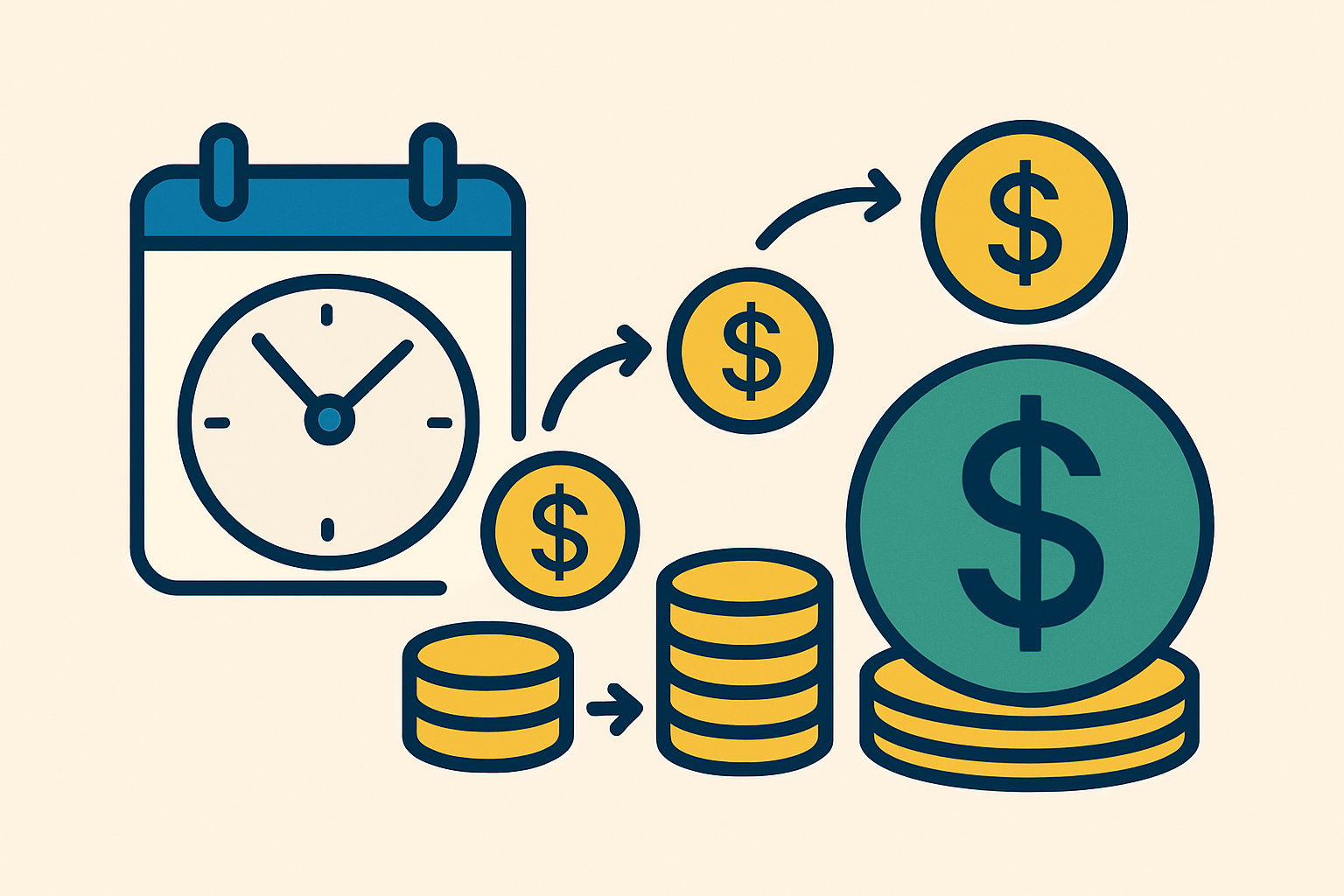
An interest rate is the cost of using money over time or the reward for saving it. When you borrow money, the interest rate tells you how much extra you must pay back on top of what you borrowed. When you save money, it shows how much you earn for letting someone else use your funds. This rate is usually shown as a yearly percentage. Even small changes in interest rates can have a big effect on spending, saving, and market prices.
In most countries, the main interest rate is set by the central bank. The central bank looks at inflation, economic growth, employment, and financial stability before making a decision. While banks and markets set many other rates on their own, they usually follow the direction set by the central bank. This is why traders pay close attention to central bank meetings and statements.
Interest rates affect how attractive a country’s assets are to investors. Higher rates can draw money into bonds and currencies because returns look better. Lower rates can push money into riskier assets like stocks or into other countries with higher returns. Because markets react to future expectations, prices often move as soon as traders think rates might change, not only after they actually do.
Not always. A currency often strengthens when rates rise, but only if the move is larger or faster than markets expected. If traders already planned for the increase, the currency may not move much at all. In some cases, higher rates can even weaken a currency if they signal economic stress. This is why expectations and context matter as much as the rate decision itself.
Interest rates usually change only a few times a year, depending on the country. Central banks meet on a fixed schedule, often every one or two months. However, market interest rates can move every day as expectations shift. Traders must remember that even when the official rate stays the same, market prices can still change based on new data or comments.
Many traders choose not to trade during rate announcements. Prices can move very quickly, spreads may widen, and sudden reversals are common. For new traders, it is often safer to watch how the market reacts and trade later, once the direction becomes clearer. Learning how markets behave around these events is useful, but managing risk should always come first.
Interest rates represent the cost of using money and are a key force behind market movements. Set mainly through central bank policy and shaped by economic conditions, they influence borrowing, investment, and capital flows.
For traders, interest rates help explain currency strength, price trends, and periods of higher risk. Understanding how rates change and why markets react to them allows traders to make better timing and risk decisions.
Disclaimer: This material is for general information purposes only and is not intended as (and should not be considered to be) financial, investment, or other advice on which reliance should be placed. No opinion given in the material constitutes a recommendation by EBC or the author that any particular investment, security, transaction, or investment strategy is suitable for any specific person.



World's Best Broker