Published on: 2026-05-08
The CAC 40 jumped nearly 3% in a single session this week, then gave back part of the move. Oil dropped sharply. Diplomatic reports suggested Washington and Tehran were edging toward a framework agreement to end the US-Iran conflict. European markets celebrated, and Paris led the move.

The key issue is simple: falling oil can lift European equities, but the CAC 40 still depends heavily on luxury demand, TotalEnergies, aerospace, banks, and French macro conditions. A peace rally can remove fear. It cannot create earnings growth by itself.
Falling oil prices help European economies absorb energy costs and cool inflation. That logic is sound. The problem is that the CAC 40 is not primarily an energy index. It is a luxury-heavy benchmark with a major energy counterweight, and the peace rally just priced out a risk without resolving the structural headwinds that were dragging the index down long before the Strait of Hormuz was closed.
Since the late-February escalation in the Strait of Hormuz, European markets have been hit on multiple fronts simultaneously. Brent crude spiked to $114.44 a barrel at its peak, igniting inflation fears across the eurozone. Supply chains running through the Middle East tightened. Tourist arrivals in Paris fell as regional travel collapsed. Consumer confidence weakened.
When Axios reported that Washington and Tehran were close to a one-page framework agreement, markets reversed those fears in hours. Oil fell sharply. The CAC 40, DAX, and FTSE all climbed. By the close, Paris had posted its strongest single-session gain in months.
The deal has not been signed. Iran is still reviewing the US proposal, and fresh military exchanges occurred as recently as May 8. Oil has already partially recovered, with WTI near $96 and Brent back above $100.
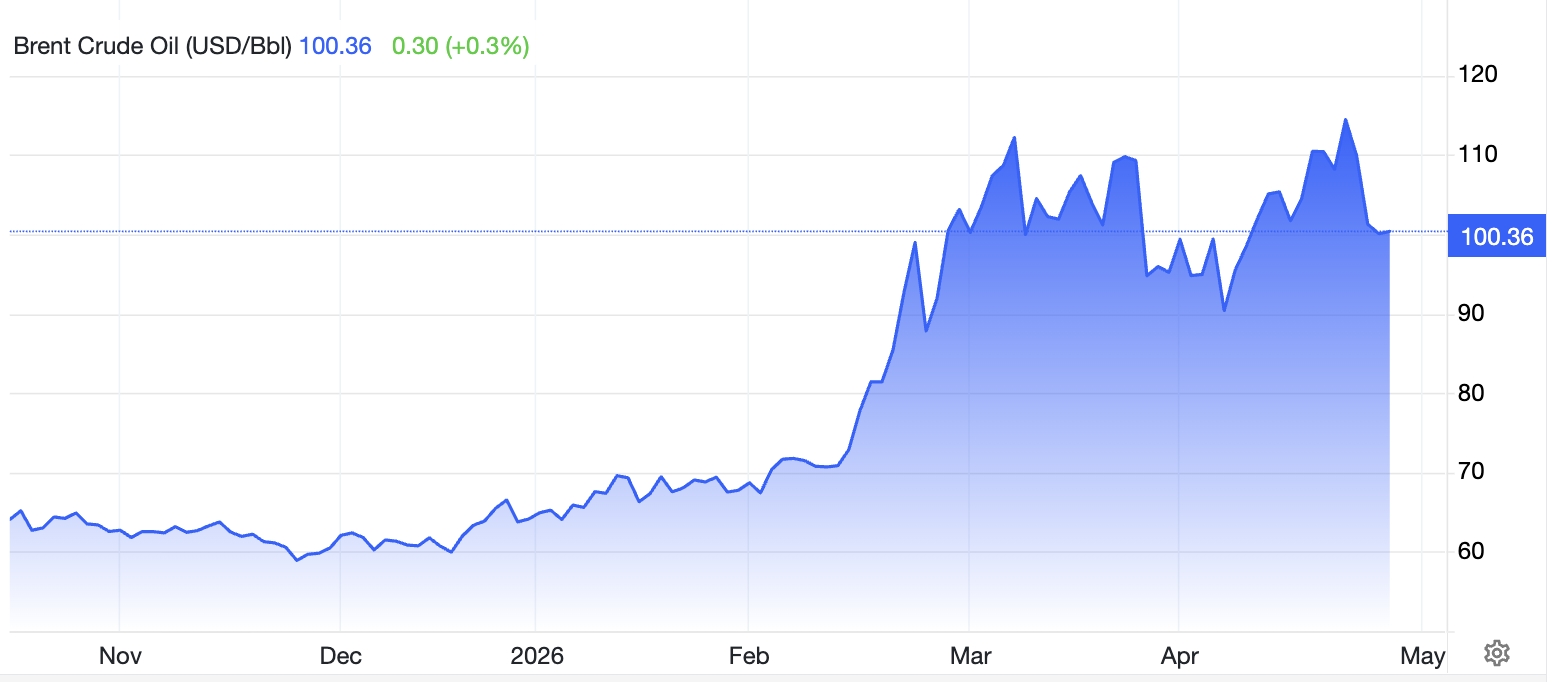
Even if a deal is reached, the IEA has warned that Gulf production capacity recovery will be slow, with infrastructure damage and insurer reluctance to service tankers through Hormuz extending the timeline.
The rally priced in peace. The situation has not yet delivered it.
To understand why falling oil is insufficient to sustain the rally, you have to understand what the CAC 40 actually is.
The index is dominated by three sectors: luxury goods, energy, and industrials. The top positions by market capitalization include:
LVMH: The world's largest luxury group, also the index's largest constituent
Hermès: One of the index's largest luxury constituents, high-end leather goods and fashion
TotalEnergies: France's energy giant, directly tied to oil prices
Airbus and Safran: Industrial and aerospace heavyweights
BNP Paribas and Société Générale: Major French banks
Luxury remains one of the CAC 40's most influential exposures, even after its weighting has declined from its peak. The index’s direction is still more tied to Chinese consumer spending, Middle Eastern tourism, and global high-end demand than to any single oil-price move.
Cheaper oil does not sell more Hermès bags. It does not reverse a Gucci decline. And it does not bring tourists back to Paris.
The US-Iran conflict accelerated the damage, but the CAC 40's luxury stocks were already under pressure before the first strike landed.
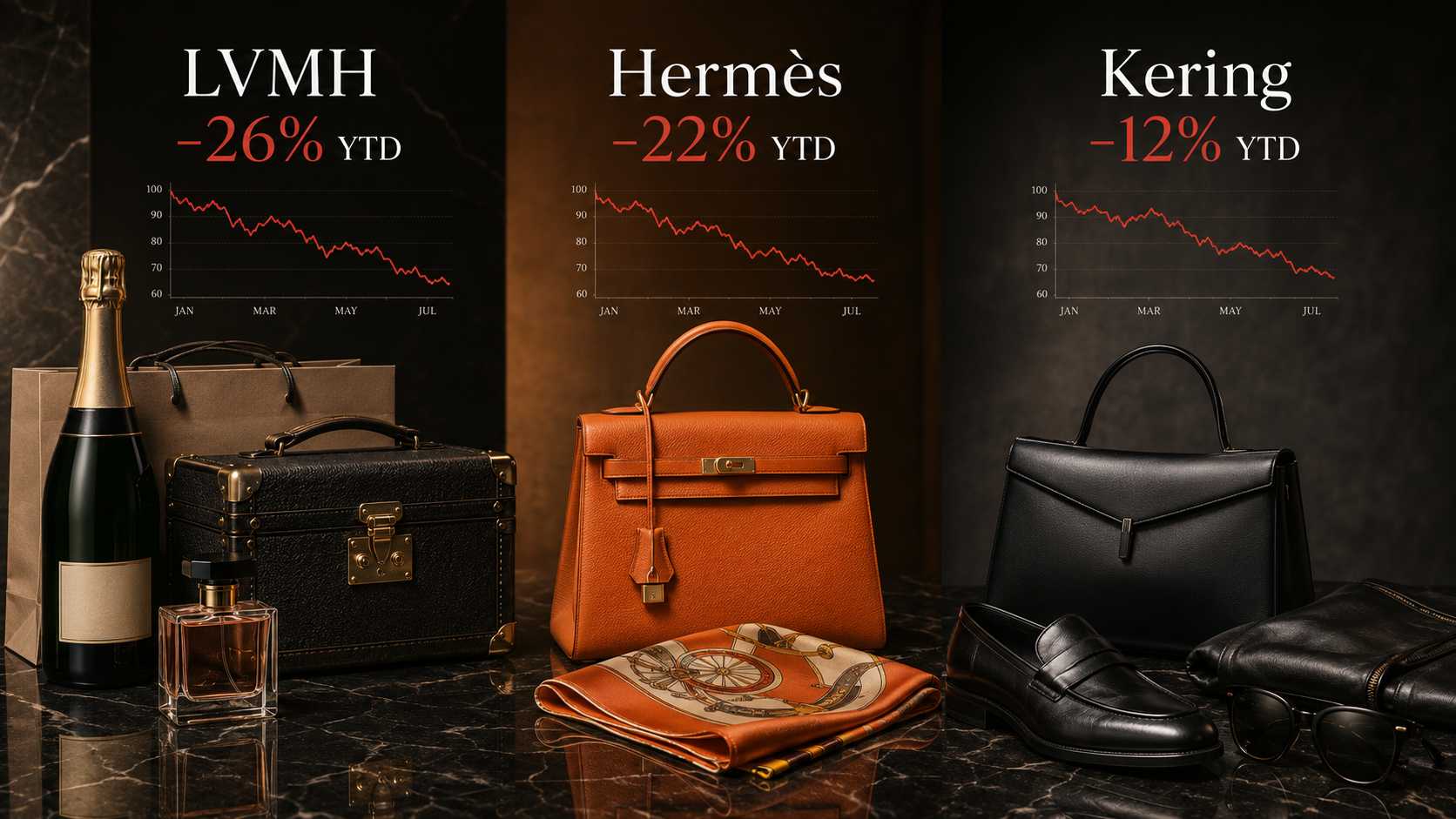
Since January 2026, the losses across the sector have been substantianal:
LVMH has shed approximately 26% year to date
Hermès is down roughly 22%
Kering has fallen around 12%
The drivers behind these declines are structural, not just geopolitical. Kering's Gucci brand posted its eleventh consecutive quarterly revenue decline in the most recent earnings report. That is not an oil story. That is a brand-positioning failure that has played out over nearly three years.
LVMH management also warned that the Iran conflict reduced group sales by at least one percentage point in the quarter. Even without that impact, organic revenue in fashion and leather goods came in below expectations.
Chinese luxury demand has also softened as Beijing’s consumer recovery underdelivered. With China’s GDP growth expected to slow to 4.5% in 2026 from 5% the prior year, the recovery story in the world’s most important luxury market is weakening, not strengthening.
A ceasefire in the Middle East does not fix Gucci's eleven quarters of declining revenue. It does not restore Chinese consumer confidence. And it does not reopen the Middle Eastern tourism routes that kept Paris luxury boutiques at capacity before the war began.
This is the part of the oil narrative that often gets skipped. TotalEnergies is one of the CAC 40's largest constituents. It is a direct beneficiary of elevated oil prices and a direct casualty when oil falls.
When Brent traded above $100 a barrel, TotalEnergies generated exceptional cash flow. When oil drops sharply on peace hopes, the stock faces immediate downward pressure. A falling oil price simultaneously relieves energy-consuming manufacturers while compressing earnings expectations for the index's biggest energy name. The net effect on the CAC 40 is more muted than the headline move implies.
The third leg of the trap is domestic French economics, and it has nothing to do with Iran.
France enters 2026 with a deficit still close to 5% of GDP, well above the European Union's 3% ceiling. The European Commission expects it to narrow from 5.5% of GDP in 2025 to 4.9% in 2026, but fiscal adjustment is still set to weigh on domestic demand at precisely the moment when consumer confidence is fragile.
The ECB held its deposit rate at 2.0% at its most recent meeting and acknowledged that risks to the eurozone economy had "intensified" as a result of the Middle East conflict. Eurozone GDP growth for 2026 is projected at just 0.9%, according to ECB staff forecasts. That is not a growth backdrop that typically supports premium equity valuations.
Demand inside France itself is slowing. Fiscal consolidation is compressing the public sector contribution to growth. Private consumption is subdued. Luxury multiples need strong global growth, confident Chinese consumers, and active tourism. Those conditions are not in place.
Beyond the three structural issues above, several risks remain live that the peace rally did not resolve.
The oil supply recovery timeline is longer than markets assume. Even if Iran accepts the US framework, Gulf production capacity cannot be restored overnight. Infrastructure damage is significant, insurers remain reluctant to cover tankers crossing Hormuz, and the IEA projects supply normalization will be gradual.
The ECB is not offering a clean monetary tailwind. Its deposit facility rate remains at 2.0%, while the Middle East conflict has increased upside risks to inflation and downside risks to growth. That makes aggressive easing difficult unless energy pressure fades more convincingly.
Defense and geopolitical spending is shifting capital flows. Within the CAC 40 itself, Thales has remained part of the stronger defense narrative even as luxury stocks have struggled. Airbus and Safran have also benefited from rising European defense budgets. This rotation suggests institutional capital is not broadly bullish on the CAC 40 as a whole. It is moving away from luxury and toward names with government contract exposure.
The peace rally was a sentiment trade. A legitimate one, given that ending the conflict would remove a genuine headwind from European markets. But a sentiment trade is not the same as a fundamental repricing.
For the CAC 40 to sustain a durable recovery, several things need to happen that have nothing to do with oil:
Chinese luxury demand needs to stabilize, which current data does not support
French fiscal conditions need to ease, which conflicts with the government's deficit commitments
LVMH and Kering need to show organic revenue recovery, which takes multiple quarters
Tourism to Paris needs a sustained period of stability, not just a ceasefire
Falling oil removes one headwind. It does not remove the others. And in a market where TotalEnergies represents a significant index weight, it actually adds a headwind on the energy side.
The CAC 40 performs best in a world of strong global growth, confident luxury consumers, and geopolitical calm. The peace rally assumed two of those three were about to return. The evidence suggests the third, and the one doing most of the structural work, remains a long way off.
For any serious CAC 40 forecast, the question is whether lower oil can translate into stronger earnings, broader market breadth and better luxury demand. A ceasefire, if it holds, would remove a major macro shock for European equities. But relief alone does not create a durable recovery.
The CAC 40 still carries burdens that oil prices cannot solve: fragile Chinese luxury demand, constrained French fiscal policy and uneven earnings momentum. None of those recover because a barrel of oil gets cheaper. Long-term index positioning depends on knowing the difference between a sentiment bounce and a structural repricing.