Published on: 2026-05-08
Updated on: 2026-05-08
Rocket Lab stock rebounded after hours after the company gave traders a stronger growth-and-backlog story than the regular-session selloff suggested.
RKLB closed the regular session at $78.58, down approximately 7%, then briefly traded in the mid-$80s after hours before settling near $81.98, according to Marketbeat data. The move followed Rocket Lab’s report of record Q1 revenue, an expanded backlog, Q2 revenue guidance, its largest launch contract, new defense-related work, and the planned acquisition of Motiv Space Systems.
The rebound reflected more than an earnings beat. It tested whether traders are willing to look beyond ongoing losses and view Rocket Lab as a long-term story focused on backlog, defense, and Neutron execution.
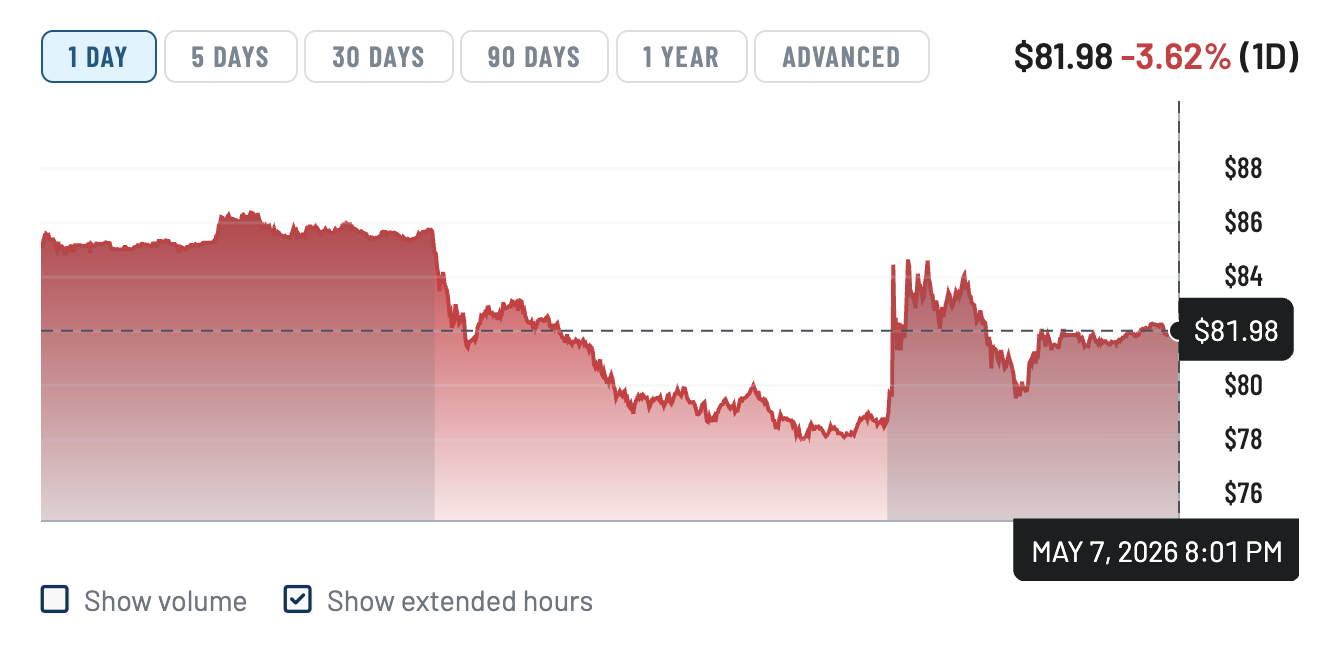
RKLB rose after hours because Rocket Lab’s Q1 report provided multiple catalysts: record revenue, backlog growth, Q2 revenue guidance, a record launch contract, and increased defense exposure.
Rocket Lab reported Q1 revenue of $200.3 million, up 63.5% year over year. GAAP gross margin reached 38.2%, while backlog rose 20.2% quarter over quarter to $2.2 billion. The company also guided for Q2 revenue of $225 million to $240 million, which would mark another record quarter if delivered. (1)
The release gave buyers a reason to challenge the regular-session selloff. Prior to the report, RKLB had declined sharply. Following the release, traders saw renewed evidence that demand is stronger than the regular-session price suggested.
Profitability remains a concern. Rocket Lab projected a Q2 adjusted EBITDA loss of $20 million to $26 million, so the stock’s movement is driven by growth, backlog visibility, contract momentum, and confidence in the company’s ability to scale despite ongoing losses. Adjusted EBITDA is a non-GAAP measure and should not be treated as a substitute for GAAP profitability. (1)
| Item | Detail |
|---|---|
| Stock | Rocket Lab / RKLB |
| Regular-session move | Down about 7%, closing at $78.58 |
| After-hours move | Rebounded into the low-to-mid $80s |
| Main catalyst | Q1 earnings, backlog, Q2 guidance, launch contracts, defense work |
| Q1 revenue | $200.3 million, up 63.5% year over year |
| Backlog | $2.2 billion, up 20.2% quarter over quarter |
| Q2 revenue guide | $225 million to $240 million |
| Key risk | Negative adjusted EBITDA, valuation, Neutron execution |
The after-hours rebound appears more significant given the sharp regular-session decline, making the next market open particularly important.
A stock that drops 7% before earnings and then rebounds after hours sends mixed signals. The initial decline reflected caution, while the rebound indicated the report was strong enough to attract after-hours buyers. Whether that move becomes a durable reversal depends on regular-session volume, analyst revisions and continued confidence in Neutron execution.
After-hours trading can exaggerate moves because liquidity is thinner than during the regular session. The first real test is whether RKLB can hold above $78.58 when normal trading volume returns.
If the stock remains above this level, the rebound gains credibility. If it falls below, the market may view the after-hours increase as a temporary relief rally rather than a full reset.
The most compelling aspect of Rocket Lab’s update was its backlog.
Rocket Lab said its backlog reached $2.2 billion, while its total launch manifest now exceeds 70 contracted missions. The company also said it signed 31 new Electron and HASTE contracts in Q1, plus five new dedicated Neutron launches.
That gives bullish traders tangible evidence. RKLB’s movement is supported by contracted demand across launch services, hypersonic testing, and space systems, not just sector enthusiasm.
However, backlog does not equal realized revenue. It must convert to sales over time, and those sales must yield acceptable margins. For RKLB, this conversion risk is significant given ongoing investments in Neutron, manufacturing, acquisitions, and defense programs.
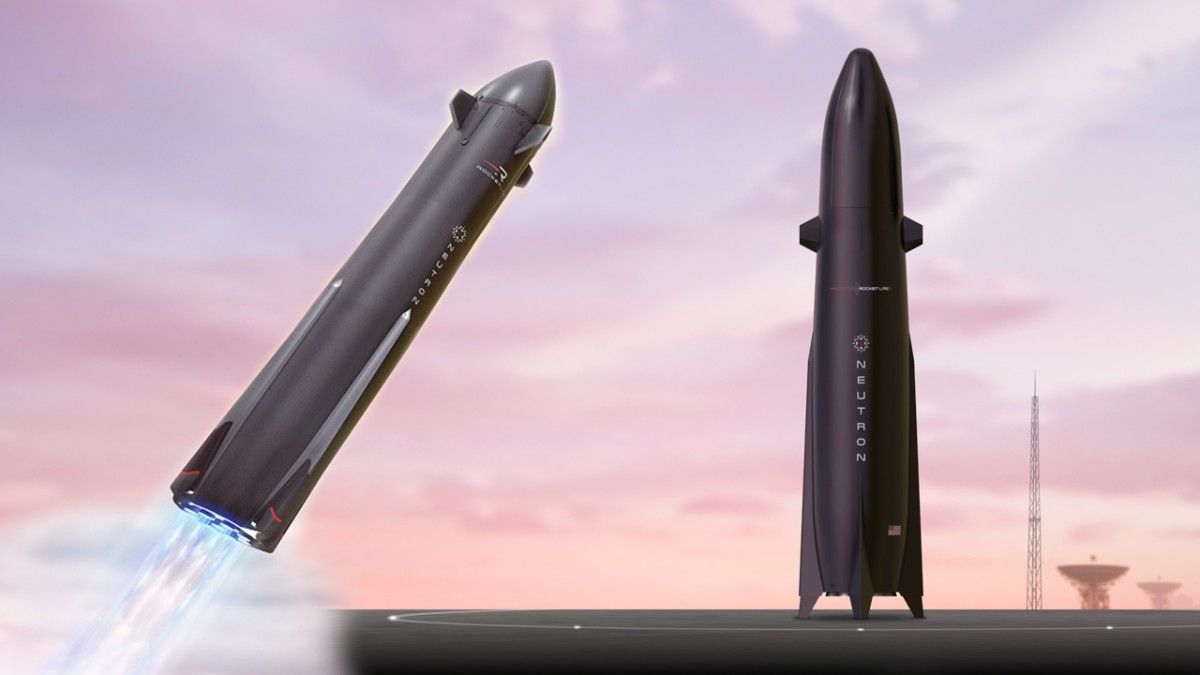
Rocket Lab also announced the largest launch contract in the company's history. The deal covers five dedicated Neutron launches and three dedicated Electron launches for a confidential customer, with launches baselined for 2026 through 2029. Rocket Lab said the agreement lifts its total launch manifest above 70 missions and overall backlog above $2.2 billion. (2)
The contract gives Rocket Lab a stronger demand signal for Neutron before the vehicle’s first flight.
It also raises the stakes. Neutron is the bridge between Rocket Lab’s current small-launch business and a larger medium-lift opportunity. The more future contracts depend on Neutron, the more sensitive RKLB becomes to development milestones, test results, launch timing, and cost control.
Rocket Lab reported progress on Neutron’s first-flight hardware, Archimedes engine qualification, second-stage development, and reusable fairing systems, positioning the vehicle for a debut launch in late 2026.
This timeline should be viewed as a target rather than a guarantee. Smooth progress would support the bullish backlog case, while delays, failed tests, or increased costs could quickly renew concerns about profitability.
The defense angle gave the after-hours move more depth.
Rocket Lab announced a $30 million contract with Anduril covering three HASTE hypersonic test launches from Rocket Lab Launch Complex 2 in Virginia, with the first mission scheduled to launch in less than 12 months. (3)
Rocket Lab also said it was selected in partnership with Raytheon to demonstrate advanced capabilities for the U.S. Space Force’s Space Based Interceptor program, which the company linked to national missile defense and counter-hypersonic capabilities. (4)
That gives RKLB a stronger defense narrative alongside commercial launch demand. The stock is now tied to hypersonic testing, missile defense, national security space, and government-backed programs.
The risk is that defense programs can be delayed, repriced, competed away, or spread across multiple suppliers. Defense exposure can strengthen the story, but it does not remove execution or margin risk.
Rocket Lab signed a definitive agreement to acquire Motiv Space Systems, a robotics and spacecraft mechanisms company. Motiv will add robotics, motion-control systems, precision mechanisms, and capabilities for solar-array-drive assembly. Closing is expected in Q2 2026, subject to customary conditions. (5)
The strategy is clear: Rocket Lab aims to control more of the spacecraft supply chain rather than relying solely on launches. This approach can enhance capabilities, reduce bottlenecks, and support larger space systems.
The trade-off is increased complexity. Rocket Lab is already scaling launches, developing Neutron, expanding space systems, integrating acquisitions, and pursuing defense contracts. Greater vertical integration can create value, but it also requires stronger execution.
The initial reference point is $78.58, the regular-session close. Maintaining a price above this level would indicate continued support from after-hours buyers as regular-session liquidity returns.
The next reference area is the mid-$80s, where RKLB briefly traded after hours. A move back into that zone would suggest buyers are still rewarding the earnings and backlog update. Failure to retest it would show hesitation around valuation, losses, or Neutron risk.
Upcoming catalysts include analyst revisions, premarket volume, management commentary from the earnings call, contract margin details, and further information on Neutron timing.
The bullish case is that Rocket Lab’s backlog and defense pipeline are becoming harder for traders to dismiss, especially if revenue growth continues and Neutron milestones stay on track.
The bearish case is that the stock still reflects significant execution risk going forward, even after the adjustment, while adjusted EBITDA remains negative.
Rocket Lab’s after-hours rebound was driven by multiple catalysts. The company reported record Q1 revenue, a $2.2 billion backlog, Q2 revenue guidance, its largest launch contract, new Anduril hypersonic work, a selection with Raytheon for the U.S. Space Force’s Space Based Interceptor program, and the planned acquisition of Motiv Space Systems.
The next session will show whether regular-session buyers confirm the after-hours rebound or fade it. Holding above $78.58 would support the rebound, while a decline below the regular close would indicate ongoing concerns about negative adjusted EBITDA, valuation, and Neutron execution risk.
For now, RKLB’s after-hours setup has improved, but the next regular session will show whether buyers are willing to defend the move.