Published on: 2026-04-22
Updated on: 2026-04-22
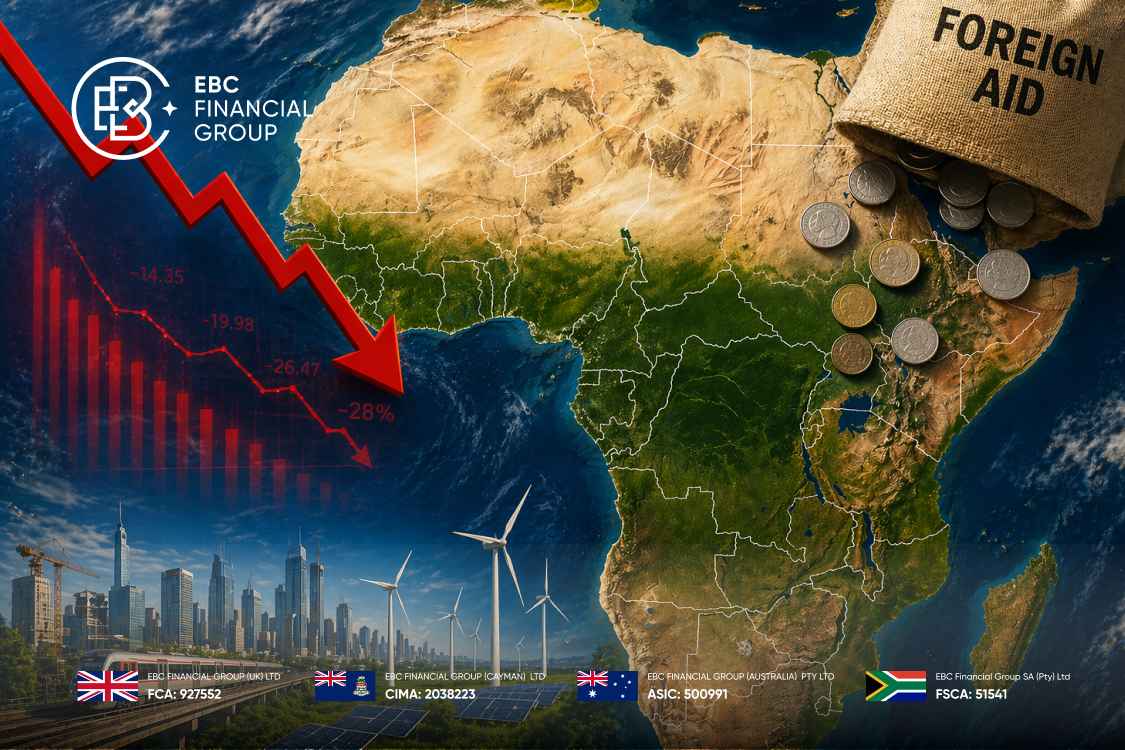
Bilateral development assistance to Sub-Saharan Africa fell between 16% and 28% in 2025, part of the largest annual contraction in global ODA on record. The IMF’s Africa Director called this shock “structural,” not cyclical.
Global ODA fell 23.1% in 2025 to $174.3 billion. The United States drove three-quarters of the decline, with U.S. aid falling 56.9%. All five top donors, the U.S., Germany, the UK, Japan, and France, together accounted for 95.7% of the total drop.
Despite the aid withdrawal, 11 of the world’s 15 fastest-growing economies in 2026 are in Africa, with Sub-Saharan Africa growing at 4.3%, nearly 40% faster than the global average of 3.1%.
The continent raised roughly $18 billion from international capital markets in 2025. Countries like Ethiopia, Nigeria, and Ghana moved quickly to offset aid losses through domestic tax reform and budget reallocation.
Last week, at the IMF Spring Meetings in Washington, the Fund’s Africa Director Abebe Selassie announced that bilateral development assistance to Sub-Saharan Africa fell between 16% and 28% in 2025. He titled a full chapter of the Regional Economic Outlook “Aid Cuts in Sub-Saharan Africa: This Time Is Different.”
Past aid reductions were cyclical, with donors cutting back during fiscal pressure and returning when conditions improved. What Selassie described is structural: the four largest Western donors cut ODA simultaneously for two consecutive years, something that has never happened before, and the OECD projects a further 5.8% decline in 2026.
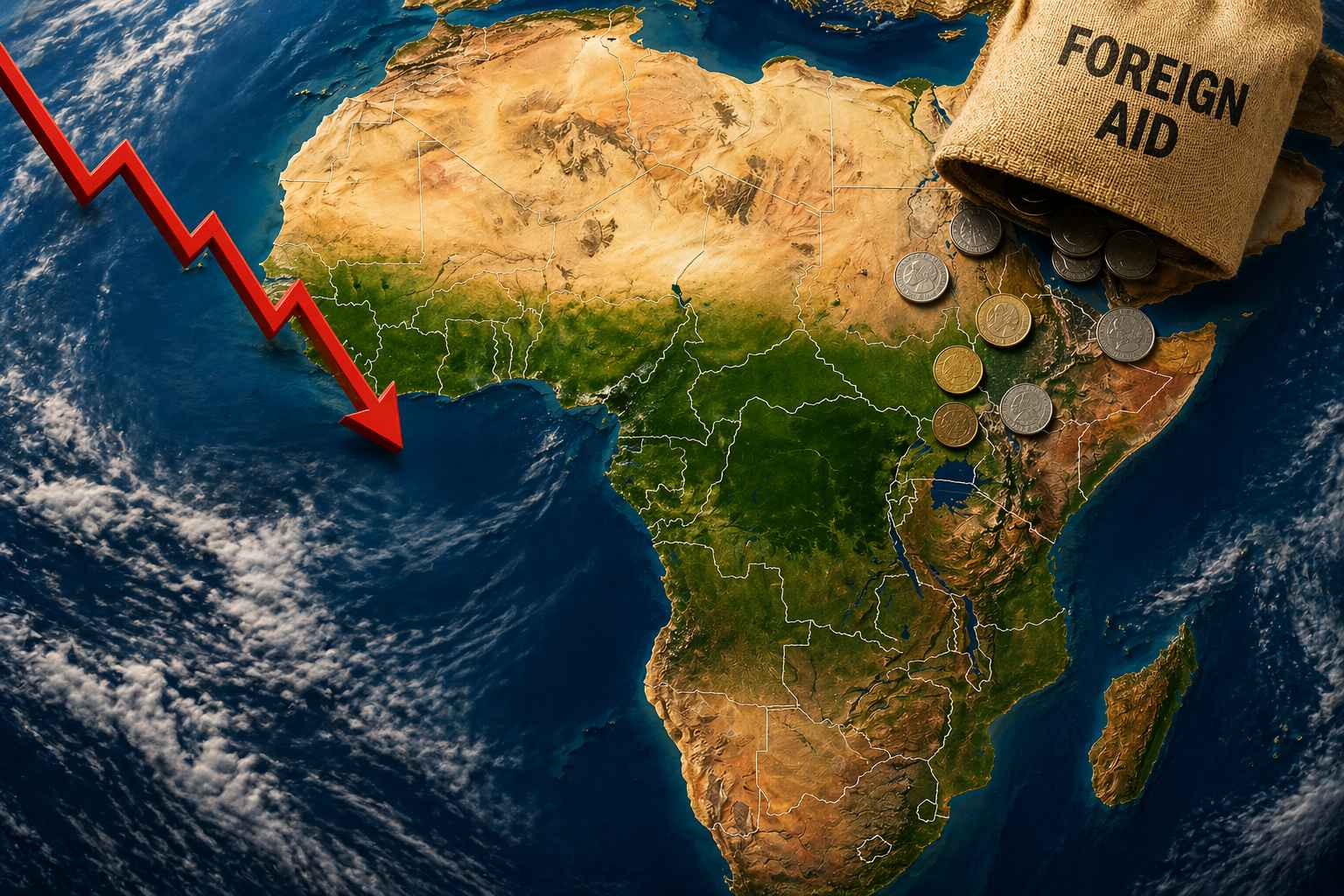
The IMF also projects that 11 of the world’s 15 fastest-growing economies in 2026 are in Africa, making the continent the fastest-growing region on earth. A continent absorbing the largest aid withdrawal in modern history while outgrowing every other region is a paradox that financial markets have not fully worked through.
The OECD’s preliminary data for 2025, released in April 2026, confirmed the largest annual contraction in official development assistance since records began. Total ODA from DAC countries fell 23.1% to $174.3 billion, bringing it back to levels last seen in 2015 when the 2030 Sustainable Development Agenda was adopted.
The five largest donors drove nearly all of the decline:
United States: ODA fell 56.9%, a $38 billion decline and the largest single-year reduction by any donor on record
United Kingdom: Cut aid from 0.5% to 0.3% of GNI, amounting to roughly £6 billion in reductions
Germany: Despite becoming the largest ODA provider for the first time at $29.1 billion, Germany still cut its overall aid by 27%
France: Reduced ODA as part of broader fiscal consolidation
Japan: Trimmed contributions amid its own fiscal constraints
Together, these five countries accounted for 95.7% of the total decline. Much of the reallocation went to defense spending as NATO allies scrambled to meet the 2% GDP target amid the Middle East war and continued pressure from Washington.
The scale of the redirect shows up in a single comparison: when EU institutional outflows are included, Ukraine received $44.9 billion in ODA in 2025, an 18.7% increase. That single-country figure exceeded the combined bilateral ODA to all least developed countries ($28.1 billion) and all countries in Sub-Saharan Africa ($29.2 billion).
Eight of the top 20 countries that receive the most foreign aid as a share of gross national income are in Africa. Fragile and conflict-affected states, where aid functions as budget financing rather than a supplement, carry the heaviest exposure.
The OECD identified the most vulnerable recipients: Kenya, Mozambique, Uganda, South Africa, and Tanzania are among the top recipients of health-sector ODA, which fell 19-33% in 2025 compared to 2023 levels. In Nigeria, USAID funding had accounted for roughly one-fifth of the national health budget. In Burundi, the Central African Republic, Liberia, Niger, and Somalia, aid accounts for a significant share of government revenue.
The macro picture adds further pressure. Median inflation in Sub-Saharan Africa is projected to rise from 3.4% in 2025 to 5.0% in 2026, driven by oil, fertilizer, and shipping costs from the Middle East conflict. 22 low-income countries in the region are in or at high risk of debt distress, and the African Development Bank estimates an annual infrastructure financing gap of $108 billion.
Against all of that, the growth numbers stand out. Sub-Saharan Africa grew at 4.5% in 2025, the fastest pace in over a decade, with inflation falling to a median of 3.4% from 4.8% in 2024. Fiscal deficits narrowed, public debt declined, and current account balances improved.
The IMF’s own projections for 2026 show where that growth is concentrated:
| Country | 2026 GDP Growth | Primary Driver |
|---|---|---|
| South Sudan | 22.4% | Oil export resumption |
| Guinea | 10.5% | Mining sector expansion |
| Sudan | 9.5% | Post-conflict economic rebound |
| Uganda | 7.6% | Gold/coffee exports, oil production |
| Rwanda | 7.5% | Services, construction, tech hub |
| Ethiopia | 7.1% | Hydroelectric investment, reforms |
| Côte d’Ivoire | 6.3% | Agricultural and manufacturing diversification |
| Niger | 6.0%+ | Oil production ramp-up |
| Benin | 6.0%+ | Port infrastructure, cotton exports |
| Zambia | 6.0%+ | Mining recovery |
| Senegal | 6.0%+ | Oil and gas production |
The drivers split into three categories: conflict recovery (South Sudan, Sudan), resource extraction (Guinea, Niger, Zambia, Senegal), and structural reform and diversification (Ethiopia, Rwanda, Uganda, Côte d’Ivoire, Benin). Long-term investors will focus on the third group, where growth reflects policy choices rather than commodity cycles.
Foreign Affairs published a detailed analysis in March 2026 arguing that Africa’s response to the aid shock has been more resilient than predicted. Several country-level examples back that up.
Ethiopia’s government revised its own 2026 growth projection upward to 10.2% from 8.9% (the IMF projects a more conservative 7.1%), introduced a new tax to cover funding previously provided by USAID, and continued exchange rate reforms and subsidy reductions. Nigeria mobilized nearly half the amount of lost USAID health funding within a month of the shutdown announcement. Ghana removed caps on its national health insurance tax and redirected domestic resources toward health and social programs.
African governments raised roughly $18 billion from international capital markets in 2025, which shows that market access has held up even as aid declines. Morocco has shifted its manufacturing base toward higher-value industries, including automotive and aerospace, and Mauritius ranked 56th out of 171 countries in the 2026 Global Social Progress Index. Rwanda has expanded primary healthcare using domestic resources and advanced electronic patient record systems.
The pattern across these examples points to a broader shift in how the continent’s most reform-oriented economies finance themselves, moving from aid dependence toward domestic revenue and capital markets.
The continent’s aggregate growth rate masks enormous divergence. Oil exporters benefit from elevated crude prices, while oil importers face worsening terms of trade, higher inflation, and tighter financial conditions. Reform-oriented economies are attracting private capital, while fragile states that depended on aid for basic budget financing face genuine fiscal collapse.
The IMF warns that Sub-Saharan Africa’s growth, while the fastest of any region, is still “too weak to catch up with the income of other regions.” The gains of 2025 are real, but they are under pressure from the Middle East war, declining aid, rising debt service, and the reallocation of global capital toward defense spending in Europe and North America.
Whether Africa’s financing model can fully shift from aid dependence toward capital markets, domestic resource mobilization, and foreign direct investment depends on whether the reform momentum in countries like Ethiopia, Rwanda, Nigeria, Côte d’Ivoire, and Kenya can outlast the fiscal pressure that the aid withdrawal is creating.
The largest aid contraction in recorded history is hitting Africa at the same moment the continent is delivering its strongest growth in a decade. The crisis narrative and the optimism narrative are both incomplete on their own.
The countries adapting fastest, raising domestic revenue, accessing capital markets, and diversifying their economies, are proving that growth can survive the withdrawal of external support. Countries that depend on aid as budget financing, particularly fragile states with limited institutional capacity, face a fundamentally different trajectory.
The aggregate number tells you Africa is growing. The country-level data shows which parts of Africa are building something durable and which are absorbing a shock they may not recover from quickly.