Published on: 2026-06-05
Updated on: 2026-06-05
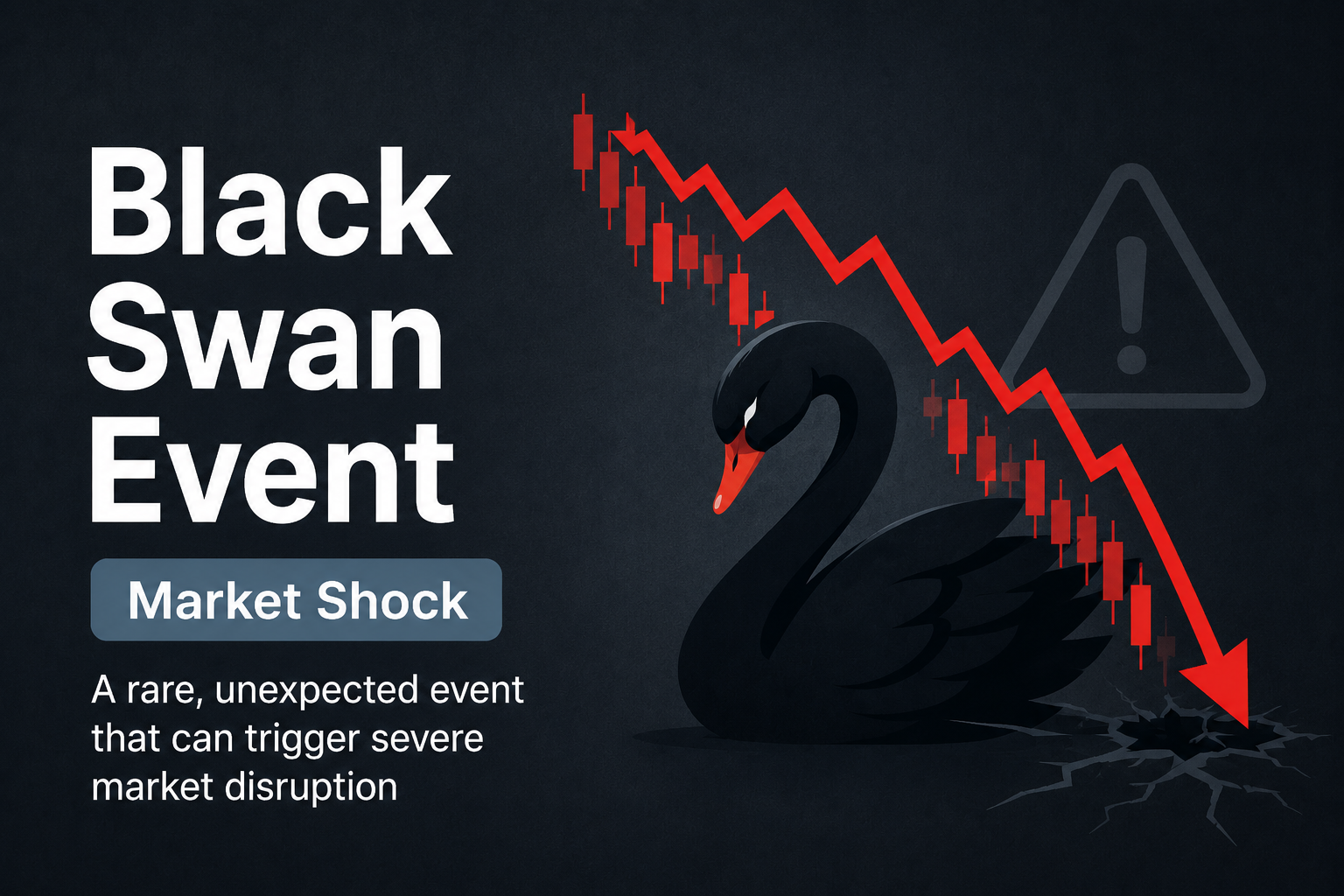
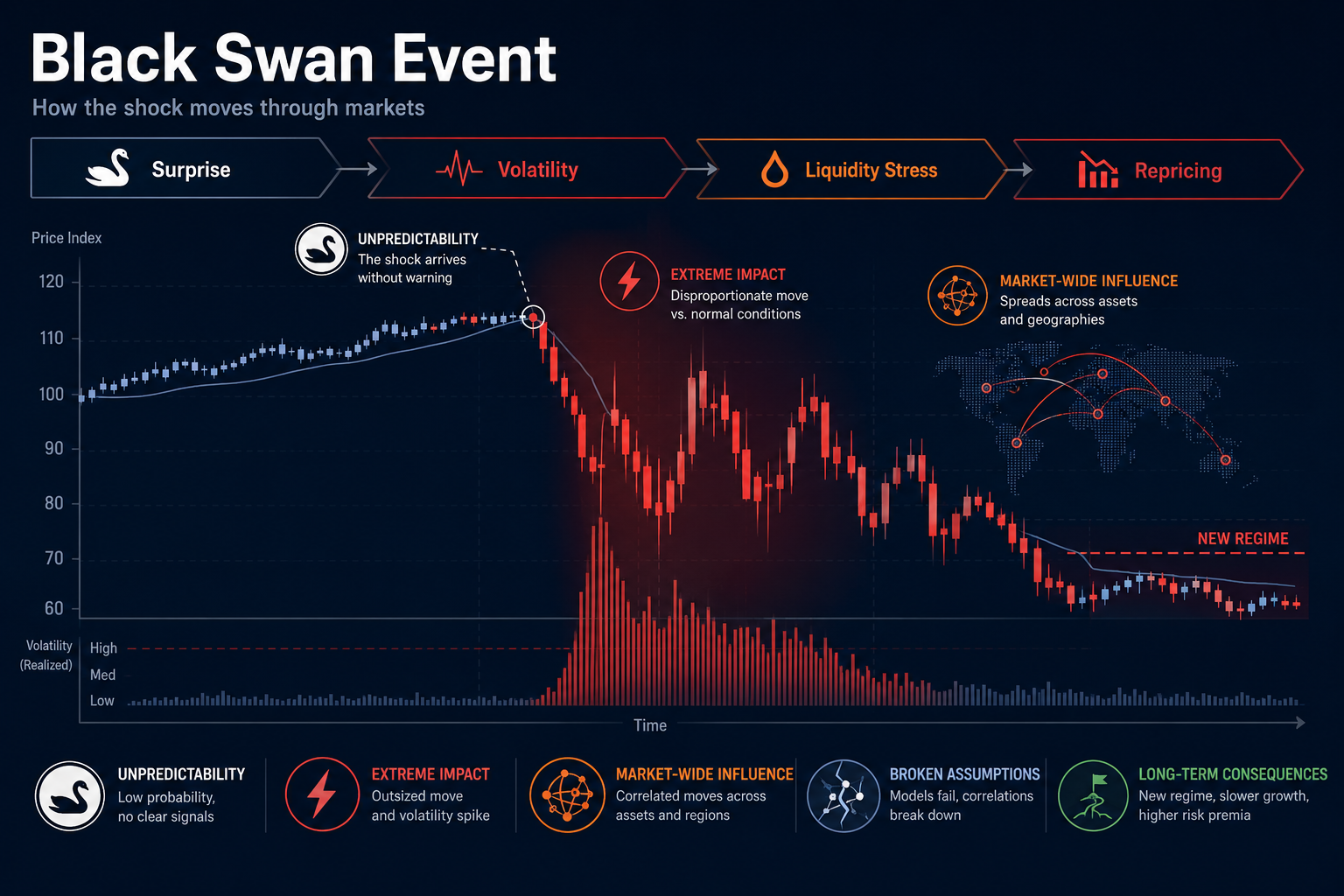
A Black Swan Event is a sudden, unexpected event that can throw financial markets into chaos. It refers to a rare shock that markets were not prepared for. The impact can be serious, including market crashes, liquidity problems, forced selling, shaken confidence, and long-term economic harm.
Traders pay attention to Black Swan risks because they reveal problems that calm markets can hide. A strategy might seem strong in normal times, but it can fall apart if prices suddenly jump and liquidity is scarce.
The term “Black Swan” became popular thanks to Nassim Nicholas Taleb, who used it to describe rare events that are outside normal expectations and have big consequences.
The name comes from the old belief that all swans were white, which was overturned when black swans were discovered in Australia. Markets can be similar, and traders trust what they know until something unexpected proves them wrong.
A Black Swan Event usually has three main features: it is rare, it has a big impact, and people often explain it only after it happens. After the shock, some may claim the warning signs were clear, even though few traders were ready for it.
Black Swan Events are important because they can change market behaviour faster than traders can react.
Prices can jump past important levels. The gap between buying and selling prices can get bigger. Sometimes, buyers vanish. Stop-loss orders might be filled far from where you planned. If you use leverage, a sudden move can force you to close your position.
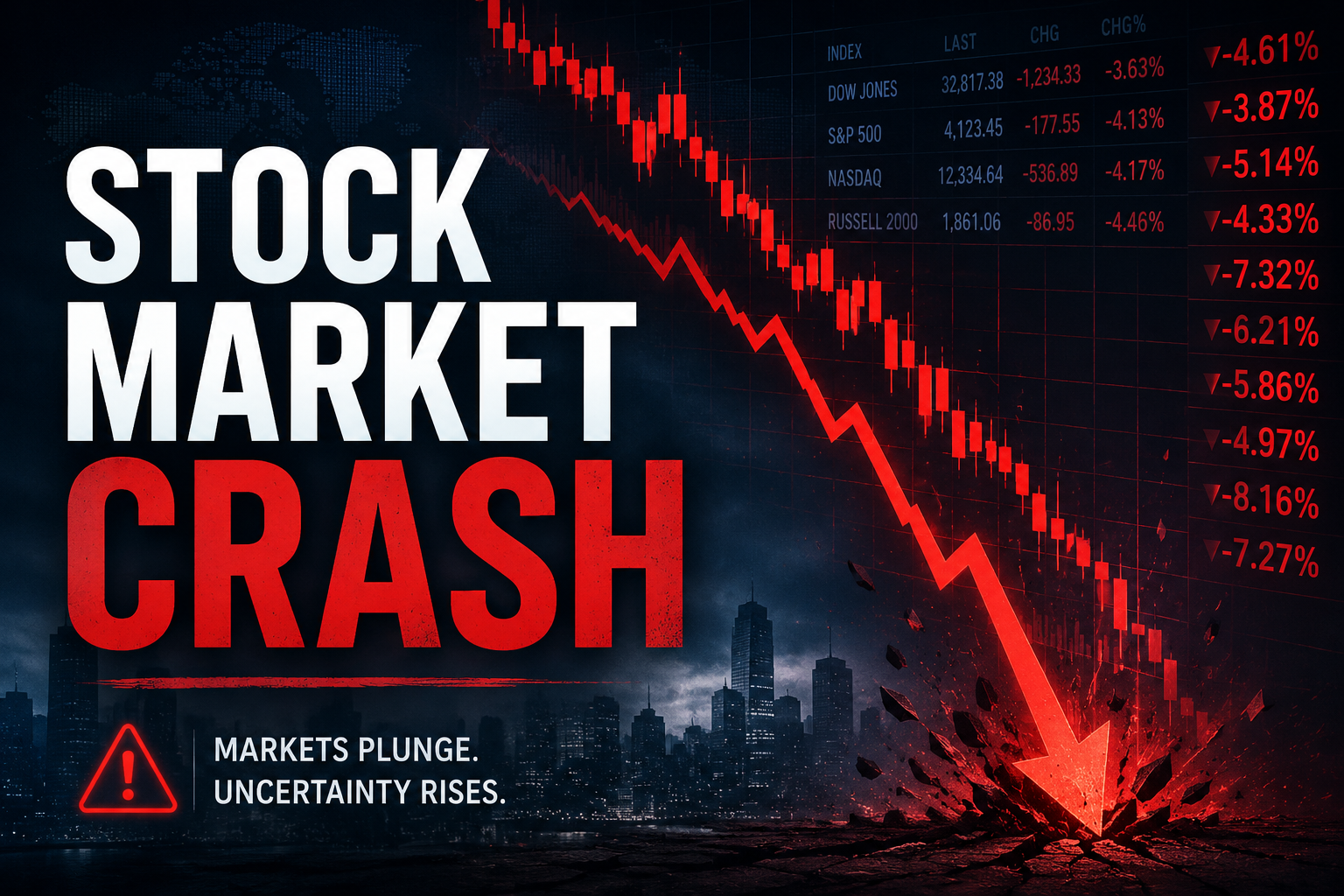
The 2008 crisis started with risky mortgage lending, too much leverage, and stress in the banking system. When Lehman Brothers failed, stock prices dropped quickly, credit markets froze, and investors moved their money to safer investments.
Many people call it a Black Swan Event because the damage surprised the markets, but some debate this label since there were already warning signs.
The COVID-19 crash in 2020 occurred as the pandemic spread worldwide and governments implemented lockdowns, travel bans, and emergency health measures.
Stock prices fell, volatility jumped, and many investors switched to cash. The shock affected company earnings, supply chains, consumer spending, and confidence all at once.
On October 19, 1987, stock markets around the world had one of the biggest one-day drops ever. The Dow Jones Industrial Average fell by more than 20% in just one day.
The crash worsened due to program trading, portfolio insurance, panic selling, and insufficient liquidity. Because it happened so quickly, markets later added protections such as circuit breakers.
In March 2011, Japan experienced a strong earthquake and tsunami, which was followed by the Fukushima nuclear disaster.
Japanese stock prices dropped as investors tried to figure out the damage to infrastructure, factories, energy supplies, and global supply chains. This sudden natural disaster had big financial effects.
For example, a trader might buy a stock at $50 and set a stop-loss at $47. Normally, this would help limit losses. But if unexpected news comes out after the market closes and the stock opens at $40, the sale could occur at a much lower price than planned. This is called gap risk.
High volatility can also ruin a trading strategy. A system built for small price changes may struggle when price swings widen, spreads widen, and trades become harder to execute. Using leverage makes positions riskier because losses compound quickly, and margin calls can occur before a trader can respond.
Normal ups and downs are just part of trading. A Black Swan Event is different because it changes the rules even as traders are still trying to respond.
Using too much leverage: Big positions can be risky if prices suddenly jump and there are fewer buyers or sellers.
Panic trading: Making emotional decisions and rushing back into trades can worsen losses.
Ignoring position size: Making one trade that is too large can hurt your account before your trading idea has a chance to work out.
Assuming the move is over: In wild markets, prices can keep moving even after they already seem unreasonable.
Concentrating risk: Putting too much money into one stock, sector, or currency means you have less protection if something unexpected happens.
Market Volatility: The speed and size of price movements in a market.
Systemic Risk: The risk that stress in one part of the financial system spreads to others.
Risk Management: The process of limiting potential losses before and during a trade.
Safe Haven Asset: An asset investors often move into during periods of market stress.
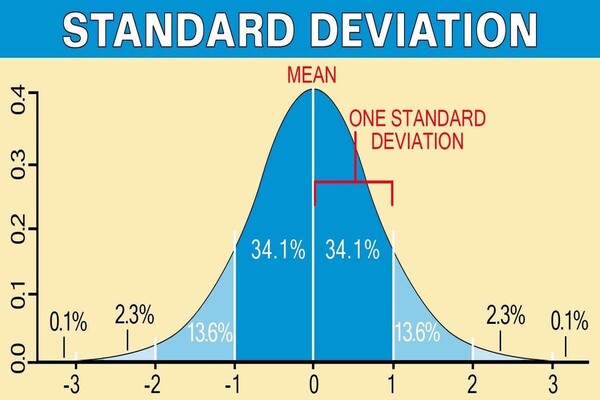
Tail Risk: The risk of an extreme market move outside normal expectations.
A Black Swan Event in trading is a rare surprise that can cause large price swings, sudden gaps, difficulty buying or selling, and larger-than-expected losses.
It can be caused by factors such as a financial crisis, a pandemic, a natural disaster, a sudden political event, an unexpected policy change, or a problem with market functioning.
Not really. Traders might notice weak spots, but it is hard to know exactly what will happen or when. That is why being prepared is more helpful than trying to predict.
Traders can protect themselves by using less leverage, keeping position sizes reasonable, spreading out their investments, keeping extra margin, and remembering that stop-loss orders might not always work during sudden price gaps.
A Black Swan Event is a rare, high-impact shock that is almost impossible to predict before it happens, yet often appears obvious once markets have already reacted.
In trading, these events are dangerous because they break normal assumptions. Forecasts, models, stop-losses, liquidity, and investor confidence can all fail when prices move faster and further than expected.
Traders cannot reliably predict black swans, but they can prepare for uncertainty. Careful position sizing, limited leverage, diversification, and strong risk management help build strategies that can survive extreme market conditions.