Published on: 2026-06-05
Updated on: 2026-06-05
Deleveraging means reducing debt or relying less on borrowed money. People or organisations can do this by paying off what they owe, selling assets, raising money through equity, saving profits, or not taking on new loans.
People, businesses, banks, investors, and governments might choose to deleverage to make their finances more stable, pay less interest, or reduce their financial risks.
Deleveraging usually occurs when there is too much debt, borrowing becomes more expensive, asset prices drop, or economic uncertainty increases.
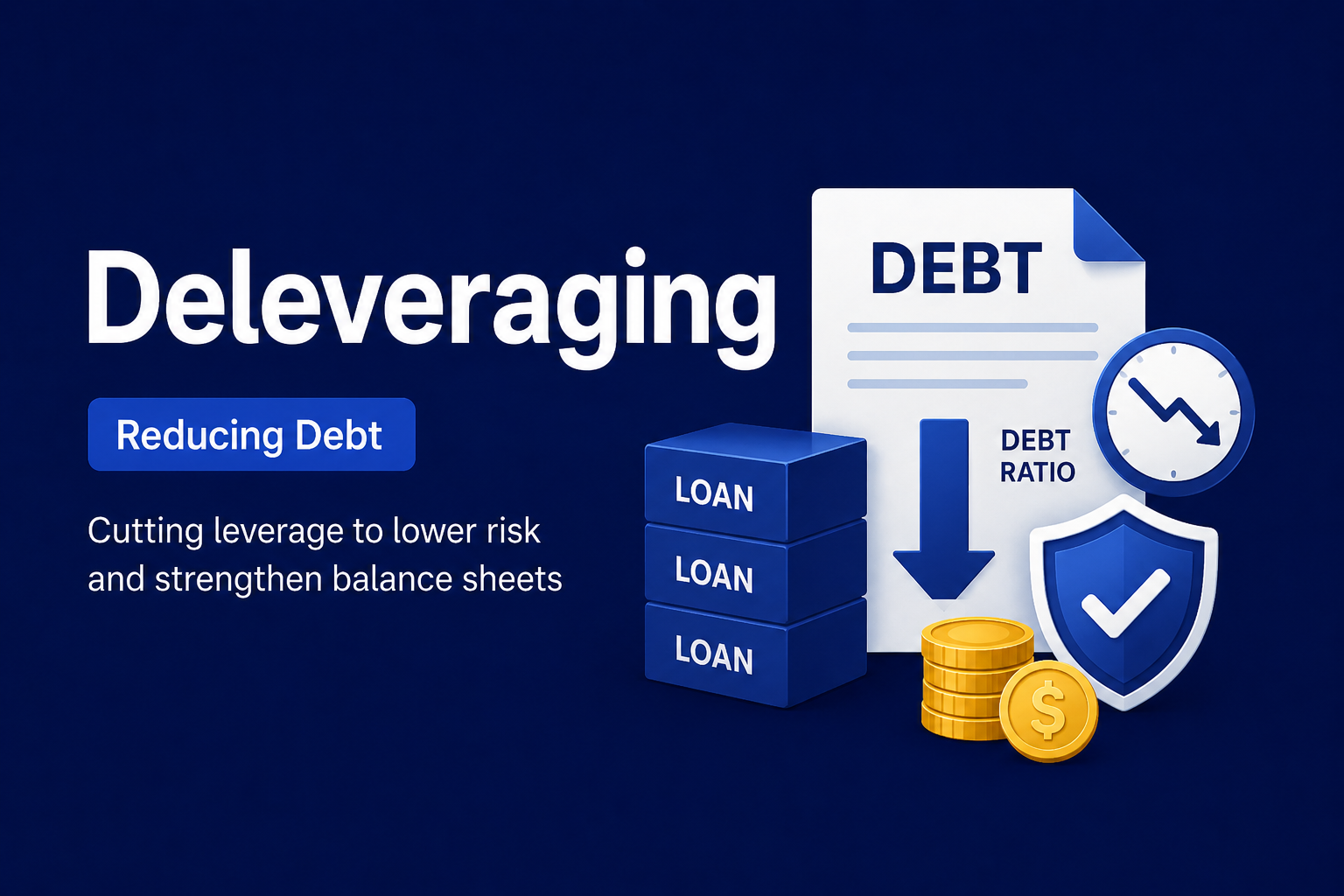
Deleveraging means using less borrowed money to pay for investments, business activities, or spending. This usually brings down measures like the debt-to-equity or debt-to-income ratio.
Common ways to deleverage include:
Paying down existing loans
Selling assets to raise cash
Cutting expenses and increasing savings
Avoiding additional borrowing
Raising capital through equity instead of debt
Using retained earnings to reduce liabilities
Deleveraging may involve closing leveraged positions, reducing margin debt, or selling assets to meet margin requirements. For companies, it may involve asset sales, refinancings, debt repayments, or equity issuances. For governments, it may involve reducing budget deficits or lowering debt relative to gross domestic product.
If many people or organisations try to deleverage at the same time, there can be a lot of selling. This can drive down asset prices, make it harder to buy or sell, and cause more market volatility.
Deleveraging is important for financial markets, corporate finances, and the economy's ups and downs.
It matters because it can:
Reduce financial risk and debt burdens.
Lower interest expenses when debt is repaid
Improve balance sheet strength.
Help households, companies, and governments become more financially stable.
Reduce dependence on external financing.
Trigger asset price declines when selling pressure increases.
Slow economic growth if borrowing, spending, and investment fall
Deleveraging is helpful when it reduces excessive debt and makes finances more stable. But if it happens too quickly or is forced, it can cause problems because people or companies might have to sell things fast, spend less, or invest less.
Big waves of deleveraging usually happen after times when there has been too much borrowing, asset prices have dropped, it’s harder to get loans, or there has been a financial crisis.
Suppose a company takes on $100 million in debt while growing quickly. When interest rates rise, the company’s leaders choose to sell some assets they don’t need and use the proceeds to pay back $30 million on their loans.
After paying back the $30 million, the company now owes $70 million. This means it has less debt, might pay less interest in the future, and has stronger finances. This is what deleveraging looks like.
But the company now has fewer assets and less money to grow. So, while deleveraging can make finances safer, it might also slow down growth in the short term.
Leverage: The use of borrowed funds to increase investment exposure or finance activity. Deleveraging reduces this reliance on debt.
Margin Call: A broker’s demand for additional funds or securities when a leveraged position loses value. Margin calls can force investors to deleverage.
Credit Risk: The risk that a borrower fails to meet debt obligations. High leverage can increase credit risk.
Liquidity: The ease of buying or selling an asset without significantly affecting its price. Liquidity may fall during large-scale deleveraging.
Financial Crisis: A period of severe market stress that can lead investors, banks, companies, and households to reduce debt and risk exposure.
Debt-to-Equity Ratio: A measure of how much debt a company uses relative to shareholders’ equity. A falling debt-to-equity ratio may indicate deleveraging.
The opposite of deleveraging is leveraging. Leveraging occurs when individuals, companies, or investors increase their use of borrowed money to finance investments, business expansion, or asset purchases. Leverage can increase potential returns but also increase potential losses and financial risk.
Markets can drop during deleveraging if investors and institutions sell assets to raise cash, pay down debt, or meet margin requirements. If lots of people sell at once, there’s more supply, less liquidity, and prices can fall.
Deleveraging can help a company when it has too much debt, or borrowing gets expensive. Less debt can mean better cash flow, lower risk, and stronger finances. But deleveraging isn’t always good right away. If a company sells key assets, invests less, or sells shares at a bad price, it could hurt growth or shareholder value.
When many people and businesses deleverage, economic growth can slow down because they borrow, spend, and invest less. Less borrowing can mean weaker demand and a slower recovery. In the long run, careful deleveraging can help the economy by reducing excessive debt and strengthening the financial system.
Deleveraging often starts when interest rates go up, the economy is uncertain, asset prices fall, it’s harder to get loans, cash flow is weak, there are margin calls, or there’s a financial crisis. These situations make people and investors want to reduce debt and be more cautious about risk.
Deleveraging means cutting debt or relying less on borrowed money. It can strengthen finances, reduce risks, and support long-term stability. But deleveraging can also cause short-term problems. If many people sell assets, spend less, or invest less at the same time, prices can drop, trading can become harder, and the economy might slow down.
Understanding deleveraging can help spot changes in market sentiment, trading ease, lending conditions, and risk appetite for investors and traders.