Published on: 2026-02-10
Updated on: 2026-02-10
APP stock surged higher ahead of earnings because the market received a rare occurrence in a high-volatility tape: a headline risk catalyst that moved in the company's favor.
For context, the rally followed a partial retraction and apology from CapitalWatch that walked back key allegations tied to shareholder Tang Hao, which had weighed on sentiment after a January report. Additionally, short sellers were caught leaning the wrong way.
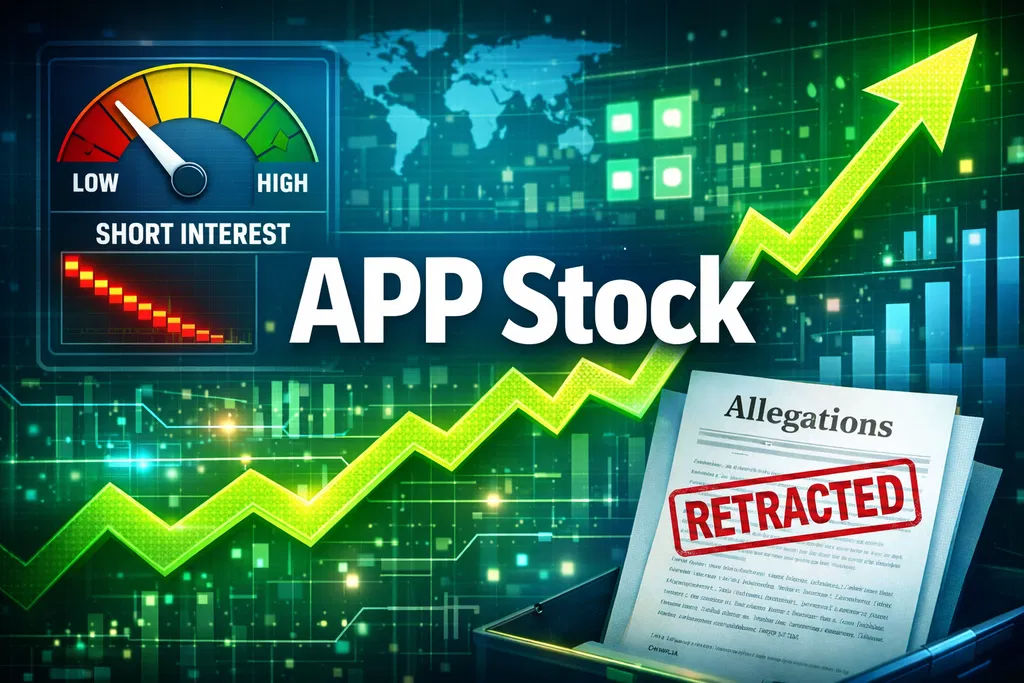
On Monday, APP stock traded around $460 and became one of the biggest gainers in the S&P 500. The timing is crucial, as AppLovin reports its fourth-quarter and full-year 2025 results on Wednesday, February 11, 2026, after the U.S. market closes, with a webcast scheduled for the same day.
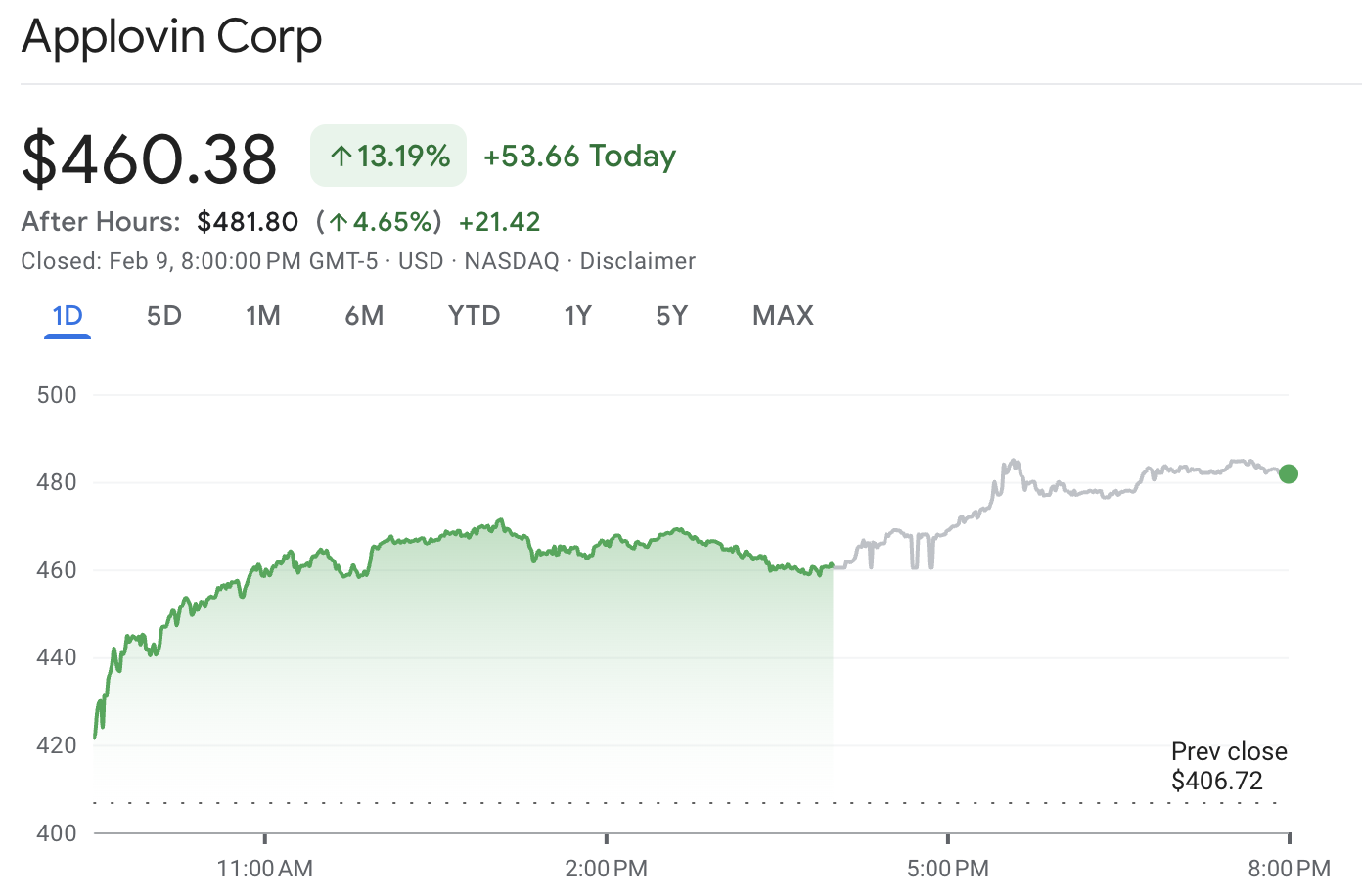
As highlighted above, APP stock jumped sharply in the latest session, trading around $460 and posting a roughly 13% gain from the prior close.
The move was not calm. APP's intraday range was wide, trading roughly between $416 and $487 during the session, suggesting positioning was being forced to reset.
This rebound followed a challenging start to 2026, as the stock had already dropped significantly earlier in the year due to short-seller pressure and other concerns that affected sentiment.
| Date (2026) | Catalyst | Market impact |
|---|---|---|
| Jan 20 (reported) | CapitalWatch publishes allegations that hit sentiment | Stock volatility increases and downside hedging demand rises |
| Feb 9 | CapitalWatch posts a correction and apology retracting key claims | APP jumps and becomes a top S&P 500 gainer on the day. |
This rally did not start with a blowout earnings report. It started with a narrative reset.
For context, CapitalWatch has formally retracted specific allegations against Tang Hao following an internal review that found they did not meet its standards.
That does not mean all criticism disappeared, as CapitalWatch maintained concerns about the company's structure and indicated it planned further reporting.
Still, for traders, the retraction mattered for one reason: it reduced the probability of a near-term "untradeable" outcome, such as a rapid escalation from allegation to formal enforcement action, which is the type of risk that compresses multiples and freezes incremental dip-buying.
| Metric | Latest disclosed reading | What it implies for price action |
|---|---|---|
| Shares sold short | 14.53 million | Enough inventory to cover into a sharp up-day, especially if risk limits are tight. |
| Short % of float | 4.98% | Not extreme, but meaningful when paired with headline volatility. |
| Days to cover | 3.3 | Covering can take more than one session when volume normalizes. |
The second driver was positioning. APP is not a meme stock with 25% to 40% of its float shorted. Thus, the more realistic scenario is that we are experiencing a rally due to short covering in an already volatile stock, where the level of short interest need not be significant to trigger a reversal driven by a headline.
As of January 15, 2026, the settlement report indicated that APP short interest stood at approximately 14.53 million shares, accounting for about 4.98% of the float, with an estimated 3.3 days to cover. The report also showed a decline in short interest compared to the previous period.
Key Takeaway:
When a widely circulated bearish claim is partially pulled back, many shorts stop thinking about "being right" and start thinking about "not being carried out." The change in mindset often leads to immediate buy orders, even when short interest is moderate.

The market did not wait for the Q4 numbers because the retraction created a "now or never" moment for positioning.
Headline risk premium fell. A partial retraction does not prove innocence or eliminate all regulatory questions, but it can reduce the worst-case probability that was being priced.
Shorts reduced exposure to earnings. With an implied move in the mid-teens, many shorts will cut size even if they remain bearish.
Dip buyers returned. Some investors, such as Jefferies analyst James Heaney, interpreted the earlier selloff as overdone.
This combination often produces a sharp, fast move because liquidity on the offer tends to be thin when the crowd is leaning one way.
The options market has been pricing APP as a high-volatility earnings event. OptionSlam showed an earnings volatility rating (EVR) of 8.5 for APP, with an implied move of about 14.68% for the week of earnings and about 17.00% over the monthly window.
| Options measure | Reading | Practical takeaway |
|---|---|---|
| Weekly implied move | 14.68% | Options traders are braced for a very large post-print swing. |
| Monthly implied move | 17.00% | Even longer-dated hedges are pricing elevated uncertainty. |
| EVR | 8.5 / 10 | APP behaves like a "high beta to headlines" earnings name. |
When the implied move is that high, two things happen more often:
Gamma hedging can enhance intraday trends, especially when a stock surpasses commonly monitored strike prices.
Pre-earnings rallies can feed on themselves, because traders prefer to reduce short exposure before the event rather than after it.
A retraction can lift a stock, but it does not erase every concern investors have been debating.
In October 2025, the U.S. SEC had been probing AppLovin's data-collection practices.
That type of headline matters because ad-tech businesses depend on platform rules, privacy expectations, and trust with partners.
Even after the partial retraction, CapitalWatch said it planned additional reports about AppLovin.
For traders, that means headline risk can return quickly, especially if the stock rallies into earnings and sentiment becomes crowded again.
| Indicator / Level | Reading | How traders tend to use it |
|---|---|---|
| RSI (14) | 64.13 | Momentum is constructive, but it is approaching “hot” territory if it keeps rising. |
| MA50 (simple) | 442.03 | A sustained hold above MA50 often signals the bounce is gaining structure. |
| MA200 (simple) | 562.19 | This remains the "big level" overhead that defines the longer-term downtrend until reclaimed. |
From a technical analysis perspective, APP is in a high-volatility rebound, but it is still recovering from the earlier selloff.
Technical indicators showed:
RSI (14): 64.13 (Buy)
MACD (12,26): 7.49 (Buy)
Stochastics and the Williams %R indicator are showing overbought conditions, which often signal short-term market heat.
This mix typically indicates strong momentum, but the market may pull back quickly if buyers hesitate.
| Level type | Zone | Why it matters |
|---|---|---|
| Support (pivot S1–S3, classic) | ~463.7 to 458.6 | Near-term support if the rally cools |
| Pivot (classic) | ~466.6 | A common “decision level” |
| Resistance (pivot R1–R3, classic) | ~468.8 to 473.9 | First resistance band above the pivot |
If APP holds above the mid-460s and continues to attract volume, momentum can stay in control.
If the stock loses the pivot zone and fades, it can quickly test lower support because volatility is already elevated.
The 200-day moving average is significantly above the current price, indicating the longer-term trend is still rebuilding.
APP surged mainly because CapitalWatch partially retracted and apologized for key claims, which reduced headline risk, and because shorts covered as the stock moved sharply higher.
It appears to be more of a rally driven by short covering rather than a classic short squeeze. The short interest is approximately 4.98% of the float, with around 3.3 days required to cover. While this situation can still lead to significant upward movement in a volatile stock, it does not represent an extreme short-interest scenario.
APP is scheduled to report after market close on Wednesday, February 11, 2026. The company webcast is scheduled for 2:00 p.m. PT, which is 5:00 on February 12.
The biggest risk is that guidance fails to validate the growth and margin story, given the stock's already volatile, headline-sensitive nature. Even a small miss or cautious commentary can be amplified when implied volatility is elevated in the event.
In conclusion, APP stock pre-earnings surge was not random. It was a positioning unwind triggered by a major narrative shift after CapitalWatch withdrew key allegations against shareholder Tang Hao and issued an apology for claims that fell short of its standards.
With short interest still meaningful and options implying a mid-teens earnings move, the setup became primed for covering and hedging flows.
The next move is likely to be decided by the earnings report on February 11 and the tone of forward guidance. If results are strong and the story stays quiet, the rally can extend. If guidance disappoints or fresh controversies arise, volatility can return just as quickly as it left.
Disclaimer: This material is for general information purposes only and is not intended as (and should not be considered to be) financial, investment or other advice on which reliance should be placed. No opinion given in the material constitutes a recommendation by EBC or the author that any particular investment, security, transaction or investment strategy is suitable for any specific person.