Published on: 2026-02-09
Updated on: 2026-02-09
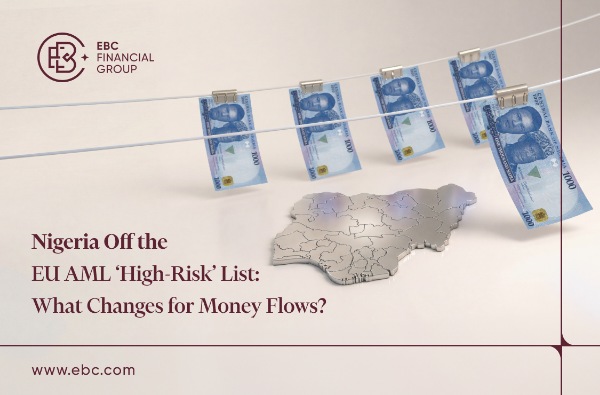
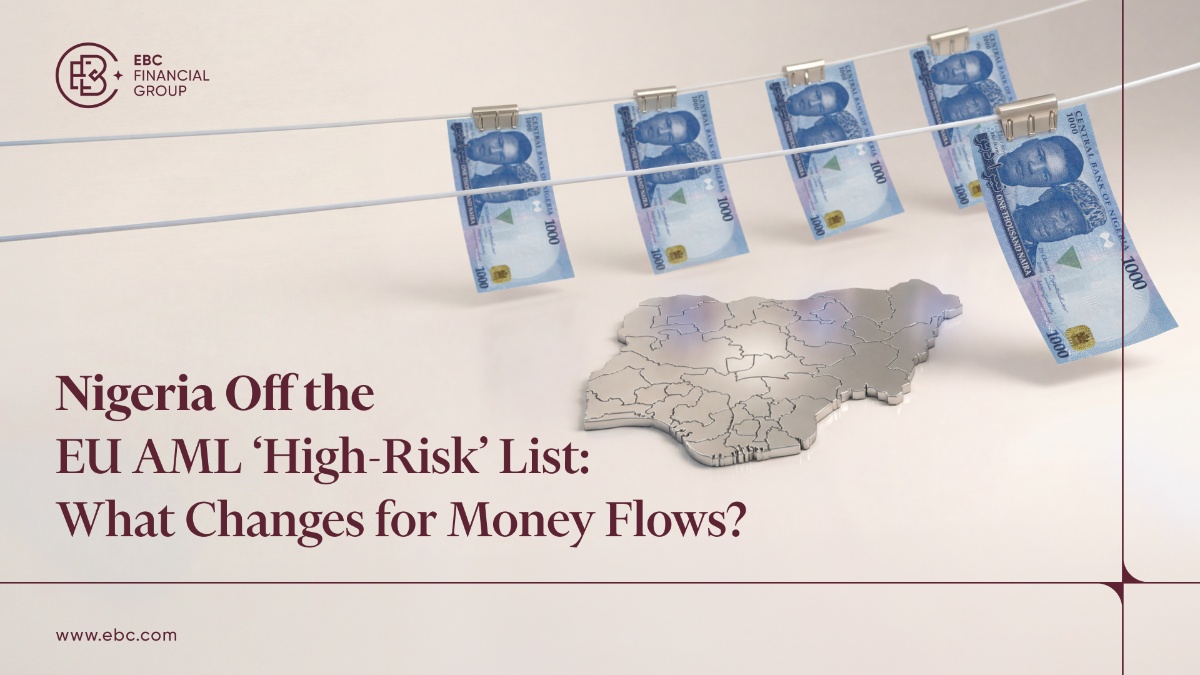
With Nigeria delisted from the European Union's (EU)
Anti-Money Laundering and Countering the Financing of Terrorism (AML/CFT)
high-risk list since 29 January 2026, attention is turning to the price of
compliance friction. International Monetary Fund (IMF) research suggests grey
listing can be associated with a 7.6% of GDP hit to capital inflows on average,
which is why the follow-through matters more than the label. EBC Financial Group
(EBC) says the immediate question is operational: whether EU counterparties
shorten onboarding timelines and reduce manual holds for routine transactions.
Over time, those small process changes are what can support lower transaction
costs and, eventually, softer funding spreads.
David Barrett, Chief Executive Officer at EBC Financial Group (UK) Ltd., said, "This delisting is not a victory lap. It is a test of whether risk pricing catches up with reform. The next signal investors will watch is not a statement, but settlement experience: how quickly EU-linked onboarding, trade finance checks and payment approvals start to move."
The EU's update removed Nigeria from the bloc's AML/CFT high-risk third-country list, following progress recognised by the Financial Action Task Force (FATF). Delisting does not switch off AML/CFT obligations. Nigeria's laws still require a risk-based approach to customer due diligence, including enhanced checks where risks are higher. institutions may still apply stricter internal controls even as EU-linked due diligence expectations ease.
Nigeria's Ministry of Finance described EU delisting as a milestone after the FATF process, framing it as reinforcement for reforms aimed at improving financial system integrity and market confidence. The operational angle is scale: National Bureau of Statistics (NBS) data put Q3 2025 total trade at ₦38.94tn (exports ₦22.81tn, imports ₦16.12tn), meaning even small reductions in friction can compound across routine flows.
In the near term, the biggest swing factor is whether EU-linked counterparties actually re-tier risk. Some institutions will move quickly once the legal trigger is gone; others will wait for more evidence, especially on supervision, prosecutions and beneficial ownership enforcement.
Barrett added, "Markets price certainty more than applause. If reform continues to show up in enforcement and transparency, the benefit should appear in narrower risk premia and smoother euro-linked settlement. If momentum fades, delisting becomes a headline without a spread change."
For FX and gold markets, delisting is best read as a risk-friction story, not a guaranteed inflow wave. It can support confidence at the margin, but currencies will still be driven by rates, inflation paths, fiscal credibility and global risk appetite.
EBC Financial Group treats regulatory shifts like this as part of trader education because they shape liquidity, execution conditions and cross-border sentiment. Clients can follow our market coverage and risk-learning resources through the EBC Learning Academy, alongside access to global FX and metals markets via EBC's trading platforms.
Disclaimer: This material is for information only and does not constitute a recommendation or advice from EBC Financial Group and all its entities ("EBC"). Trading Forex and Contracts for Difference (CFDs) on margin carries a high level of risk and may not be suitable for all investors. Losses can exceed your deposits. Before trading, you should carefully consider your trading objectives, level of experience, and risk appetite, and consult an independent financial advisor if necessary. Statistics or past investment performance are not a guarantee of future performance. EBC is not liable for any damages arising from reliance on this information.