Published on: 2026-04-03
Investors have, for the most part, had their fill of gold during the opening quarter of 2026. While the "yellow metal" has been hogging the headlines with its safe-haven appeal, a quieter, grittier, and arguably more lucrative conversation is taking place in the corners of the global trading floor: the emergence of a multi-year "strategic metals" supercycle.
Institutional traders are increasingly looking past the traditional shine of precious metals and eyeing Copper, Uranium, and Rare Earth Elements (REE) as the primary "alpha" drivers for the next decade. But for the discerning trader, the question remains: is this a genuine, multi-year structural shift in the global economy, or just a crowded narrative where market participants have piled into the same room with no clear exit strategy?
As a trader, your focus shouldn’t be to simply "buy into" the electrification story. You should in fact stress-test underlying assumptions. In this analysis, we will deconstruct the market signals that separate a true supercycle from a fleeting "hype-train," and demonstrate how to express these macro-theses using the instruments available on EBC Financial Group’s platform.
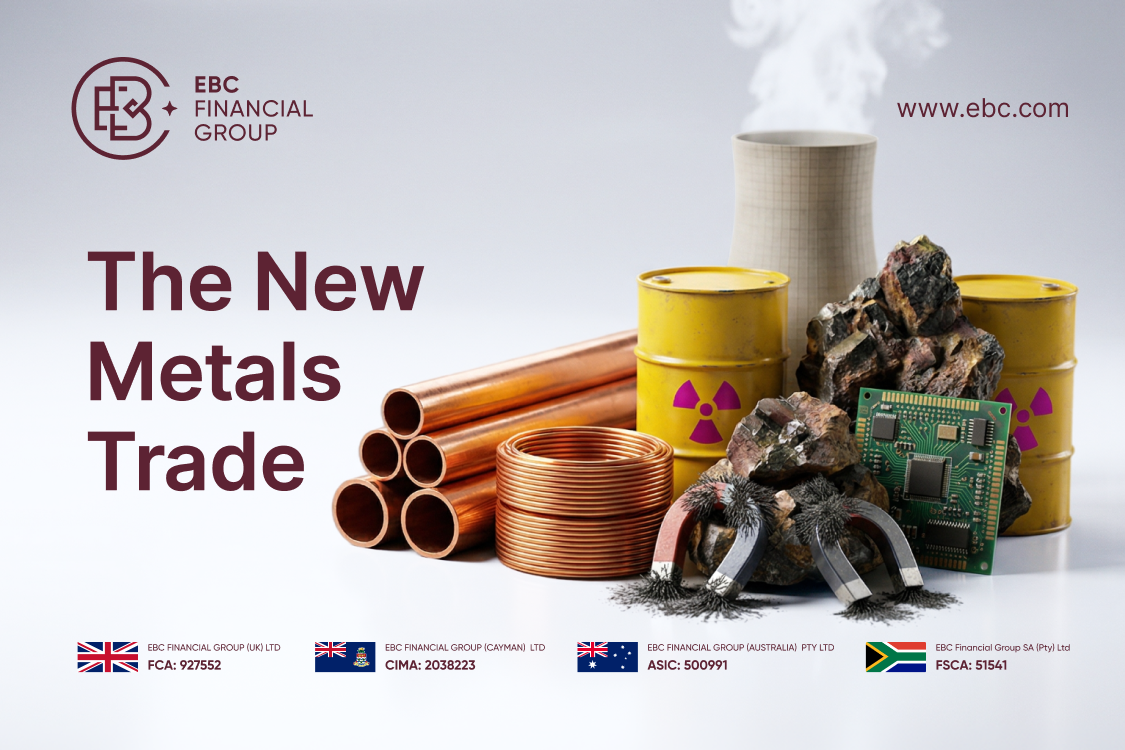
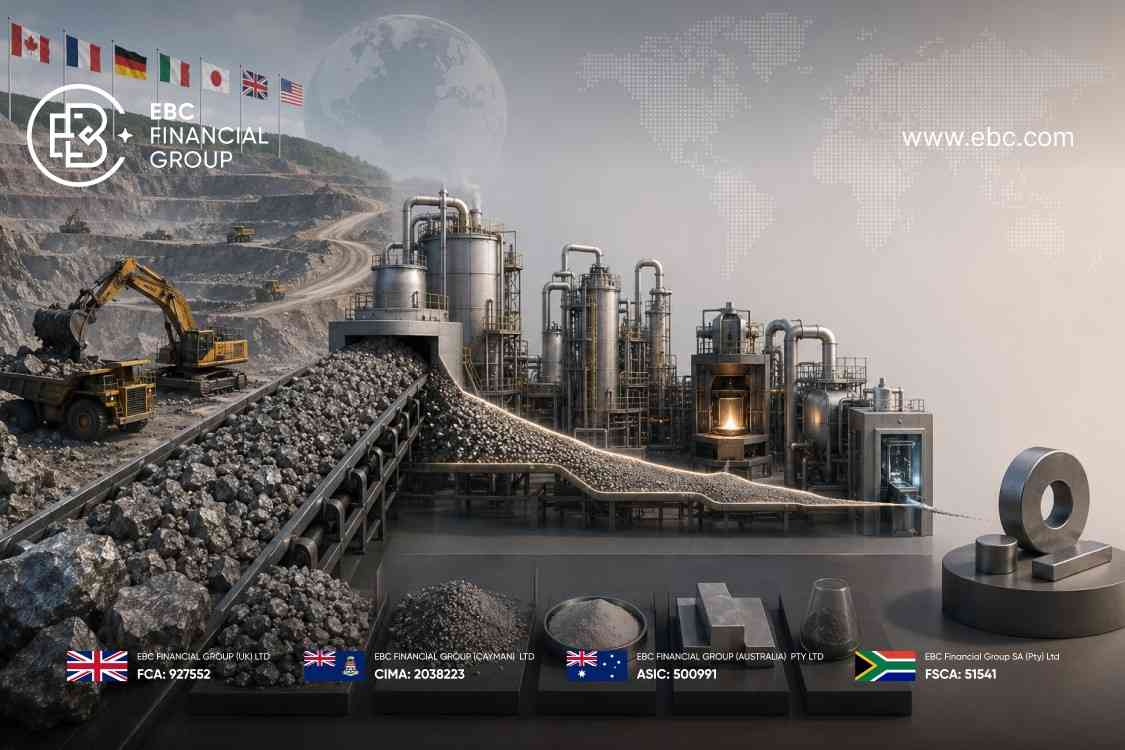
The talk of a "Supercycle" in 2026 is not emerging from a vacuum. It is supported by three distinct structural pillars. However, to trade these effectively, we must look closer at the "plumbing" of the global supply chain to see if these pillars can actually support the weight of current valuations.
When market analysts discuss industrial demand, the conversation usually defaults to "grids and Electric Vehicles (EVs)." While the Battery Electric Vehicle (BEV) remains a significant consumer, the 2026 reality is being redefined by the sheer, unglamorous scale of Artificial Intelligence (AI) data centres.
Traditional data centres were already energy-intensive, but modern AI clusters require a massive leap in copper intensity. This is due to the requirements of high-density power distribution and the sophisticated liquid-cooling systems needed to manage the heat of high-performance processors.
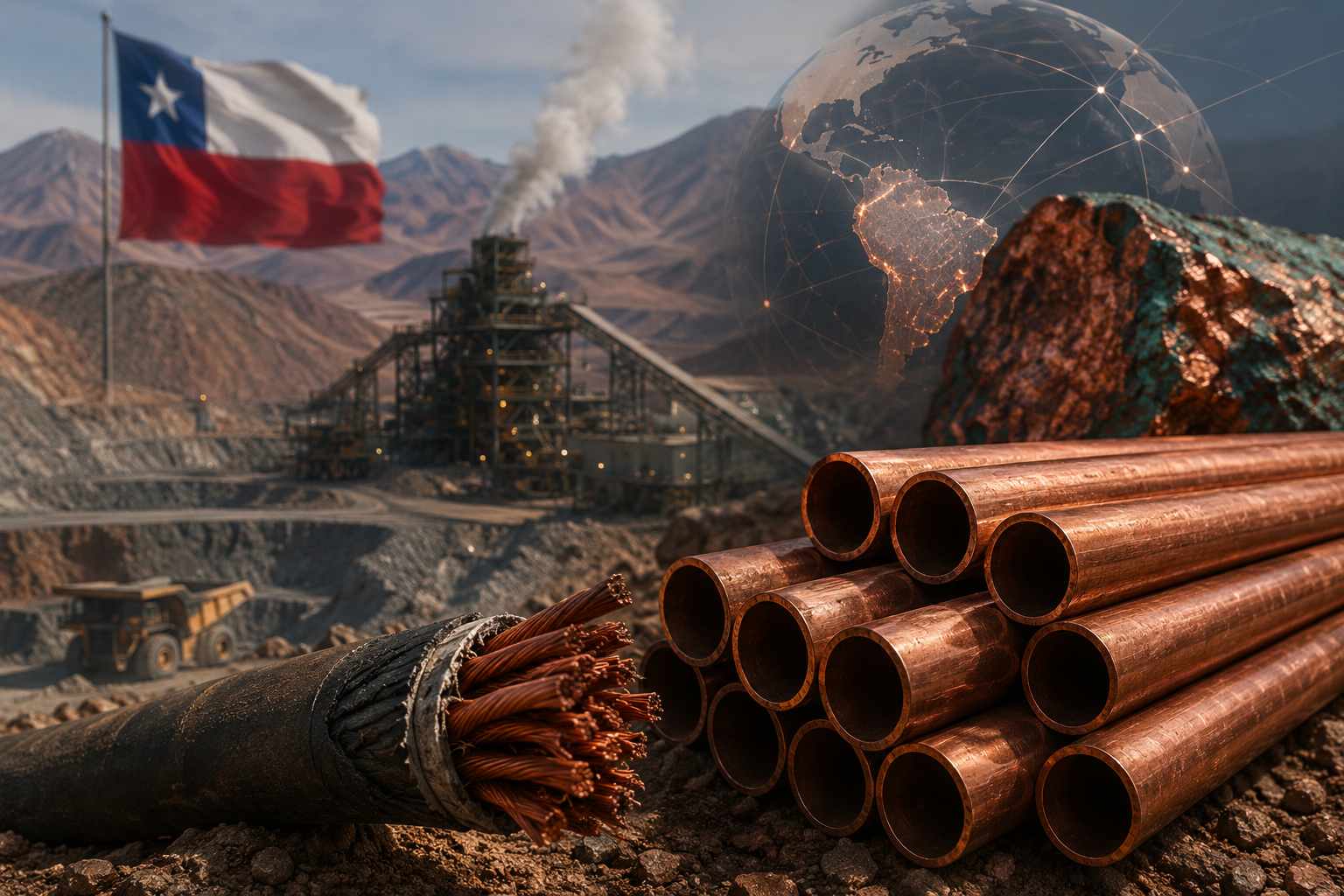
Think of the scale: a standard Internal Combustion Engine (ICE) car uses approximately 20kg of copper. A BEV uses roughly 80kg. However, a single, massive AI data centre can require miles of high-tension copper cabling and specialised heat sinks just to keep the "digital brain" of the global economy humming. If the world’s computational needs continue to scale at the current rate, the demand for "red metal" will move from a steady stream to a flood.
There is a fundamental "lag" in the commodities market that many retail traders overlook. If you wish to open a retail business, you can be operational in months. Opening a copper or uranium mine, however, is a 10-to-15-year odyssey involving complex permitting, stringent environmental impact studies, and massive Capital Expenditure (Capex).
We are currently living through the consequences of a decade of chronic under-investment. In the world of metals, more Capex today does not translate to more supply tomorrow; it means maybe—if geopolitical conditions and environmental regulations permit—more supply by the mid-2030s. This inherent lag is the "DNA" of a supercycle: the physical inability of supply to respond to price signals in any meaningful timeframe.
The global economy has transitioned from a world of "just-in-time" free trade to a world of "strategic stockpiling." Governments are now treating rare earths and uranium with the same reverence previously reserved for gold or oil. We are witnessing a surge in export controls, particularly from China, and aggressive "onshoring" policies in the West.
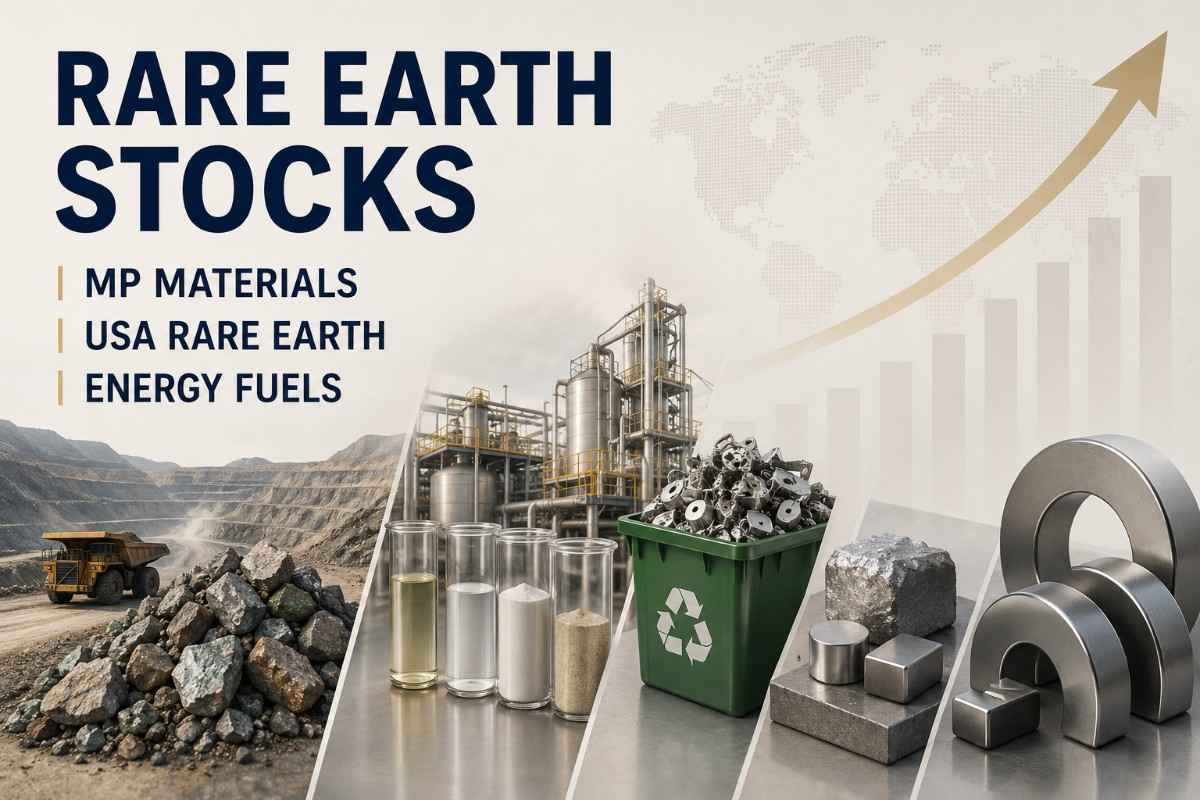
Rare earth elements, in particular, are a policy-driven story. These materials are not actually "rare" in the Earth's crust; however, the complex processing required to turn raw ore into high-purity magnets is concentrated in very few hands. When headlines break regarding new tariffs or export bans, it creates a "headline tape" where prices move on political fear and sovereign security concerns rather than immediate physical shortages.
To navigate this environment, let’s understand these three important terms.
Supercycle: A sustained period (often a decade or more) where demand remains relentless while supply remains structurally constrained, keeping prices elevated across multiple business cycles.
Crowded Trade: A scenario where too many market participants hold the same position for the same reasons. This creates "artificial" price support that can evaporate instantly if a catalyst triggers a rush for the exit.
Rally: A short-to-medium-term price increase that is often driven by sentiment or temporary supply disruptions, prone to swift reversals when the "story" cools.
To determine if we are witnessing a structural cycle or merely market noise, traders should apply this scorecard to their preferred commodity. Score each metric from 0 to 2.
Metric |
0 (Weak/Crowded) |
1 (Mixed) |
2 (Cycle Signal) |
1. Inventories |
Rising |
Flat |
Falling |
2. Futures Curve |
Contango (Relaxed) |
Mixed |
Backwardation (Tight) |
3. Demand Pulse |
Weakening |
Mixed |
Improving |
4. Supply Response |
Catching up |
Lagging |
Constrained |
5. Price Behaviour |
Fading Gains |
Choppy |
Strong Follow-through |
The Interpretation:
8–10: A genuine structural supercycle is likely in play.
4–7: A period of dislocation or a "mixed bag"—approach with caution and tighter stops.
0–3: Likely a crowded trade at risk of a sharp, painful reversal.
To appreciate the value of a data-driven scorecard, one must remember the moments when the commodity markets became unmoored from reality.
In March 2022, the London Metal Exchange (LME) took the unprecedented step of cancelling trades and halting the market. A massive short position held by a Chinese stainless-steel giant was "squeezed" when prices surged following geopolitical instability. Prices doubled within hours, exceeding $100,000 per tonne. This was not a demand-driven move; it was a total breakdown of market mechanics. A trader using a scorecard would have seen that the price behaviour was completely disconnected from inventory data.
On 20 April 2020, the West Texas Intermediate (WTI) futures contract famously hit -$37 per barrel. This occurred not because oil was worthless, but because of a "storage and curve" nightmare. The tanks in Cushing, Oklahoma, were at capacity, and those holding contracts were forced to pay buyers to take delivery. It serves as a stark reminder that in commodities, physical reality always wins in the end.
Traders often ask why Brent (XBRUSD) or WTI (XTIUSD) should influence their copper or uranium thesis. The answer lies in inflation and margins. Oil acts as the "inflation shock amplifier" for the entire commodities sector. The massive mines required to extract copper or uranium are energy-intensive; they run on diesel and heavy fuel oil. If energy prices spike, the "All-In Sustaining Cost" (AISC) for miners rises.
This creates a paradox: a mining company may see the price of its metal rise, but if energy costs rise faster, its profit margins actually shrink. For those trading the Materials Select Sector SPDR (XLB.P), an oil spike can be a "silent killer" for the constituent companies, even if the supercycle narrative for the raw metals remains intact.
As we progress through early 2026, the headlines are screaming "Supercycle!" However, a forensic look at the copper market suggests a reason for pause.
The key metric is not the price level itself, but whether market tightness persists when the news cycle slows down. Recently, we have observed LME copper inventories jump from approximately 140,000 tonnes to over 330,000 tonnes in a matter of months. For a "supercycle bull," this is a significant red flag. In a true structural deficit, inventories should remain depleted even after price spikes.
When prices remain high while inventories are building, the market is "lying" to you. It suggests the move is being driven by speculative investor flows and "narrative chasing," rather than by industrial manufacturers actually requiring the physical metal for factories and power grids.
Since most retail traders cannot take physical delivery of 25 tonnes of copper or a drum of uranium, we look to high-liquidity proxies:
XLB.P (Materials Select Sector SPDR): This Exchange-Traded Fund (ETF) allows you to "buy the neighbourhood." It tracks broad industrial materials and mining giants. If the broad cycle is real, XLB.P will demonstrate relative strength against the S&P 500.
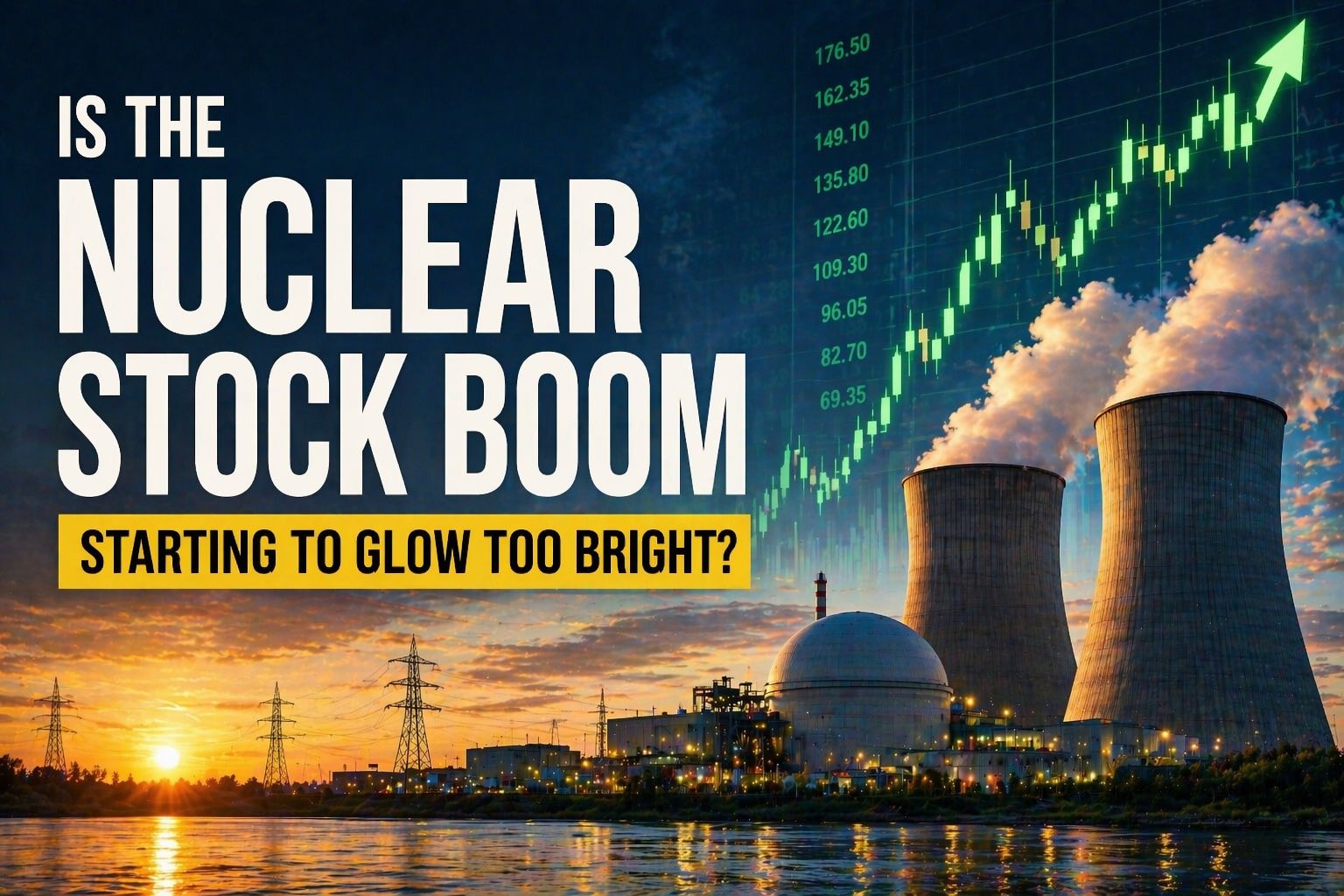
URA.P (Global X Uranium ETF): Uranium operates on long-term contracting cycles. URA.P offers a cleaner play on the "strategic energy" theme, specifically tied to the global nuclear renaissance and Small Modular Reactor (SMR) adoption.
XAUUSD / XAGUSD: Use Gold and Silver as your "macro filter." If precious metals are rising while industrial metals are falling, it is a clear signal that the market is fleeing for safety (Risk-Off), rather than betting on industrial growth (Risk-On).
To trade the supercycle effectively, your weekly routine should involve more than just staring at a candlestick chart. Treat your Monday morning like a detective's briefing:
Audit the LME Warehouse Stocks: If the narrative says "shortage" but the warehouse says "surplus," trust the warehouse.
Monitor the "China Demand Pulse": Copper remains hypersensitive to Chinese manufacturing and property sectors. If the pulse is weakening, the "AI story" may not be enough to carry the entire load.
Watch the US Dollar Index (DXY): Commodities are priced in dollars. With the DXY hovering near the 100.00 level in March 2026, any further strength in the greenback will act as a significant headwind for metal prices.
Test Relative Strength: Is the materials sector leading the broader market, or is it merely being dragged along? Real cycles are defined by outperformance.
The 2026 strategic metals story is one of the most compelling macro-thematic shifts of our time. However, a supercycle is not a straight line up; it is a series of violent expansions and painful contractions. By using the scorecard approach and monitoring the relationship between physical inventories and speculative flows, you can position yourself on the right side of the "Three Pillars" without being crushed if the "crowded trade" decides to exit.
Start trading these metals via XLB.P and URA.P with EBC, the World’s Best* Broker.
*3 Consecutive Years of Recognition From World Finance: Best FX Trading Platform 2023, Best CFD Broker 2024, Best Trading Platform 2025, Most Trusted Broker 2025. Online Money Awards Best CFD Provider 2025.
Disclaimer & Citation
This material is for information only and does not constitute a recommendation or advice from EBC Financial Group and all its entities ("EBC"). Trading Forex and Contracts for Difference (CFDs) on margin carries a high level of risk and may not be suitable for all investors. Losses can exceed your deposits. Statistics or past investment performance are not a guarantee of future performance. EBC is not liable for any damages arising from reliance on this information.