Published on: 2026-04-20
Updated on: 2026-04-20
USDMXN offers one of the clearest lessons in foreign exchange: currencies rarely move on a single headline. On March 26, Banxico lowered the target for the overnight interbank rate to 6.75%, effective March 27.
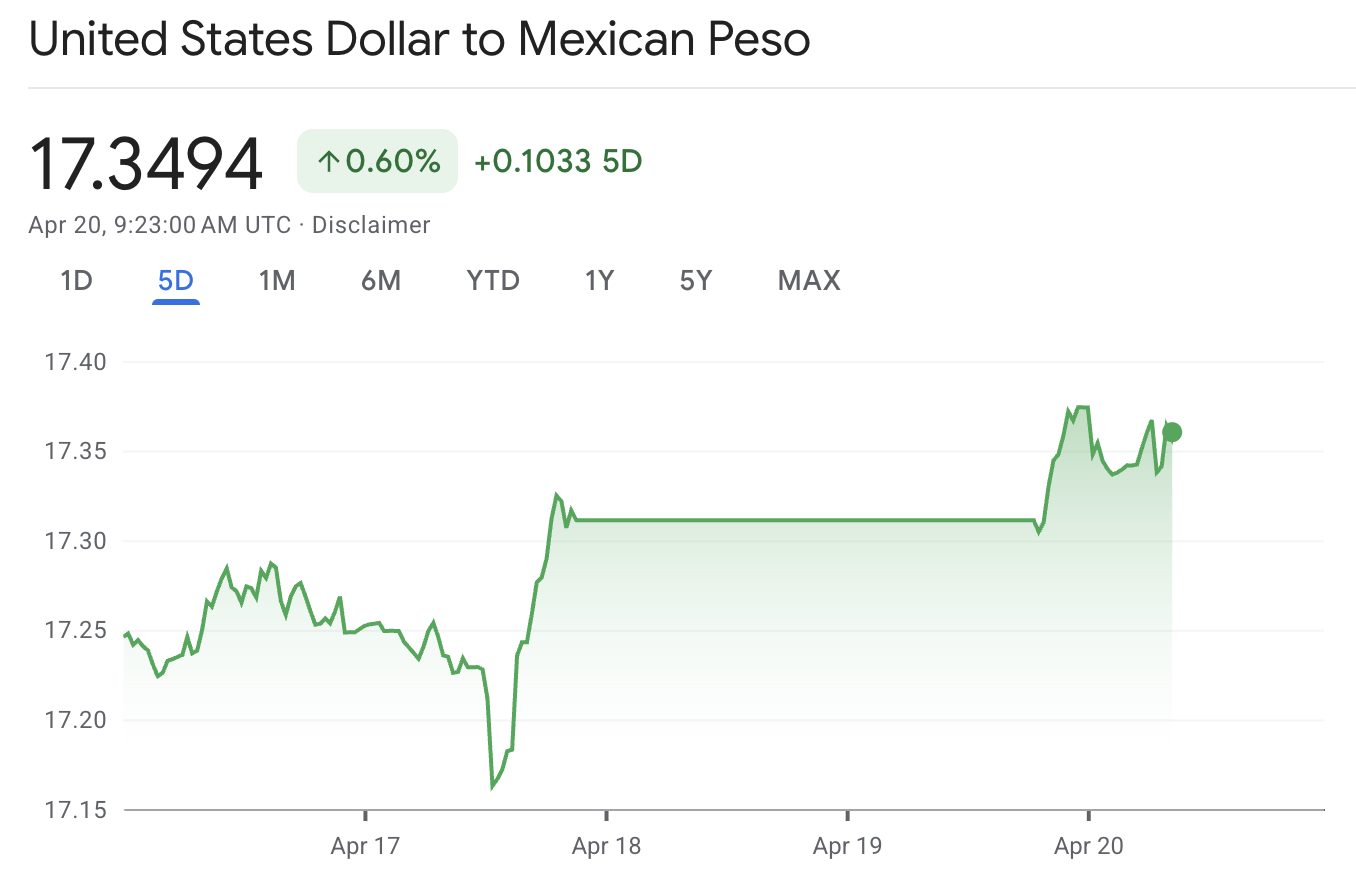
A straightforward interpretation would suggest a weaker peso. By April 20, however, USDMXN was still only around 17.3592, while the peso remained stronger over both the past month and the past year.
That apparent contradiction is the core of the story. The market was not pricing the cut in isolation. It was pricing the level of rates after the cut, the still-wide gap versus the United States, the attractiveness of MXN carry, and the broader external backdrop described by Banxico itself.
Banco de México cut its policy rate by 25 basis points to 6.75% on March 26, 2026, yet the peso remained firm into April 20.
A rate cut does not automatically weaken a currency. USDMXN reacts to relative yields, carry demand, dollar direction, trade risk, and global sentiment.
Banxico’s April 9 minutes show policymakers were balancing weak domestic activity, higher oil prices, trade-policy uncertainty, and inflation risks at the same time.
The peso held up because Mexico still offered a wide yield premium and the broader macro backdrop did not force a full repricing of MXN risk.
Banxico’s March statement delivered two clear signals. The Governing Board saw significant weakness in Mexican economic activity at the start of 2026, and it judged monetary conditions restrictive enough to continue the easing cycle even with inflation risks still biased upward. The bank also noted that the peso had depreciated slightly since the previous decision, not broken down.
By April 20, the exchange-rate picture still looked constructive for MXN. Market data showed USDMXN at 17.3592, with the peso stronger by about 2.40% over the past month and 12.05% over the past 12 months. Mexico’s policy rate was still 6.75%, while the U.S. benchmark rate stood at 3.75%.
That is the first lesson. A rate cut can change the policy narrative without destroying a currency’s support if the post-cut yield level remains attractive and the market does not see a destabilizing shift in the broader balance of risks.
Foreign exchange is a relative market. USDMXN is not priced by Banxico alone. It is priced by comparing Mexico’s policy rate, inflation path, growth outlook, and risk profile with those of the United States.
On March 26, Banxico cut its target rate by 25 basis points to 6.75%, but the Federal Reserve was still holding the federal funds target range at 3.50% to 3.75% after its March 18 meeting. Mexico therefore retained a wide yield premium even after the cut.
The inflation backdrop also kept the policy stance relatively restrictive. Banxico said annual headline inflation rose from 4.22% in the first half of January to 4.63% in the first half of March, while core inflation fell from 3.72% to 3.56% over the same period.
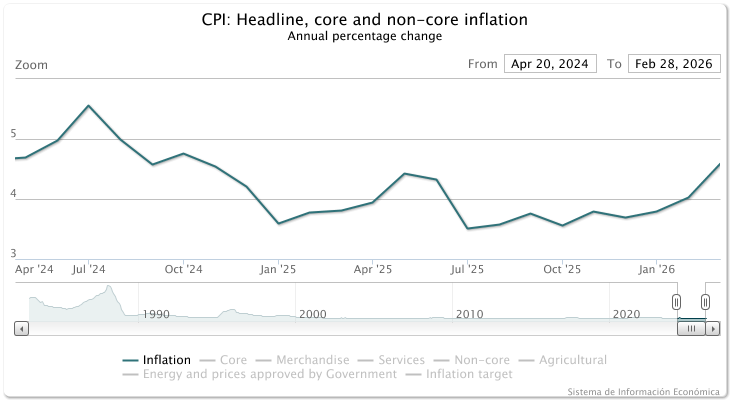
A policy rate of 6.75% against that inflation profile still implied positive real rates and left Mexico offering one of the more attractive nominal yields in the emerging-market FX universe. That combination can keep peso demand firm, especially when carry strategies remain active.
Banxico’s own language reinforced that interpretation. The Board said it took into account the observed exchange rate, the weakness in domestic activity, and the degree of monetary restriction already in place.
That phrasing signaled a controlled normalization step rather than a rush to stimulate growth or a retreat from inflation discipline. In currency markets, that distinction is important: a cut can reduce support at the margin, but it does not automatically reverse a currency when the post-cut rate level remains high and the broader policy framework still looks credible.
USDMXN is one of the most watched emerging-market carry pairs because Mexico tends to offer higher short-term rates than the United States. In a carry trade, investors seek to earn the yield differential as long as exchange-rate losses do not erase the income advantage.
A 25-basis-point cut trims that appeal at the margin. It does not eliminate it if the gap remains wide. On April 20, the differential was still around 300 basis points based on current market data. That is enough to keep MXN attractive when global risk appetite is stable or improving.
USDMXN also reacts to forces outside Mexico. Banxico’s March statement said the U.S. dollar appreciated, U.S. government interest rates increased, and commodity prices rose during the latest Middle East conflict. It also warned that changes in U.S. trade policy and escalating geopolitical conflicts were adding uncertainty to the inflation outlook.
The April 9 minutes broadened that picture. Most Board members said global uncertainty had increased because of geopolitical tensions. They noted that nearly 20% of global oil freight supply had been affected, that Brent crude had risen above $100 per barrel, and that the conflict had created a volatile external environment.

That is the second lesson. USDMXN is not a one-factor pair. It reflects Banxico policy, but also Fed policy, dollar demand, oil, trade-policy risk, and the broader appetite for emerging-market currencies. A rate cut sits inside that larger system.
The minutes published on April 9 show how divided the Board was. Some members favored continued normalization because restrictive policy built over the previous three years still offered room to adjust. Others argued for holding the rate at 7.00%, warning that inflation risks and external uncertainty remained too high.
That split is important for USDMXN because currencies react not only to the action but to the logic behind the action. Banxico was easing while still acknowledging upside inflation risks, volatile energy prices, external shocks, and a fragile global backdrop. The decision signaled confidence in the restrictive starting point, not complacency about inflation.
Banxico said future decisions will depend on the evolution of macroeconomic and financial conditions. The path of subsequent cuts will influence whether MXN keeps enough yield support to hold its carry appeal.
USDMXN will continue reacting to the U.S. side of the equation. A higher-for-longer Fed or a rebound in Treasury yields can strengthen the dollar even if Mexico’s domestic story is unchanged. The U.S. policy rate was still 3.75% in current market data.
The peso often performs well when investors are comfortable owning higher-yielding emerging-market currencies. A sharp deterioration in global sentiment can lift USDMXN even when Mexico retains a strong yield premium. The April minutes show Banxico is already watching those external risks closely.
Because the policy rate remained high at 6.75%, leaving Mexico with a wide yield advantage over the United States. Carry demand and broader market conditions also supported MXN.
No. Currencies react to relative policy, capital flows, risk appetite, and the broader dollar trend, not to one rate decision alone.
It is a strategy that seeks to benefit from Mexico’s higher interest rates relative to U.S. rates, provided exchange-rate volatility does not offset the yield pickup.
Both. Banxico shapes MXN’s yield appeal, while the Fed and the broader dollar environment often drive the USD side of the pair.
USDMXN stayed contained after Banxico cut rates because foreign exchange markets were pricing more than the headline. Mexico still offered a high policy rate, the carry trade remained attractive, and the external backdrop did not force a wholesale repricing of peso risk.
The broader lesson is simple. A central-bank cut can alter the narrative, but it rarely explains a currency on its own. In USDMXN, the deeper drivers are relative rates, capital flows, dollar direction, and the evolving balance between Mexico and the United States.