Published on: 2026-04-16
South Korea’s entry into a major global bond index is drawing sustained foreign capital into its debt market.
The Korean won's recovery is no longer driven by a single headline. It is being reinforced by converging structural flows from multiple directions.
Bullish FX options positioning signals that options activity suggests investors are positioning for a more durable won rebound.
The durability of this rebound depends on whether flow momentum can outlast a still-uncertain geopolitical and monetary backdrop.
USD/KRW is easing, but the more important question is why. This is no longer just a short-lived relief trade after the temporary US-Iran ceasefire. It is becoming a test of whether structural bond inflows, stronger external accounts, and improving market positioning can pull the won away from the stress levels it reached earlier this month.
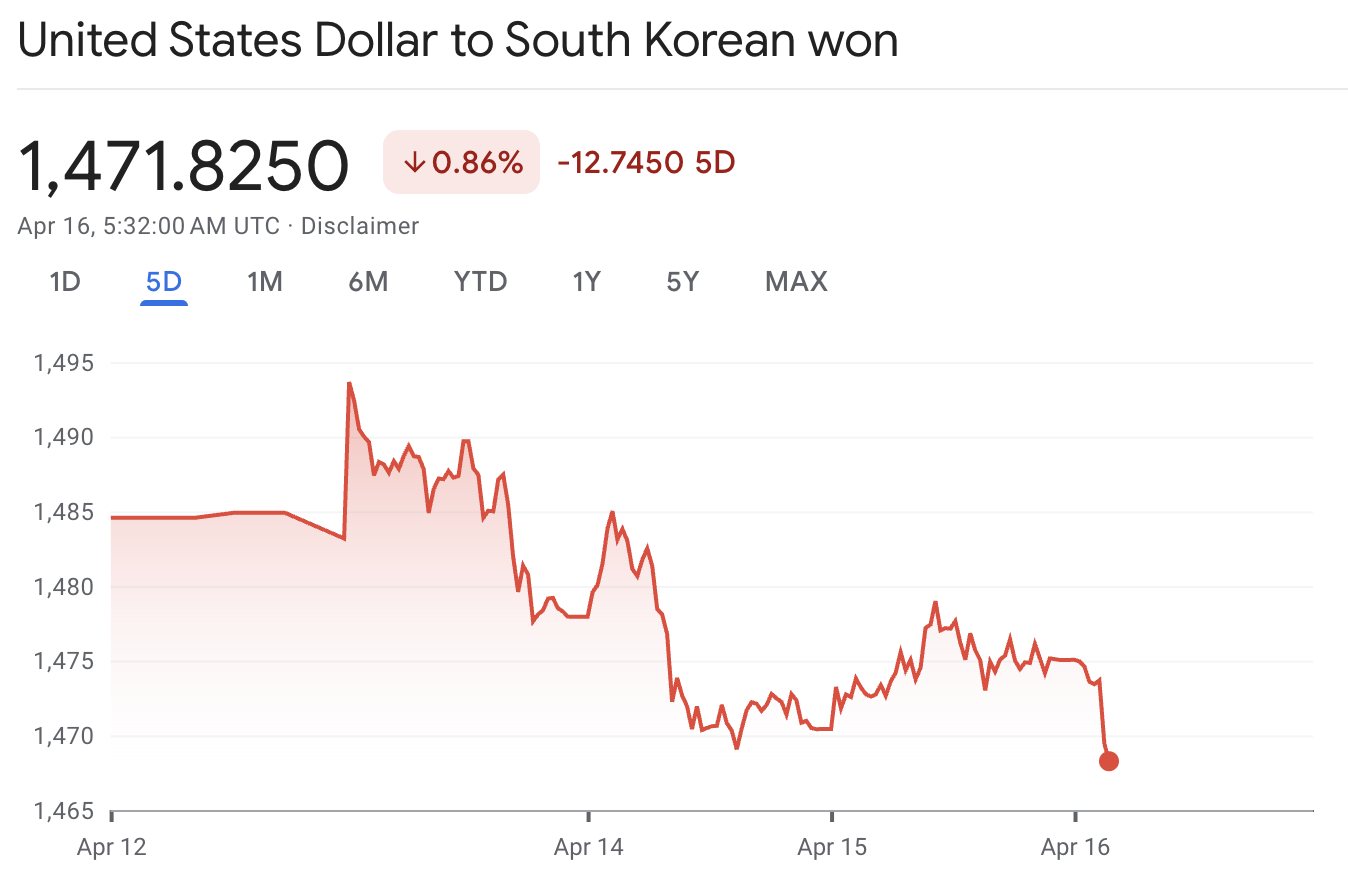
The Bank of Korea held its base rate at 2.50% on 10 April and said the won had risen into the 1,500 won range during the Middle East war before retreating after the temporary ceasefire. That official framing matters because it confirms the move is tied to geopolitics, but not limited to it.
South Korea’s entry into the FTSE World Government Bond Index is the deepest part of this story. FTSE Russell said the inclusion began with the April 2026 index profiles and will be phased in over eight equal monthly tranches through November 2026.
As of the January 2026 profiles, 63 KRW-denominated government bonds were projected to qualify, representing 2.05% of the index on a market-value-weighted basis.
That matters because WGBI is followed by an estimated $2.5 trillion to $3.0 trillion in assets. Once a market enters an index of that scale, the currency story changes. Demand for local bonds is no longer driven only by discretionary investors. Passive and benchmark-aware money starts to matter as well.
The flow data suggest that process has already started to support the won.
| Flow signal | Latest reading | Why it matters for USD/KRW |
|---|---|---|
| WGBI phase-in | April to November 2026 | Keeps foreign demand staggered over several months |
| Eligible KRW bonds | 63 | Broad enough to draw meaningful benchmark allocations |
| Index weight | 2.05% | Large enough to matter for passive and benchmark-aware funds |
| Foreign bond buying | 6.8 trillion won over 8 trading days around April 1 | Confirms early real-money demand for Korean government bonds |
| First-wave buying | About 4.7 trillion won in the first few days | Shows inflows started quickly after inclusion began |
Sources for table: FTSE Russell and local reporting citing finance ministry data.
This is what separates the current move from a standard ceasefire bounce. A peace headline can remove fear. Index inclusion can create follow-through. That gives the won a deeper institutional bid than a typical risk-on rally.
The derivatives market is telling a similar story. Bloomberg reported that one-month dollar options on the won and yuan rose to the highest level in a month after the ceasefire news, while bullish call volume in large trades exceeded puts by about 70%. That points to active positioning for further won strength rather than a passive reaction to calmer headlines.
That matters because options flows often reveal whether traders think a move has legs. In this case, the won is being treated less as a panic hedge and more as an Asia recovery trade with structural support behind it.
The won is also being helped by Korea’s external sector. Exports in the first 10 days of April rose 36.7% from a year earlier to $25.2 billion, while imports rose 12.7% to $22.1 billion, leaving a $3.1 billion trade surplus. Semiconductor shipments were a key driver.
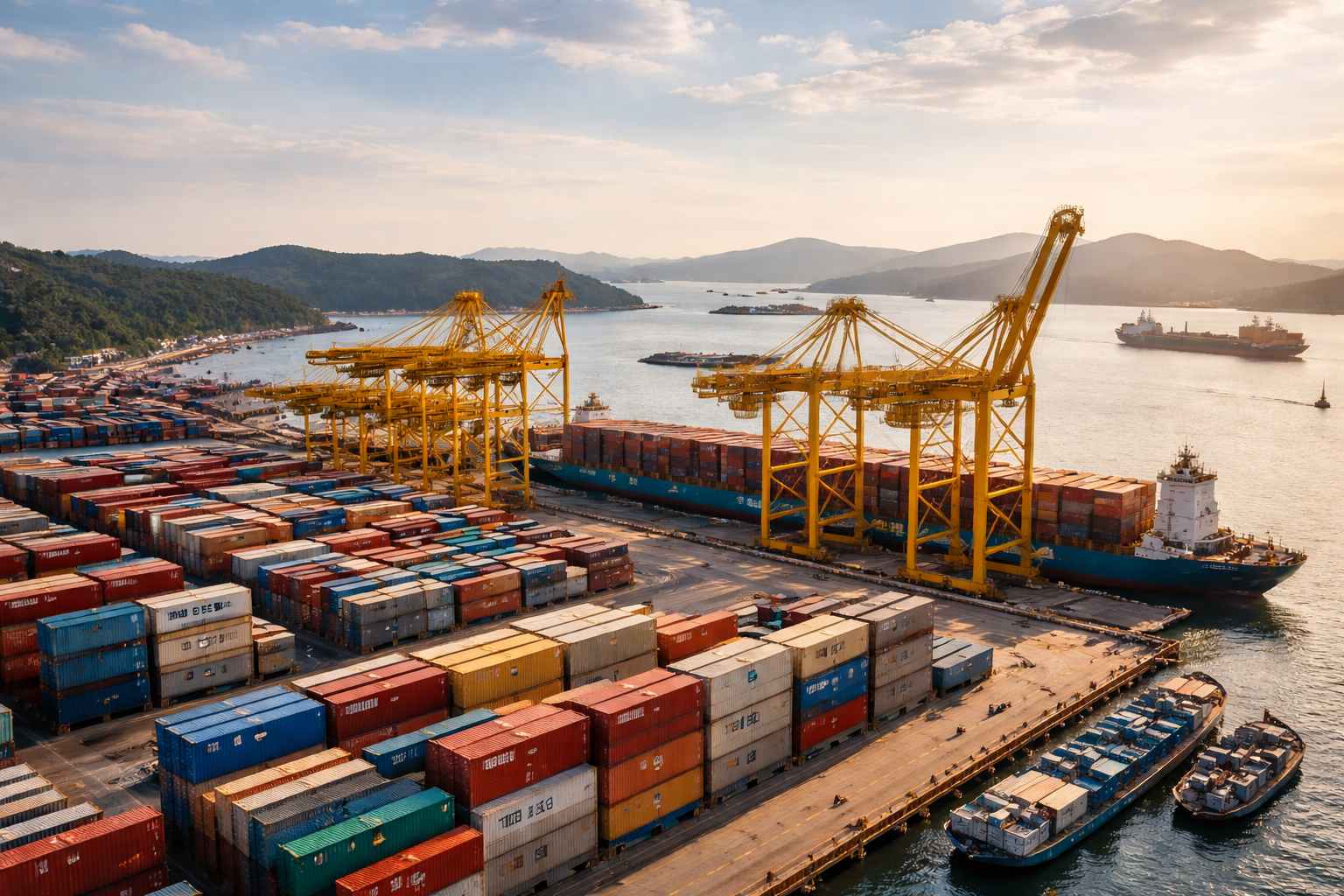
A second external signal is just as supportive. South Korea posted a record $23.19 billion current-account surplus in February, the highest monthly surplus on record, helped by strong goods exports. That gives the won a firmer fundamental base than simple relief from geopolitical stress.
| External support | Latest reading | Market implication |
|---|---|---|
| Exports, Apr. 1 to 10 | $25.2 billion | Export engine remains strong |
| Export growth | 36.7% year over year | Supports confidence in Korea’s external earnings power |
| Imports, Apr. 1 to 10 | $22.1 billion | Import bill remains heavy, especially on energy |
| Trade balance, Apr. 1 to 10 | $3.1 billion surplus | Helps cushion the won |
| Current-account balance, February | $23.19 billion surplus | Reinforces the medium-term external backdrop |
Sources for table: Korea Customs data via Yonhap and Bank of Korea data via Yonhap.
The Bank of Korea is not treating the rebound as a clean all-clear signal. In its April decision, the central bank said inflation is likely to rise above its previous forecast, while growth is expected to come in below the 2.0% forecast made in February.
It also said uncertainty remains very high because of oil, exchange-rate moves, and the broader fallout from the Middle East war.
That caution is echoed by governor nominee Shin Hyun-song, who said authorities stand ready to respond to excessive foreign-exchange volatility if needed, while adding that the won’s weakness does not amount to a crisis given Korea’s foreign reserves and economic fundamentals.
The clearest risk is another oil shock. South Korea remains heavily exposed to imported energy, and March import prices rose 16.1% month on month, the sharpest increase since January 1998, according to Bank of Korea data reported on 15 April. That shows how quickly oil stress can feed into the economy and back into the currency.
The near-term watch list is straightforward:
A renewed rise in crude prices
A breakdown in ceasefire diplomacy
A stronger US dollar globally
Slower-than-expected WGBI-related inflows
Softer export momentum after the April burst
For now, though, USD/KRW is being driven by more than fear reduction. It is being supported by a mix of real money flows, derivatives positioning, and solid external data.
It brings sustained demand for Korean government bonds from index-tracking and benchmark-aware investors, which can support the won over several months.
No. The ceasefire helped, but bond inflows, options positioning, export strength, and a record current-account surplus are also supporting the currency.
The BOK is on hold at 2.50% and says oil, exchange-rate moves, and inflation risks are keeping uncertainty high, which makes an early cut harder to call.
Another oil spike is the clearest risk, as South Korea is highly exposed to imported energy, and recent import-price data already show strong pass-through.
USD/KRW is easing, but the better way to read the move is not as a simple peace dividend. The ceasefire opened the door.
The more durable drivers are WGBI-related bond inflows, stronger external accounts, and options positioning that suggests investors are trying to get ahead of a broader won recovery.
That does not make the won immune to reversal. Korea remains exposed to oil, regional stress, and broad US dollar swings. But for now, USD/KRW is telling a more interesting story than “fear down, won up.” It is showing how quickly structural flows can start to reshape a currency once the headline pressure begins to lift.
Disclaimer: This material is for general information purposes only and is not intended as (and should not be considered to be) financial, investment or other advice on which reliance should be placed. No opinion given in the material constitutes a recommendation by EBC or the author that any particular investment, security, transaction or investment strategy is suitable for any specific person.