Published on: 2026-05-13
Updated on: 2026-05-13
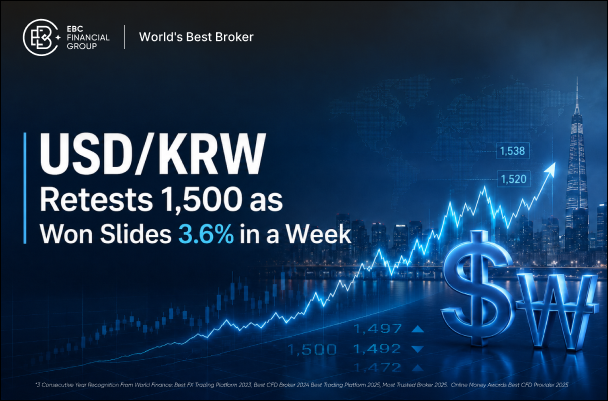
USD/KRW is pressing against one of Asia’s most important foreign-exchange thresholds after a sharp one-week repricing in the Korean won.
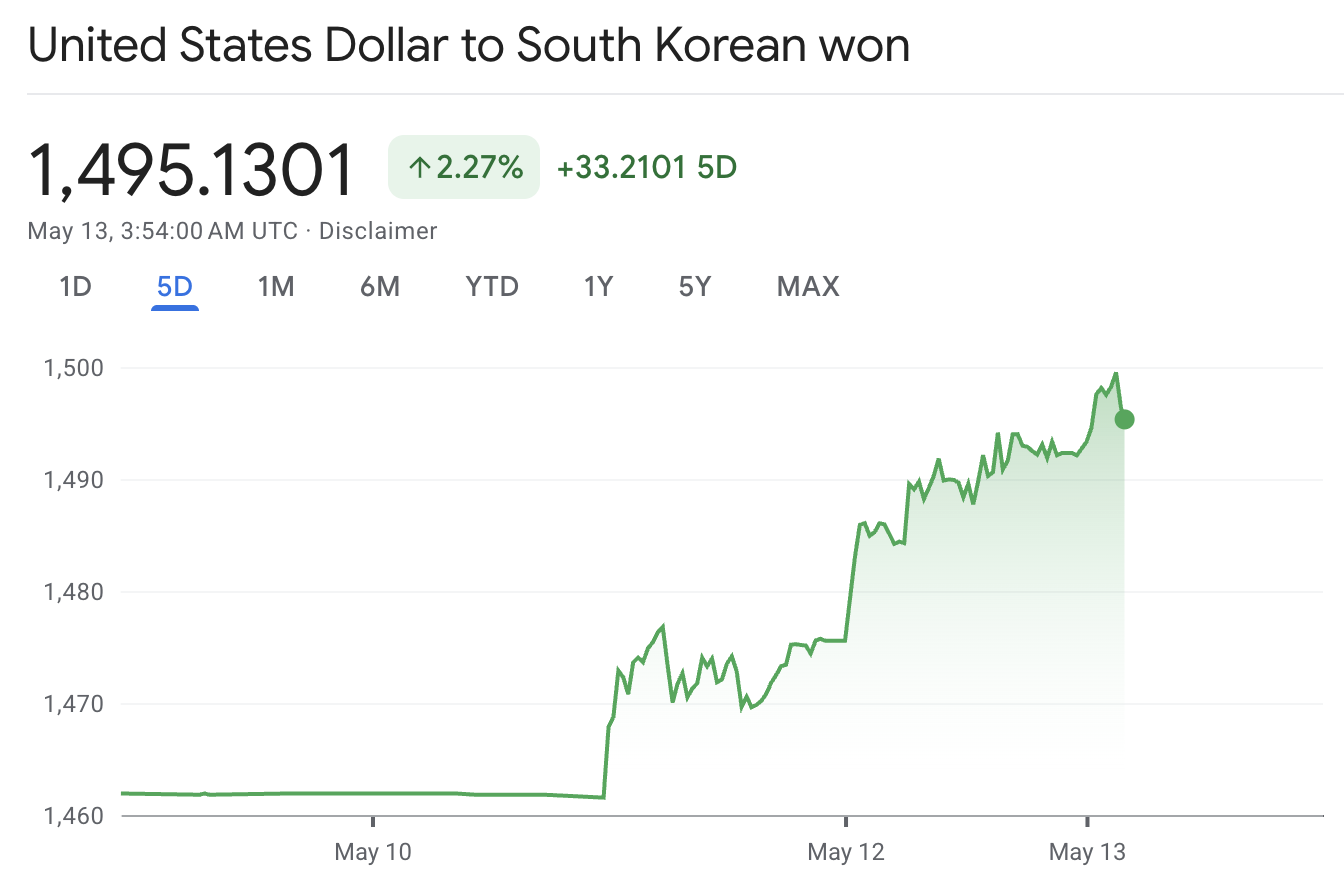
USD/KRW traded around 1,497 to 1,498 on May 13, after rising from 1,445.57 on May 6. That marks a gain of roughly 3.6% in the pair and puts the exchange rate within immediate reach of the 1,500 psychological level.
The move reflects more than broad dollar strength. Higher oil prices, sticky U.S. inflation, a wide Fed-BoK policy gap, foreign equity pressure and structural demand for overseas dollar assets have converged at the same time. The market is now testing whether 1,500 remains a resistance ceiling or becomes the base of a higher USD/KRW trading range.
USD/KRW rose roughly 3.6% in one week, from 1,445.57 on May 6 to around 1,497 to 1,498 on May 13.
The pair traded as high as 1,499.79, leaving the 1,500 resistance level exposed.
A daily close above 1,500 would open the path toward 1,505 to 1,510, then 1,520.
Immediate support sits at 1,492, with deeper support near 1,472 to 1,476.
April U.S. CPI at 3.8% year-on-year and a 100 to 125 basis-point Fed-BoK rate gap keep the dollar supported.
Oil remains a direct pressure point, with WTI near $101 to $102 and Brent above $107.
USD/KRW has not moved higher through random volatility. The pair has built a clear staircase pattern over the past week.
| Date | USD/KRW Level |
|---|---|
| May 6 | 1,445.57 |
| May 7 | 1,458.64 |
| May 8 | 1,461.80 |
| May 11 | 1,474.32 |
| May 12 | 1,493.46 |
| May 13 | Around 1,497 to 1,498 |
The important shift came when USD/KRW cleared the 1,470 to 1,490 zone. That area had acted as a consolidation range. Once it broke, the pair moved quickly toward 1,500, showing that exporter dollar supply and routine won buying were not enough to absorb dollar demand.
The 1,500 level is both psychological and technical. A confirmed daily close above it would strengthen the bullish USD/KRW structure and bring 1,505 to 1,510 into focus first. The next upside target would be 1,520, followed by the broader stress-zone reference near 1,538.45.
The downside signal is equally clear. A move below 1,492 would suggest the pair is struggling to hold the breakout attempt. A deeper fall below 1,472 to 1,476 would show that the latest dollar squeeze is fading.
Oil is the most direct external pressure on the won. With Brent above $107 and WTI near $101 to $102, South Korea faces a terms-of-trade challenge because it relies heavily on imported fossil fuels and has limited domestic energy resources.
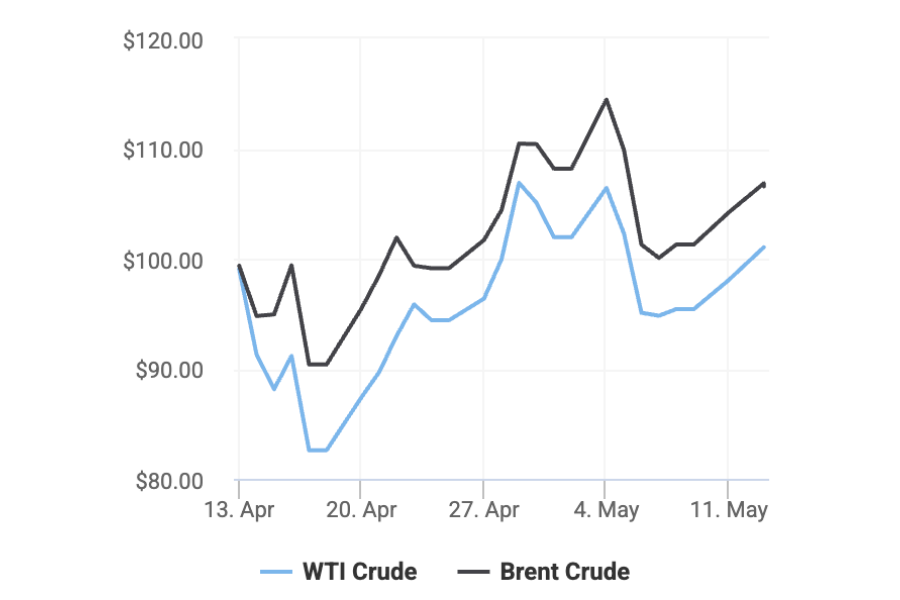
Higher oil prices increase Korea’s dollar-denominated import bill, raise demand for dollars from energy importers and add inflation pressure through fuel, transport and industrial input costs. Strong semiconductor exports can support Korea’s external position, but they do not fully offset the FX pressure created by a sustained rise in crude prices.
The April U.S. CPI reading added a second layer of pressure. Inflation at 3.8% year-on-year makes it harder for markets to price aggressive near-term Federal Reserve rate cuts. That keeps U.S. yields supported and reinforces the dollar’s defensive appeal.
The policy gap also matters. The Fed funds target range is 3.50% to 3.75%, while the Bank of Korea’s base rate is 2.50%. In calm markets, that gap may not drive a sharp won selloff. During risk-off conditions, it becomes more powerful because investors are paid more to hold dollar assets while the won remains exposed to oil prices, capital outflows and external funding pressure.
The older FX framework was straightforward: strong exports generated dollar inflows, and those inflows supported the won. That relationship has weakened.
Korean households, pension funds, institutions and private investors have increased overseas portfolio investment, especially into U.S. assets. This creates persistent dollar demand even when Korea’s current account is supported by exports. It also explains why USD/KRW can remain elevated despite Korea’s strong position in semiconductors and AI-related supply chains.
This capital-flow structure makes the won more sensitive to global stress. Foreign equity selling, overseas investment demand, importer hedging, higher oil prices and stronger U.S. yields can all reinforce the same dollar-buying cycle. Together, those flows can push USD/KRW higher even when Korea’s export data remains resilient.
| Level | Type | Market Signal |
|---|---|---|
| 1,538.45 | Major resistance | 52-week high area and broader stress-zone reference |
| 1,520 | Upside target | Next major level if 1,500 breaks cleanly |
| 1,505 to 1,510 | Momentum zone | First follow-through area above 1,500 |
| 1,500 | Key resistance | Psychological and intervention-watch threshold |
| 1,497 to 1,498 | Current zone | Pair is pressing the upper band |
| 1,492 | Immediate support | First intraday pullback level |
| 1,472 to 1,476 | Key support | Prior consolidation and invalidation zone |
The technical structure remains dollar-positive while USD/KRW holds above 1,492. A close above 1,500 would confirm upside momentum and shift focus to 1,520. A break below 1,472 to 1,476 would weaken the bullish USD setup and suggest that won selling pressure is easing.
USD/KRW is at a decisive inflection point after rising roughly 3.6% in one week. The move reflects elevated oil prices, sticky U.S. inflation, a wide Fed-BoK policy gap, foreign equity pressure and structural Korean demand for overseas dollar assets. A confirmed break above 1,500 would place 1,520 in focus and raise the risk of a move toward 1,538.45. A rejection below 1,492, then 1,472, would show that the won has absorbed the latest pressure.