Published on: 2026-04-21
Updated on: 2026-04-21
UnitedHealth reported first-quarter 2026 results on Tuesday, April 21, 2026, before the market opened, and raised its full-year 2026 adjusted earnings outlook to greater than $18.25 per share from greater than $17.75. First-quarter revenue was $111.7 billion, earnings from operations were $9.0 billion, and adjusted earnings were $7.23 per share.
The key result was medical cost execution. UnitedHealth's medical cost ratio was 83.9% in Q1 2026, down from 84.8% in Q1 2025 and comfortably below the company's full-year 2026 framework of 88.8% plus or minus 50 basis points.
AI remains part of the cost-control story, but it was not the main reason the quarter beat expectations. UnitedHealth said the operating cost ratio rose to 13.8% from 12.4% because of investments in people, processes, and technology, including artificial intelligence, while the bigger earnings signal came from lower medical cost pressure and improved UnitedHealthcare margins.
Q1 2026 revenue was $111.7 billion and adjusted EPS was $7.23, ahead of same-day consensus figures cited by Barron’s and WSJ coverage.
MCR was 83.9%, down from 84.8% a year earlier, and included a 20-basis-point positive impact from the previously disclosed Optum Health loss contracts reserve.
UnitedHealth raised its full-year 2026 outlook to greater than $17.35 in net earnings per share and greater than $18.25 in adjusted earnings per share.
AI still supports the long-term cost-control story, but the Q1 report showed higher near-term operating costs because the company is still investing in people, processes, and technology.
UnitedHealth reported first-quarter 2026 revenue of $111.7 billion, earnings from operations of $9.0 billion, GAAP earnings of $6.90 per share, and adjusted earnings of $7.23 per share. It also raised full-year 2026 earnings guidance to greater than $17.35 per share and adjusted earnings guidance to greater than $18.25 per share.
That result beat Wall Street expectations cited in same-day coverage. Barron’s reported consensus estimates near $109.4 billion in revenue and $6.58 in adjusted EPS, while MarketWatch said analysts were looking for a medical cost ratio near 85.5%.
| Period | Revenue | Earnings from operations | MCR | Operating cost ratio |
|---|---|---|---|---|
| Q1 2025 | $109.6B | $9.1B | 84.8% | 12.4% |
| Q2 2025 | $111.6B | $5.2B | 89.4% | 12.3% |
| Q3 2025 | $113.2B | $4.3B | 89.9% | 13.5% |
| FY 2025 | $447.6B | $19.0B | 89.1% reported, 88.9% adjusted | 12.9% adjusted |
| 2026 framework at Jan. 27, 2026 | >$439.0B | >$24.0B | 88.8% ± 50 bps | 12.8% ± 50 bps |
| Q1 2026 reported | $111.7B | $9.0B | 83.9% | 13.8% |
The reported quarter materially strengthens the 2026 reset case. Revenue rose 2% year over year to $111.7 billion, while earnings from operations of $9.0 billion nearly matched the year-ago quarter. Most importantly, the 83.9% MCR came in far below the full-year 2026 framework of 88.8% plus or minus 50 basis points.
That does not mean the cost issue is fully solved. UnitedHealth said the year-over-year MCR improvement reflected strong medical cost management and favorable reserve development, partially offset by consistently elevated utilization and unit cost trends. The operating cost ratio also moved higher because the company kept investing in people, processes, and technology.
In short, the quarter delivered exactly what investors needed most: cleaner medical cost execution. The next test is whether UnitedHealth can keep MCR inside the annual framework without relying too heavily on reserve help.
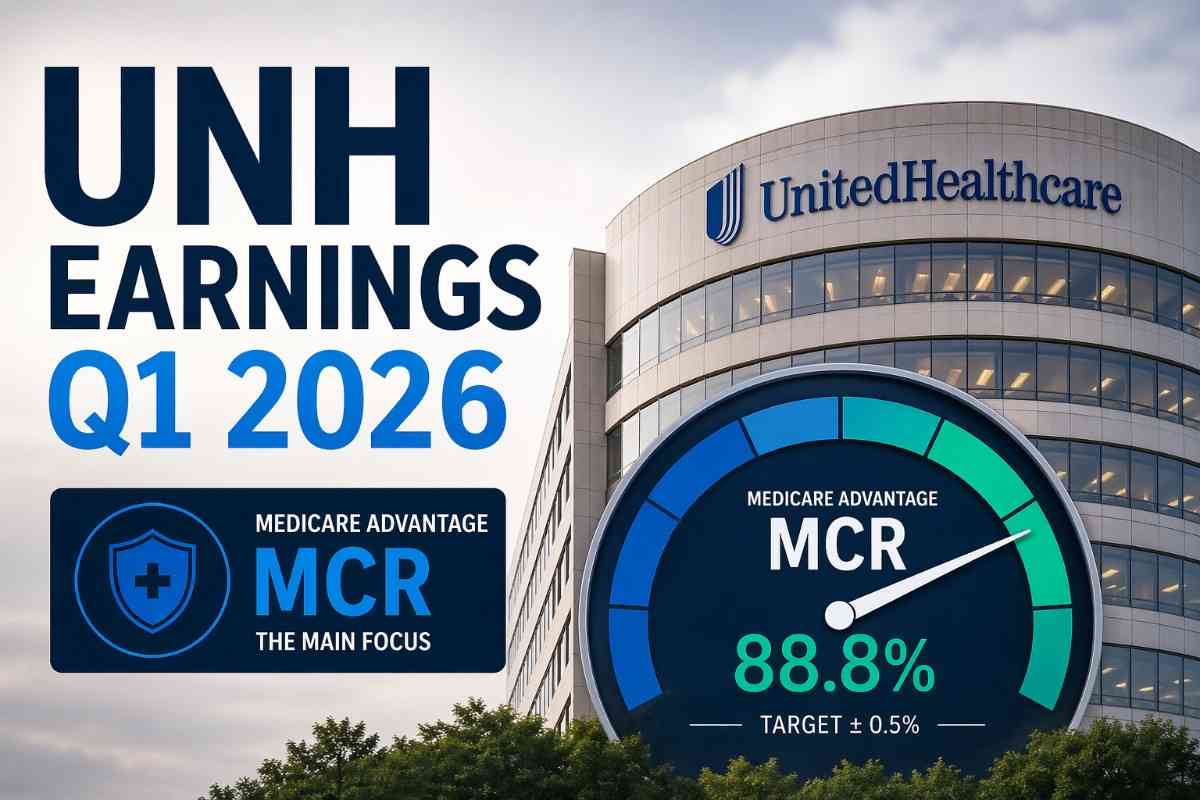
MCR stayed the decisive number, and UnitedHealth delivered. The first-quarter 2026 medical cost ratio was 83.9%, down 90 basis points from the first quarter of 2025. The company said the decrease was driven by strong medical cost management and favorable reserve development, partially offset by consistently elevated utilization and unit cost trends.
UnitedHealth also disclosed that the 83.9% MCR included a 20-basis-point positive impact from the previously disclosed Optum Health loss contracts reserve. That supports the margin-repair thesis, but it does not prove that utilization pressure has fully normalized.
The Medicare backdrop still matters, but this quarter's evidence came from execution more than policy. UnitedHealthcare Medicare & Retirement revenue rose 1% year over year to $42.1 billion, while seniors served through Medicare Advantage declined by 965,000 in the first quarter as repricing actions partially offset membership attrition.
AI remained part of the operating story, but the quarter did not show immediate consolidated cost savings from AI alone. UnitedHealth said the 13.8% operating cost ratio reflected investments in people, processes, and technology, including artificial intelligence, to improve performance and support future innovation, modernization, growth, and earnings.
That framing matters because the clean earnings surprise came from the lower MCR and better UnitedHealthcare margin, not from a lower operating cost ratio. AI can still support claims, audit, and administrative workflows over time, but this report shows it as an investment line as much as a savings lever.
The narrower conclusion now is clearer: AI still supports the margin story, but medical cost execution remains the larger earnings driver for UNH.
Ahead of the release, the options market had priced about a 5.21% move. After the report, MarketWatch said UNH shares rose 5.4% in premarket trading, which means the initial reaction was roughly in line with, and slightly above, the move options had already implied.
That response makes sense. The company beat on revenue, earnings, and MCR, while also lifting full-year adjusted guidance, so the market treated the quarter as a credible early sign that the 2026 margin repair plan is working.
UnitedHealth's Q1 2026 report moved the story from preview to evidence. The company beat on revenue and earnings, delivered a much better-than-feared 83.9% medical cost ratio, and raised full-year adjusted earnings guidance to greater than $18.25 per share.
The remaining caution is that some of the MCR benefit came from favorable reserve development and a previously disclosed Optum Health reserve item, while utilization and unit cost trends remain elevated.
For the rest of 2026, investors should watch whether MCR stays inside the full-year framework and whether higher AI and technology spending eventually translates into a lower operating cost ratio.