Published on: 2026-04-22
Updated on: 2026-04-22
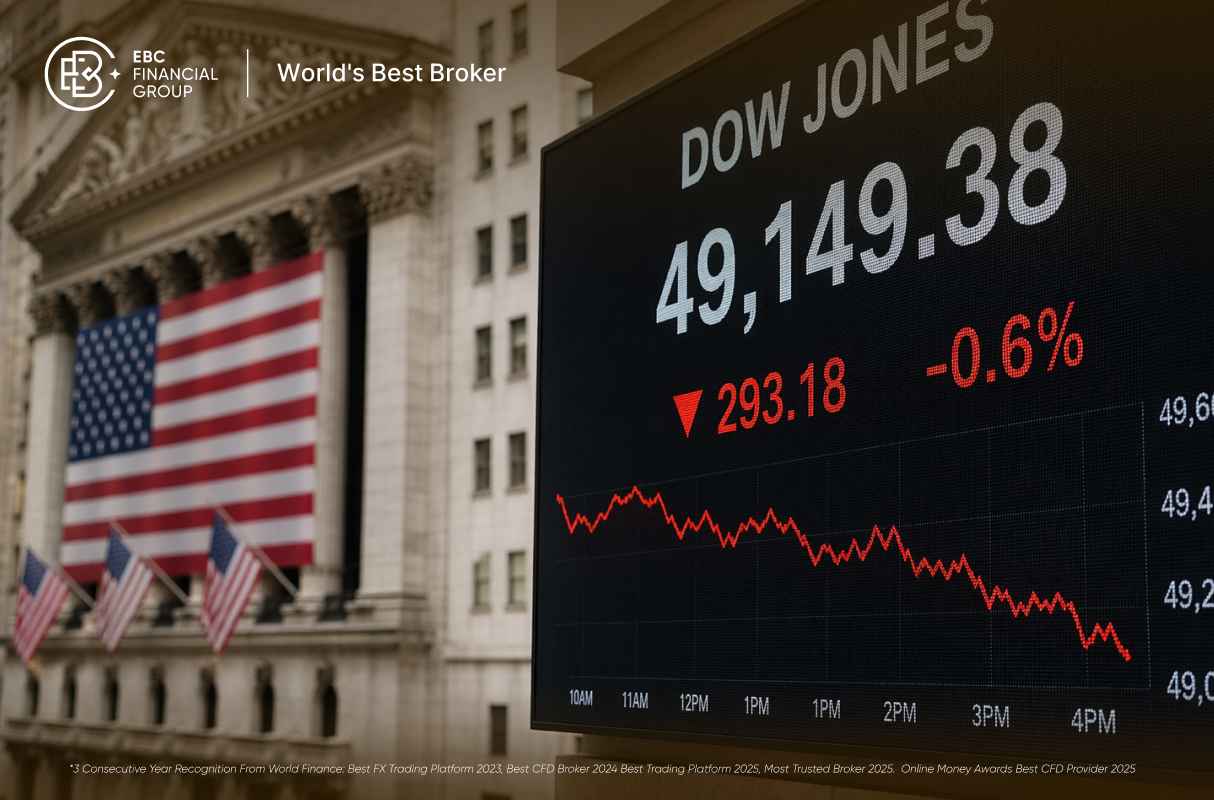
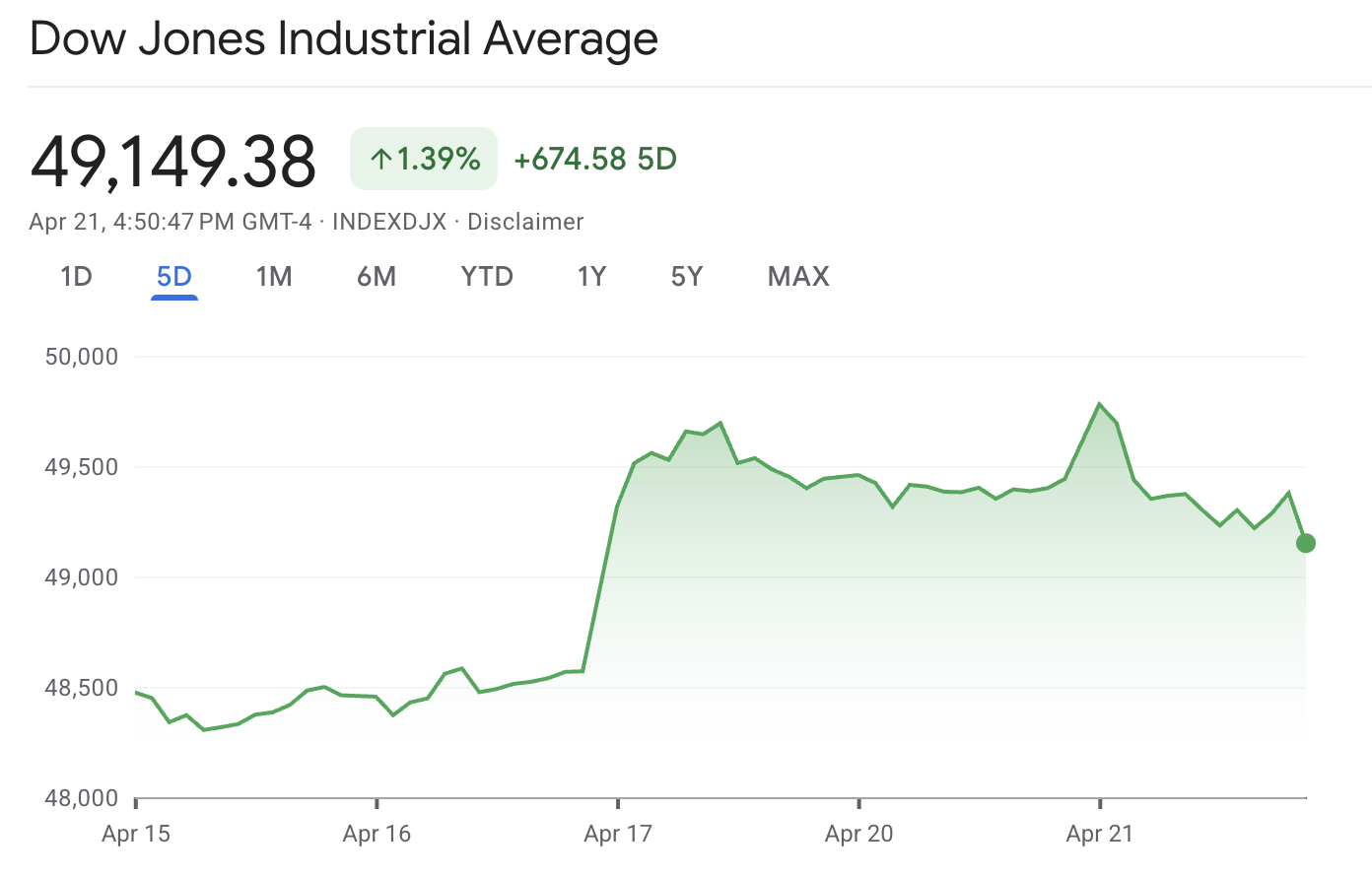
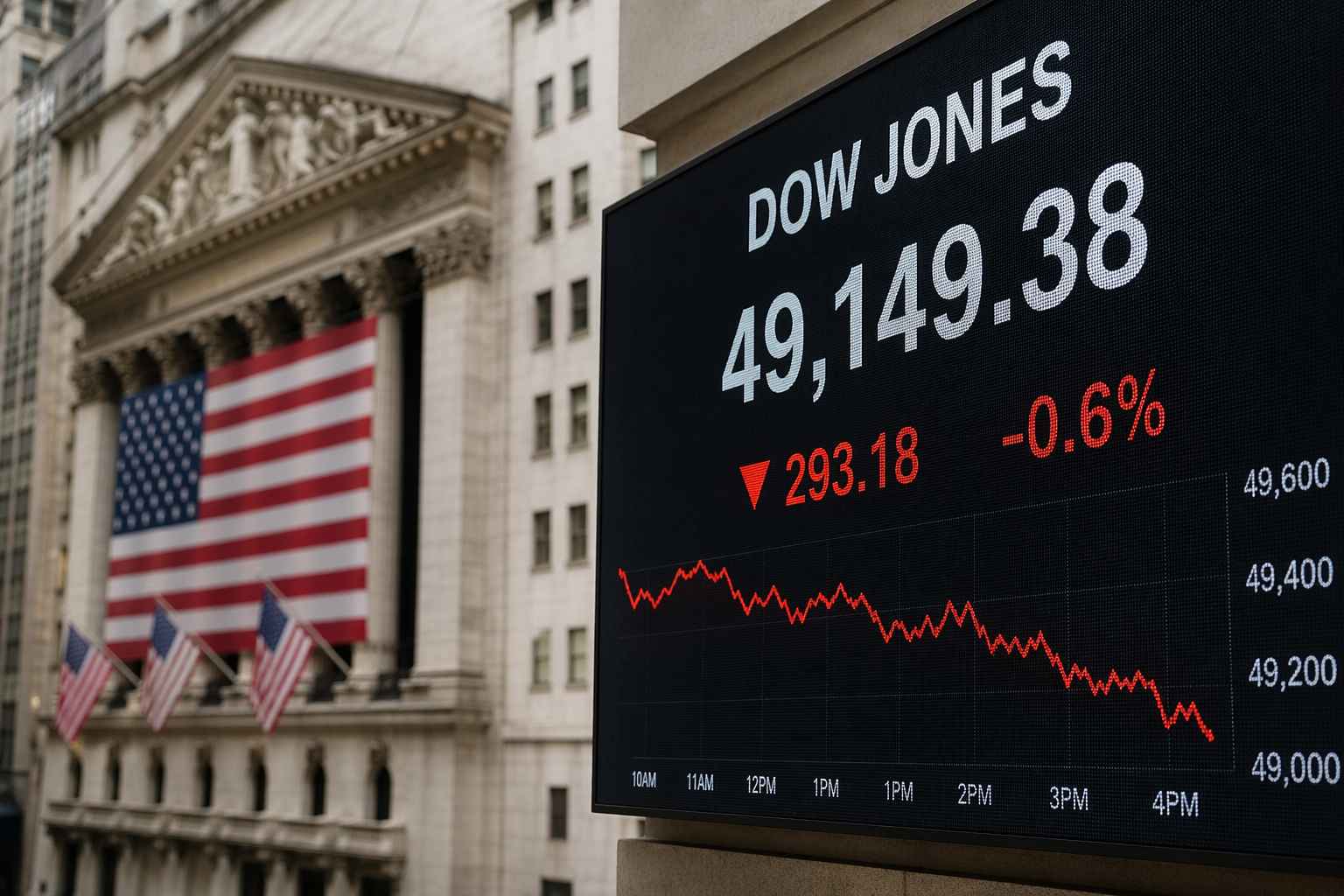
The Dow Jones Index closed lower on April 21, 2026, yet the session’s larger story lay in how narrowly that move was shaped. The Dow Jones Industrial Average ended at 49,149.38, down 293.18 points, after rising by as much as 400 points earlier in the day as earnings strength briefly lifted sentiment.
By the close, that optimism had faded amid renewed uncertainty around efforts to extend the Iran ceasefire, leaving the benchmark down 0.6%. The reversal was not only a shift in mood. It also showed how quickly the Dow can move from looking resilient to looking fragile when leadership is concentrated in a small group of high-priced stocks.
 What made the session notable was the Dow’s structure. The benchmark is a price-weighted measure of 30 U.S. blue-chip companies, which means nominal share price, not market value, determines how much each stock moves the index. On a day shaped by earnings surprises, sector divergence, and abrupt swings in risk sentiment, that methodology turned the Dow into a concentrated readout of a few expensive names rather than a broad measure of market participation.
The Dow finished at 49,149.38, down 293.18 points, after an intraday gain of roughly 400 points.
UnitedHealth and 3M contributed about 220 points to the Dow’s morning rally.
Merck and Honeywell later accounted for about 76 points of downside pressure as the session reversed.
In the Dow, a $1 move in any component equates to roughly 6.16 index points, underscoring how strongly a few high-priced stocks can shape the headline number.
Broader U.S. indexes also fell, though the Dow’s move carried a more concentrated and stock-specific character.
A 0.6% decline suggested a contained session on the surface, but the path to that close was far less balanced. The market opened higher on upbeat earnings news, then lost momentum as geopolitical concerns returned and broader selling pressure spread across major indexes.
What began as a solid earnings-led advance ended as a more defensive close across Wall Street.
UnitedHealth supplied the strongest upside impulse. The company reported first-quarter revenue of $111.7 billion, earnings of $6.90 per share, and adjusted earnings of $7.23 per share, while raising its full-year 2026 adjusted earnings outlook to greater than $18.25 per share.
The stock rose sharply on the session, an outsized move for a high-priced Dow component and one that carried unusual force inside a price-weighted index. In a benchmark built on price rather than market capitalization, a large move in a stock such as UnitedHealth can have an immediate and visible effect on the headline average.
3M added to the morning strength. The company reported Q1 GAAP sales of $6.0 billion, adjusted EPS of $2.14, and reiterated full-year adjusted EPS guidance of $8.50 to $8.70. Those results helped power the early move higher, even though the stock later reversed and closed down 2% at $148.47, showing how quickly intraday support can fade when broader conviction is weak.
The Dow’s methodology is the central reason the session looked simpler than it was. In a market-cap-weighted index, company size determines influence. In the Dow, a high share price carries more weight, which is why gains in UnitedHealth and 3M were enough to add around 220 points to the morning advance.
That arithmetic also explains why stock-specific earnings reactions can overwhelm the broader market message on days like April 21. A benchmark can look orderly even when its direction is being determined by a short list of stocks rather than a broad cross-section of the market.
The same structure amplified the downside once the rally lost momentum. Declines in Merck and Honeywell together shaved about 76 points from the Dow. Merck came under pressure after the company and Eisai provided an update on a Phase 3 renal cell carcinoma trial, while Honeywell also weakened as the broader tone deteriorated.
The index did not simply drift lower. It was pulled lower by a narrow group of influential stocks. The move was not a clean macro repricing across sectors. It was a more fragmented retreat, with the benchmark first lifted by earnings strength in a few expensive names, then pulled back by weakness in another set of influential components.
The session also showed why the Dow can tell a different story from other major benchmarks. The S&P 500 and Nasdaq are more expansive and, in the case of the S&P 500, more closely tied to market capitalization. Their moves often reflect broader participation across sectors and industries. The Dow, by contrast, compresses the market into 30 stocks and gives the greatest marginal influence to the shares with the highest prices.
That does not make the Dow less relevant. It does mean the benchmark needs to be interpreted through its construction. On days when earnings are clustered among high-priced components, the Dow can look stronger or weaker than the broader market for reasons that have more to do with index mechanics than with a uniform shift in sentiment.
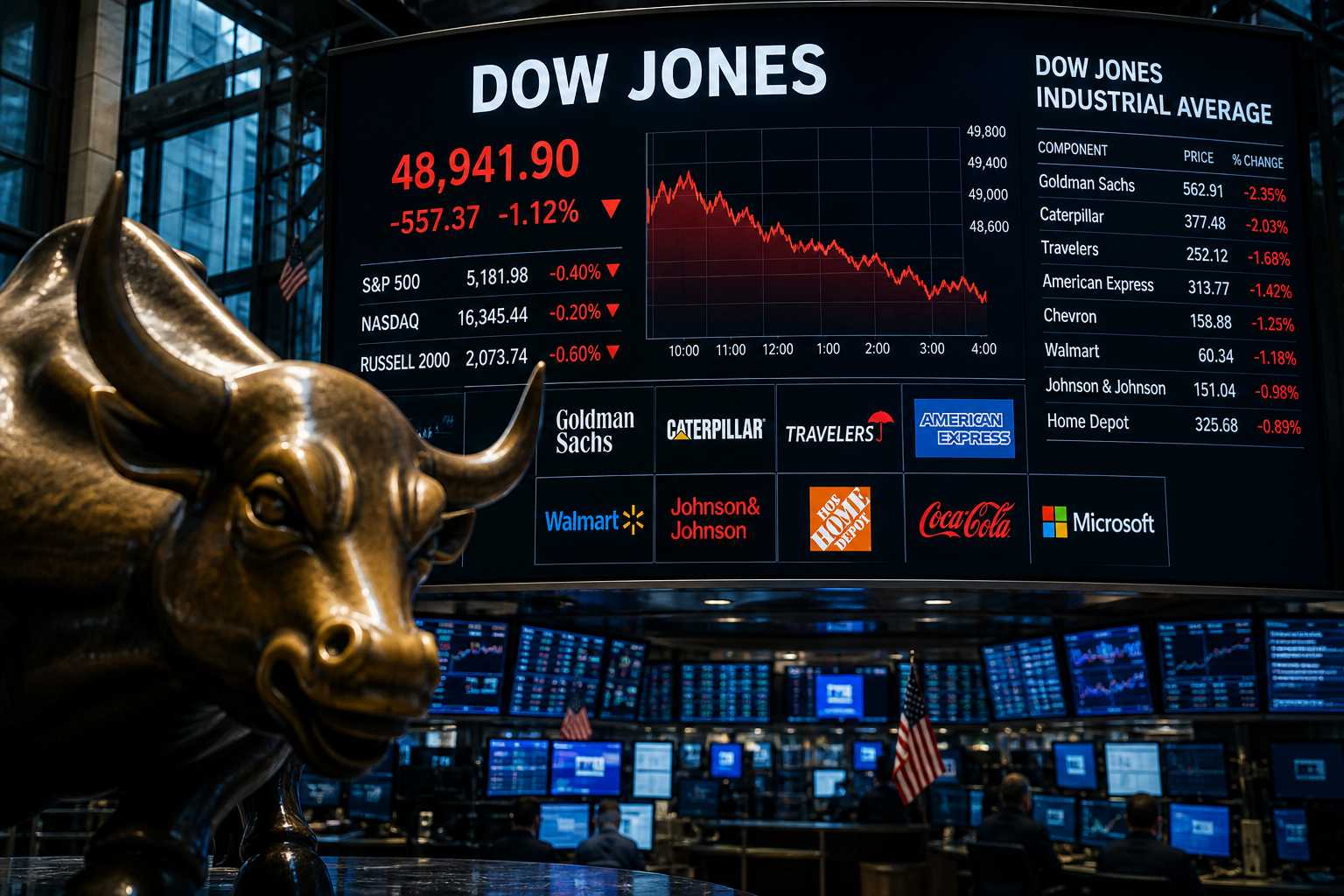
The concentration inside the Dow unfolded alongside a broader retreat across U.S. equities. The S&P 500 fell 45.13 points to 7,064.01, the Nasdaq Composite lost 144.43 points to 24,259.96, and the Russell 2000 dropped 27.99 points, or 1%, to 2,764.97.
Those moves showed that the session was not isolated to the Dow, even if the Dow’s internal swings were more clearly shaped by the mechanics of a few components. Broader market weakness added context to the reversal, but it did not erase the more specific point that the Dow’s path was unusually dependent on a handful of names.
That combination is what made April 21 stand out. The broader market weakened as geopolitical concerns resurfaced, yet the Dow’s own path remained tightly linked to company-level earnings reactions. When a narrow benchmark meets a narrow leadership profile, the headline result can miss the depth of the day’s internal shifts.
The clearest reading of April 21 is not that the market was quiet. It is that the Dow Jones Index can project relative calm even when leadership is narrow and stock-specific volatility is doing most of the work.
Early strength in UnitedHealth and 3M lifted the benchmark sharply, then weakness in Merck and Honeywell helped reverse that move as geopolitical concerns resurfaced. The closing loss captured the direction of the session, but not its concentration.
What looked like a manageable decline in percentage terms was, in practice, a reminder that the Dow can compress a complex trading day into a deceptively simple number.
The Dow Jones Index did not offer a straightforward read on market conditions on April 21. Its intraday reversal showed how quickly a handful of high-priced stocks can shape the benchmark when earnings reactions are strong and sentiment turns fragile.
In a price-weighted index, a modest headline move can still conceal a narrow and uneven market beneath the surface. On April 21, the Dow was not merely lower by the close. It was a clear example of how index structure, earnings concentration, and shifting risk appetite can combine to make the market’s most familiar benchmark say less than it appears to say.