Published on: 2026-06-05
Updated on: 2026-06-05
It’s easy to overlook US Treasury auctions unless you pay close attention to the rates market. But these numbers can sometimes explain why markets move in ways you might not expect.
A Treasury auction measures demand for US debt, but it doesn’t predict where the dollar will go next. If buyers ask for higher returns before lending to the US government, the bond market usually reacts first, and other markets often follow.
Even if you don’t usually watch bonds, Treasury auctions can help explain dollar moves when usual triggers like inflation data, Fed decisions, or payroll numbers aren’t driving the action.
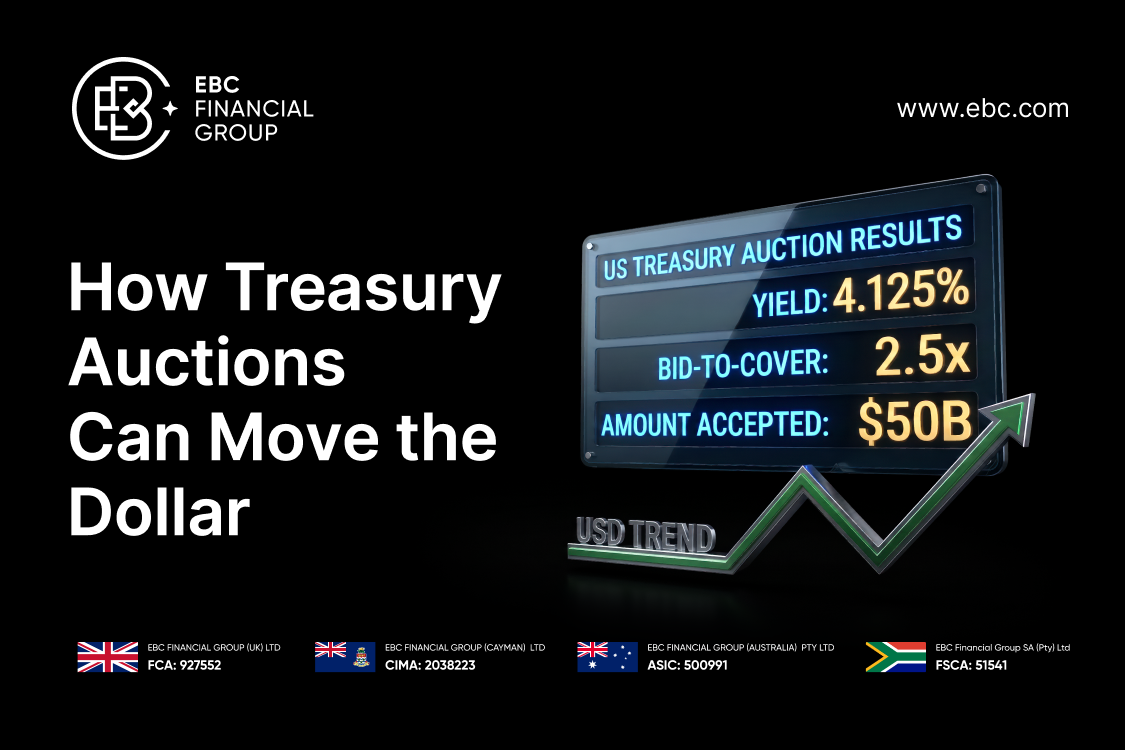
The US government borrows money by selling Treasury bills, notes, and bonds. Bills are short-term; notes last for up to 10 years. Bonds are for longer periods, like 30 years.
When the government needs to borrow money, it holds an auction. Investors submit bids saying how much they want to lend and what interest rate they'll accept in return. The government keeps accepting bids until it raises the full amount it needs.
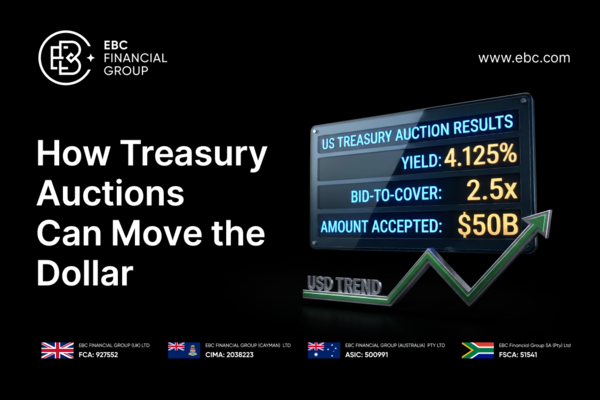
The interest rate, called the yield, is what everyone watches most closely. A lower rate means lots of investors wanted in, so the government didn't have to offer much to attract them. A higher rate means the opposite: demand was lukewarm, so the government had to sweeten the deal to get takers.
The difference might be just a fraction of a percentage point. That may not sound like much, but it can matter when markets are already nervous about inflation, government debt, heavy borrowing, or shifts in Federal Reserve policy.
A weak auction doesn't always set off a new trend. More often, it just gives traders a reason to point to for a move that was already underway.
Treasury yields affect how much investors can earn from US dollar assets. When yields rise, dollar assets can start looking more attractive compared to lower-paying alternatives.
But why does this matter to you?
Yields can climb when investors expect stronger US growth, stubborn inflation, or fewer interest rate cuts from the Federal Reserve. In that case, the dollar tends to get a lift because US assets appear to offer better returns.
Yields can also rise when investors demand more compensation to lend money to the US government. That sends a different signal. It might still push the dollar higher against some currencies, particularly when investors are playing it safe, but the broader market reaction tends to be harder to read.
The USD/JPY currency pair often moves with US yields because it is particularly sensitive to them. Gold can also react, depending on inflation-adjusted yields and the dollar's direction. US stock markets may slip if higher yields make company valuations look stretched. And currencies from developing economies can come under pressure if investors pull money out of riskier assets.
The auction helps traders figure out what’s driving the yield move.
First, look at the auction yield. Traders compare it to where that Treasury was trading just before the auction. If the auction settles at a higher yield than expected, it is called a tail. In plain terms, buyers wanted more return than the market had anticipated.
Bid-to-cover is another key number. It shows how many bids came in compared to the amount of debt for sale. A higher ratio means stronger interest, while a lower one means fewer buyers. It’s best to compare this with recent auctions of the same maturity.
Who buys the debt is another thing to look at. Indirect bidders are investors who bid through intermediaries, and they’re often seen as a sign of big institutional or overseas demand. Primary dealers are large banks expected to bid in Treasury auctions. If dealers end up with more supply than usual, traders might see it as a sign that other buyers weren’t as interested.
AUCTION DETAIL |
MEANING |
Tail |
Buyers wanted a higher yield than expected |
Stop-through |
Buyers accepted a lower yield than expected |
Strong bid-to-cover |
Buyers showed more interest than usual |
Weak indirect demand |
Fewer large or overseas buyers appeared willing to take the debt |
Heavy dealer take-up |
Dealers absorbed more of the supply |
Two 10-year auctions show how the message can change from one sale to the next.
In April 2024, a $39 billion 10-year Treasury sale was reported as weak. The auction tailed by 3 basis points, primary dealers took 24% of the sale, and the 10-year yield rose to an intraday high of 4.55% after the result.Barron’s described the auction as poorly received, noting that the high yield came in about 3.1 basis points above pre-auction expectations.
In April 2025, another $39 billion 10-year sale had the opposite tone. It was reported that indirect bidders took 87.9% and that the auction stopped through by 3 basis points during a volatile session. The debt sold at 4.435%, below the 4.465% level seen just before the sale, and described the result as strong enough to calm concern about buyers stepping away from US debt.
The difference came down to demand. In 2024, buyers pushed for a higher yield and the big banks ended up holding more of the debt than usual, a sign that appetite for it was weak. In 2025, buyers were willing to accept a lower yield and demand from large investors was much stronger, painting a healthier picture overall.
For traders, this is why auction details could be worth your time.
Traders usually see higher US yields as good for the dollar, but auction results can make things less clear-cut.
A weak auction can push yields up because buyers want more return. That might support the dollar in a simple FX view. But higher yields from strong growth aren’t the same as higher yields from weak demand for government debt.
This difference can show up in many markets. USD/JPY might move with yields, but gold could react differently. Stocks may fall if investors think higher yields are due to heavy borrowing, not better growth. Emerging market currencies can also drop if investors become more cautious.
Even mixed reactions are important. It reminds traders not to judge the yield to move by itself.
Start by watching Treasury yields. If the move fades quickly, the auction probably did not cause much concern. If yields keep moving after the initial reaction, it is worth looking at what is happening across broader markets.
Next, check the dollar. USD/JPY is a useful guide because it tends to move with US yields. EUR/USD can help show whether the move reflects broad dollar strength or something more specific.
Gold can help confirm the picture. If higher yields come alongside weaker gold, the market reaction is usually easier to read. But if gold holds firm while yields rise, the dollar signal becomes harder to trust.
Riskier assets can give you a wider view. US stock markets, developing economy currencies, and higher-volatility currencies can show whether the auction is part of a bigger shift in market mood.
Most auctions won’t change traders’ day. They happen, yields adjust, and the market moves on. The auctions to watch are those where the bond reaction sticks, and other markets start to follow. When that happens, a routine auction can explain why the dollar is moving before the next big headline hits.