Published on: 2026-03-23
Updated on: 2026-03-23
The festive optimism that usually carries Wall Street into the spring was unceremoniously smothered. The US stock market decline we've been nervously watching for the last few weeks has officially graduated from a "correction" into something much more unsettling.
We aren't just seeing a "dip" that's ripe for buying anymore. Instead, the market seems to be grappling with the realization that the "goldilocks" era of low inflation and high growth might be heading for the exit. The numbers on the board are a sea of deep, unapologetic red.
The S&P 500—the heartbeat of American retirement accounts—didn't just slip; it got hammered. It dropped 1.51% to close at 6,506.48. The Nasdaq, the engine room of the tech boom, took a much harder punch to the gut, sliding 2.01% to end the day at 21,647.61. Even the Dow, usually the steady hand in the room, shed over 443 points to settle at 45,577.47.
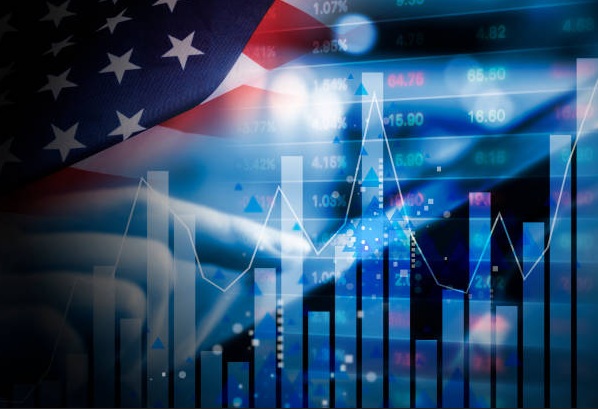
To really grasp the weight of the sell-off, you have to look past the percentages and see where the benchmarks actually landed. This isn't just about a few points; it's about key psychological levels being shattered. The US stock market decline has effectively wiped out nearly all year-to-date gains in a matter of days.
| Index | Closing Price | Daily Change | Month-to-Date |
| S&P 500 | 6,506.48 | -1.51% | -4.84% |
| Dow Jones (DJI) | 45,577.47 | -0.96% | -6.61% |
| Nasdaq Composite | 21,647.61 | -2.01% | -4.33% |
| Russell 2000 | 2,438.45 | -2.26% | -6.96% |
| VIX (The "Fear Gauge") | 30.27 | +25.81% | +44.26% |
When the VIX—the market's favorite way to measure panic—crosses the 30 mark, it tells you that professional traders aren't just "hedging" their bets; they're genuinely worried. We haven't seen this kind of sustained anxiety in a year, and it's making people move into cash faster than we've seen in quite some time.
It's never just one thing that causes a US stock market decline of this magnitude. Usually, it's a nasty cocktail of geopolitical tension, stubborn inflation, and a tech sector that's finally hitting a wall. Here is what's actually driving the carnage:
The most immediate catalyst for today's drop is coming from thousands of miles away. The escalating conflict in the Middle East has moved from "tense" to "critical." Following the recent strikes on energy infrastructure, the Strait of Hormuz—the world's most important oil artery—is effectively a bottleneck right now.
With roughly 20% of the world's oil supply at risk, Brent crude prices didn't just rise; they exploded to $100 a barrel. For the US economy, this is a massive headache. Higher oil doesn't just mean it costs more to fill up your car; it means it costs more to deliver every single package, every head of lettuce, and every piece of industrial equipment. It's an "inflation tax" that hits the consumer and the corporation at the same time.
For months, the market lived in a dream world where the Federal Reserve was going to bail everyone out with interest rate cuts by the spring of 2026. Jerome Powell essentially put those dreams through a paper shredder last week.
With inflation refusing to drop below 2.7% and energy prices threatening to push it back toward 3.5%, the Fed has its hands tied. They can't cut rates without risking a total loss of control over prices. So, interest rates are staying high. When you can get a guaranteed 4.3% return on a "safe" 10-year Treasury bond, the argument for holding "risky" tech stocks starts to fall apart. Investors are doing the math, and they're deciding that "safe and steady" beats "volatile and expensive."
We've spent the last two years absolutely obsessed with Artificial Intelligence. It felt like if a company mentioned "AI" in an earnings call, their stock went up 10% automatically. But the honeymoon is over, and the bills are coming due.
Investors are finally asking the "show me the money" question. Big Tech has spent hundreds of billions on chips and data centers, but the actual revenue growth from these investments hasn't matched the hype for many firms.
Nvidia fell over 3% as fears grow that the hardware buying spree is peaking.
Microsoft and Apple are facing intense pressure as their margins get squeezed by massive capital expenditures.
Small Tech is getting decimated because they can't afford to play in the AI sandbox while interest rates are this high.
The speed of this US stock market decline has left many retail portfolios in tatters. Here are the three most important trends we are seeing right now:
The Death of "Buy the Dip": For years, every time the market dropped 1%, retail traders rushed in to buy. Not this time. Today, the "buying pressure" was nonexistent, suggesting that people are genuinely scared of what's coming next.
Small Caps are the Canary in the Coal Mine: The Russell 2000 (small companies) is down nearly 7% this month. These companies are the most sensitive to high interest rates because they carry the most debt. If they're hurting, it's a sign that the broader economy is feeling the squeeze.
Cash is King (Again): We're seeing a massive flight to safety. Investors aren't moving into gold or "meme stocks." They are moving into cash and short-term Treasuries. In a world of uncertainty, liquidity is the only thing people want.
If you're the type of person who looks at charts, the picture is pretty ugly. The S&P 500 officially broke below its 200-day moving average. For non-traders, that's essentially the "line in the sand" that separates a healthy market from a broken one.
Once you break that line, a lot of the automated trading programs that run Wall Street start selling automatically. It creates a "snowball effect"—the lower the market goes, the more the computers sell, which pushes the market even lower. We are currently in the middle of that feedback loop. The technical damage of this US stock market decline will likely take months, not days, to repair.
It's easy to look at a day like today and think the world is ending, but it's important to remember that markets don't go down in a straight line forever.
The "bull case" (the optimistic view) is that the market is currently "oversold." Some analysts believe that once the geopolitical situation in the Middle East shows even a glimmer of stabilizing, we will see a massive "relief rally." The US economy is still adding jobs, and corporate balance sheets are generally in much better shape than they were during the 2008 financial crisis.
However, the reality is that we are in a period of painful transition. We are moving from a world of "free money" into a world where borrowing costs actually matter. That transition is never easy, and it's usually accompanied by the kind of volatility we saw today.
This US stock market decline is a wake-up call. The market is trying to find a new equilibrium in a world with $100 oil and 4% interest rates. Until it finds that balance, expect the "sea of red" to stick around.
Keep a very close eye on the weekly jobless claims coming out this Thursday. If the labor market starts to show cracks, it might force the Fed to pivot, which could be the only thing capable of stopping the bleeding. But for now? Keep your seatbelt fastened and your expectations low. It's going to be a long week on Wall Street.
Disclaimer: This material is for general information purposes only and is not intended as (and should not be considered to be) financial, investment or other advice on which reliance should be placed. No opinion given in the material constitutes a recommendation by EBC or the author that any particular investment, security, transaction or investment strategy is suitable for any specific person.